Customer relationship management process powerpoint presentation slides

Rating:
87%
Customer relationship management process powerpoint presentation slides
Slide 1 of 47
Favourites Favourites

Try Before you Buy Download Free Sample Product

Audience Impress Your
Audience
Editable 100%
Editable
Time Save Hours
of Time
The Biggest Sale is ending soon in
0
0
:
0
0
:
0
0
Rating:
87%
Presenting our Customer Relationship Management Process PowerPoint Presentation Slides. This is a 100% editable and adaptable PPT slide. You can save it in different formats like PDF, JPG, and PNG. It can be edited with different colors, fonts, font sizes, and font types of the template as per your requirements. This template supports the standard (4:3) and widescreen (16:9) format. It is also compatible with Google Slides.
Content of this Powerpoint Presentation

Slide 1: This is the cover slide of Customer Relationship Management Process PowerPoint Presentation.
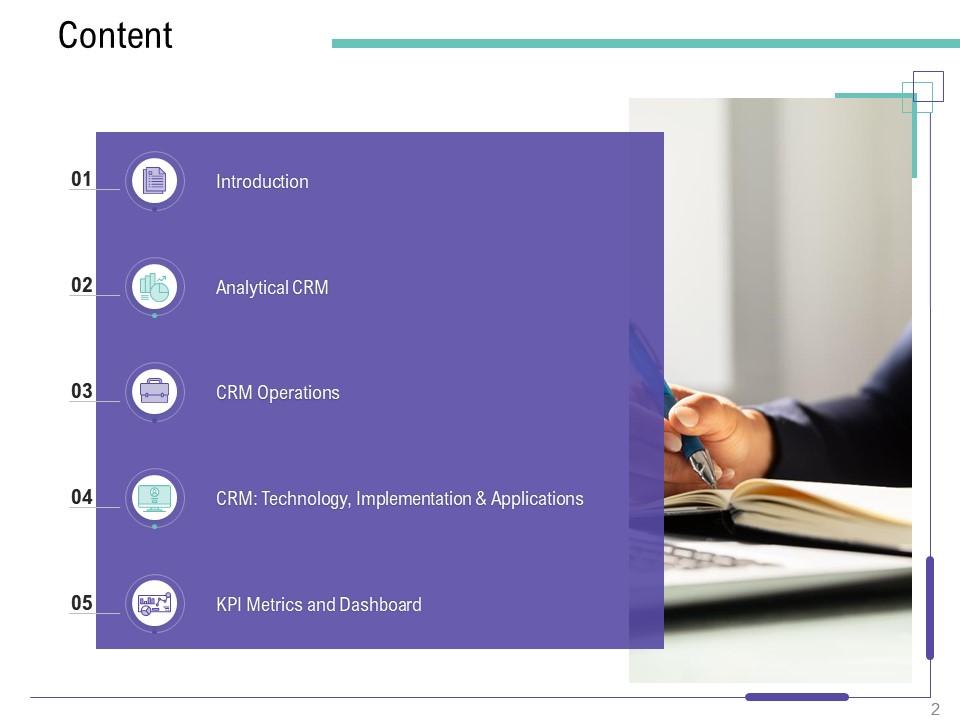
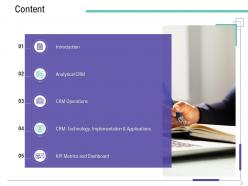
Slide 2: This is the Table of Contents slide that lists out all the essential elements covered in the deck.
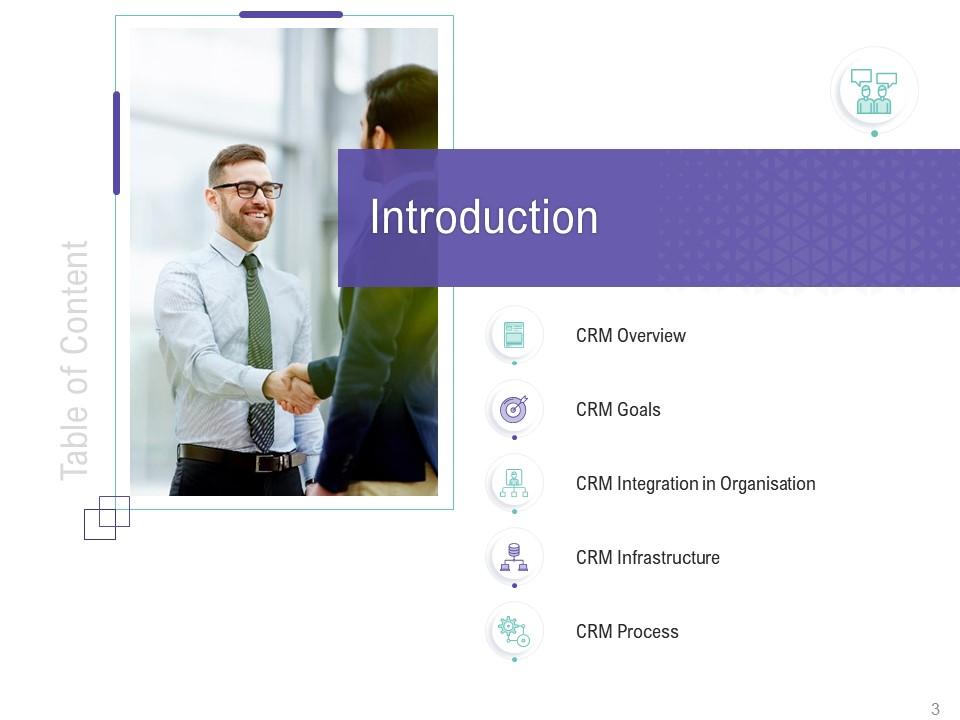
Slide 3: This is the Introduction slide that presents the CRM Overview, goals and insfrastructure.
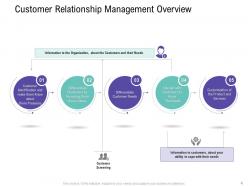
Slide 4: This is the Customer Relationship Management Overview slide.
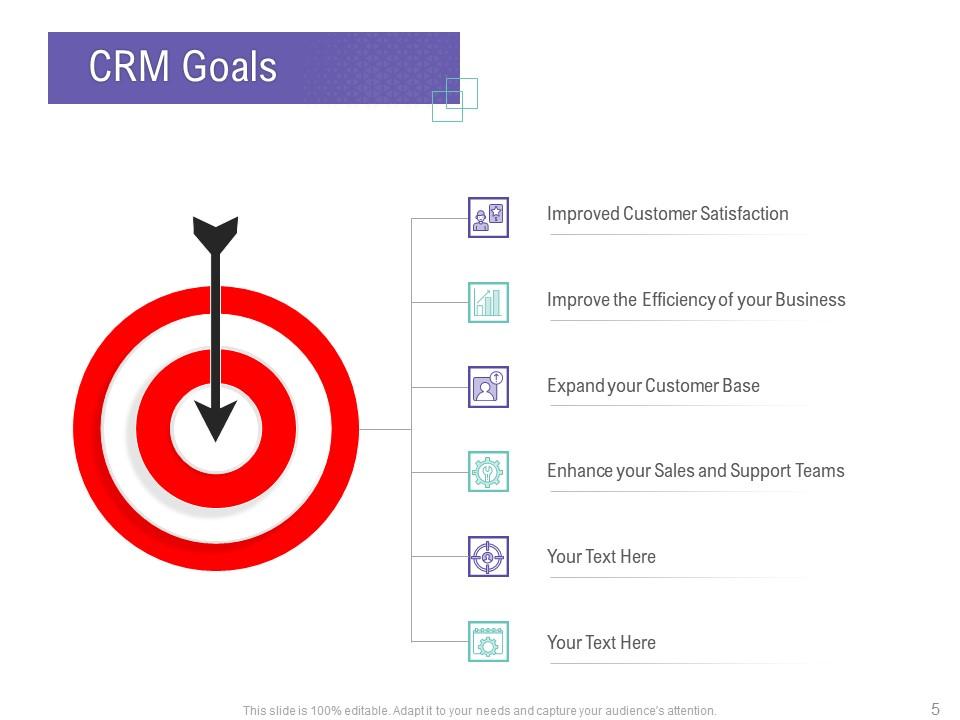
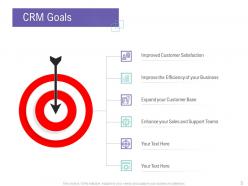
Slide 5: This slide presents CRM Goals.
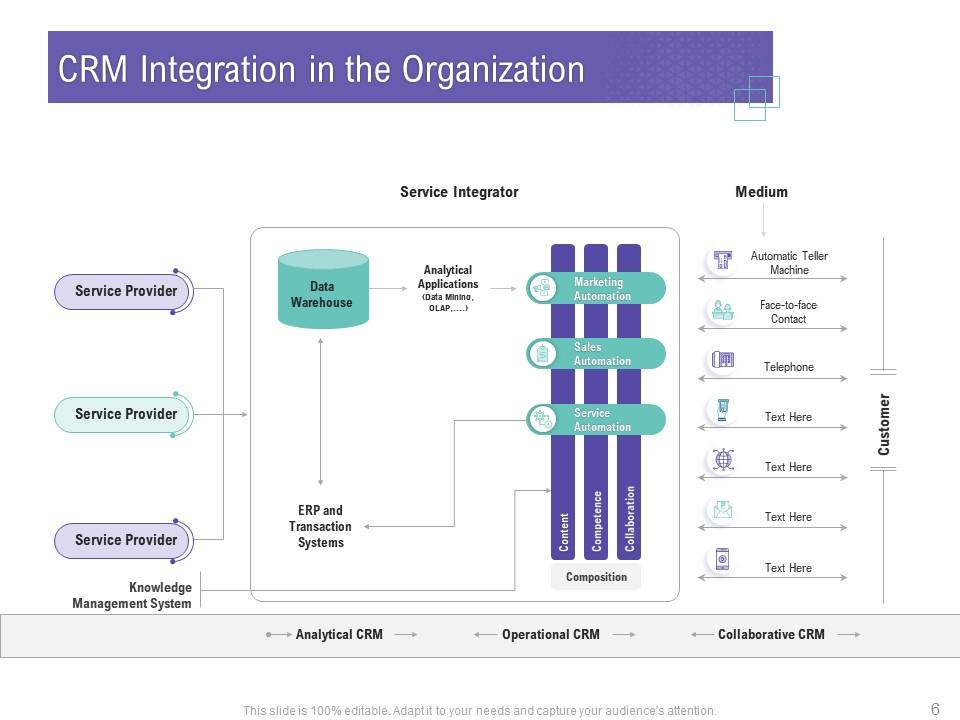
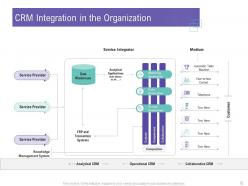
Slide 6: This slide presents CRM Integration in the Organization.
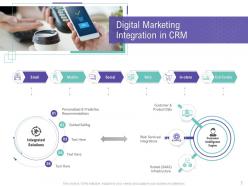
Slide 7: This slide presents Digital Marketing Integration in CRM.
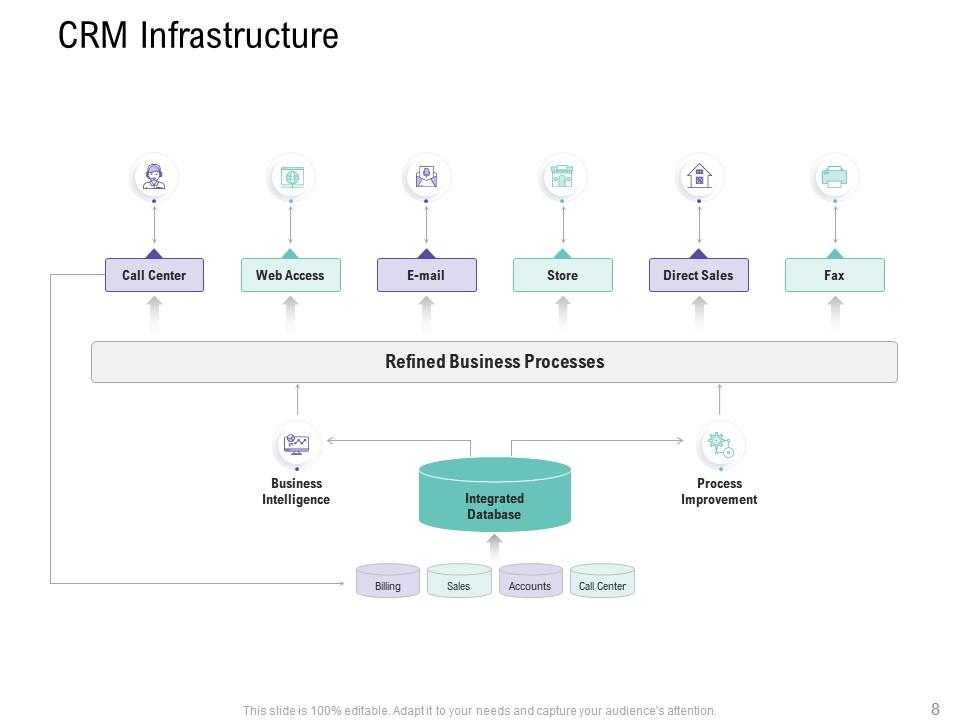
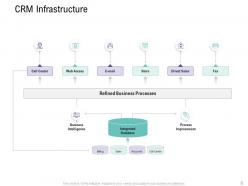
Slide 8: This slide presents CRM Infrastructure
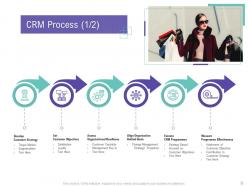
Slide 9: This slide presents CRM Process (1/2)
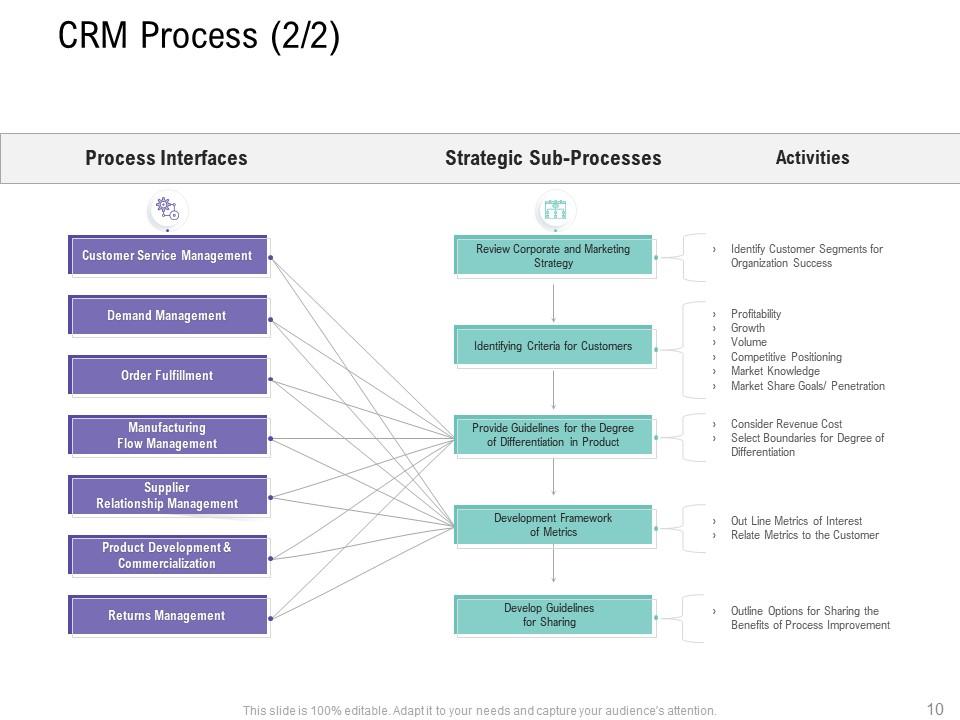
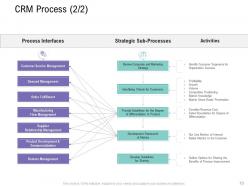
Slide 10: This slide presents CRM Process (2/2)
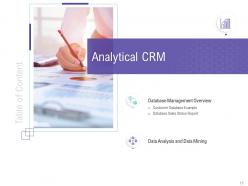
Slide 11: This slide presents Analytical CRM
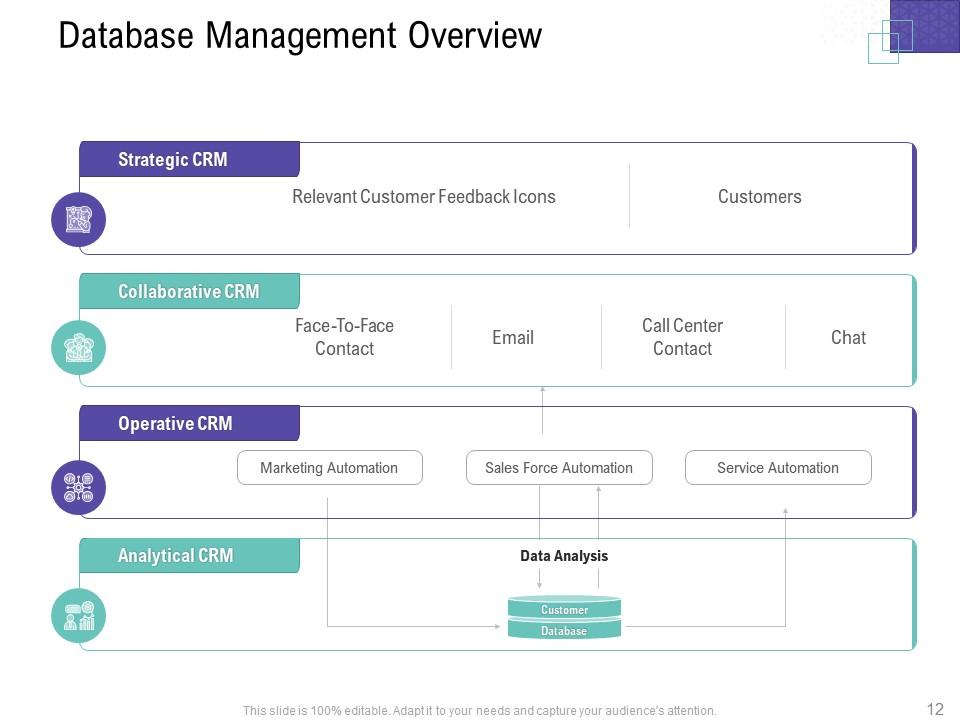
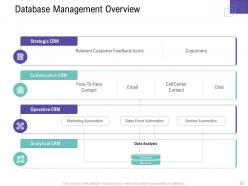
Slide 12: This slide presents Database Management Overview.
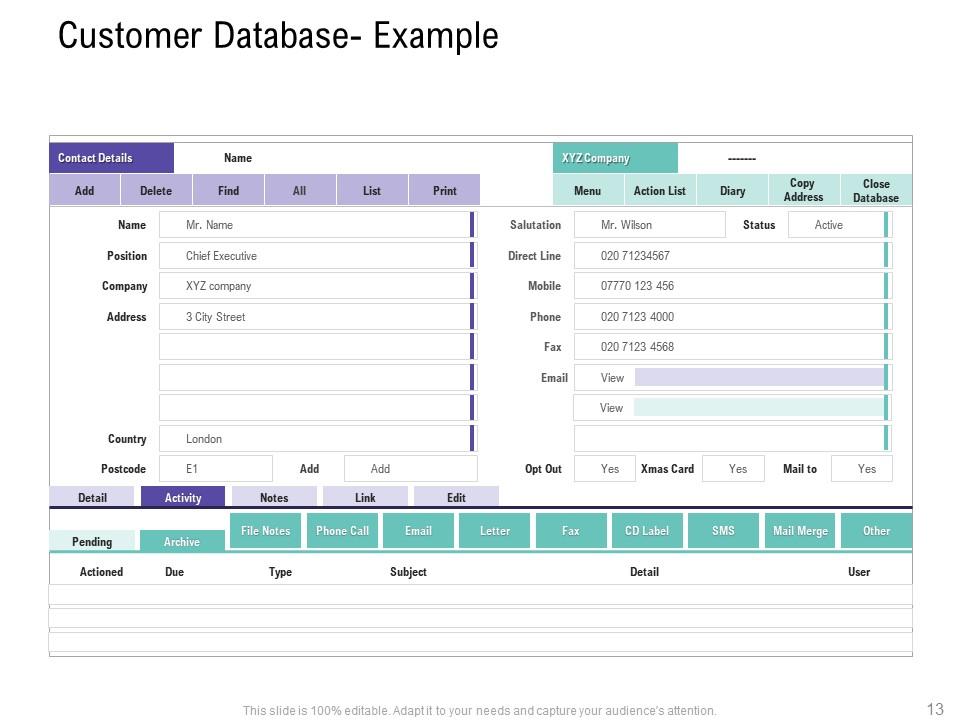
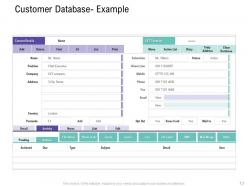
Slide 13: This slide presents Customer Database.
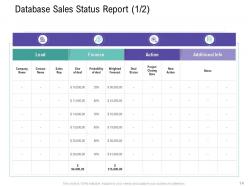
Slide 14: This slide Database Sales Status Report (1/2)
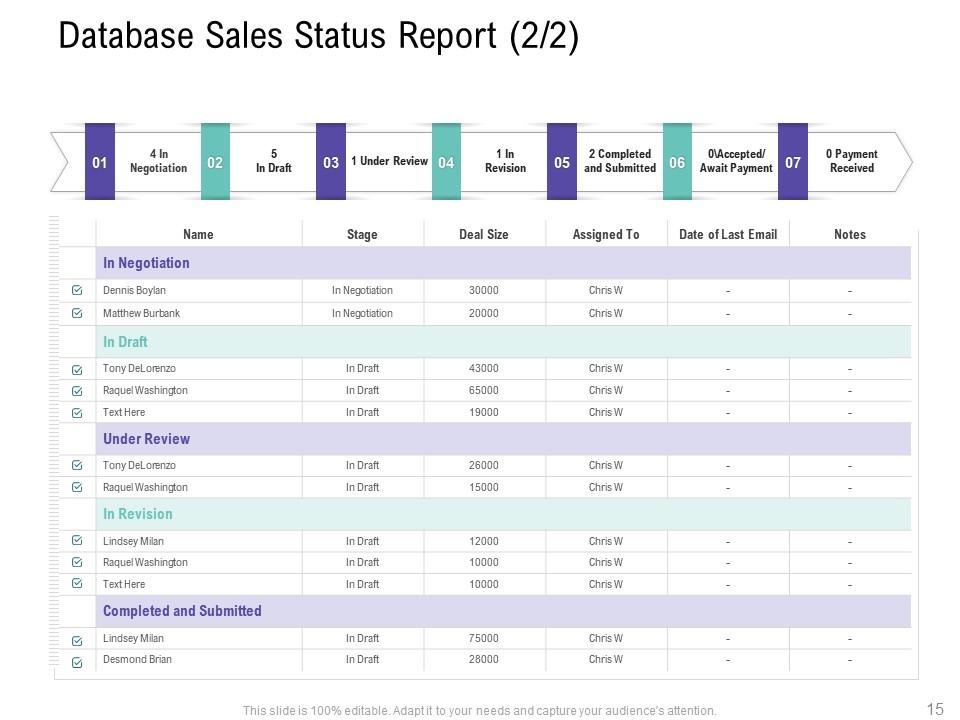
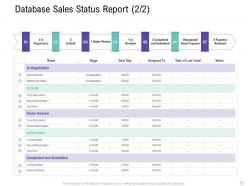
Slide 15: This slide presents Database Sales Status Report (2/2)
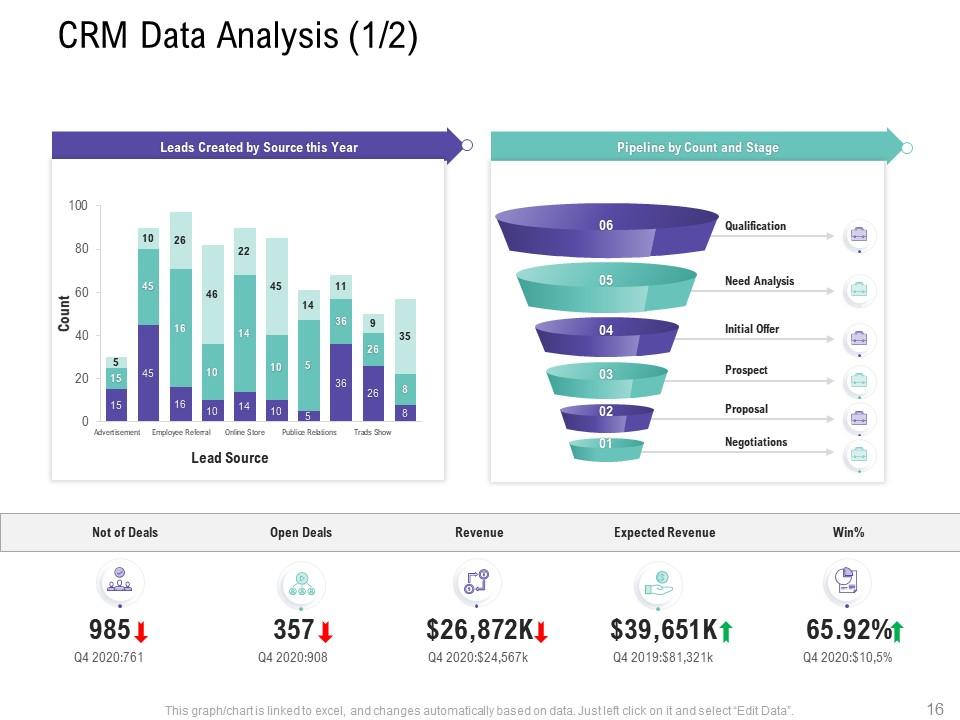
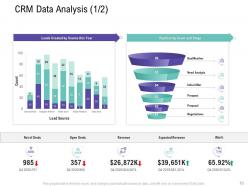
Slide 16: This slide presents CRM Data Analysis (1/2)
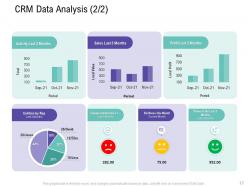
Slide 17: This slide presents CRM Data Analysis (2/2)
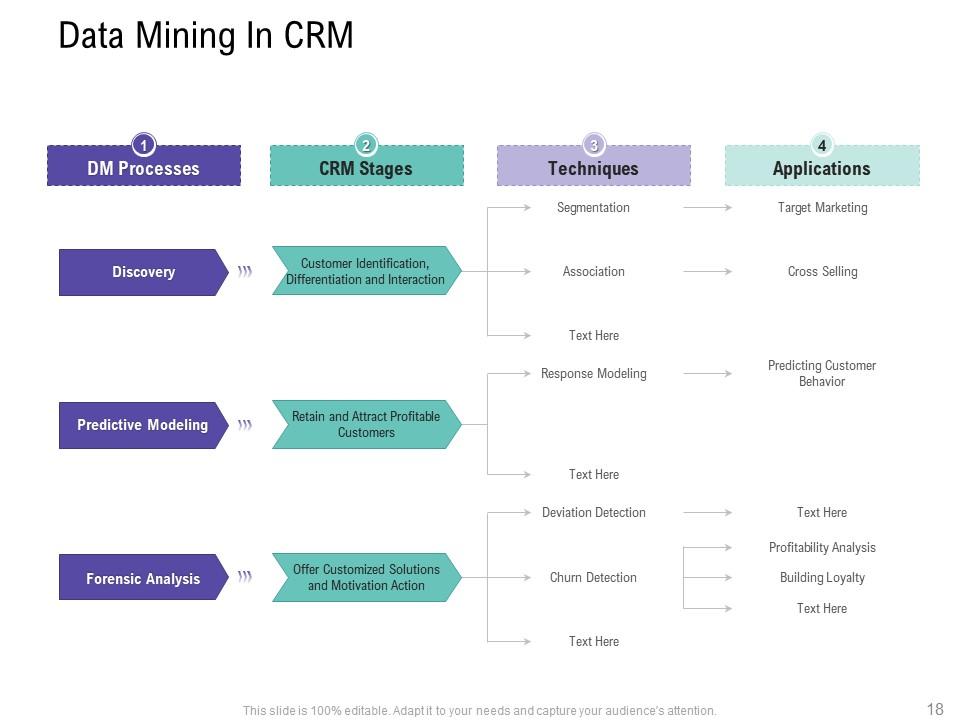
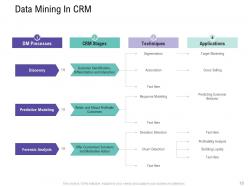
Slide 18: This slide presents Data Mining In CRM.
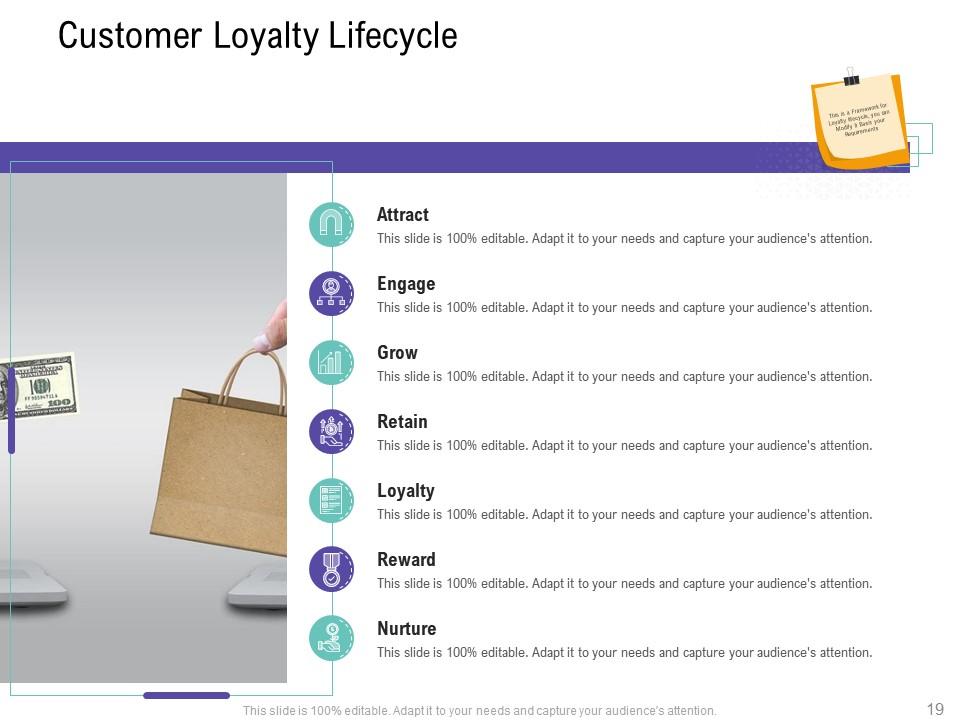
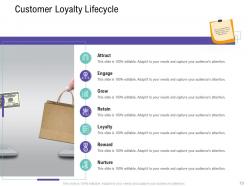
Slide 19: This slide presents a Framework for Loyalty lifecycle, you can Modify it Basis your Requirements.
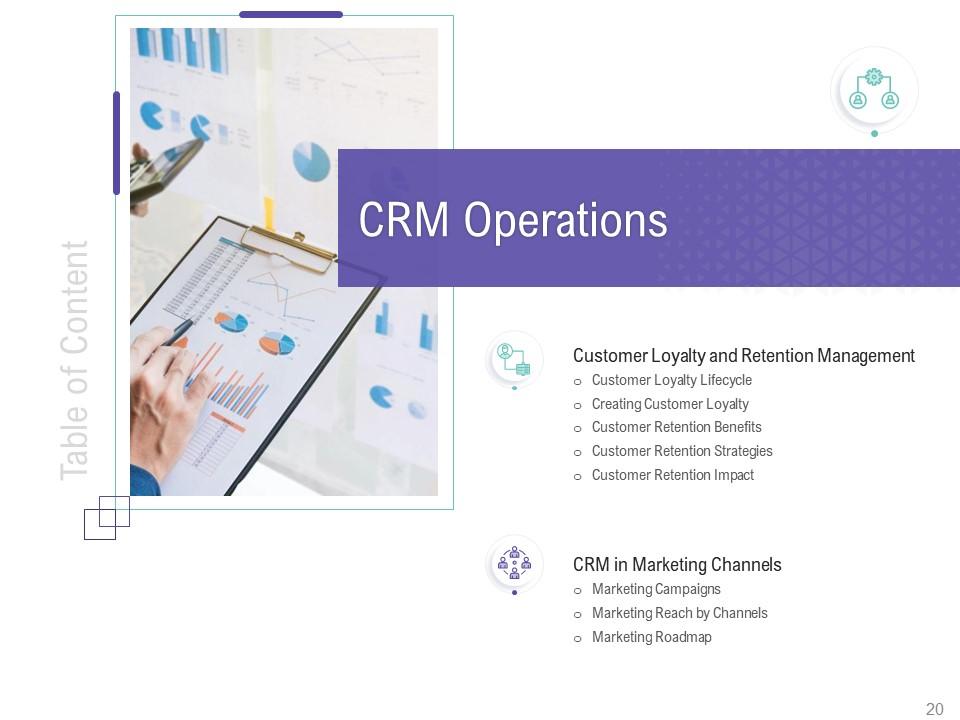
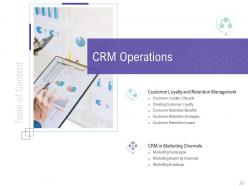
Slide 20: This slide presents CRM Operations.
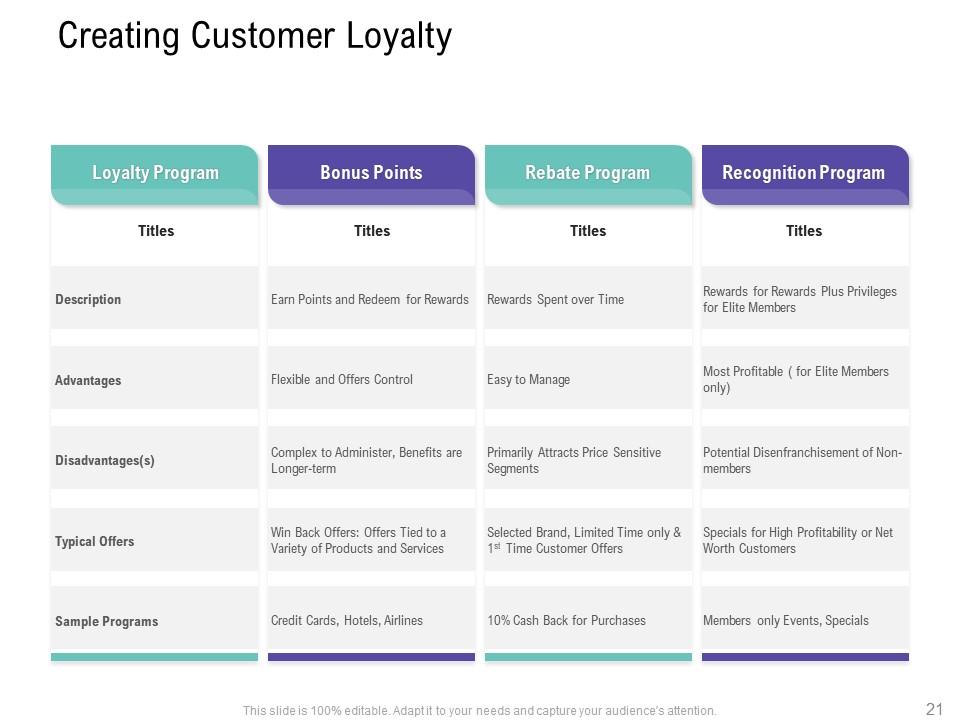
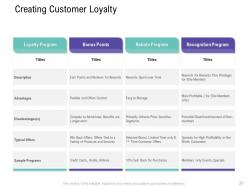
Slide 21: This slide presents Creating Customer Loyalty.
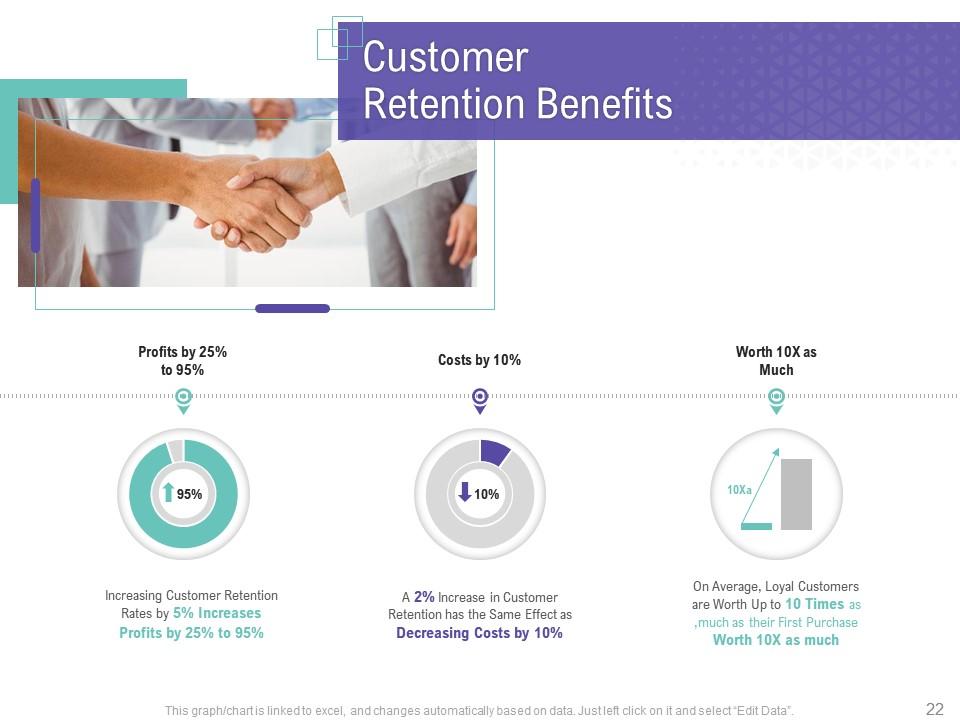
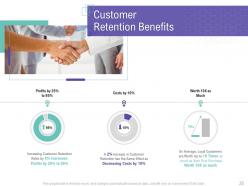
Slide 22: This slide presents Customer Retention Benefits
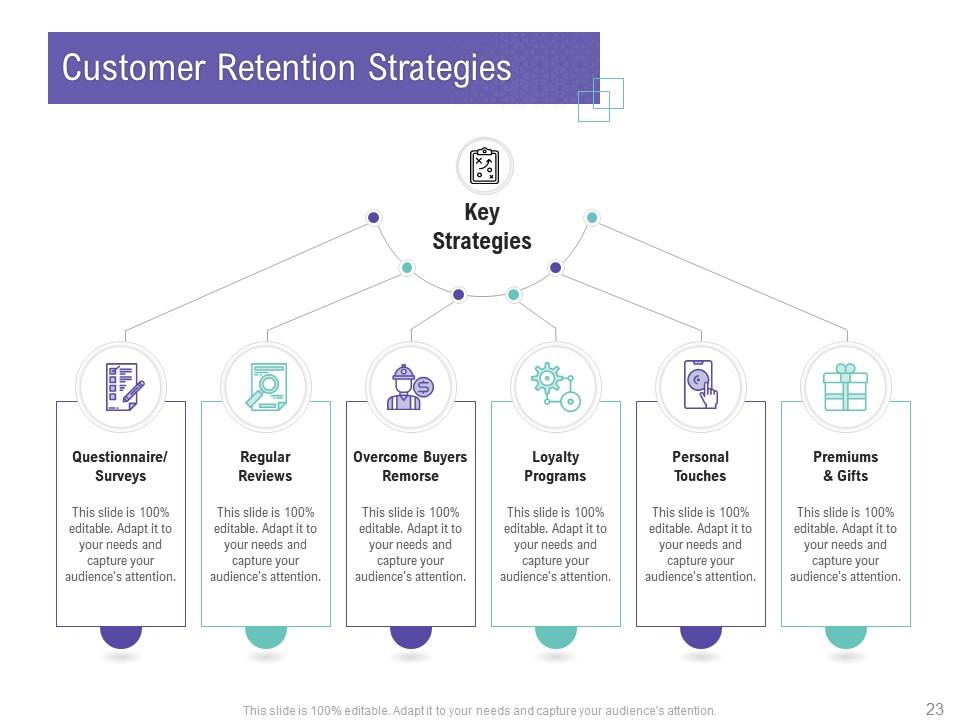
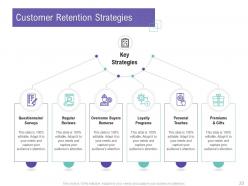
Slide 23: This slide presents Customer Retention Strategies
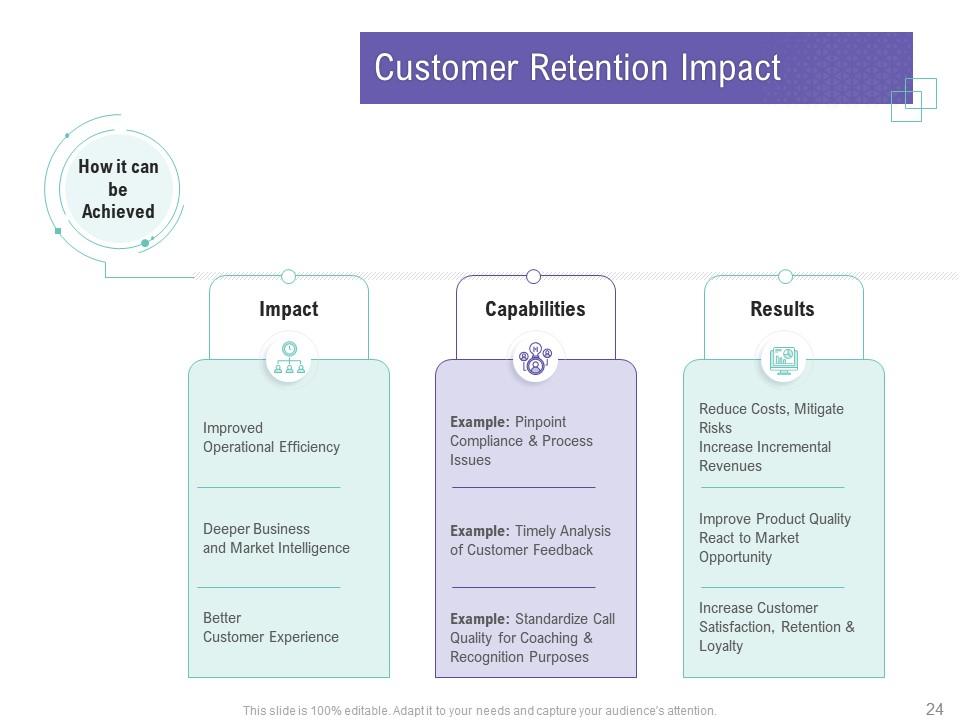
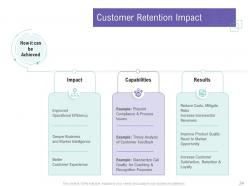
Slide 24: This slide presents Customer Retention Impact
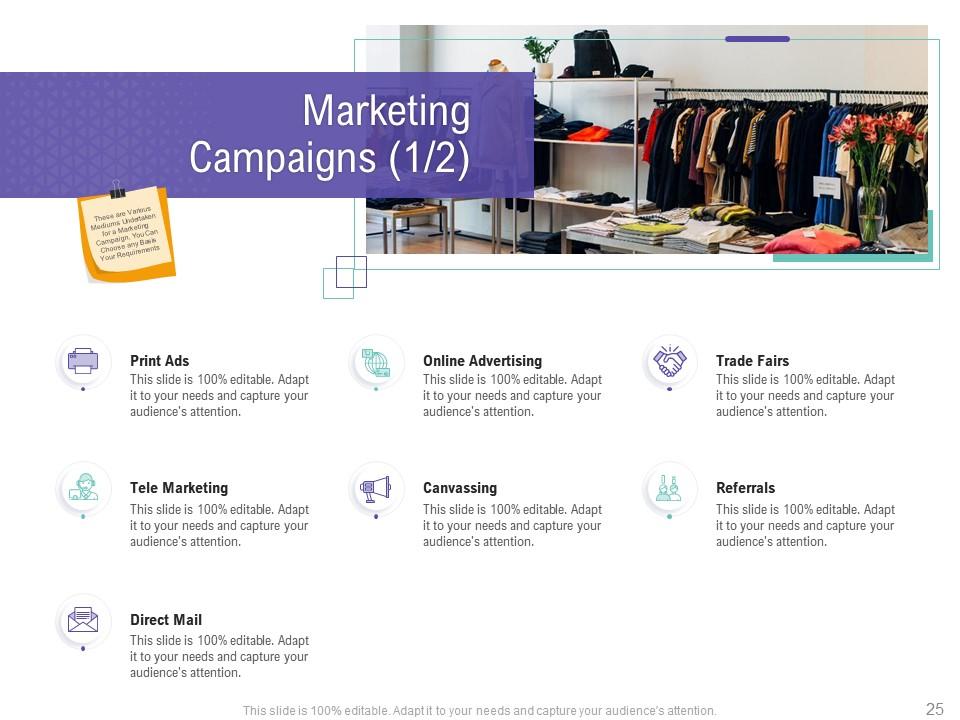
Slide 25: This slide presents Online Advertising
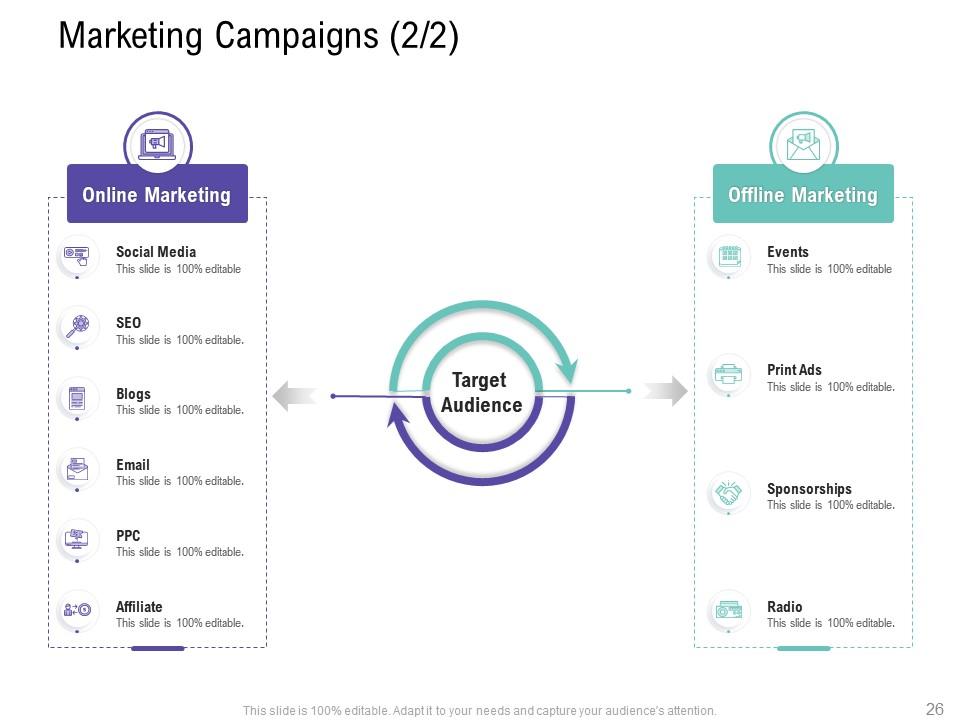
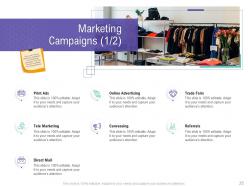
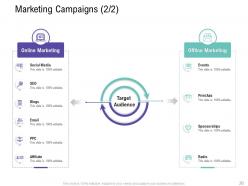
Slide 26: This slide presents Marketing Campaigns
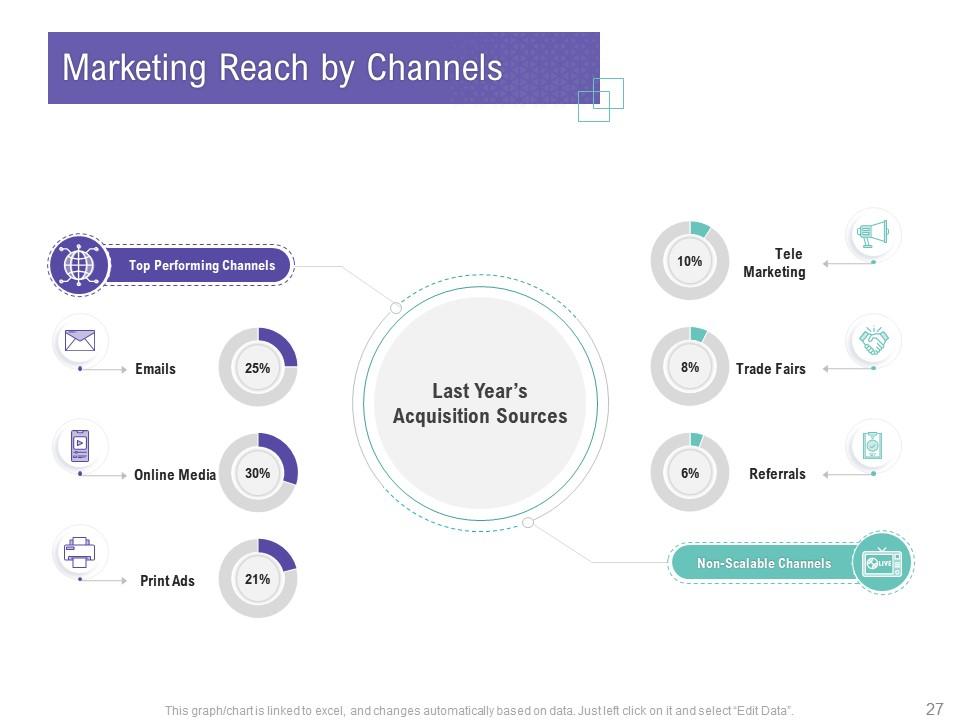
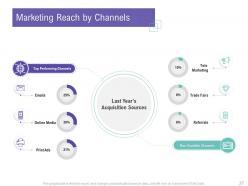
Slide 27: This slide presents Marketing reach by channels.
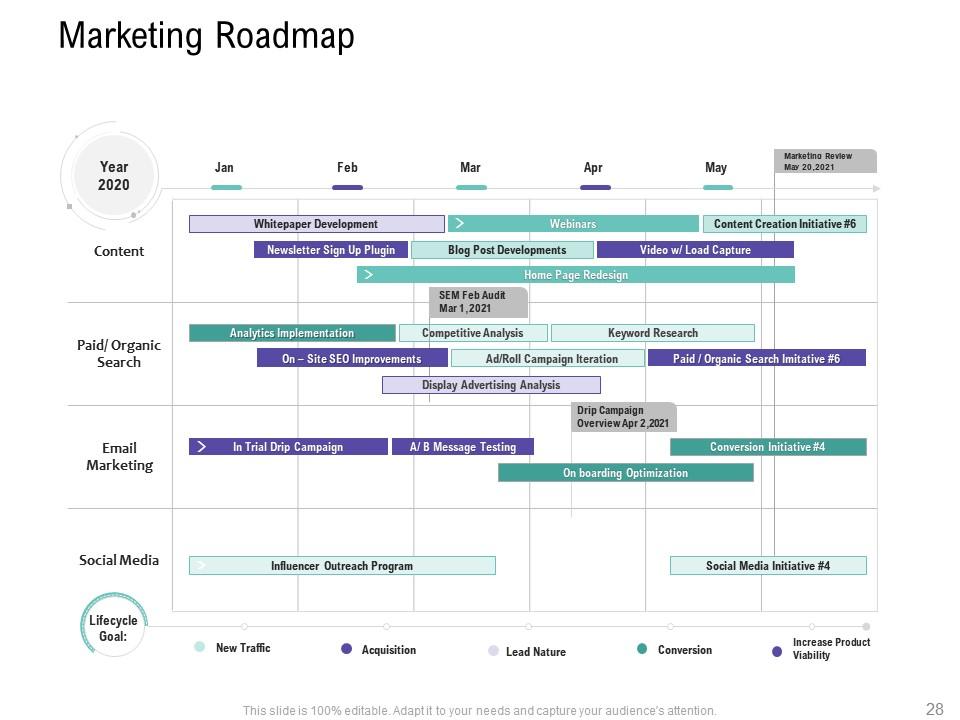
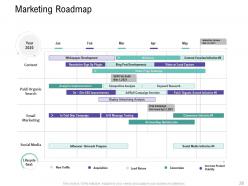
Slide 28: This slide presents Marketing Roadmap.
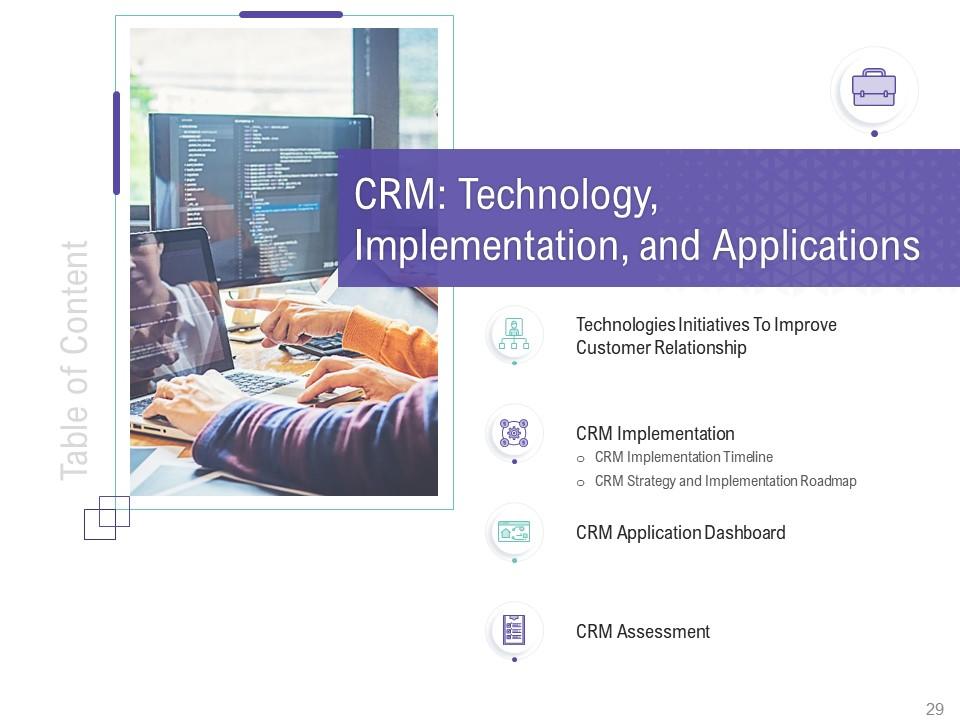
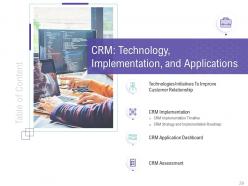
Slide 29: This slide presents CRM: Technology, Implementation and Application.
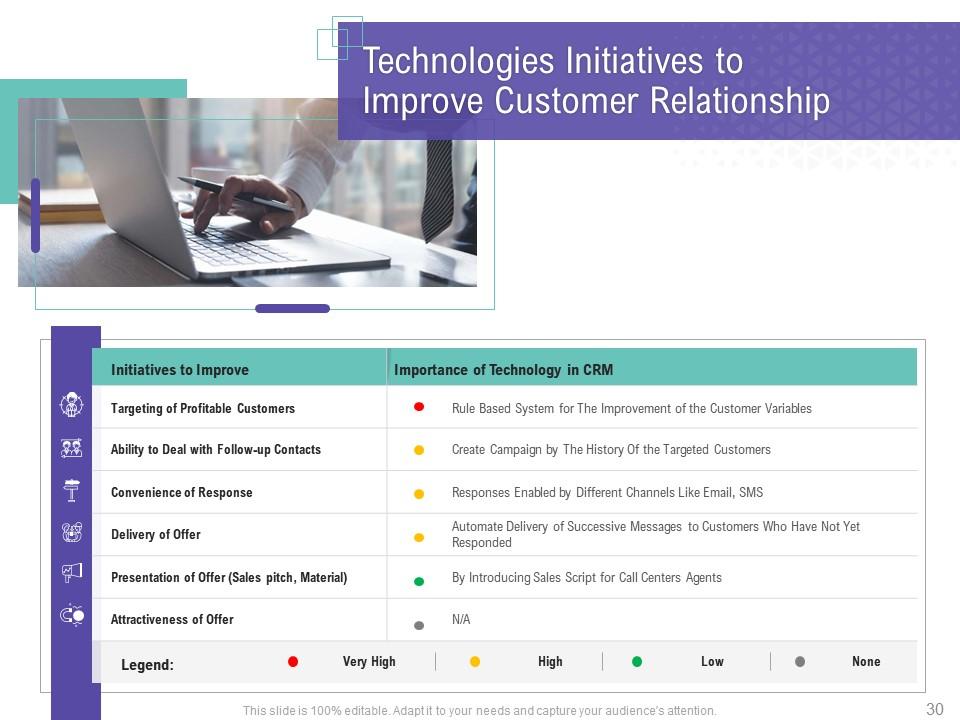
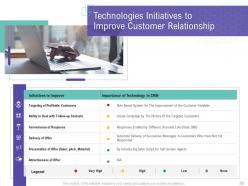
Slide 30: This slide presents Technologies Initiatives to Improve Customer Relationship.
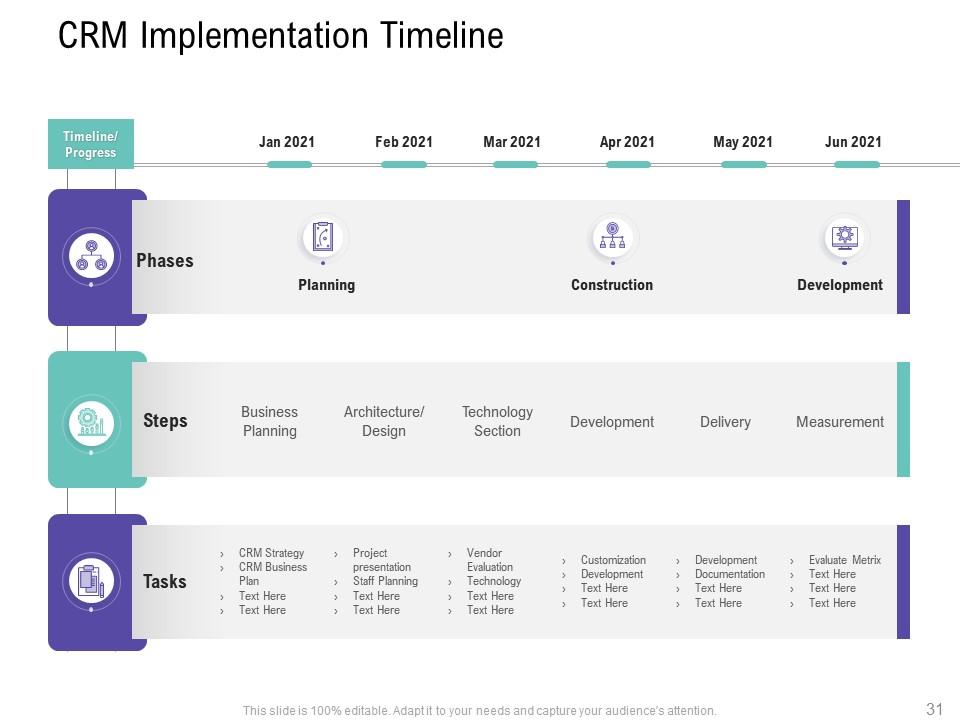
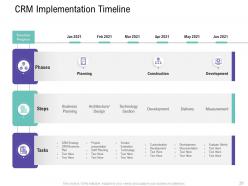
Slide 31: This slide presents CRM Implementation Timeline.
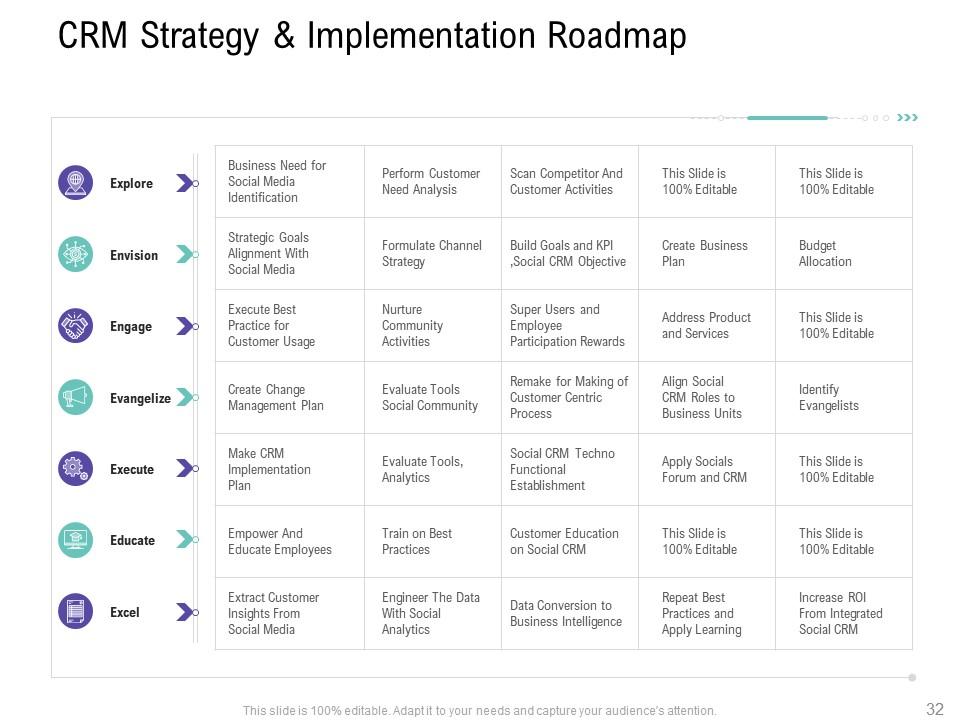
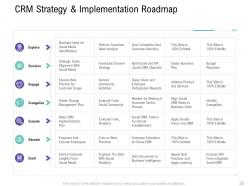
Slide 32: This slide presents CRM Strategy & Implementation Roadmap.
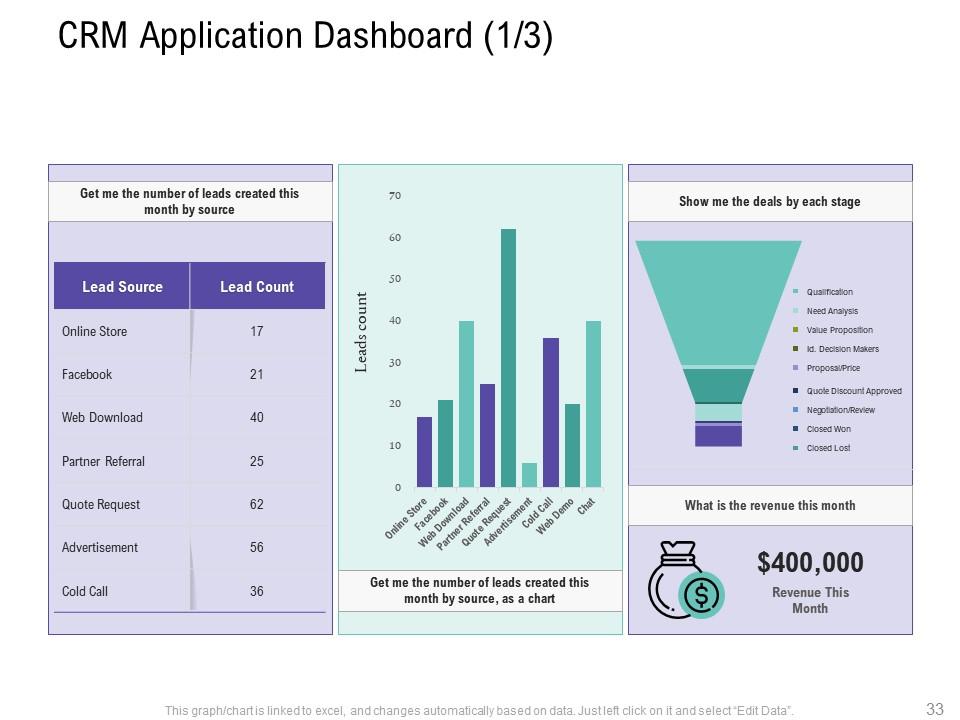
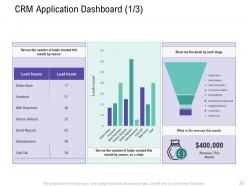
Slide 33: This slide presents CRM Application Dashboard (1/3)
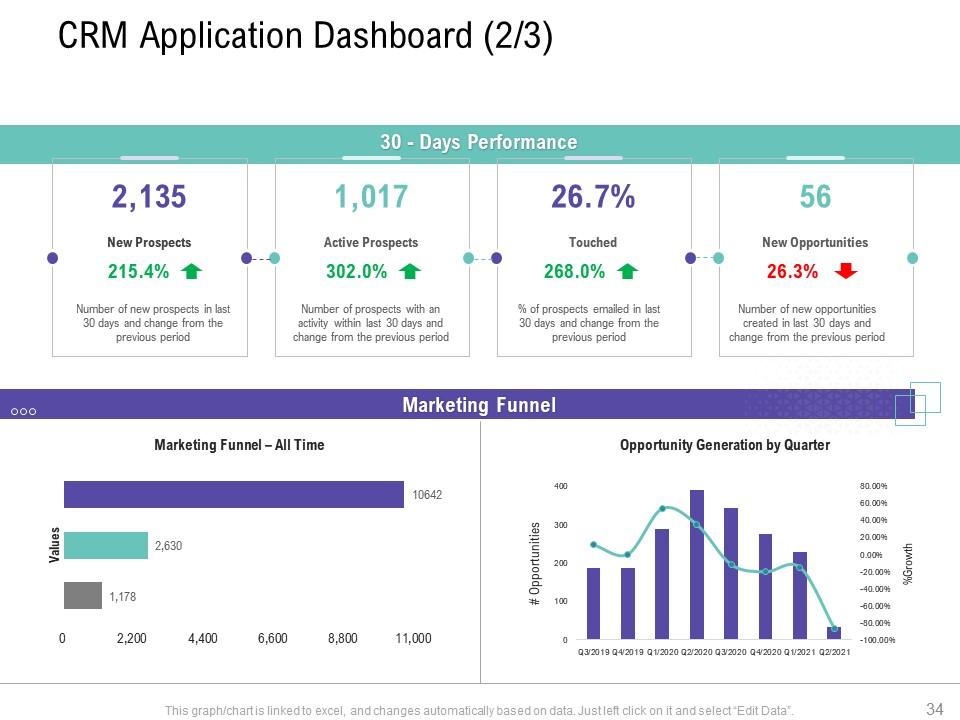
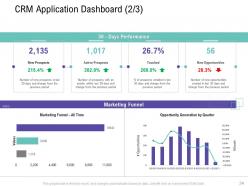
Slide 34: This slide presents CRM Application Dashboard (2/3)
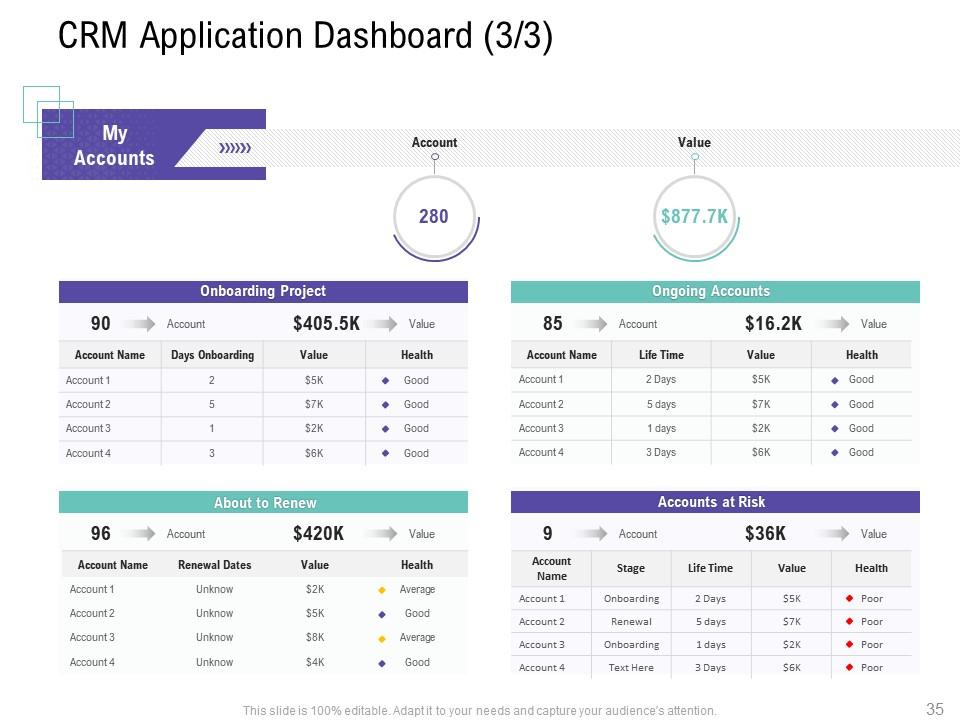
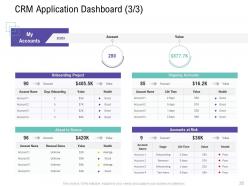
Slide 35: This slide presents CRM Application Dashboard (3/3)
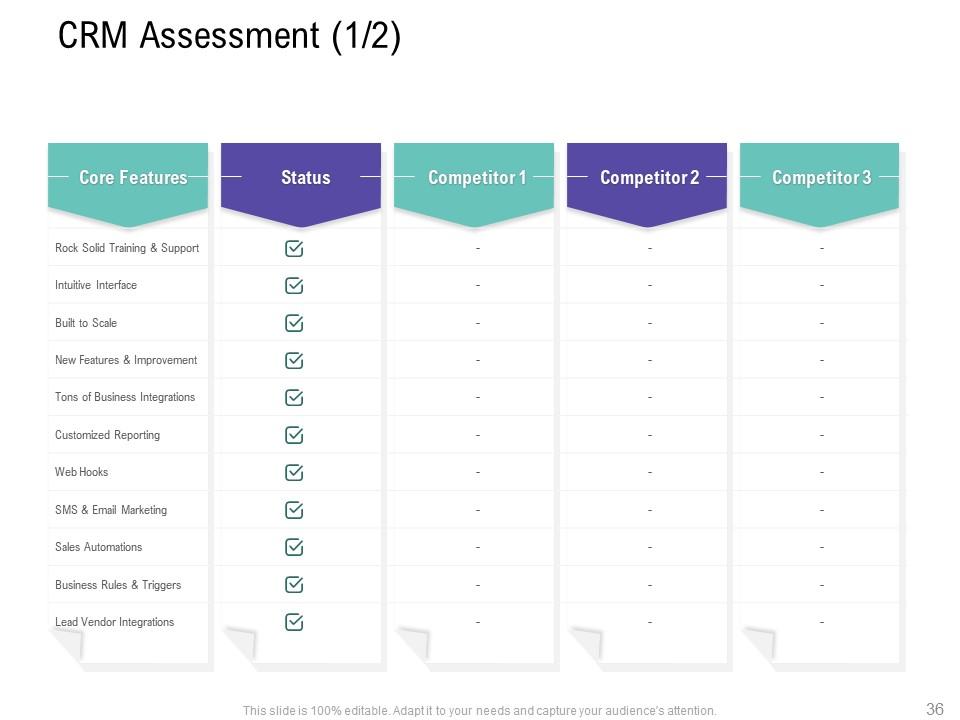
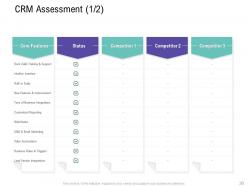
Slide 36: This slide presents CRM Assessment (1/2)
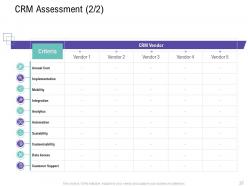
Slide 37: This slide presents CRM Assessment (2/2)
Slide 38: This slide presents KPI’s Metrics
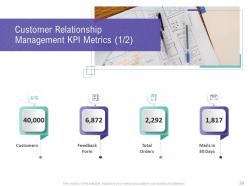
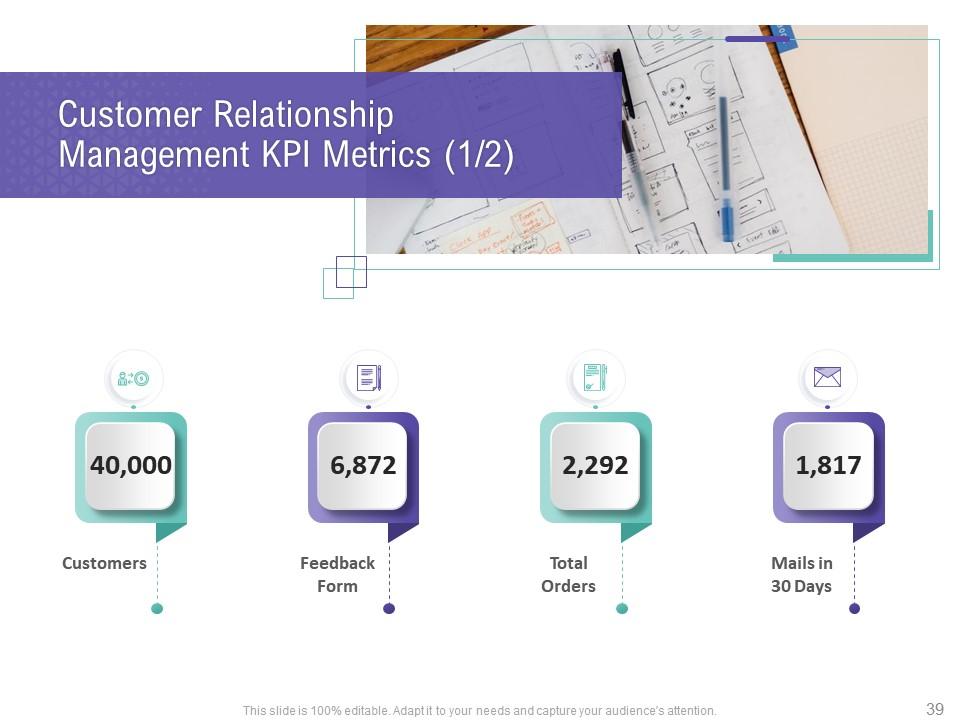
Slide 39: This slide presents Customer Relationship Management KPI Metrics (1/2)
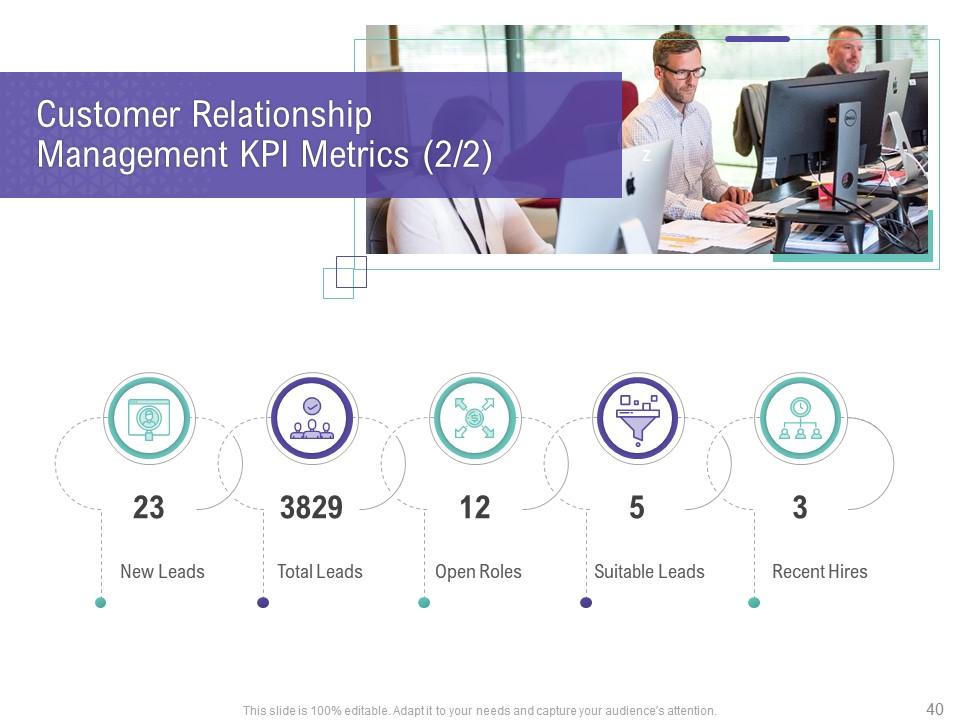
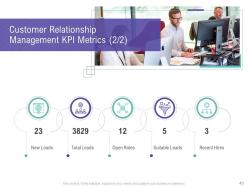
Slide 40: This slide presents Customer Relationship Management KPI Metrics (2/2)
Slide 41: This is an Icon slide. Use it as per your needs.
Slide 42: This is an Additional Slide.
Slide 43: This is Our Mission slide to state your mission and vision.
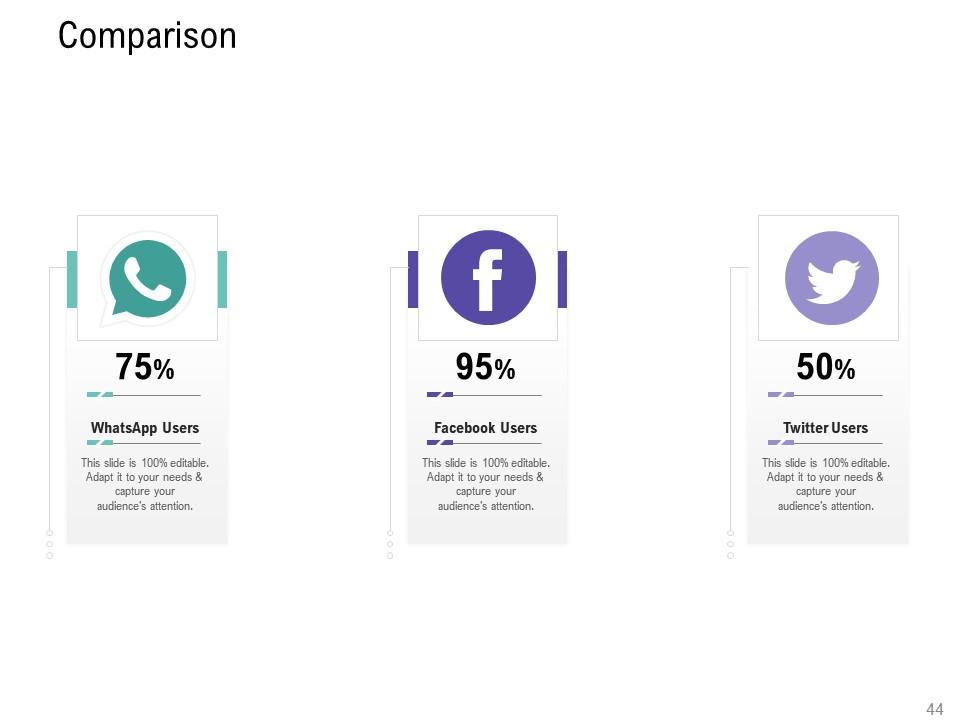
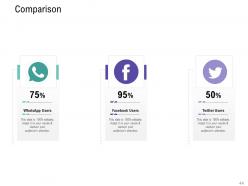
Slide 44: This is a Comparison slide that can be used to conduct comparison between different elements.
Slide 45: This is a Roadmap slide that can be used to present chronological sequence of events.
Slide 46: This is a Timeline slide that can be used to present series of events.
Slide 47: This is a Thank You slide for acknowledgment.

FAQs for Customer relationship management process

Effective CRM systems include contact management, sales pipeline tracking, automated marketing campaigns, customer service ticketing, and comprehensive analytics dashboards. These features streamline operations by centralizing customer data, automating follow-ups, and providing actionable insights, with many organizations finding that integrated CRM platforms ultimately deliver improved customer retention and accelerated sales cycles.

CRM software improves customer retention by tracking customer interactions, personalizing communications, and identifying at-risk accounts through predictive analytics. These systems enable businesses to deliver targeted marketing campaigns, resolve issues proactively, and provide consistent service experiences across all touchpoints, with many companies finding that automated follow-ups and data-driven insights significantly enhance customer loyalty and reduce churn rates.

CRM enhances customer experience by centralizing customer data, tracking interaction history, personalizing communications, and enabling faster response times across all touchpoints. Through integrated platforms, businesses streamline support processes, anticipate customer needs, and deliver consistent service quality, with many retail and financial services organizations finding significantly improved satisfaction rates and stronger customer loyalty.

Small businesses can leverage CRM solutions through cloud-based platforms, freemium models, and scalable pricing tiers that align with their growth stages and budget limitations. These cost-effective approaches enable startups and small enterprises to automate customer interactions, streamline sales processes, and enhance customer retention without significant upfront investments, ultimately delivering improved customer experiences and competitive advantage.

Cloud-based CRM systems offer subscription pricing, automatic updates, remote accessibility, and scalable storage, while on-premise solutions provide direct data control, customization flexibility, and internal infrastructure management. Many organizations find that cloud solutions streamline implementation and reduce IT overhead, though enterprises with strict compliance requirements often leverage on-premise systems for enhanced security control.

CRM data analytics contributes to informed decision-making by transforming customer interactions, purchase patterns, and behavioral data into actionable insights for strategic planning. Through predictive analytics and trend analysis, organizations can optimize sales forecasting, enhance customer segmentation, and improve resource allocation, with many companies finding that data-driven CRM strategies ultimately deliver higher conversion rates and stronger customer retention.

**INPUT**: What strategies can be implemented to ensure high user adoption of CRM software? **OUTPUT**: Effective CRM adoption strategies include comprehensive user training, workflow customization, executive sponsorship, gradual rollout phases, and ongoing support systems. These approaches streamline implementation by addressing resistance early, aligning features with daily tasks, and demonstrating clear value, with many organizations finding that combining change management with regular feedback loops ultimately delivers higher engagement rates and sustainable usage across sales teams. [Word count: 60]

Integrating social media with CRM enhances customer interactions by centralizing communications, tracking engagement across platforms, and providing real-time sentiment analysis. This combination enables businesses to respond faster to inquiries, personalize outreach based on social behavior, and identify potential issues before they escalate, ultimately delivering more responsive customer service and stronger relationship management.

Key CRM metrics include customer acquisition cost, customer lifetime value, retention rates, sales conversion rates, and customer satisfaction scores. These metrics enable businesses to assess relationship quality, revenue impact, and operational efficiency, with many organizations finding that tracking lead response times, pipeline velocity, and support resolution rates ultimately delivers enhanced customer experiences and sustained competitive advantage.

CRM systems can be tailored through industry-specific modules, customizable workflows, specialized data fields, integrated compliance tools, and sector-relevant automation features. Financial services leverage loan tracking capabilities, healthcare organizations utilize patient communication tools, and retail businesses implement loyalty program integrations, while manufacturing companies benefit from supply chain visibility, ultimately delivering enhanced operational efficiency and stronger customer relationships.

CRM implementation challenges include data migration complexities, user adoption resistance, inadequate training, poor system integration, and insufficient customization for specific business processes. While these obstacles can initially impact productivity and ROI, organizations that address them through comprehensive change management, thorough staff training, and phased rollouts ultimately achieve enhanced customer relationships and streamlined operations.

CRM tools support personalized marketing campaigns by collecting comprehensive customer data, segmenting audiences based on behaviors and preferences, and automating targeted content delivery across multiple channels. Through advanced analytics and integration capabilities, retail businesses and financial services can create highly relevant messaging, track engagement metrics, and optimize campaign performance, ultimately delivering improved conversion rates and stronger customer relationships.

Mobile CRM technology enhances field sales productivity by enabling real-time customer data access, streamlined lead management, automated activity tracking, instant quote generation, and seamless communication with headquarters. Through cloud-based platforms, sales representatives can update opportunities immediately, access product catalogs offline, and close deals faster, while managers gain visibility into field activities, ultimately delivering shorter sales cycles and improved customer relationships.

**INPUT**: What ethical considerations should businesses keep in mind when using CRM data? **OUTPUT**: Ethical CRM data considerations include customer consent, data transparency, privacy protection, security safeguards, and responsible usage policies. These practices enhance customer trust by ensuring clear communication about data collection, providing opt-out options, and implementing robust security measures, with many organizations finding that ethical data handling ultimately strengthens customer relationships and competitive advantage. **Word count: 55 words**

CRM automation streamlines repetitive tasks like data entry, lead scoring, follow-up scheduling, and report generation, allowing customer-facing employees to focus on relationship building and strategic interactions. Through automated workflows, sales and service teams can prioritize high-value activities like personalized consultations and complex problem-solving, ultimately delivering enhanced customer experiences and stronger business relationships.

Ratings and Reviews

87% of 100
Review Form
Write a review
Most Relevant Reviews
  1. 100%

    by Jack Johnson

    Excellent products for quick understanding.
  2. 100%

    by Cory Reynolds

    Best Representation of topics, really appreciable.
  3. 80%

    by Darrin Porter

    Great experience, I would definitely use your services further.
  4. 100%

    by Joe Thomas

    Very unique, user-friendly presentation interface.
  5. 80%

    by Darius Webb

    Unique design & color.
  6. 80%

    by James Lee

    Informative design.
  7. 80%

    by Dan Marshall

    Great designs, really helpful.
  8. 80%

    by Brown Murphy

    Unique and attractive product design.
  9. 80%

    by Douglass Riley

    Great quality slides in rapid time.

9 Item(s)

per page: