Customer Satisfaction Vs Customer Delight Edu Ppt
Try Before you Buy Download Free Sample Product
Audience
Editable
of Time
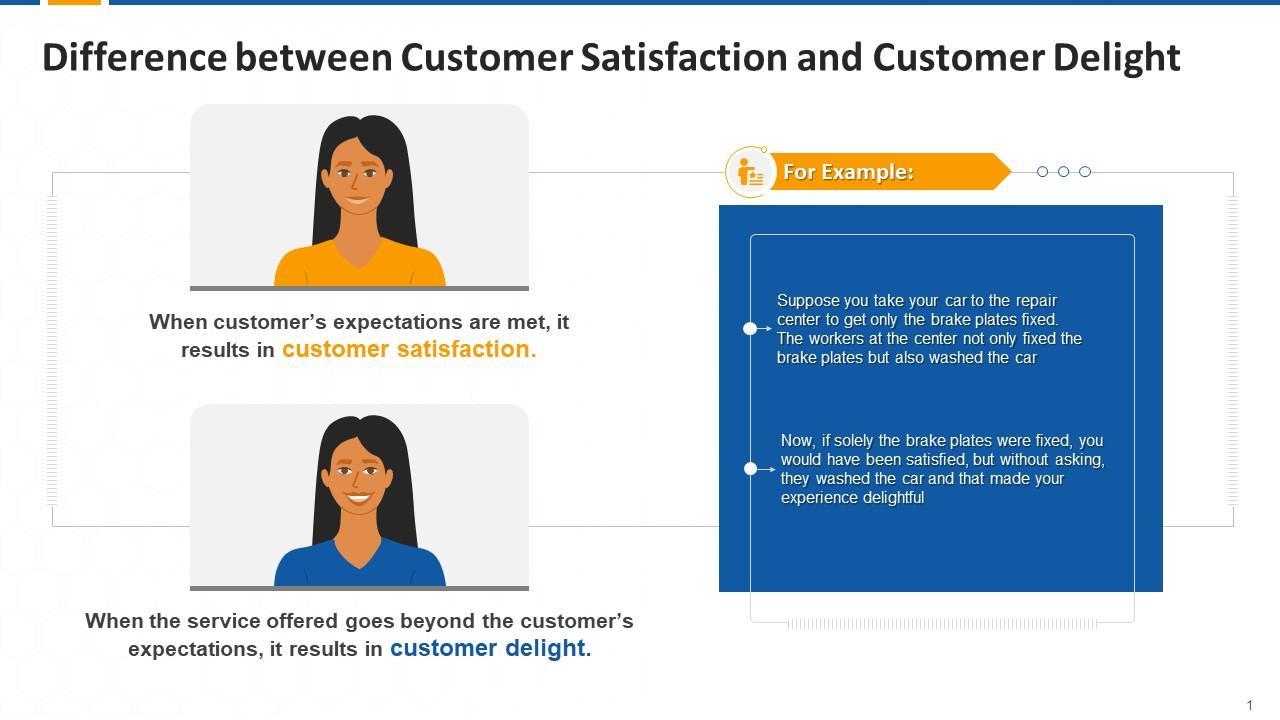
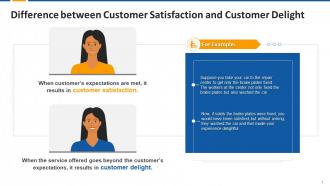
The purpose of this slide is to highlight how customer satisfaction is different from customer delight. It also contains an example to explain the same.
People who downloaded this PowerPoint presentation also viewed the following :
Customer Satisfaction Vs Customer Delight Edu Ppt with all 17 slides:
Use our Customer Satisfaction Vs Customer Delight Edu Ppt to effectively help you save your valuable time. They are readymade to fit into any presentation structure.
FAQs for Customer Satisfaction Vs Customer
Honestly, it's all about getting the basics right everywhere customers interact with you. Your website needs to load fast - slow pages are instant deal-breakers. Make everything feel personal too, like you actually remember what they bought last time. I'm obsessed with proactive updates - send shipping info before they start wondering where their stuff is. Map out where people get frustrated in your process first though. Short interactions work better than long ones. Fix those pain points and you're already ahead of most companies who just wing it.
Dude, personalization is a game changer - boosts customer satisfaction by like 20% and gets way more people coming back. People actually notice when you remember their stuff or suggest things they'd actually want. Makes them feel less like a transaction, you know? I've seen businesses totally transform just by using customer data smartly - better product recs, timing emails right, that kind of thing. Though honestly, start with something simple like personalizing your emails first. Don't go crazy trying to do everything at once. When customers feel like you actually "get" them, that's when the real loyalty kicks in.
Honestly, customer feedback is your best detective tool for finding where things go wrong. People will straight-up tell you in surveys and reviews - like if your checkout's broken or support takes forever. Social media's even better because nobody holds back there lol. Sort all the complaints into categories first, that makes it less overwhelming. Quick wins are where I'd start - fix the easy stuff to get your team pumped. But here's the thing that really matters: actually tell customers when you've fixed their issue. They'll remember you listened and stick around way longer.
Look, tech is basically running the whole customer experience game now. Every time someone hits your website, uses your app, or even talks to a chatbot - that's all shaping how they see your brand. People want everything to work smoothly across all these different platforms, which honestly gets pretty crazy to manage. Mobile, social media, all those smart devices... there's touchpoints everywhere. But here's the thing - don't just throw tech at problems hoping it'll stick. Map out where your customers actually get frustrated first. Then pick tools that genuinely fix those headaches instead of creating new ones.
Okay so you'll definitely want to track the usual suspects - NPS, CSAT scores, customer effort scores. Those give you decent baselines. But honestly? The real insights come from actually talking to people. Customer interviews are huge, plus digging into support tickets to see what people are complaining about. Social media mentions too if you have the bandwidth. Retention rates matter more than people think - happy customers don't bail after three months. I'd set up some kind of monthly review where you actually look at this stuff with your team, not just let it sit in a spreadsheet somewhere. When numbers drop, that's when you dive deep into the why.
Dude, most companies totally think they're nailing this but they're really not. Your biggest win? Getting all your systems to actually talk to each other - like when someone starts shopping on your app, then calls support, they shouldn't have to repeat their whole story. Real-time sync is everything. Your team needs access to the same customer info whether it's chat, phone, or in-person. I swear, nothing's more annoying than explaining yourself three times to the same company. Fix your data setup first though - that's honestly where everyone screws up. Everything flows better after that.
Dude, stories are magic for this stuff. Makes everything feel way more human instead of just trying to sell someone something. I'll share a quick story about another customer who had the same headache, or sometimes even my own screwups - honestly, people relate to that more than you'd think. Facts and numbers? They forget those instantly. Stories stick. Just keep them short and actually relevant to what they're dealing with. Don't shoehorn one in if it feels weird. But when you find that perfect little story that clicks with their problem, you'll literally watch them relax and start trusting you.
Okay so first thing - own up to whatever happened, no excuses. People can tell when you're being fake about it. Let them vent the whole story before you jump in trying to fix things. That's honestly where most businesses mess up. Give them something real to make up for it - money back, new product, discount for next time, whatever makes sense. Then (and this part matters) actually check back with them later to see if they're good. Most customers will totally give you another shot if you don't act like a robot about fixing it. It's basically free marketing if you do it right.
Okay so training is literally everything when it comes to customer service - like, I can't stress this enough. Your team needs to actually know what they're selling and how to talk to people without sounding like robots. I've watched companies with great products completely tank because their staff was clueless (honestly made me cringe). Think about it - employees are basically your brand walking around. Figure out where your biggest training gaps are first. Even fixing communication skills will bump up those satisfaction scores pretty fast. Oh, and make sure they can actually solve problems instead of just transferring people around endlessly.
Definitely start with NPS and customer satisfaction scores - those two will tell you the most. Customer effort score is huge too, though honestly a lot of people sleep on that one. Track your retention rates and support ticket volume while you're at it. Oh, and first-call resolution if you do phone support. I'd stick to maybe 4-5 metrics max though. It's so easy to go overboard and then you're drowning in spreadsheets but not actually improving anything. Pick the ones that matter for your specific business and just... actually look at them regularly. You can always add more weird metrics later once you've got the basics down.
Honestly, just talk to people like they're actual humans. Reply to comments fast, ask questions in your posts - stuff that gets them talking back. Behind-the-scenes content works great too because everyone's so over that polished corporate vibe. Try polls and live videos instead of just posting random stuff into the void. Oh, and repost customer photos when you can - makes them feel special. Pick one platform where your people actually are (don't spread yourself everywhere) and focus on being genuinely useful there. Way better than trying to be everywhere at once.
Honestly, AI chatbots are killing it right now - they're getting weirdly good at predicting what customers want before they even complain. Companies are using real-time sentiment analysis too, which catches angry customers instantly. Voice assistants handle way more complex stuff now. AR is pretty cool for trying on clothes virtually, though I'm still skeptical about the furniture thing working well. Predictive analytics reduces so much friction. I'd look at your current customer touchpoints first and see where you can make things more anticipatory. Oh, and the personalization engines are nuts these days.
So customer journey mapping is basically tracking every single interaction someone has with your business - like from when they first Google you to calling support six months later. What's wild is how many broken spots you'll find that you had no clue about. You can see exactly where people get annoyed or confused and just... leave. Honestly, some of the friction points are so obvious once you map them out, you'll wonder how you missed them. The best part? You don't have to fix everything at once - just tackle the worst pain points first and watch your customer experience actually improve.
Dude, companies are doing some wild stuff these days. Zappos randomly upgrades people to overnight shipping without asking. Hotels stalk your Instagram then leave notes about your hobbies (weird but it works). Restaurants text you when tables are ready so you don't have to stand there like an idiot. Sephora's AR thing where you try makeup virtually is pretty genius too. Honestly, the trick is spotting those annoying moments customers deal with but never complain about. Just pick one random step in your process and think - how could we make this way less painful? Sometimes the smallest changes hit different.
Make customer impact visible company-wide, not just to support teams. I'd share customer stories in all-hands and tie customer metrics to every department's goals. Have non-customer teams actually talk to customers too - I've seen finance teams sit in on support calls and it's pretty eye-opening. Train managers to ask "how does this help customers?" in meetings. When your accounting team gets how faster invoicing improves customer experience, they'll naturally care more about getting it right. It's really about connecting daily work to real customer outcomes.
-
The PPT layout is great and it has an effective design that helps in presenting corporate presentations. It's easy to edit and the stunning visuals make it an absolute steal!Â
-
A big thanks to SlideTeam! An incredible and diverse library of templates helped me with my business project presentation.