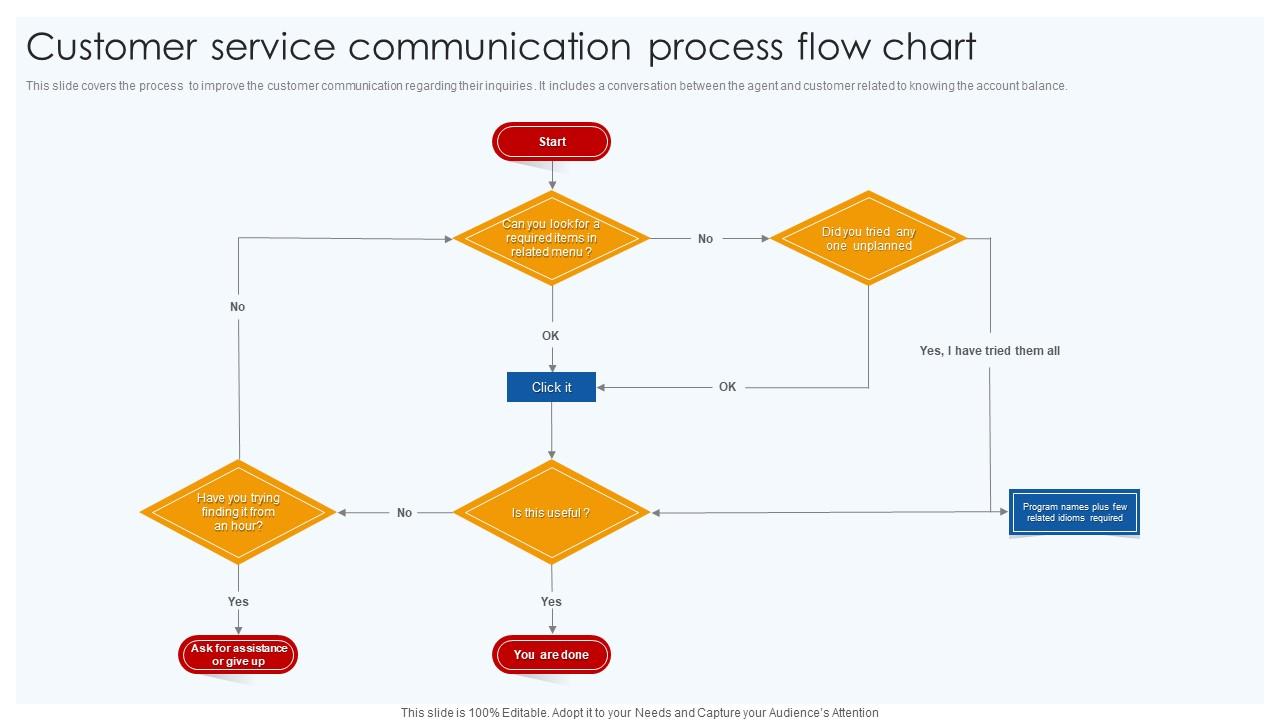
Customer Service Communication Process Flow Chart
Try Before you Buy Download Free Sample Product
Audience
Editable
of Time
This slide covers the process to improve the customer communication regarding their inquiries . It includes a conversation between the agent and customer related to knowing the account balance.
People who downloaded this PowerPoint presentation also viewed the following :
Customer Service Communication Process Flow Chart with all 6 slides:
Use our Customer Service Communication Process Flow Chart to effectively help you save your valuable time. They are readymade to fit into any presentation structure.
FAQs for Customer Service Communication
Honestly, just focus on actually listening instead of waiting for your turn to speak. Use normal words too - frustrated customers don't want to decode corporate jargon. Your tone is huge whether you're writing or talking. I always acknowledge how they're feeling before diving into fixes. And this might sound obvious but... if you promise to call Tuesday, actually call Tuesday! People notice that stuff. The whole empathy thing isn't just being nice - it genuinely works. Master these basics first and you'll handle most situations just fine.
Honestly, it's all about not sounding like a robot when you talk to customers. Frustrated energy? They'll throw it right back at you. But when you're actually warm and talk like a normal person, people chill out and work with you way more. Word choice makes a huge difference too - "I'd be happy to help" hits different than just "I can do that." Shows you give a damn, you know? Try to match how they're communicating while staying positive. Oh, and always focus on solutions rather than problems. Works every time.
Dude, active listening totally changed how I handle customer service calls. Instead of jumping straight into fix-it mode (which I used to do all the time), I actually hear what they're saying first. You catch way more - like emotional stuff and context you'd miss otherwise. Honestly? Just pausing before you respond makes a huge difference. When you repeat their issue back and ask follow-up questions, they feel heard. Builds trust so much faster than steamrolling into solutions. I know it sounds obvious but you'd be amazed what details you pick up when you're not already planning your next move.
Honestly, role-playing scenarios work best - way better than boring lectures. Have your team practice with fake customers so they can mess up without real consequences. Mock interactions for de-escalation, empathy, all that stuff. Body language workshops are solid too since people pick up on your vibe before you even speak. Oh, and make it regular training, not some one-off thing they'll forget next week. I'd start by figuring out where your team struggles most first. We did weekly practice sessions at my old job and people actually got confident pretty fast.
Honestly, the worst thing you can do is sound like a robot reading from a script. Listen to what they're actually saying instead of just waiting for your turn to talk. Don't get all defensive when someone's pissed off - I get it, it's hard not to take it personally sometimes. Never promise stuff you can't actually make happen, and skip the corporate speak. People want straight answers. Also, make them repeat their problem to three different people and they'll lose their minds. Just take decent notes! Stay real with them, admit when something sucks, then focus on fixing it.
Dude, body language is everything in customer service. Like, customers can literally sense when you're annoyed even through the phone - weird but true. Your tone gives you away every time. Face-to-face is even trickier because crossed arms or dodging eye contact screams "I don't want to help you." People subconsciously pick up on this stuff and decide if you actually care. I learned this the hard way lol. Just do a quick mental check of your posture and expression before dealing with customers. Makes a huge difference.
So there's tons you can do with tech for customer stuff. Chatbots handle basic questions 24/7 which is clutch. CRM systems track all your conversations so you actually remember what people said last time - game changer honestly. Video calls work way better than email for complicated issues. Oh and social media monitoring catches problems early before people get really pissed off. You can automate follow-ups too so you're not constantly doing busy work. The trick is figuring out what your customers actually prefer using, not just whatever shiny new tool everyone's hyping up.
Look, the moment something breaks, get out ahead of it fast. Don't make customers discover the mess themselves - that's how you lose people for good. Tell them exactly what went wrong and how you're fixing it. Even if you don't have updates, keep talking to them anyway. Silence makes people think you've given up or don't care. Honestly, I've watched businesses completely tank relationships just by going quiet during crises. The weird thing is, customers will actually trust you MORE after seeing how you handle problems than if everything had worked perfectly from the start.
Honestly, just stay calm and actually listen to what's bugging them - not just the obvious stuff they're complaining about. Say something like "yeah, I'd be annoyed too" to show you get it. Ask questions to figure out the real problem. Half the time they're just having a crappy day and you're getting the worst of it. I always focus on what I can actually help with instead of listing what I can't do. Don't take their attitude personally, even when they're being totally unreasonable. Oh, and write down what happened afterward so your team knows the whole situation.
Weekly team check-ins are your best bet for covering the big stuff. But honestly? The real magic happens when you drop actual customer quotes in a shared Slack channel or doc - like, their exact words. Trust me, hearing "this feature saved me hours" lands so much harder than some watered-down summary. Monthly deep dives help you spot patterns too. The trick is making feedback routine, not crisis-driven. Oh, and whatever feels natural for how your team already communicates - start there and build from it.
Dude, there's so many good options it's kinda overwhelming. CRM platforms like Salesforce or HubSpot are solid for keeping track of conversations. Live chat tools - Intercom and Zendesk Chat are popular ones - let you juggle multiple customers at once. Help desk stuff like Freshdesk puts all your tickets in one spot, which is nice. Oh, and chatbots can handle the boring repetitive questions so your team doesn't lose their minds. Knowledge bases work great for that too. My advice? Figure out what's driving you crazy first, then pick whatever fixes that specific problem. Don't try to solve everything at once.
Honestly, just acknowledge what they're feeling first before jumping into fix-it mode. Say stuff like "That sounds really frustrating" or "I totally get why you'd be stressed about this." I used to mess this up all the time - I'd go straight to solutions without actually listening to the emotion behind their complaint. Super awkward. Mirror how they talk when it feels natural, but ditch the corporate robot voice. Once they feel heard, they're way more willing to work with you on solving whatever went wrong. It's weird how well this works, but people just want to feel understood first.
Okay so basically, when you personalize stuff for customers, they actually feel like you give a damn about them. Use their name, bring up what they bought before - that kind of thing. Nobody wants those generic copy-paste responses that sound like a robot wrote them (honestly, those are the worst). You'll get way better satisfaction scores and people will stick around longer. Plus they'll actually tell their friends about you, which is huge. Oh and issues get solved faster too since you're not just throwing random solutions at them. Start small though - just names and account history will shock you how much it helps.
Oh man, this is so true from my experience. Some cultures are really direct about problems, but others will hint around it and you'll totally miss what they're actually upset about. Time stuff is weird too - like what feels urgent to you might be totally normal pace to them. I've noticed some customers want all the small talk and politeness first, while others just want you to fix their issue and move on. Honestly, the best thing is just matching however they're communicating with you instead of using the same approach every time. You'll figure out their vibe pretty quickly if you pay attention.
Track response times and how long stuff takes to resolve - those are your basics. CSAT and NPS scores matter too, but honestly? First Contact Resolution is probably the most important one. Nobody wants to call back three times for the same issue, it's infuriating. Check sentiment analysis from feedback and have someone review actual conversations for quality. Don't just chase speed though - quick replies are worthless if they don't fix anything. I'd start with maybe 2-3 metrics that actually align with what your team's trying to accomplish.
-
The designs are very attractive and easy to edit. Looking forward to downloading more of your PowerPoint Presentations.
-
Wow, never been this impressed with any online service provider. Really appreciate the customer support all along from the navigation to purchasing the right products.