Dashboard Snapshot Showing Effective Management Of Sales Pipeline Sales Pipeline Management

Rating:
100%
Dashboard Snapshot Showing Effective Management Of Sales Pipeline Sales Pipeline Management
Slide 1 of 7
Favourites Favourites

Try Before you Buy Download Free Sample Product

Audience Impress Your
Audience
Editable 100%
Editable
Time Save Hours
of Time
The Biggest Sale is ending soon in
0
0
:
0
0
:
0
0
Rating:
100%
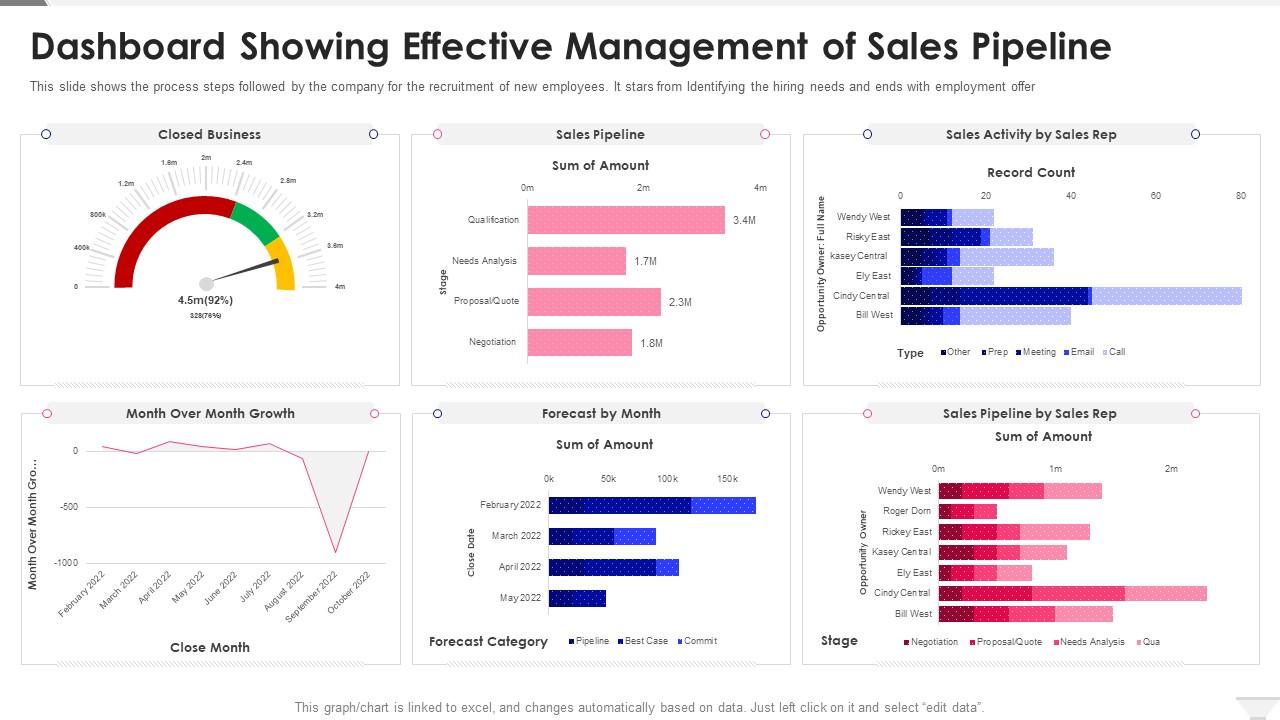
This slide shows the process steps followed by the company for the recruitment of new employees. It stars from Identifying the hiring needs and ends with employment offer Present the topic in a bit more detail with this Dashboard snapshot Showing Effective Management Of Sales Pipeline Sales Pipeline Management. Use it as a tool for discussion and navigation on Management, Pipeline, Dashboard. This template is free to edit as deemed fit for your organization. Therefore download it now.

FAQs for Dashboard Snapshot Showing Effective Management Of Sales Pipeline

Sales pipeline stages typically include lead generation, qualification, needs assessment, proposal presentation, negotiation, and closing. While core stages remain consistent, industries adapt these phases significantly—financial services emphasize compliance verification, manufacturing focuses on technical specifications and procurement cycles, and SaaS companies prioritize trial periods and implementation planning, ultimately delivering streamlined processes tailored to sector-specific buyer behaviors.

Effective sales pipeline management improves forecasting accuracy by providing clear visibility into deal stages, historical conversion rates, and realistic timelines for each opportunity. Through systematic tracking and data analysis, sales teams can identify patterns, eliminate wishful thinking, and base predictions on actual pipeline metrics rather than intuition, ultimately delivering more reliable revenue forecasts and strategic planning capabilities.

CRM software centralizes pipeline management by tracking leads, automating follow-ups, forecasting revenue, and providing real-time visibility into deal progression across sales stages. These systems streamline communication, enhance team collaboration, and deliver actionable insights through analytics, with many organizations finding that integrated CRM platforms ultimately accelerate deal closure and improve conversion rates.

Businesses identify sales pipeline bottlenecks by analyzing conversion rates between stages, tracking deal velocity, and monitoring representative performance metrics to pinpoint slowdowns. Through CRM analytics and regular pipeline reviews, organizations can streamline qualification processes, automate follow-ups, and reallocate resources, with many finding that addressing these inefficiencies reduces sales cycles and enhances revenue predictability.

Key metrics include conversion rates between pipeline stages, average deal size, sales cycle length, pipeline velocity, and win/loss ratios by source or territory. These indicators help sales teams identify bottlenecks, forecast revenue more accurately, and optimize resource allocation, with many organizations finding that tracking lead response time and pipeline coverage ratio ultimately delivers improved forecasting accuracy and accelerated deal closure.

Automation tools enhance sales pipeline productivity by streamlining lead qualification, automating follow-up sequences, and providing real-time performance analytics across all pipeline stages. These technologies enable sales teams to focus on high-value prospect interactions while reducing manual data entry, with many organizations finding that automated workflows accelerate deal velocity and improve conversion rates significantly.

Lead nurturing strategies include personalized email sequences, targeted content delivery, strategic follow-up calls, social media engagement, and automated drip campaigns tailored to each pipeline stage. These approaches streamline prospect progression by delivering relevant information, addressing specific pain points, and maintaining consistent touchpoints, with many sales organizations finding that this systematic nurturing increases conversion rates and accelerates deal closure.

Setting realistic sales targets involves analyzing historical conversion rates, average deal sizes, sales cycle lengths, and current pipeline volume across different stages. By examining conversion percentages from each pipeline stage to closure, tracking seasonal trends, and factoring in team capacity, sales managers can establish achievable quotas that motivate teams while ensuring sustainable growth and accurate revenue forecasting.

Sales teams can shorten cycles through automated lead scoring, streamlined proposal processes, targeted content delivery, strategic follow-up sequences, and data-driven qualification criteria. These techniques enable faster decision-making by eliminating bottlenecks, personalizing customer interactions, and focusing resources on high-probability prospects, ultimately delivering reduced time-to-close while maintaining relationship quality and deal value.

Regularly reviewing and updating the sales pipeline is crucial for maintaining forecast accuracy, identifying bottlenecks, and optimizing conversion rates throughout the sales cycle. This consistent analysis enables sales teams to reallocate resources strategically, address stalled opportunities proactively, and improve close rates, with many organizations finding that weekly pipeline reviews increase revenue predictability and overall sales performance.

Common sales pipeline mistakes include inaccurate lead qualification, inconsistent follow-up processes, poor data hygiene, unrealistic forecasting, and neglecting pipeline stages alignment with customer journeys. These oversights significantly impact revenue predictability and team performance, with many organizations finding that implementing standardized qualification criteria, automated tracking systems, and regular pipeline reviews ultimately delivers improved conversion rates and more accurate sales forecasting.

Marketing-sales collaboration improves pipeline effectiveness by aligning lead qualification criteria, sharing customer insights, and coordinating messaging throughout the buyer journey. When marketing provides detailed lead scoring and behavioral data while sales shares feedback on lead quality, organizations create seamless handoffs, reduce conversion time, and ultimately deliver higher-quality prospects and improved close rates.

Buyer personas fundamentally shape sales pipeline structure by defining stage criteria, content requirements, touchpoint strategies, qualification processes, and resource allocation based on specific customer profiles. These detailed customer archetypes enable sales teams to customize approaches for different segments, streamline lead nurturing sequences, and optimize conversion rates, with many organizations finding that persona-driven pipelines deliver significantly higher close rates and shorter sales cycles.

Feedback from sales representatives informs pipeline adjustments by revealing bottlenecks, identifying stage conversion issues, and highlighting customer objection patterns throughout the sales process. These insights enable managers to refine lead qualification criteria, adjust stage definitions, and optimize resource allocation, with many organizations finding that regular rep feedback reduces sales cycle length and improves forecast accuracy.

Best practices for training sales staff include establishing clear stage definitions, implementing consistent CRM usage protocols, teaching lead qualification frameworks, and emphasizing regular pipeline reviews. Through role-playing exercises and real-world scenarios, organizations streamline prospect tracking, enhance forecasting accuracy, and accelerate deal closure rates, with many sales teams finding that structured training ultimately delivers improved conversion metrics and predictable revenue growth.

Ratings and Reviews

100% of 100
Review Form
Write a review
Most Relevant Reviews
  1. 100%

    by Edgardo Chapman

    A beautiful, professional design paired with high-quality images and content that is sure to impress. It is a must-use PPT template in my opinion. 
  2. 100%

    by Clemente Myers

    Great quality product.

2 Item(s)

per page: