Design of work system process ppt powerpoint presentation slides brochure

Design of work system process ppt powerpoint presentation slides brochure
Slide 1 of 5
Favourites Favourites

Try Before you Buy Download Free Sample Product

Audience Impress Your
Audience
Editable 100%
Editable
Time Save Hours
of Time
The Biggest Sale is ending soon in
0
0
:
0
0
:
0
0
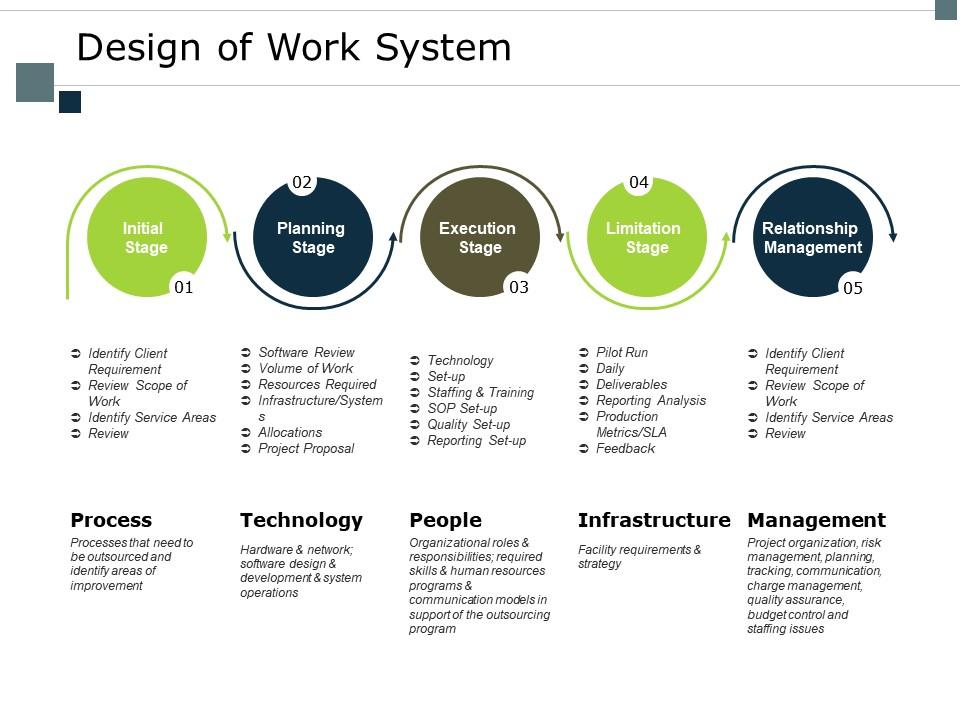
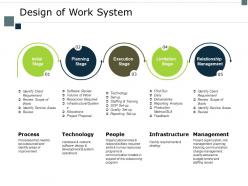
Presenting this set of slides with name Design Of Work System Process Ppt Powerpoint Presentation Slides Brochure. This is a five stage process. The stages in this process are Process, Technology, People, Infrastructure, Management. This is a completely editable PowerPoint presentation and is available for immediate download. Download now and impress your audience.

People who downloaded this PowerPoint presentation also viewed the following :

FAQs for Design of work system process ppt powerpoint

Honestly, start by mapping out what you're doing now - yeah it's boring but you'll spot where things get stuck. Get your workers involved since they actually know what sucks about their jobs. Focus on standardizing the messy stuff and designing roles that aren't mind-numbing but also aren't overwhelming people with too much variety. Build in ways to get feedback and keep improving things. The workflow optimization part sounds fancy but it's really just figuring out how to stop wasting time and energy. Don't forget feedback loops - they're huge for catching problems early.

Honestly, start with ergonomics from the beginning - don't try to fix it after everything's built. Watch how people actually work first. Where do they sit all day? What are they constantly reaching for? Design around the human body instead of making people bend into weird positions (learned that one the hard way). Adjustable desk heights are huge. Good lighting too. Keep the stuff they use most within arm's reach - seems obvious but you'd be surprised how often that gets overlooked. Oh, and definitely get input from the people who'll actually be using the space. They know exactly what sucks about their current setup.

Tech basically runs everything now - it handles boring repetitive stuff and lets teams actually communicate without losing their minds. Project management tools are game changers, and AI can deal with basic customer questions while people tackle the harder problems. Though honestly, I still miss the days when you could just walk over to someone's desk sometimes. The trick is finding what actually works for YOUR situation, not just whatever everyone's hyping up. Map out where things are getting stuck first. Then grab tools that fix those specific headaches.

Honestly, start with spaces where people actually run into each other - both online and IRL. Cross-functional teams work great for this. Shared dashboards are clutch too. Kill those department silos though - they're innovation murderers, I swear. Map out where your communication totally falls apart right now, then fix those handoff points first. Build in regular check-ins and feedback loops. Make info visible to whoever needs it. Design processes that force multiple people to contribute. The magic happens when you stop letting teams hide in their corners and actually make them work together on stuff.

Oh man, this is actually pretty straightforward. Start by tracking the obvious stuff - how productive people are, quality scores, how long tasks take, error rates. But here's the thing: numbers only tell half the story. You've gotta talk to the actual workers doing the job - they'll tell you what's broken way faster than any spreadsheet will. Time studies are solid for catching weird bottlenecks too. Don't skip safety metrics or how happy people are with the work. Honestly, the magic happens when you mix hard data with what people actually tell you. Just make sure you measure everything before you change anything so you can actually see if it worked.

Oh man, cultural stuff will absolutely wreck your system if you don't think it through first. Like, Germans are super direct but try that approach in Japan and you'll probably offend everyone. Power distance is huge too - some places want clear bosses while others hate hierarchy. Meeting styles, tech adoption, training methods... it all varies by region. Honestly, I learned this the hard way at my last job. Do cultural assessments before you roll anything out globally. What works in one country can totally bomb somewhere else.

So basically, you don't design a work system and call it done - you build it knowing it'll change. Start with feedback loops and ways to measure stuff so you can actually see what's broken. Your first design is honestly just your best guess anyway. Collect data regularly, ask users what sucks, then tweak things based on what you find. The trick is making your system flexible enough that you can fix problems without having to rebuild the whole damn thing later. Otherwise you'll hate yourself when something needs changing.

Ugh, employee pushback is the worst part - nobody wants their routine messed with. Communication usually sucks too because leadership doesn't explain the "why" properly. Your tech systems probably won't integrate smoothly either, which creates headaches. Budget and time? Yeah, expect those to be tight since this stuff isn't cheap. Training different teams on new processes gets messy fast. Oh, and I forgot - start with small pilot programs first. Find those influential people who actually get it and let them sell the idea to everyone else. Way easier than forcing it top-down.

Start by mapping out your current workflow - you'll spot tons of waste like unnecessary handoffs and those annoying approval steps that take forever. Standardize what works best, then create visual boards so everyone can see where things stand. Trust me, those boards make such a difference for team clarity. Instead of huge changes, focus on small tweaks that add up. The key is involving the actual people doing the work when you're figuring out solutions - they know what really slows things down. Pick one process first, nail it, then roll it out everywhere else.

Your work systems basically control how engaged people feel day-to-day. Give them autonomy and clear feedback? They'll actually care about their job. But clunky processes and confusing workflows make people mentally check out super fast - I've seen it happen so many times. The smart move is getting employees involved in designing these systems themselves. They know exactly where things suck and what would actually help. Poor design just creates endless friction. Nobody wants to fight their own tools all day.

You'll want to set up feedback from multiple places - your team, customers, and between different departments. Regular check-ins are huge. Track your key metrics too, but honestly the customer feedback part is what most people mess up. They skip it entirely then can't figure out why everything feels broken! Make sure departments talk to each other so problems don't just sit there festering. Don't try to do everything at once though - pick one problem area first and start with weekly feedback cycles there. Way better to be systematic about it than just hoping issues will surface on their own.

Okay so for work system design, I'd start with Lucidchart or Visio for process mapping. Miro's actually amazing for early brainstorming - gets messy but that's the point. You'll need Arena or AnyLogic if you're doing simulation stuff. Balsamiq works great for interface mockups, though some people swear by Figma. Python's solid for technical analysis if you're into that. MATLAB too, but honestly it's pricey. My advice? Don't go crazy with tools right away. Pick one visual tool your team already knows, maybe one for analysis. You can always add more later when things get complicated. Starting simple saves you from that overwhelming "which button do I click" feeling.

So basically, smart work design cuts waste automatically - you're not fighting your own systems. Map out how you currently do things and spot where you're burning through resources for no reason. Honestly, starting fresh beats trying to fix broken processes later (learned that the hard way). Design jobs so people naturally pick greener options. Cut redundant steps. Go digital where it makes sense. Oh, and build in some way to actually track if it's working - otherwise you're just guessing. Pick one workflow and tear it apart first.

Definitely start with clear before/after docs showing what's changing and why. Visual stuff like flowcharts work way better than long emails - people actually look at those. The "why" part is huge honestly, saves you from dealing with annoyed team members later. Hit multiple channels when communicating - some people check Slack, others live in email, you know how it is. Be upfront about timelines and give everyone a chance to ask questions first. Oh, and circle back in a few weeks to see if things are actually working or if you need to tweak anything.

Honestly, data analytics is a game-changer because it gives you actual proof instead of just winging it with hunches. Look at where workflows get stuck, find those annoying manual tasks eating up everyone's time, and catch error patterns you might've missed. There's SO much data though - it can get pretty overwhelming if you're not careful. Focus on metrics tied to what you're actually trying to fix: faster turnaround, better quality, happier users, whatever. First figure out what "winning" looks like for your project, then hunt down the numbers that'll tell you if you're on track.

Ratings and Reviews

0% of 100
Write a review
Most Relevant Reviews

No Reviews