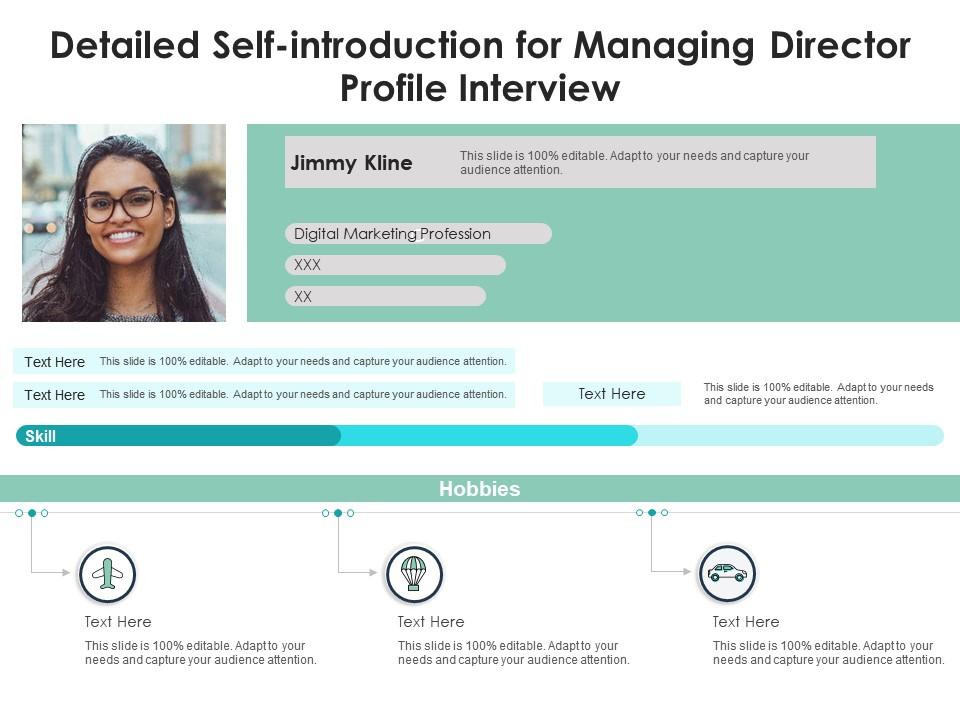
Detailed self introduction for managing director profile interview infographic template

Rating:
80%
Detailed self introduction for managing director profile interview infographic template
Slide 1 of 2
Favourites Favourites

Try Before you Buy Download Free Sample Product

Audience Impress Your
Audience
Editable 100%
Editable
Time Save Hours
of Time
The Biggest Sale is ending soon in
0
0
:
0
0
:
0
0
Rating:
80%
This is a single slide titled Detailed Self Introduction For Managing Director Profile Interview Infographic Template. It is crafted using high quality vector based visuals that are 100 percent editable and available for immediate download in standard and widescreen aspect ratios.

People who downloaded this PowerPoint presentation also viewed the following :

FAQs for Detailed self introduction for managing director profile

Look, you'll need three things to crush a Managing Director role. Strategic vision is first - seeing beyond this quarter's numbers and actually steering the company somewhere meaningful. The people stuff is where most smart people crash and burn though. Building trust, having tough conversations, inspiring teams when things get messy. Financial acumen is your third must-have. P&Ls, cash flow, understanding how every decision hits profitability. I'd honestly figure out which one you're shakiest on and attack it with some mentoring or focused training. Don't wait around on this.

Honestly, I focus on three main things: how my team's performing, if people actually want to stick around, and whether we're hitting our numbers. Retention rates matter way more than people think - good leaders don't have everyone jumping ship constantly. Get feedback through 360 reviews and those skip-level meetings where your boss talks to your team directly. Short wins feel great but don't mean much if you can't sustain it over like 12-18 months. Your people should be getting promoted and growing while still delivering. I do quarterly one-on-ones specifically about my leadership style, not just work stuff.

Pick a solid example where you actually had to guide people through big change - merger, restructuring, whatever. The main thing is showing how you explained the "why" constantly, since people really do hate uncertainty more than just hearing bad news upfront. Talk about keeping your team motivated during that awkward middle phase when everything feels chaotic. What specific things did you do when people pushed back? Did you have to pivot your approach at some point? I'd definitely mention what you learned that you'd do differently next time - shows you're self-aware about it.

Okay so psychological safety is huge - nobody's gonna pitch crazy ideas if they think they'll get roasted. Cross-functional teams work great too. I'd set up brainstorming sessions where literally anything goes (honestly, the weirdest suggestions often lead somewhere good). Give teams room to experiment and mess up quickly rather than micromanaging everything. Knowledge-sharing between departments helps a lot. Oh, and definitely have a concrete example ready because they'll ask for one. The whole thing really comes down to people feeling empowered to take risks without getting their heads bitten off.

Honestly, most companies totally screw this up - their vision just sits on some wall gathering dust. Here's what actually works: build regular check-ins where you're connecting daily work back to the big picture stuff. I'd start with quarterly reviews mapping your metrics to vision goals. Your team leads should be able to explain how their projects tie into everything else without stumbling around. But here's the thing - you gotta bake it into how you hire people and pick which projects get priority. Oh, and celebrations too. Try asking your team right now: "What did you do this week that moved us toward our vision?" You'll probably get some blank stares at first.

Look, I never make big calls without diving into the data first. Financial metrics, customer patterns, market trends - all of it matters. Yeah, I probably spend way too much time in Excel, but honestly? The numbers catch things your gut never would. They show you risks before they blow up and tell you if your ideas are actually solid or just wishful thinking. Quick tip though - whenever someone pitches you something, ask to see their data. No solid analytics backing it up? That's when you know to be skeptical.

Honestly, I always go back to what we're actually trying to achieve first. Rank everything by how much it'll move the needle on revenue and customer happiness - that's usually a good tell. I make this super basic urgency vs impact grid because literally everything feels like a fire drill these days, you know? Also factor in what resources you actually have and which projects depend on others finishing first. The key thing is explaining your logic to everyone so they get why project X beat out their pet project Y. Oh and definitely revisit this monthly since priorities change constantly.

Ugh, I had to fire someone going through a messy divorce and custody thing. Terrible timing. Part of me wanted to wait it out, you know? But honestly, the rest of my team was drowning picking up their work. That's not fair either. So I did it - gave them extra severance though and hooked them up with some job placement resources. Look, being compassionate doesn't mean you avoid the hard calls. It just means you don't handle them like a complete asshole. Still felt awful about it for weeks.

Honestly, just start by asking each person where they want to be in two years - then figure out how to get them there. Regular one-on-ones are crucial, but actually listen instead of going through the motions. Give people stretch projects that push them a bit (with backup support obviously). Oh, and try connecting them with mentors outside your team - different perspectives can be game-changing. Here's the thing though: you've got to genuinely care about their growth, even knowing they might outgrow their current spot. It's about creating those individual paths based on what they actually want and what they're good at.

Talent retention is brutal right now - remote work made everyone realize they can jump ship way easier. AI and automation keep changing how everything works, which is honestly exhausting to keep up with. Regulations won't stop coming either. Oh, and supply chains are still a mess from a few years back. The thing is, if you can spin these as chances to think strategically instead of just putting out fires, you'll stand out. Companies are drowning in all this change happening at once.

Honestly, clear expectations are huge but you can't treat people like robots. Celebrate the wins where everyone can see, save the hard talks for behind closed doors. Pizza parties are such BS - learned that one the hard way lol. Be real with your team about what's happening, but also shield them from all the corporate drama above you. One-on-ones are a lifesaver for catching burnout early. The biggest thing though? Actually walk the walk and listen when someone says they're struggling. Sounds obvious but most managers totally suck at it.

Okay so first thing - figure out who actually needs to know what and when. Don't just blast everyone with the same updates, that's how you lose people's attention fast. Map out your stakeholders and what they care about specifically. Monthly reports work great for investors, board wants quarterly deep dives, department heads need weekly touchbases. The key is staying ahead of their questions instead of scrambling to respond after they're already annoyed. Oh and definitely audit your current communication this week - you'll probably find some obvious gaps you haven't noticed. Being proactive here saves you so much drama later.

Show them it's totally doable to nail both at once. I'd set up quarterly checkpoints that build toward my bigger 3-5 year goals - that way you're chipping away at the vision while still crushing immediate deadlines. Data helps tons for quick course corrections without losing the main direction. Short-term wins should actually speed up your strategic stuff, not pull you away from it. Oh, and definitely have a real example ready - maybe something like how you launched a pilot that hit revenue targets AND tested your expansion plans. Interviewers eat that concrete stuff up way more than theoretical answers.

Look, I use tech to make real connections stronger, not replace them. Data helps me spot trends early, but honestly? Too many managers just stare at dashboards instead of actually talking to people. Slack and project management tools keep me in the loop without breathing down everyone's neck. Automation handles the boring stuff so I can think strategically and help my team grow. Figure out what actually saves you time vs what just adds more screen clutter - that's the real trick.

Okay so first thing - get them all in the same room. No more of this back-and-forth through other people, that just makes everything worse. When you're talking to them, focus on business stuff and what you're all trying to accomplish together, not the personal drama. Senior people hate admitting they screwed up, but they'll usually come around if you frame it as doing what's best for the company. Ask questions that let them figure out the solution themselves - way better than you telling them what to do. If they still can't agree though, you'll have to make the call. Oh and definitely follow up later to see how it's going.

Ratings and Reviews

80% of 100
Write a review
Most Relevant Reviews
  1. 80%

    by Dorsey Hudson

    Easily Understandable slides.

1 Item

per page: