Develop The Employee Journey Map How To Build A High Performing Workplace Culture

Rating:
90%
Develop The Employee Journey Map How To Build A High Performing Workplace Culture
Slide 1 of 7

or

Favourites Favourites

Try Before you Buy Download Free Sample Product

Audience Impress Your
Audience
Editable 100%
Editable
Time Save Hours
of Time
The Biggest Sale is ending soon in
0
0
:
0
0
:
0
0
Rating:
90%
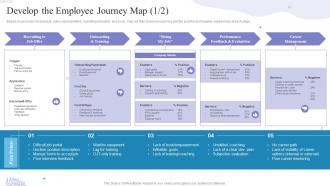
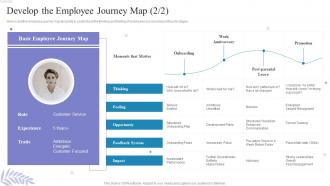
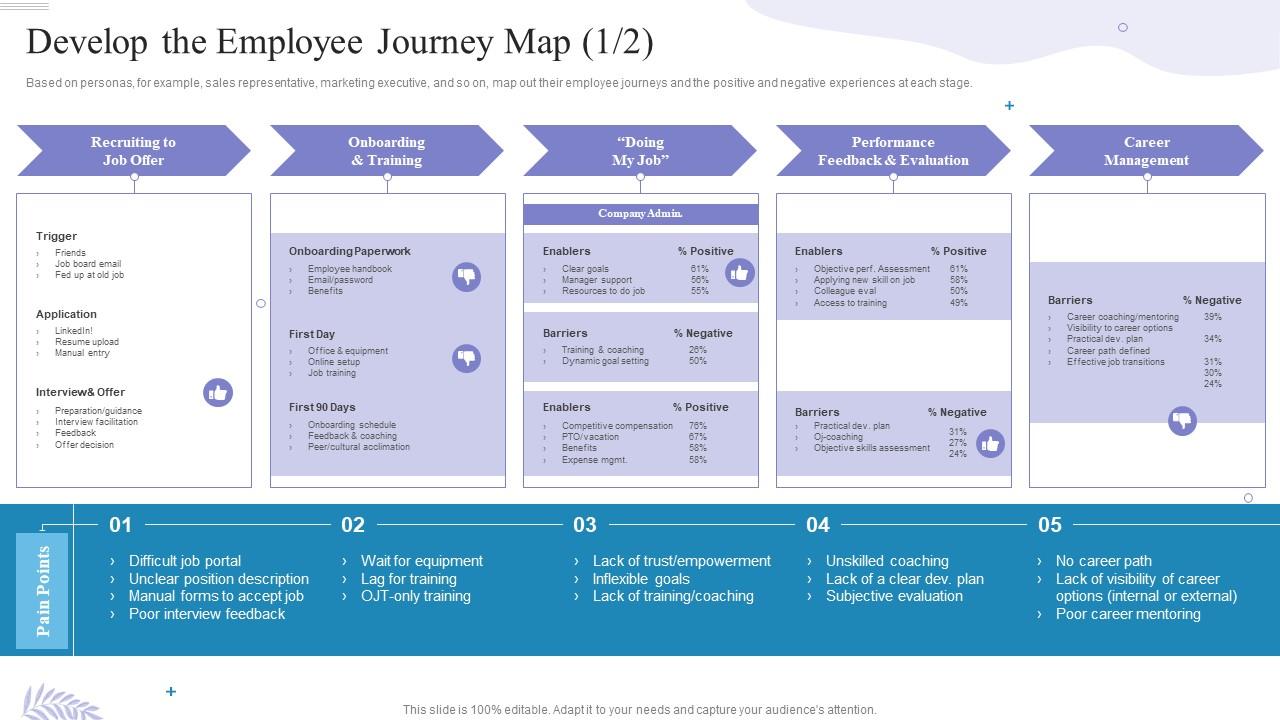
Based on personas, for example, sales representative, marketing executive, and so on, map out their employee journeys and the positive and negative experiences at each stage. Present the topic in a bit more detail with this Develop The Employee Journey Map How To Build A High Performing Workplace Culture. Use it as a tool for discussion and navigation on Empowerment, Evaluation, Equipment. This template is free to edit as deemed fit for your organization. Therefore download it now.
FAQs for Develop The Employee Journey Map How To Build A High

Employee journey maps should include pre-boarding, onboarding, early employment, development and growth, performance management, career transitions, and offboarding stages. These comprehensive stages enable organizations to identify pain points, streamline processes, and enhance employee experiences across sectors like healthcare, technology, and financial services, ultimately delivering improved retention, productivity, and organizational culture while reducing turnover costs.

Organizations effectively gather employee journey mapping data through surveys, focus groups, one-on-one interviews, exit interviews, and performance analytics. These methods enable HR teams to capture comprehensive insights across recruitment, onboarding, development, and retention phases, with many companies finding that combining quantitative metrics with qualitative feedback delivers the most actionable employee experience improvements.

Employee feedback serves as the foundation for accurate journey mapping, providing real insights into pain points, emotional states, workflow bottlenecks, and engagement drivers that managers might overlook. This direct input enables organizations to identify specific friction areas, validate assumptions about employee experiences, and prioritize improvements that deliver measurable impact, with many companies finding that feedback-driven mapping significantly enhances retention and productivity.

Technology enhances employee journey mapping through automated data collection, AI-powered analytics, real-time feedback systems, predictive modeling, and interactive visualization tools. These digital solutions streamline the mapping process by gathering comprehensive employee insights, identifying pain points across touchpoints, and enabling HR teams to create more accurate, data-driven journey maps that ultimately improve employee experiences and retention rates.

Success metrics for employee journey mapping initiatives include engagement scores, retention rates, time-to-productivity, employee Net Promoter Score (eNPS), and internal mobility rates. These metrics enable organizations to track improvements across recruitment, onboarding, development, and retention phases, with many companies finding that comprehensive measurement delivers enhanced workplace experiences, reduced turnover costs, and stronger organizational performance.

Cultural differences significantly impact employee journeys through varying communication styles, hierarchical expectations, feedback preferences, recognition approaches, and work-life balance norms across different regions. Global organizations increasingly adapt their employee experiences by implementing localized onboarding processes, culturally sensitive performance management systems, and flexible benefit structures, with many multinational companies finding that embracing these differences enhances employee engagement and retention worldwide.

Common pitfalls include creating generic maps without role-specific insights, failing to gather direct employee feedback, focusing only on negative experiences, and not involving cross-functional stakeholders in the mapping process. Many organizations find that successful journey mapping requires ongoing updates, leadership buy-in, and actionable improvement plans, ultimately delivering enhanced retention and workplace satisfaction.

Journey mapping enhances onboarding by identifying key touchpoints, pain points, emotional moments, and critical interactions throughout a new hire's first weeks. This strategic approach enables HR teams to streamline processes, personalize experiences, and proactively address concerns, with many organizations finding that mapped onboarding journeys significantly reduce time-to-productivity and improve early retention rates.

Employee journey mapping improves retention rates by identifying pain points in the employee experience, enhancing onboarding processes, and creating targeted interventions at critical touchpoints. Through comprehensive mapping, organizations streamline career development pathways, address engagement gaps, and personalize support systems, with many companies finding that proactive journey optimization reduces turnover costs while significantly improving employee satisfaction and long-term commitment.

Organizations leverage journey mapping for enhanced employee engagement by identifying pain points, optimizing touchpoints, and creating personalized experiences throughout the employment lifecycle. Through comprehensive mapping, companies in sectors like healthcare, retail, and manufacturing streamline onboarding processes, enhance communication channels, and improve retention strategies, ultimately delivering higher satisfaction scores and reduced turnover while building stronger organizational culture.

**INPUT**: What tools or software are recommended for visualizing employee journey maps? **OUTPUT**: Recommended tools include Miro, Lucidchart, Microsoft Visio, Canva, and specialized HR platforms like Culture Amp and Glint. These platforms streamline mapping by offering collaborative features, customizable templates, and real-time analytics, with many organizations finding that visual collaboration tools enhance stakeholder engagement and deliver more actionable insights for strategic workforce planning.

Cross-departmental collaboration enhances journey mapping accuracy by combining diverse perspectives, uncovering blind spots, and providing comprehensive data from each touchpoint. When HR, IT, operations, and management teams collaborate, they deliver holistic insights into employee experiences, identify process gaps more effectively, and create more actionable improvement strategies, ultimately ensuring mapping reflects actual workplace realities across all organizational levels.

Employee journey mapping significantly enhances talent acquisition strategies by identifying key touchpoints, pain points, and opportunities throughout the candidate experience, from initial awareness to onboarding completion. This strategic approach enables organizations to streamline recruitment processes, improve candidate engagement, and reduce time-to-hire, with many companies finding that optimized journey maps ultimately deliver stronger employer branding and competitive talent acquisition advantages.

Leaders can leverage employee journey mapping insights for strategic planning by identifying operational inefficiencies, predicting retention risks, and aligning resource allocation with critical touchpoints. These insights enable organizations to prioritize workforce investments, streamline HR processes, and enhance talent management strategies, with many companies finding that data-driven employee experience improvements ultimately deliver competitive advantage and sustainable growth.

Empathy enables organizations to understand genuine employee emotions, motivations, and pain points throughout their workplace experience, moving beyond surface-level data to uncover deeper insights. By putting themselves in employees' shoes, HR leaders can identify hidden friction points, recognize unmet needs, and design more meaningful interventions that enhance engagement, retention, and overall satisfaction.

Ratings and Reviews

90% of 100
Review Form
Write a review
Most Relevant Reviews
  1. 100%

    by O'Connor Collins

    Commendable slides with attractive designs. Extremely pleased with the fact that they are easy to modify. Great work!
  2. 80%

    by Claude Price

    Awesomely designed templates, Easy to understand.

2 Item(s)

per page: