


Development Plan For Employees Powerpoint Presentation Slides
Increase motivation and job satisfaction with our content ready Development Plan for Employees PowerPoint Presentation Slides. Create the right type of plan for every employee using this professionally designed employee value proposition presentation deck. The easy-to-understand action plan for employee development PPT visuals helps you to attract, retain & engage staff. The professional-looking value proposition employer branding PowerPoint complete deck contains twenty ready-to-use slides such as employee value proposition components, categories, canvas framework, and so on. Incorporate the high-quality topic-specific succession planning PowerPoint template to discuss the components of EVP such as research & benefits, employment brand, recruiting strategy, employment feedback, corporate brand, etc. Furthermore, our team of expert designers has created editable PPT slides, so that the users can modify the slides as per their specific needs. So, download this self-explanatory career development strategy PPT slides to educate your viewers about staff development & growth. Empowerment flows from our Development Plan For Employees Powerpoint Presentation Slides. The audience will feel the drive.
Increase motivation and job satisfaction with our content ready Development Plan for Employees PowerPoint Presentation Slid..




-

- Google Slides is a new FREE Presentation software from Google.
- All our content is 100% compatible with Google Slides.
- Just download our designs, and upload them to Google Slides and they will work automatically.
- Amaze your audience with SlideTeam and Google Slides.
-

Want Changes to This PPT Slide? Check out our Presentation Design Services
-

- WideScreen Aspect ratio is becoming a very popular format. When you download this product, the downloaded ZIP will contain this product in both standard and widescreen format.
-

- Some older products that we have may only be in standard format, but they can easily be converted to widescreen.
- To do this, please open the SlideTeam product in Powerpoint, and go to
- Design ( On the top bar) -> Page Setup -> and select "On-screen Show (16:9)” in the drop down for "Slides Sized for".
- The slide or theme will change to widescreen, and all graphics will adjust automatically. You can similarly convert our content to any other desired screen aspect ratio.
Compatible With Google Slides

Get This In WideScreen
You must be logged in to download this presentation.


Do you want to remove this product from your favourites?
PowerPoint presentation slides
Presenting this set of slides with name - Development Plan For Employees Powerpoint Presentation Slides. This PPT deck displays twenty slides with in-depth research. We provide a ready to use deck with all sorts of relevant topics subtopics templates, charts and graphs, overviews, analysis templates. It showcases all kinds of editable templates infographics for an inclusive and comprehensive Development Plan For Employees Powerpoint Presentation Slides presentation. Download PowerPoint templates in both widescreen and standard screen. The presentation is fully supported by Google Slides. It can be easily converted into JPG or PDF format.

People who downloaded this PowerPoint presentation also viewed the following :
Content of this Powerpoint Presentation
Slide 1: This slide introduces Development Plan for Employees. State Your Company Name and begin.
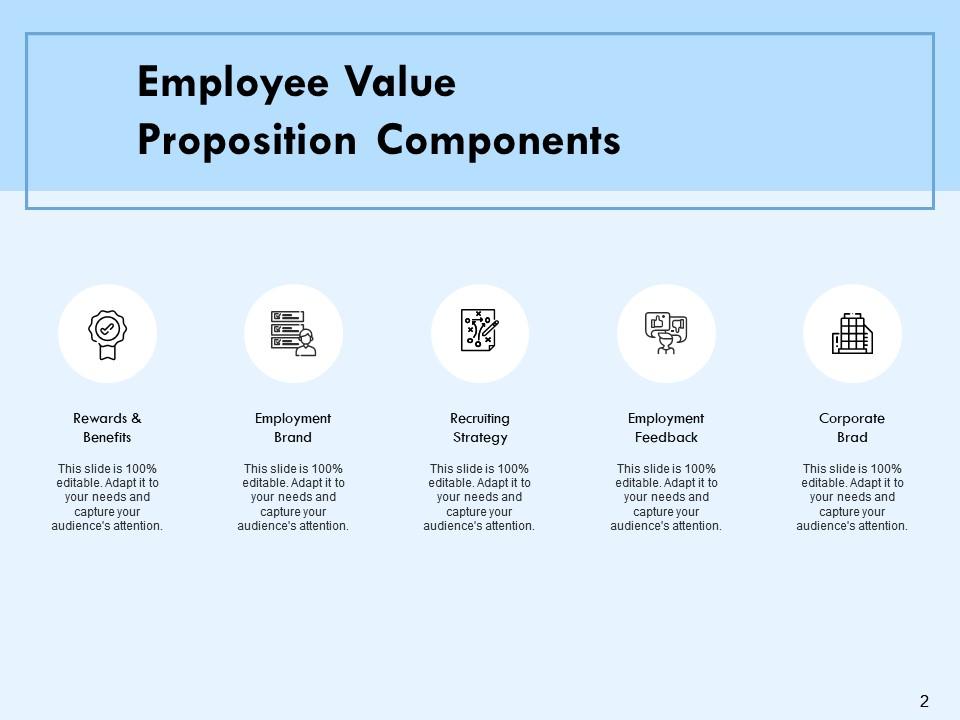
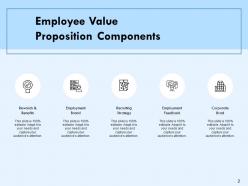
Slide 2: This slide shows Employee Value Proposition Components as- Rewards & Benefits, Employment Brand, Recruiting Strategy, Corporate Brand, Employment Feedback.
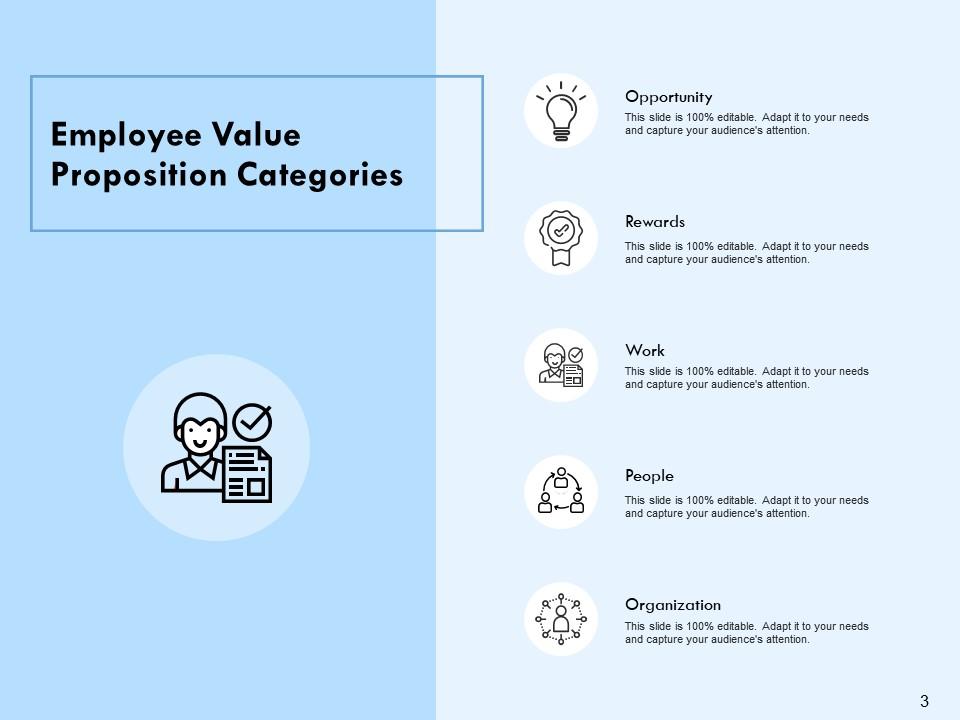
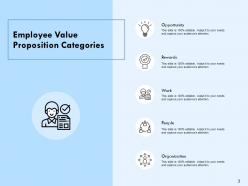
Slide 3: This slide presents Employee Value Proposition Categories as- Opportunity, Rewards, Work, People, Organization.
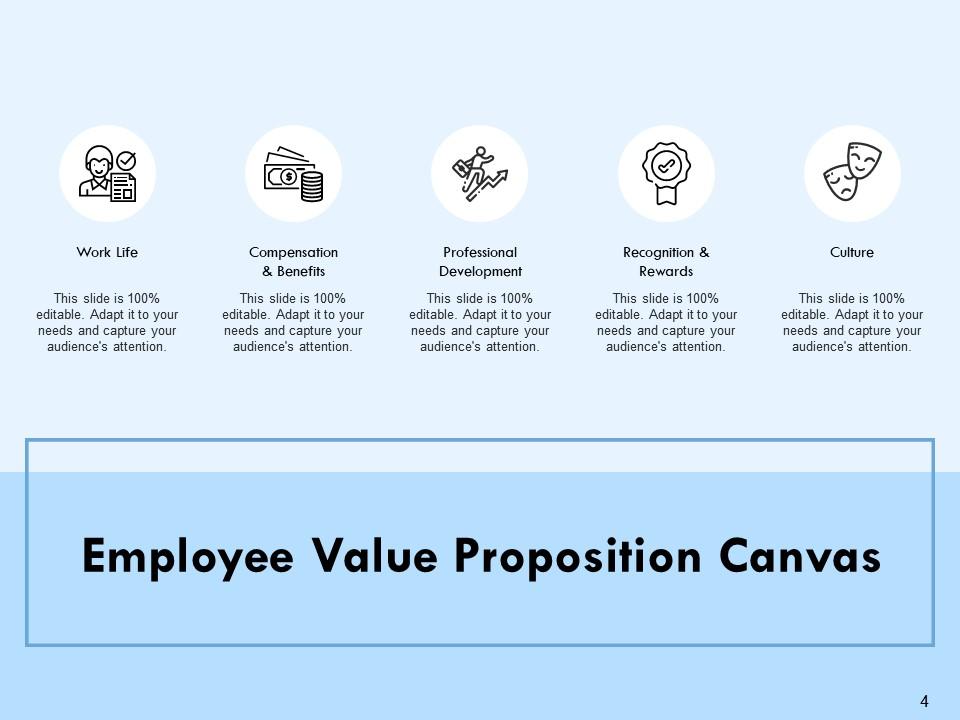
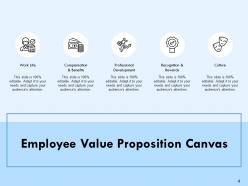
Slide 4: This slide displays Employee Value Proposition Canvas describing- Work Life, Professional Development, Compensation & Benefits, Culture, Recognition & Rewards.
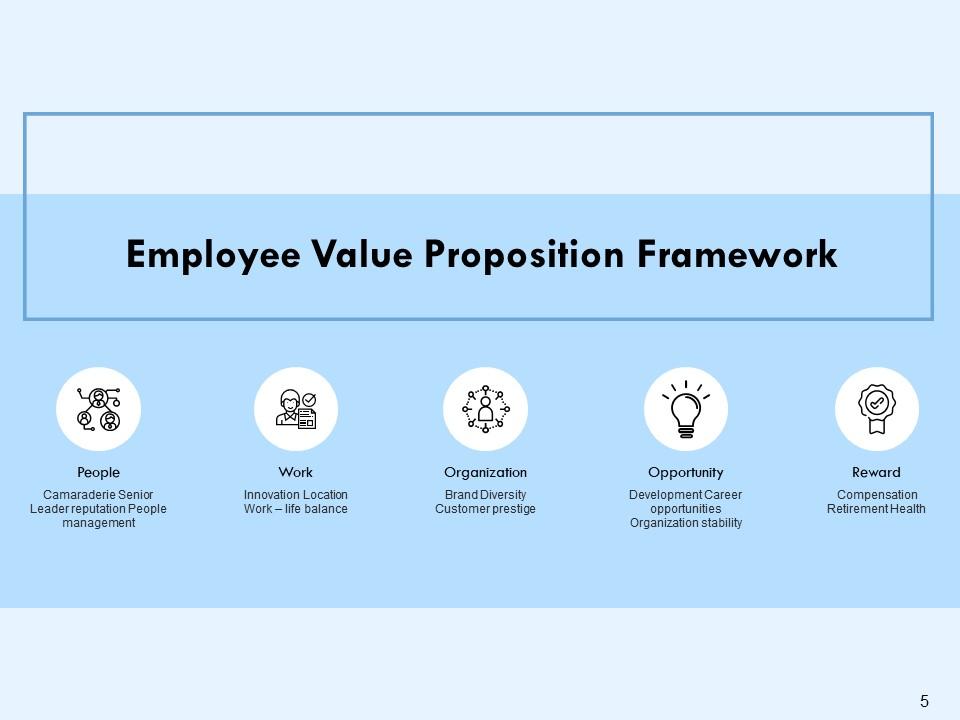
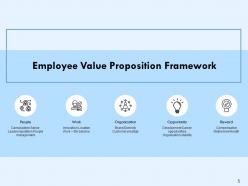
Slide 5: This slide showcases Employee Value Proposition Framework describing- People, Work, Opportunity, Reward, Organization.
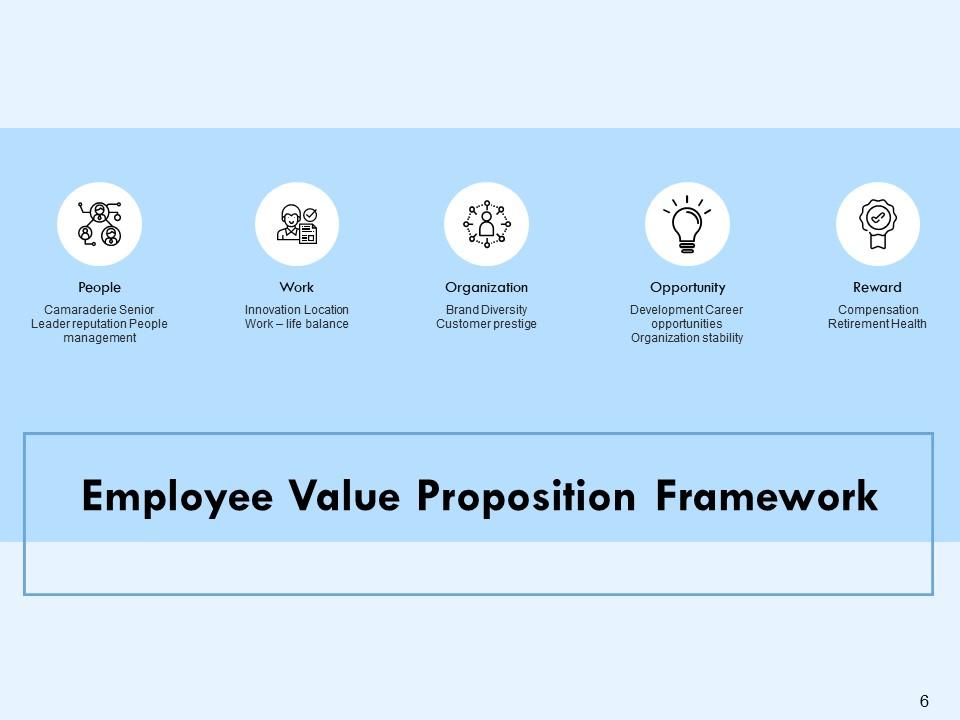
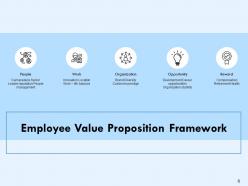
Slide 6: This is an optional slide for Employee Value Proposition Framework.
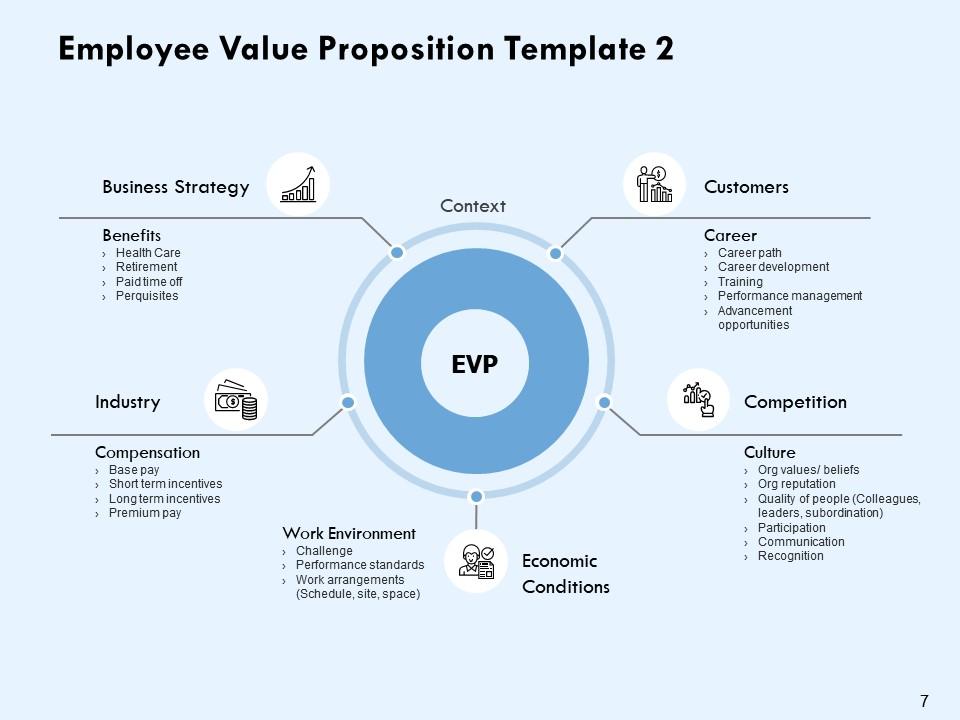
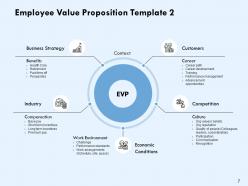
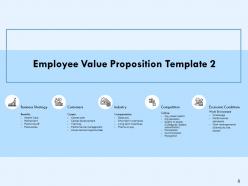
Slide 7: This slide shows Employee Value Proposition Template 2 describing- Career, Culture, Work Environment, Compensation, Benefits.
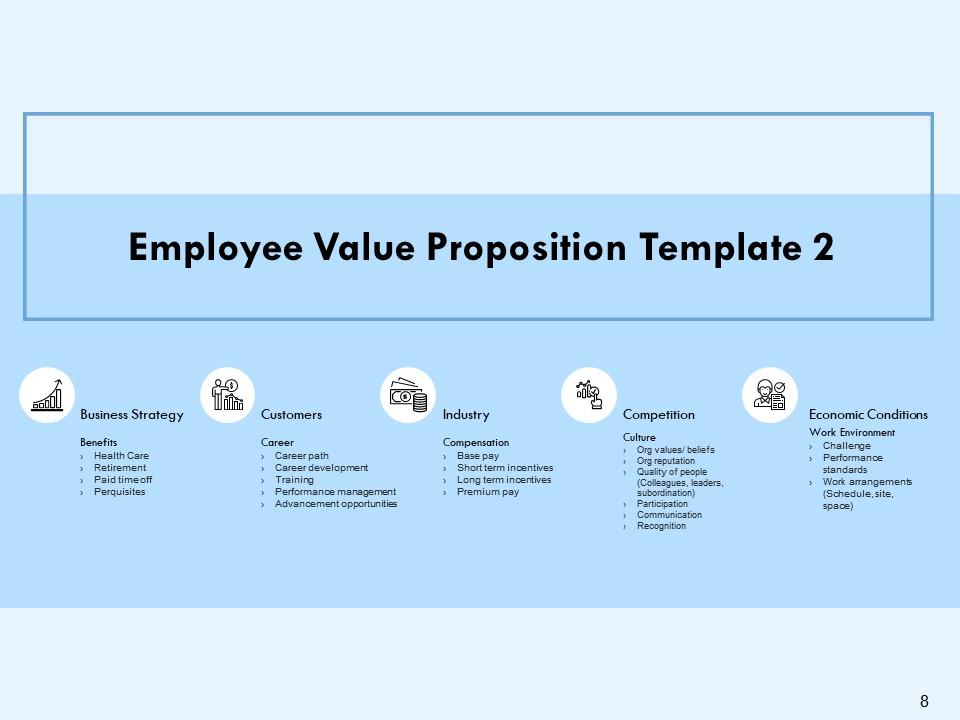
Slide 8: This is another slide showing Employee Value Proposition Template 2.
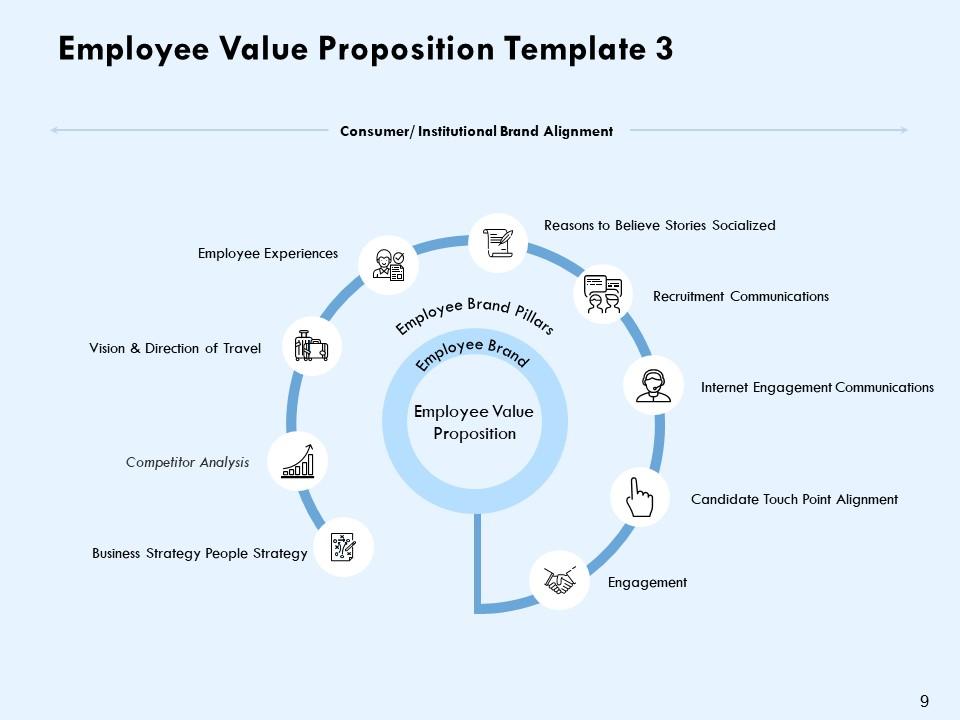
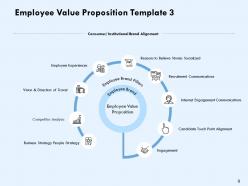
Slide 9: This slide presents Employee Value Proposition Template 3 describing- Reasons to Believe Stories Socialized, Recruitment Communications, Internet Engagement Communications, Candidate Touch Point Alignment, Engagement, Business Strategy People Strategy, Competitor Analysis, Vision & Direction of Travel, Employee Experiences.
Slide 10: This slide displays icons for Development Plan For Employees.
Slide 11: This slide is titled as Additional Slides for moving forward.
Slide 12: This is Our Team slide with names and designation.
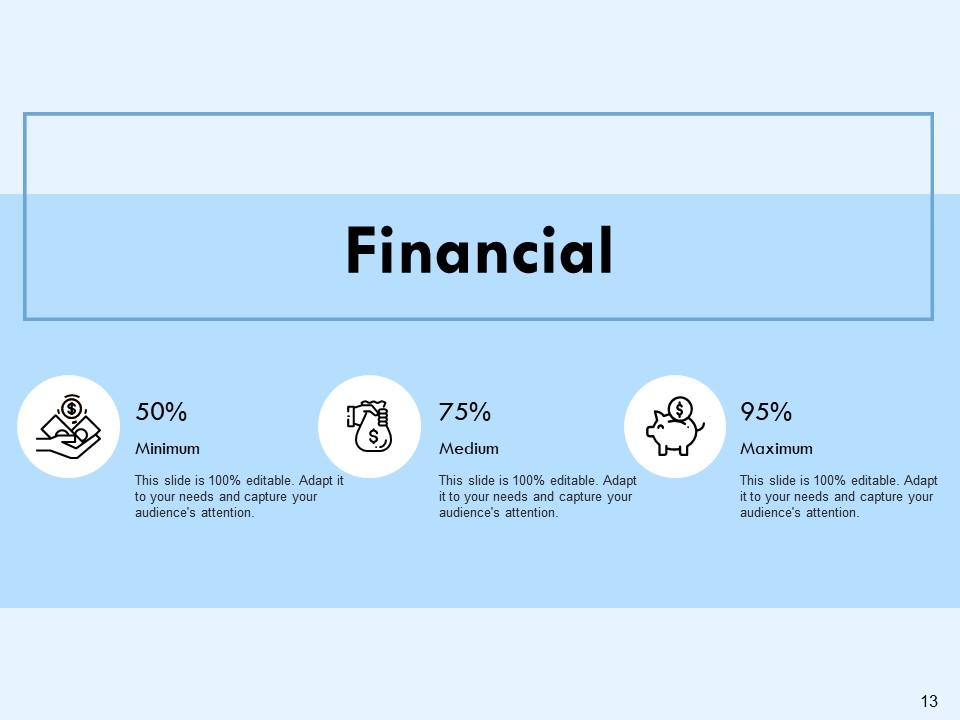
Slide 13: This is a Financial slide. Show your finance related stuff here.
Slide 14: This is About Us slide to show company specifications etc.
Slide 15: This is a Quotes slide to convey message, beliefs etc.
Slide 16: This is Our Mission slide with related imagery and text.
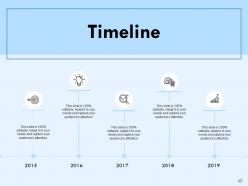
Slide 17: This is a Timeline slide to show information related with time period.
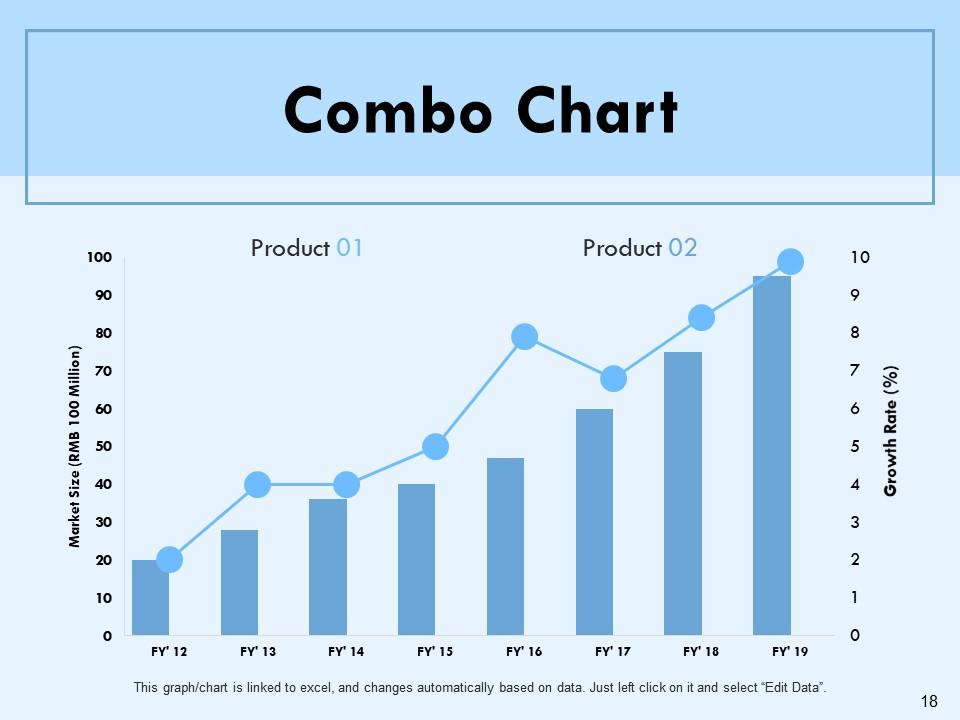
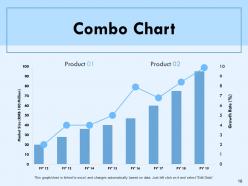
Slide 18: This slide displays Combo Chart with two products comparison.
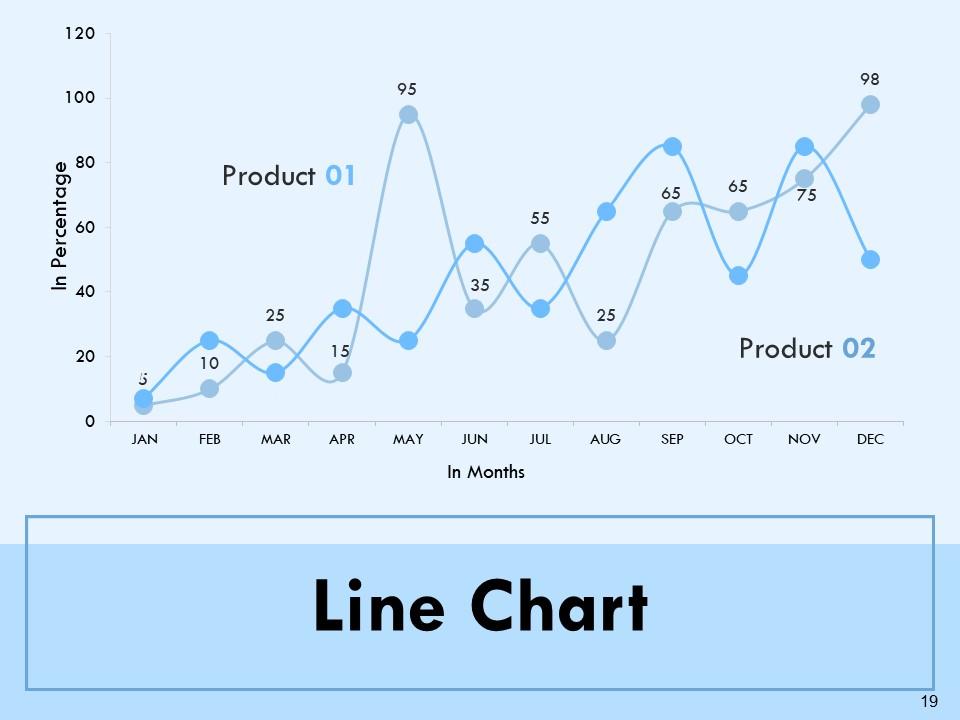
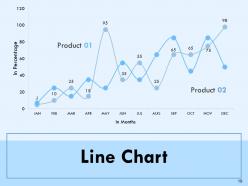
Slide 19: This slide shows Line Chart with two products comparison.
Slide 20: This is a Thank You slide with address, contact numbers and email address.
Development Plan For Employees Powerpoint Presentation Slides with all 20 slides:
Use our Development Plan For Employees Powerpoint Presentation Slides to effectively help you save your valuable time. They are readymade to fit into any presentation structure.
-
Good research work and creative work done on every template.
-
Thanks for all your great templates they have saved me lots of time and accelerate my presentations. Great product, keep them up!
-
Unique design & color.
-
It saves your time and decrease your efforts in half.
-
Helpful product design for delivering presentation.
