Diageo 2025 targets
Try Before you Buy Download Free Sample Product
Audience
Editable
of Time
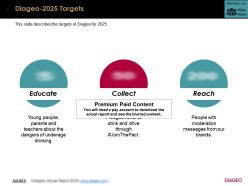
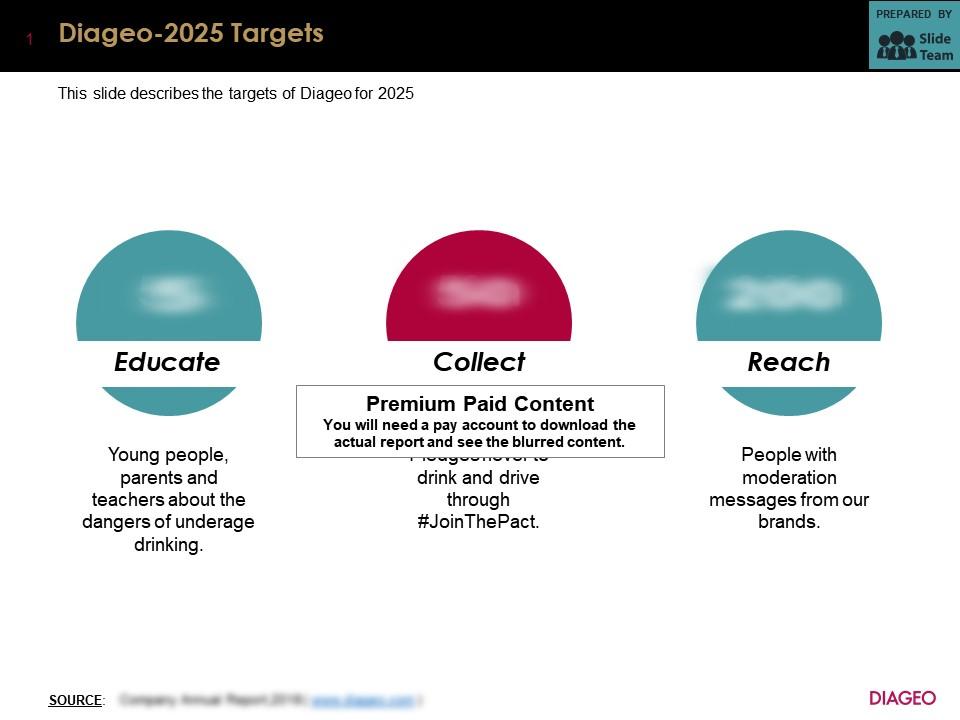
This slide describes the targets of Diageo for 2025.
People who downloaded this PowerPoint presentation also viewed the following :
Diageo 2025 targets with all 2 slides:
Indulge in intelligent displays with our Diageo 2025 Targets. Highlight the high degree of erudition existing.
FAQs for
Effective sustainability strategies include energy efficiency improvements, waste reduction programs, sustainable supply chain partnerships, circular economy adoption, and renewable energy integration. These approaches streamline operations by reducing costs, enhancing brand reputation, and meeting regulatory requirements, with many organizations finding that combining multiple initiatives delivers greater competitive advantage while attracting environmentally conscious consumers and investors.
Sustainable design influences consumer behavior by building brand trust, driving purchase decisions, and creating emotional connections with environmentally conscious values. Through eco-friendly packaging, renewable materials, and transparent practices, companies like Patagonia and Unilever attract loyal customers, command premium pricing, and gain competitive advantage in an increasingly sustainability-focused marketplace.
Technology enables sustainability initiatives by automating energy management, optimizing resource consumption, facilitating renewable energy integration, and providing real-time environmental monitoring capabilities. Through AI-powered systems and IoT sensors, organizations across manufacturing, retail, and logistics streamline operations while reducing waste, ultimately delivering cost savings and competitive advantage in an increasingly environmentally-conscious marketplace.
Companies measure sustainability impact through key performance indicators like carbon footprint reduction, waste diversion rates, energy efficiency improvements, water usage optimization, and supply chain transparency metrics. These measurements enable organizations to track progress against environmental goals, demonstrate accountability to stakeholders, and identify areas for operational enhancement, with many finding that systematic monitoring ultimately delivers cost savings and competitive advantage.
Corporate sustainability focuses on long-term environmental, economic, and social viability through resource management, emissions reduction, and sustainable business practices. Social responsibility emphasizes ethical obligations to stakeholders, communities, and society through philanthropy, fair labor practices, and community engagement, with many organizations finding that integrating both approaches delivers competitive advantage and enhanced brand reputation.
Sustainability can be integrated into supply chain management through green sourcing practices, carbon footprint reduction, ethical supplier partnerships, waste minimization strategies, and circular economy principles. These approaches enable organizations to streamline operations while reducing environmental impact, with many manufacturing and retail companies finding that sustainable supply chains ultimately deliver cost savings, enhanced brand reputation, and competitive advantage in increasingly conscious markets.
Financial benefits of adopting sustainable practices for small businesses include reduced operational costs, increased customer loyalty, enhanced brand reputation, improved employee retention, and access to green financing options. These advantages enable businesses to lower utility expenses through energy efficiency, attract environmentally conscious consumers, and qualify for tax incentives, ultimately delivering competitive advantage and long-term profitability.
Renewable energy sources contribute to sustainability goals by reducing carbon emissions, minimizing environmental impact, and decreasing dependence on finite fossil fuels. These technologies enable organizations to achieve net-zero targets while delivering long-term cost savings, with many manufacturing facilities, corporate campuses, and municipalities finding that solar and wind installations ultimately enhance operational efficiency and brand reputation.
Organizations face challenges including complex documentation requirements, high certification costs, lengthy audit processes, supply chain transparency issues, and meeting evolving regulatory standards. While these obstacles can be significant, many companies find that strategic planning, stakeholder engagement, and phased implementation approaches streamline the certification journey, ultimately delivering enhanced brand reputation, operational efficiency, and competitive advantage in increasingly sustainability-focused markets.
Individuals can promote sustainability through organizing community gardens, advocating for renewable energy initiatives, supporting local businesses, implementing recycling programs, and creating educational workshops. These grassroots efforts streamline environmental impact while building economic resilience, with many neighborhoods finding that collaborative sustainability projects ultimately deliver stronger community bonds, reduced costs, and enhanced quality of life.
Government policies drive corporate sustainability through regulatory frameworks, tax incentives, carbon pricing mechanisms, mandatory ESG reporting requirements, and green procurement standards. These policy tools enable organizations across manufacturing, energy, and financial services to streamline operations, reduce environmental costs, and gain competitive advantage, with many companies finding that compliance ultimately delivers improved efficiency and enhanced stakeholder trust.
Consumer expectations around sustainability significantly influence product development by driving demand for eco-friendly materials, circular design principles, and transparent supply chains. Companies across industries, from automotive to consumer goods, are redesigning products to meet these expectations, integrating renewable materials, reducing packaging waste, and implementing lifecycle assessments, ultimately delivering competitive advantages while building stronger customer loyalty in an increasingly environmentally conscious marketplace.
Innovative sustainable packaging solutions include biodegradable mushroom-based materials, seaweed wraps, edible packaging films, compostable plant fiber containers, and reusable smart packaging with embedded sensors. These alternatives enable companies across retail, food service, and e-commerce to significantly reduce environmental impact while enhancing brand reputation, ultimately delivering cost savings and competitive advantage in increasingly eco-conscious markets.
Educational institutions can incorporate sustainability into their curricula through interdisciplinary courses, hands-on projects, campus-based learning laboratories, industry partnerships, and integrated case studies across departments. These approaches enable students to explore renewable energy systems, waste reduction strategies, and sustainable business practices, while many universities find that combining theoretical frameworks with practical applications, such as campus sustainability audits and community environmental projects, ultimately delivers enhanced student engagement and prepares graduates for increasingly sustainability-focused careers.
Climate change significantly accelerates resource depletion, disrupts supply chains, and intensifies environmental challenges, while simultaneously driving innovation in renewable energy, circular economy models, and sustainable business practices. This creates both urgent pressures and strategic opportunities, with many organizations finding that proactive climate adaptation enhances operational resilience, reduces long-term costs, and delivers competitive advantage in increasingly sustainability-focused markets.
No Reviews