Dress Code Policy At Workplace Staff Induction Training Guide

Rating:
90%
Dress Code Policy At Workplace Staff Induction Training Guide
Slide 1 of 6

or

Favourites Favourites

Try Before you Buy Download Free Sample Product

Audience Impress Your
Audience
Editable 100%
Editable
Time Save Hours
of Time
The Biggest Sale is ending soon in
0
0
:
0
0
:
0
0
Rating:
90%
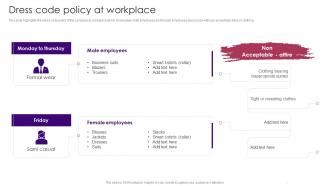
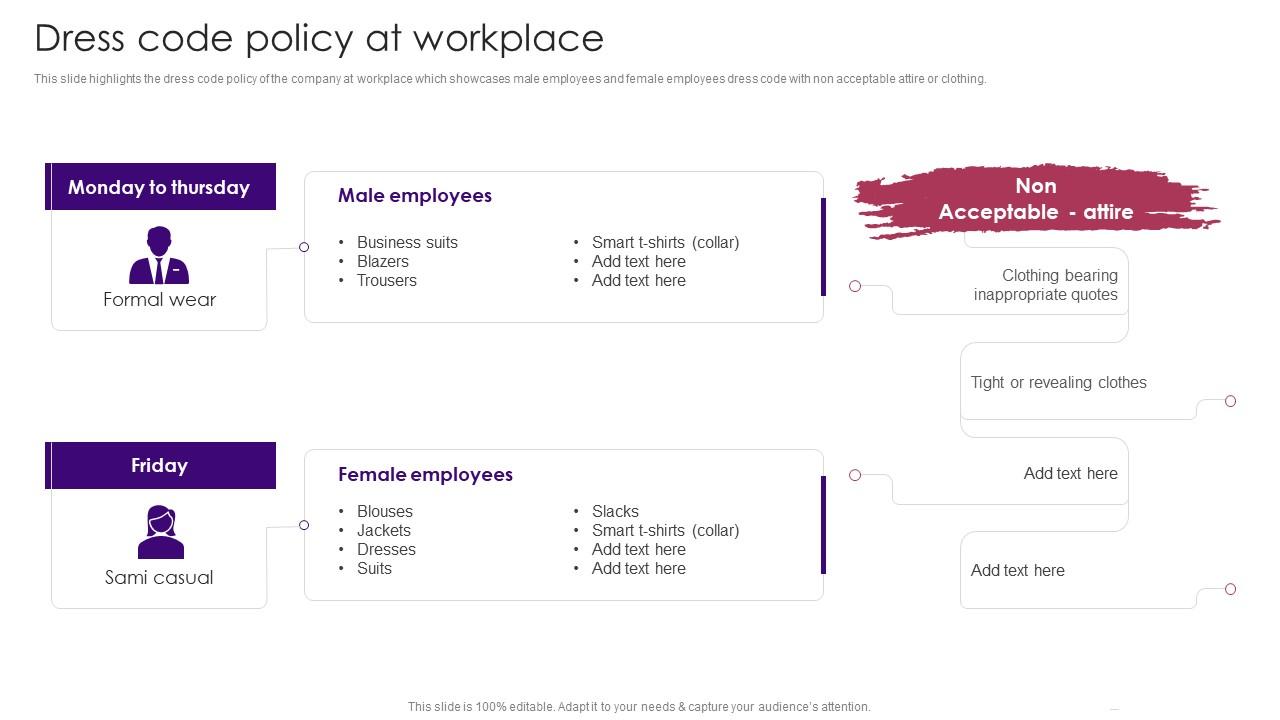
This slide highlights the dress code policy of the company at workplace which showcases male employees and female employees dress code with non acceptable attire or clothing. Deliver an outstanding presentation on the topic using this Dress Code Policy At Workplace Staff Induction Training Guide. Dispense information and present a thorough explanation of Male Employees, Female Employees using the slides given. This template can be altered and personalized to fit your needs. It is also available for immediate download. So grab it now.
People who downloaded this PowerPoint presentation also viewed the following :

FAQs for Dress Code Policy At Workplace Staff

Effective workplace dress code policies include clear attire guidelines, role-specific requirements, cultural sensitivity provisions, enforcement procedures, and accommodation protocols for religious or medical needs. These components streamline professional presentation by establishing consistent standards, reducing workplace confusion, and promoting inclusive environments, with many organizations finding that well-structured policies enhance brand image while respecting employee diversity.

A well-implemented dress code policy enhances employee morale by creating a sense of professionalism, equality, and belonging while establishing clear expectations that reduce daily decision-making stress. When organizations balance professional standards with employee comfort and self-expression, teams experience improved confidence, stronger workplace culture, and increased focus on core responsibilities, ultimately delivering enhanced productivity and better customer interactions.

Legal implications of dress code policies include discrimination claims, religious accommodation requirements, gender-based restrictions challenges, disability compliance issues, and workplace harassment considerations. These policies must balance professional standards with employee rights, ensuring clear guidelines that avoid bias while supporting business objectives, with many organizations finding that well-drafted policies enhance workplace professionalism without creating legal vulnerabilities.

Organizations ensure inclusivity by establishing gender-neutral dress codes, accommodating religious and cultural attire, considering accessibility needs, and providing flexible options for different body types and personal expression. Through comprehensive policy reviews and employee feedback sessions, companies create environments where diverse teams feel respected and valued, while maintaining professional standards, ultimately enhancing workplace culture and employee satisfaction across all demographics.

Organizational culture significantly influences dress code policies by reflecting company values, professional standards, and workplace atmosphere through attire expectations. Companies with formal cultures, like financial institutions and law firms, typically enforce strict business dress codes, while tech startups and creative agencies often embrace casual policies, ultimately aligning employee appearance with brand identity and organizational goals.

Dress code policies for remote and hybrid environments typically focus on video-call appropriate attire, maintaining professional standards during client interactions, and offering flexible guidelines for off-camera work days. Many organizations now adopt tiered approaches, requiring business professional for external meetings, business casual for internal video calls, and relaxed standards for non-video work, ultimately balancing employee comfort with professional image expectations.

Common challenges include inconsistent enforcement across departments, cultural and generational differences in style interpretation, remote work policy adaptation, and balancing professionalism with employee comfort. Many organizations find that unclear guidelines, manager reluctance to address violations, and evolving workplace norms create friction, while strategic policy updates and comprehensive training ultimately deliver consistency and enhanced workplace culture.

A well-crafted dress code policy balances professionalism with personal expression by establishing clear guidelines for business-appropriate attire while allowing flexibility in colors, patterns, and accessories within professional boundaries. Many organizations find that implementing tiered dress standards, offering "creative Friday" options, and focusing on overall appearance rather than rigid restrictions enables employees to maintain individual style while projecting competence and credibility to clients.

HR departments can communicate dress code expectations through clear written policies, visual style guides, interactive training sessions, regular reminders via internal communications, and consistent managerial enforcement across all levels. These strategies enhance workplace professionalism by eliminating ambiguity, reducing compliance issues, and fostering inclusive environments, with many organizations finding that comprehensive communication approaches ultimately deliver improved employee confidence and stronger brand representation.

Businesses can gather employee feedback through anonymous surveys, focus groups, town halls, suggestion boxes, and departmental meetings to assess comfort levels and preferences. These approaches enable organizations to understand diverse perspectives across different roles and departments, while ensuring policies balance professional standards with employee satisfaction, ultimately creating more inclusive workplace environments that enhance morale and reduce compliance issues.

Best practices for training managers and staff on dress code compliance include clear policy documentation, visual examples of appropriate attire, role-specific guidelines, interactive workshops, and regular refresher sessions. These approaches streamline implementation by ensuring consistent interpretation across departments, reducing workplace conflicts, and maintaining professional standards, with many organizations finding that comprehensive training ultimately enhances employee confidence and workplace culture.

Dress code policies evolve through regular reviews incorporating employee feedback, cultural shifts, and industry standards, while maintaining professional appearance guidelines and workplace safety requirements. Many organizations now adopt flexible frameworks allowing seasonal updates and generational input, with companies in creative industries, financial services, and healthcare finding that adaptive policies enhance employee satisfaction while preserving brand identity and operational effectiveness.

Dress code policies significantly enhance brand image by ensuring consistent professional representation, building customer trust, and reinforcing company values across all client interactions. Well-implemented policies create cohesive visual identity that customers associate with reliability and competence, with many service-oriented businesses finding that professional appearance standards directly correlate with improved customer confidence and loyalty.

Dress code policies integrate into onboarding through employee handbooks, orientation presentations, visual guides, and direct supervisor discussions during the first week. Many organizations enhance this process by providing digital lookbooks, department-specific guidelines, and mentorship programs, ultimately ensuring new hires understand expectations while building confidence and professional alignment from day one.

Creative dress code presentations include interactive workshops with style examples, visual lookbooks showcasing appropriate attire, gamified quizzes with scenario-based questions, and peer-led fashion shows demonstrating acceptable options. These engaging approaches help organizations streamline policy communication while enhancing employee understanding and compliance, with many companies finding that interactive formats significantly reduce dress code violations and workplace confusion.

Ratings and Reviews

90% of 100
Review Form
Write a review
Most Relevant Reviews
  1. 80%

    by O'Kelly Phillips

    They had the topic I was looking for in a readymade presentation…helped me meet my deadline. 
  2. 100%

    by Denver Fox

    Wow! The design and quality of templates on SlideTeam are simply the best. 

2 Item(s)

per page: