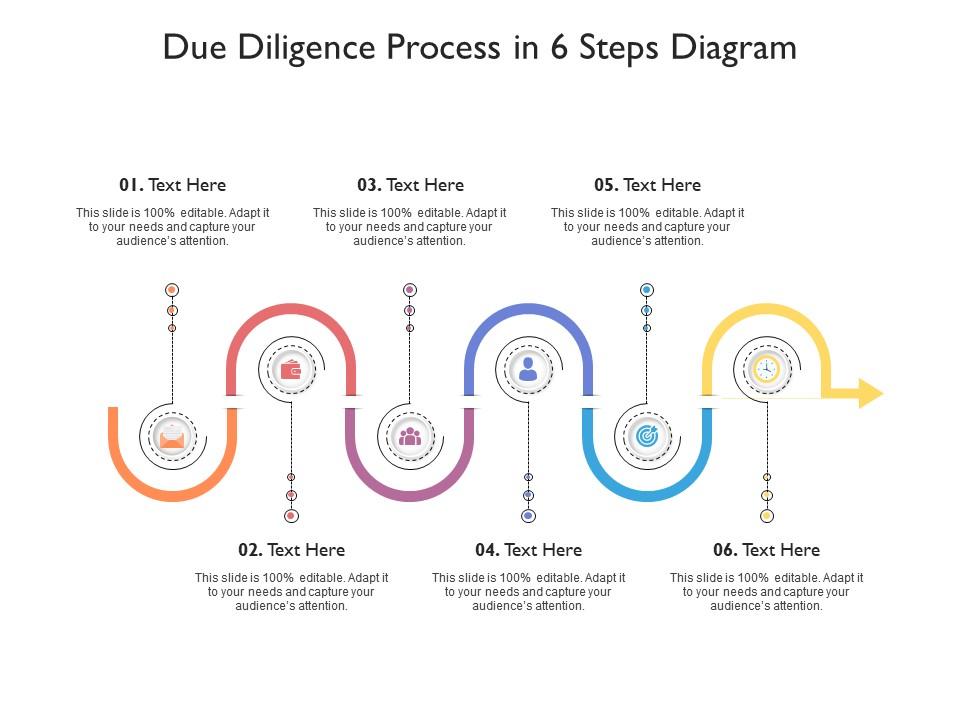
Due diligence process in 6 steps diagram infographic template
Try Before you Buy Download Free Sample Product
Audience
Editable
of Time
Our Due Diligence Process In 6 Steps Diagram Infographic Template are topically designed to provide an attractive backdrop to any subject. Use them to look like a presentation pro.
People who downloaded this PowerPoint presentation also viewed the following :
Due diligence process in 6 steps diagram infographic template with all 2 slides:
Use our Due Diligence Process In 6 Steps Diagram Infographic Template to effectively help you save your valuable time. They are readymade to fit into any presentation structure.
FAQs for Due diligence process in 6 steps
Okay so you'll want to hit four main areas: financial, legal, operational, and commercial due diligence. Financial is pretty straightforward - their books, cash flow, accounting stuff. Legal digs into contracts, IP issues, any litigation risks, compliance headaches. The operational piece looks at processes, systems, management team (this one honestly finds the weirdest stuff sometimes). Commercial examines their market position and customer base. Don't forget IT/cybersecurity too, plus environmental if that's relevant to their industry. My advice? Build out a detailed checklist from day one and make sure someone owns each piece.
So financial due diligence is basically diving into all the money stuff - cash flow, revenue trends, profit margins, projections. You're figuring out if this thing actually makes cents (see what I did there?). Legal due diligence? That's your risk radar. Contracts, lawsuits, regulatory headaches, IP issues - anything that could bite you later. And honestly, legal problems always pop up at the absolute worst moment. One tells you if there's money to be made, the other tells you if you'll get sued. Just make sure both teams talk to each other because weird financial stuff usually has legal drama attached.
Dude, tech totally transforms due diligence. AI can rip through thousands of docs in minutes - saves you weeks of mind-numbing reading. Data analytics catches financial red flags you'd probably miss doing it by hand. Virtual data rooms let your whole team collaborate without security headaches. Honestly, I have no clue how anyone survived this process before decent tech existed! Don't pick like 10 different platforms though. Find ones that actually talk to each other. My advice? Figure out what's eating most of your time first, then grab whatever tool fixes that specific problem.
Honestly, rushing the financials is the worst mistake you can make. Also skip cultural fit at your own peril - I've seen deals blow up over personality clashes alone. Don't just read management's glossy presentations either, they're basically corporate fiction. Talk to actual employees and customers yourself. Customer concentration is huge too - if 60% of revenue comes from one client, that's terrifying. Oh and dig into those footnotes for buried lawsuits or sketchy revenue recognition. Make a checklist and actually use it, even when everyone's screaming to close fast. Trust me, missing obvious red flags will keep you up at night later.
Set up a secure data room first - that's your digital vault for all the sensitive stuff. NDAs for literally everyone, including your own team (people forget this part all the time). Only share what they absolutely need to see, nothing extra. Watermarks are smart too if you can swing it. Oh and seriously, treat this like you're guarding nuclear codes or something. Because honestly? Your company's secrets are probably worth more than you think. Access controls and user tracking will save your ass if anything goes sideways.
Cross-border deals are honestly a pain - way more moving parts than domestic stuff. Get local lawyers involved right away because they know the weird regulatory stuff you'd miss. Currency controls and tax implications will mess with your numbers, plus you're dealing with two sets of securities laws. Don't skip the cultural piece either - sounds fluffy but it actually matters for making things work post-deal. Accounting standards between countries can be wildly different, so that'll throw off your models. Oh and translation costs add up fast. Budget like 3x the time for approvals because bureaucracy moves slow when it's international.
So basically, due diligence is where your valuation gets a reality check. Hidden liabilities pop up constantly - way more than the good surprises, trust me. Declining contracts, regulatory headaches, you name it. All that stuff forces you to mark down your initial price assumptions. Sometimes you'll stumble on assets they undervalued or growth potential that wasn't obvious from your desktop research, but don't count on it. The trick is updating your financial model as issues surface instead of waiting till the end. Keep adjusting that valuation range based on what you're actually finding.
Set up one central spot where all your docs live - shared drive, data room, whatever works. Track everything with timestamps and who touched what. Seriously, future you will thank me when someone starts asking questions six months later. Use the same checklists every time so you don't miss stuff. Write down every red flag you find, even the tiny ones that seem stupid. Oh, and back up your digital files regularly because nothing's worse than losing everything. Here's the thing - if you didn't document it, it basically never happened according to auditors.
So basically, whatever you find during due diligence becomes your negotiating power. Found some sketchy financials or compliance issues? Perfect - now you can push for a lower price or add protection clauses. But if everything looks pristine (which honestly rarely happens), you'll probably need to move fast since other buyers are circling too. The whole point is adjusting your game plan based on what you discovered. Maybe you get more aggressive on pricing, or maybe you build in safeguards for those red flags you spotted. It's all about working with what you've got.
Honestly, cultural due diligence can make or break your whole deal. Perfect financials mean nothing if the cultures are completely mismatched - you'll watch your best people walk out the door and productivity will nosedive. I've watched deals that looked incredible on paper turn into total disasters because nobody bothered checking if the work styles and values actually fit together. Look at their communication patterns, how management operates, what employees expect. Do it early too, not as an afterthought. Trust me, it's way easier than trying to fix a cultural trainwreck later.
Due diligence is basically your safety net before making any big moves. You're digging through financials, legal stuff, operations - looking for anything sketchy that might blow up later. It's like inspecting a house before buying, but with way more boring paperwork (and trust me, there's *a lot*). The whole point? Either walk away from risky deals, use what you find to negotiate better terms, or at least know what you're getting into. I learned this the hard way once - always do your homework first so you don't end up fixing disasters later.
Dude, startup due diligence is totally different. You're basically betting on people and ideas since most don't have real financials yet - some are literally just pitch decks with fancy logos. Focus hard on the founders' backgrounds and whether their market actually exists. Established companies? Way easier. You've got years of audited books, compliance records, actual revenue trends to analyze. With startups I spend most time validating if their business model isn't completely insane and checking they won't run out of cash in 6 months. Oh and IP stuff - super important. Different games entirely.
So due diligence is basically your radar for spotting conflicts before they blow up. You're hunting for anything that creates competing loyalties - board seats, vendor deals, family connections, financial stakes. Honestly, it's like being a detective but with way more Excel files. Map out how everyone's connected to each other first thing. I always make this conflict matrix early on (sounds fancy but it's just a visual chart) and keep adding to it as weird relationships pop up. Trust me, seeing it laid out makes those sneaky conflicts super obvious.
So you're gonna want specialists for due diligence - lawyers, accountants, maybe some tech people depending on the deal. They catch stuff you'd totally miss because they know where companies usually hide problems. Yeah, they cost a bunch upfront, but honestly? Way cheaper than buying a mess. I learned this the hard way on my second acquisition - wish I'd gotten the IT guy in there sooner. The key is bringing them in early enough that they can actually do their job properly. Don't wait until you're already halfway committed, you know?
Get your data room sorted early - like, way earlier than you think. Dump everything digital: financials, contracts, IP stuff, HR records, legal docs. Investors are gonna ask for the weirdest shit at random times, so having it organized saves your sanity later. Clean up messy contracts first and get those financials audited. Your management team should practice answering questions about growth plans and market stuff too. I learned this the hard way when we were digging through files at midnight because someone wanted our insurance policy from 2019. Seriously, start this months ahead of time. You'll thank me later.
-
Excellent template with unique design.
-
Content of slide is easy to understand and edit.
-
Excellent design and quick turnaround.
-
Great designs, really helpful.
-
Illustrative design with editable content. Exceptional value for money. Highly pleased with the product.
-
Professional and unique presentations.