E Commerce Industry Analysis And Introduction BP MD

Rating:
90%
Slide 1 of 20
Favourites Favourites

Try Before you Buy Download Free Sample Product

Audience Impress Your
Audience
Editable 100%
Editable
Time Save Hours
of Time
The Biggest Sale is ending soon in
0
0
:
0
0
:
0
0
Rating:
90%
Introduce your topic and host expert discussion sessions with this E Commerce Industry Analysis And Introduction BP MD. This template is designed using high-quality visuals, images, graphics, etc, that can be used to showcase your expertise. Different topics can be tackled using the fifteen slides included in this template. You can present each topic on a different slide to help your audience interpret the information more effectively. Apart from this, this PPT slideshow is available in two screen sizes, standard and widescreen making its delivery more impactful. This will not only help in presenting a birds-eye view of the topic but also keep your audience engaged. Since this PPT slideshow utilizes well-researched content, it induces strategic thinking and helps you convey your message in the best possible manner. The biggest feature of this design is that it comes with a host of editable features like color, font, background, etc. So, grab it now to deliver a unique presentation every time.

People who downloaded this PowerPoint presentation also viewed the following :

Content of this Powerpoint Presentation

Slide 1: This slide introduces E-commerce Industry Analysis and Introduction. State your company name and begin.
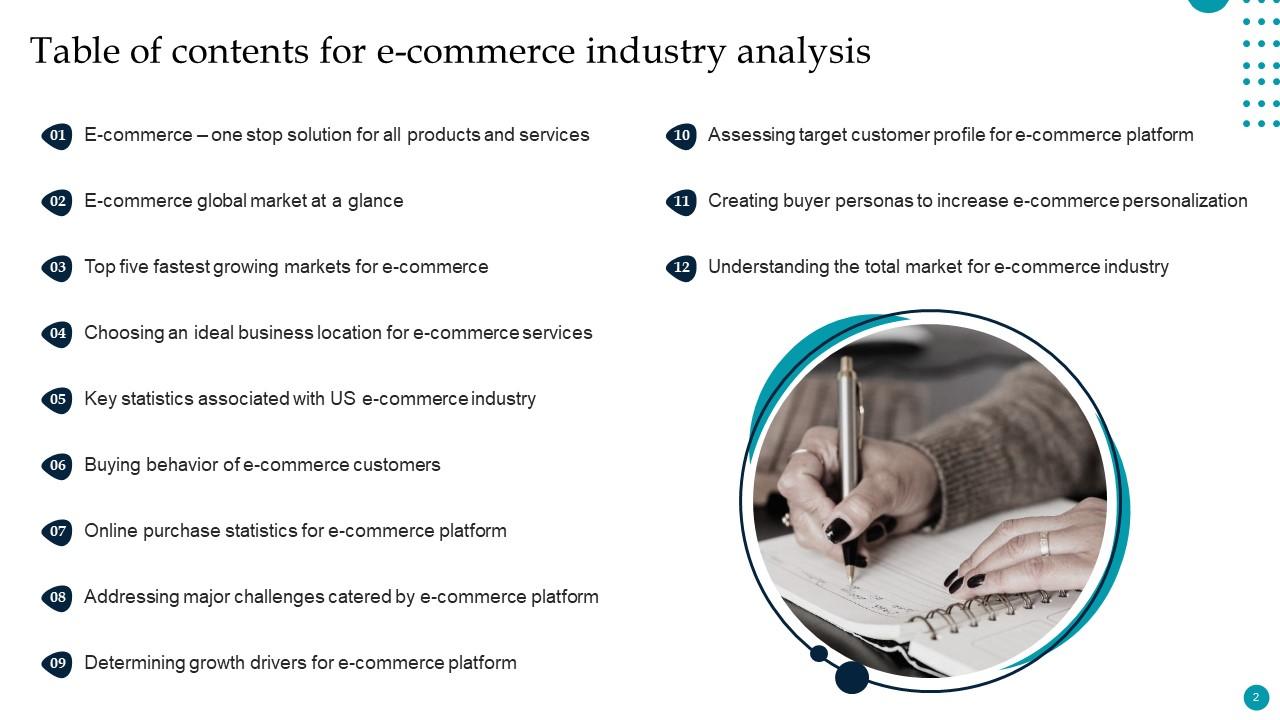
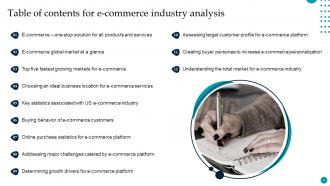
Slide 2: This slide shows Table of Content for the presentation.
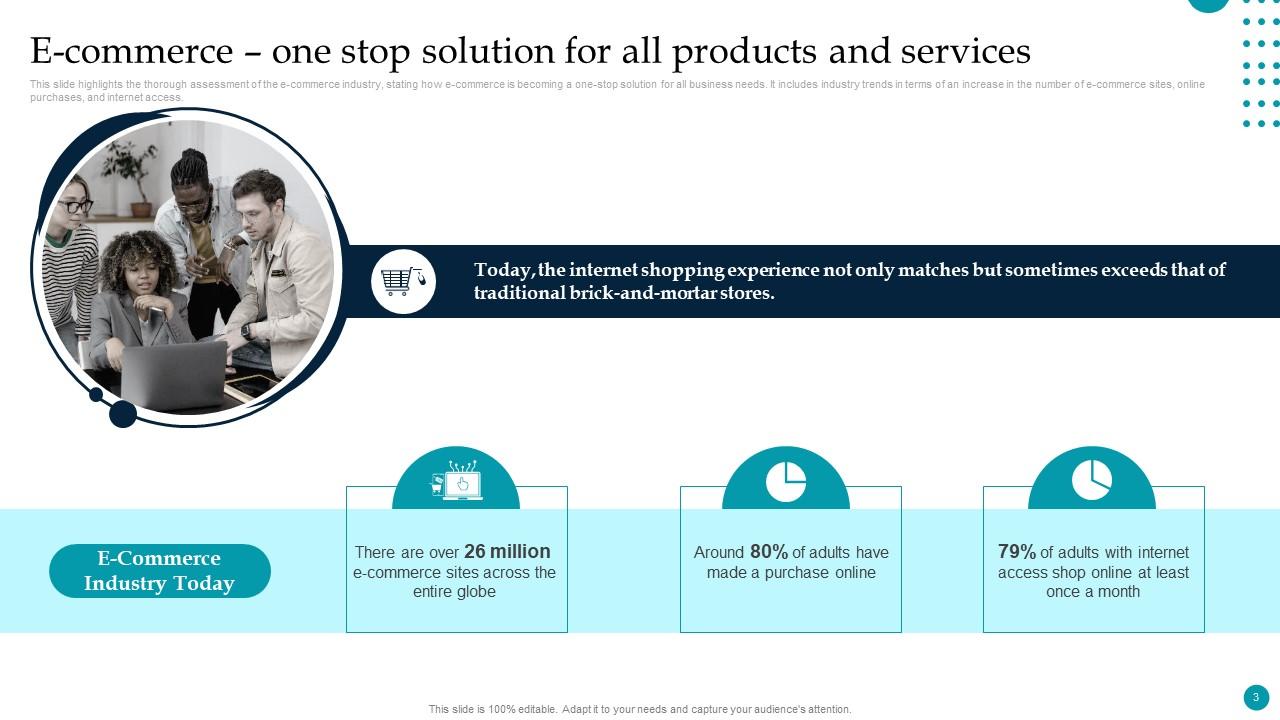
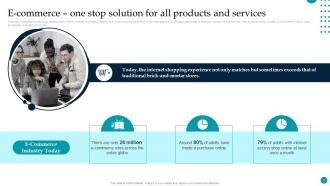
Slide 3: This slide highlights the thorough assessment of the e-commerce industry.
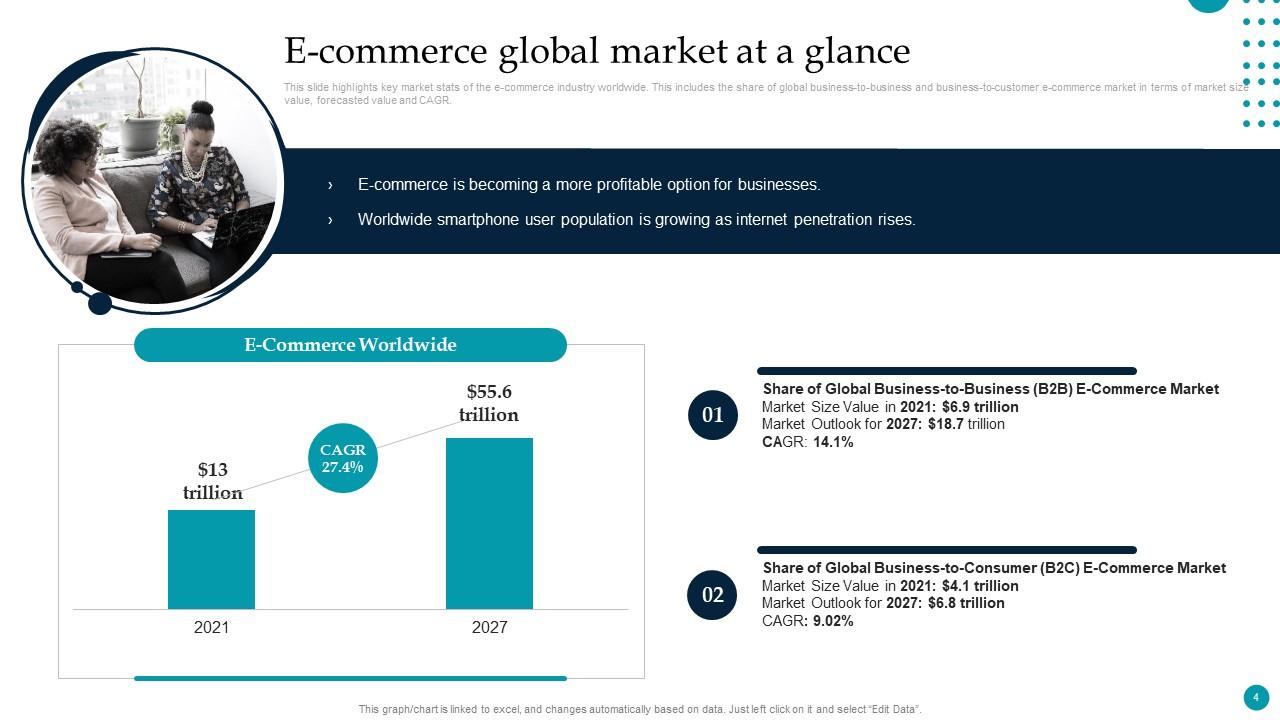
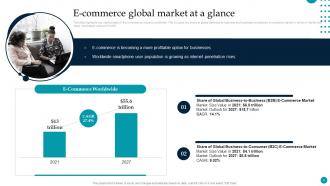
Slide 4: This slide displays E-commerce global market at a glance.
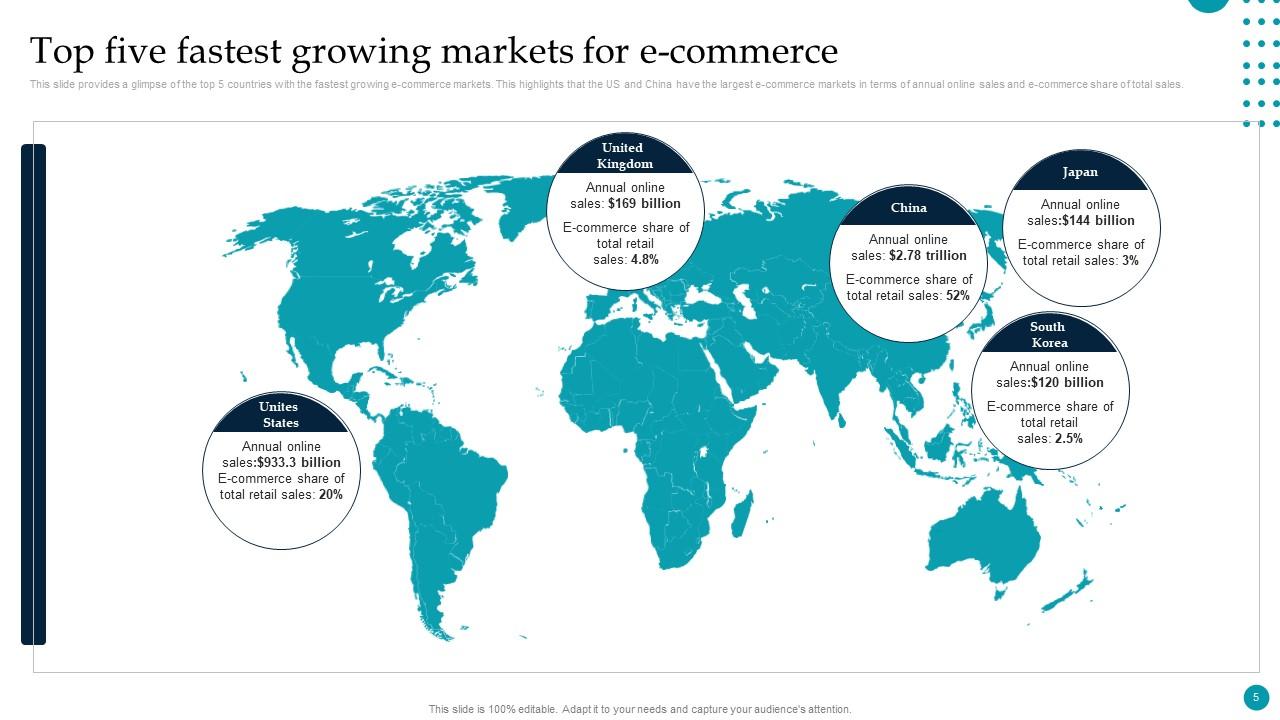
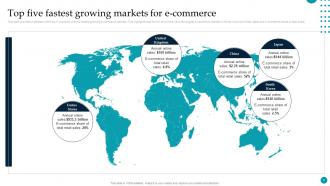
Slide 5: This slide represents Top five fastest growing markets for e-commerce.
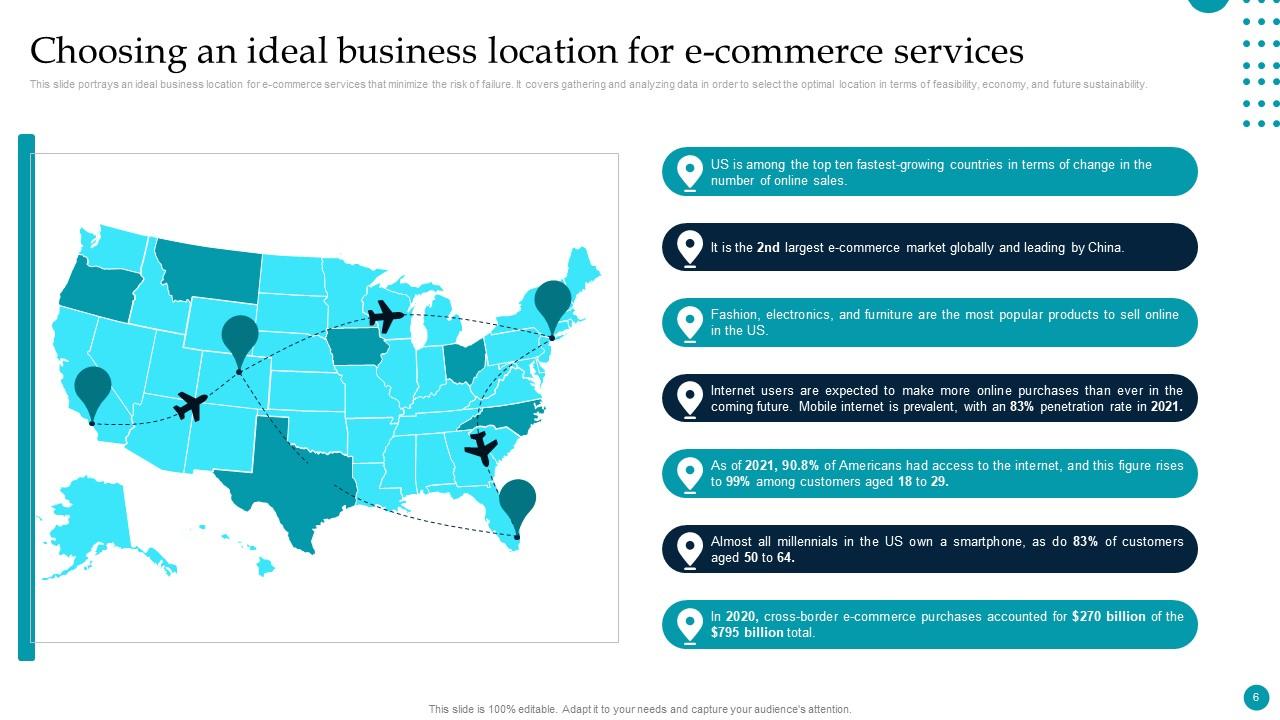
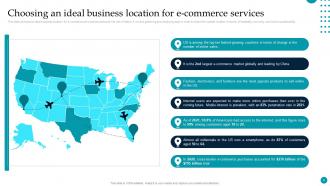
Slide 6: This slide showcases Choosing an ideal business location for e-commerce services.
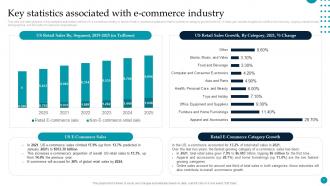
Slide 7: This slide shows Key statistics associated with e-commerce industry.
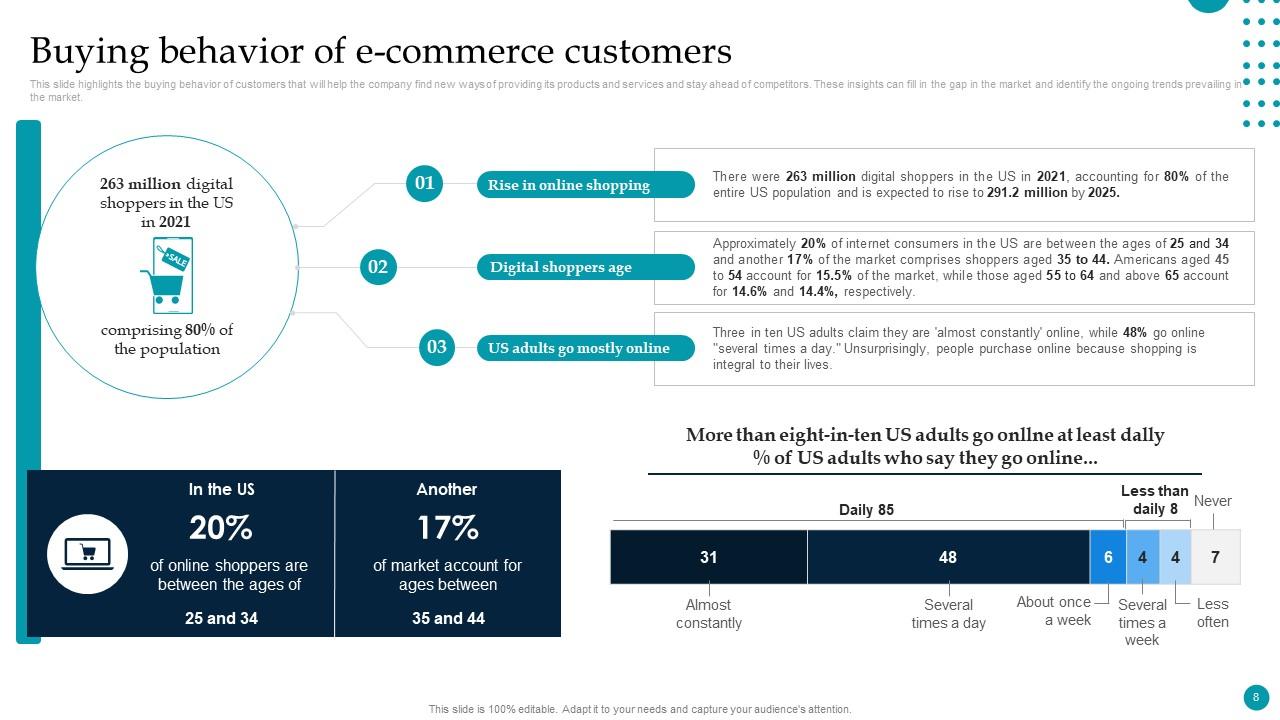
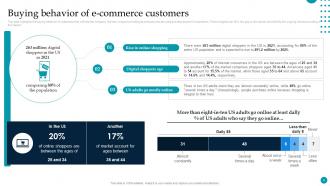
Slide 8: This slide presents Buying behavior of e-commerce customers.
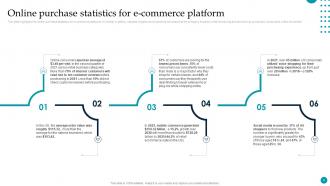
Slide 9: This slide displays Online purchase statistics for e-commerce platform.
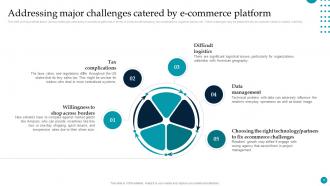
Slide 10: This slide represents Addressing major challenges catered by e-commerce platform.
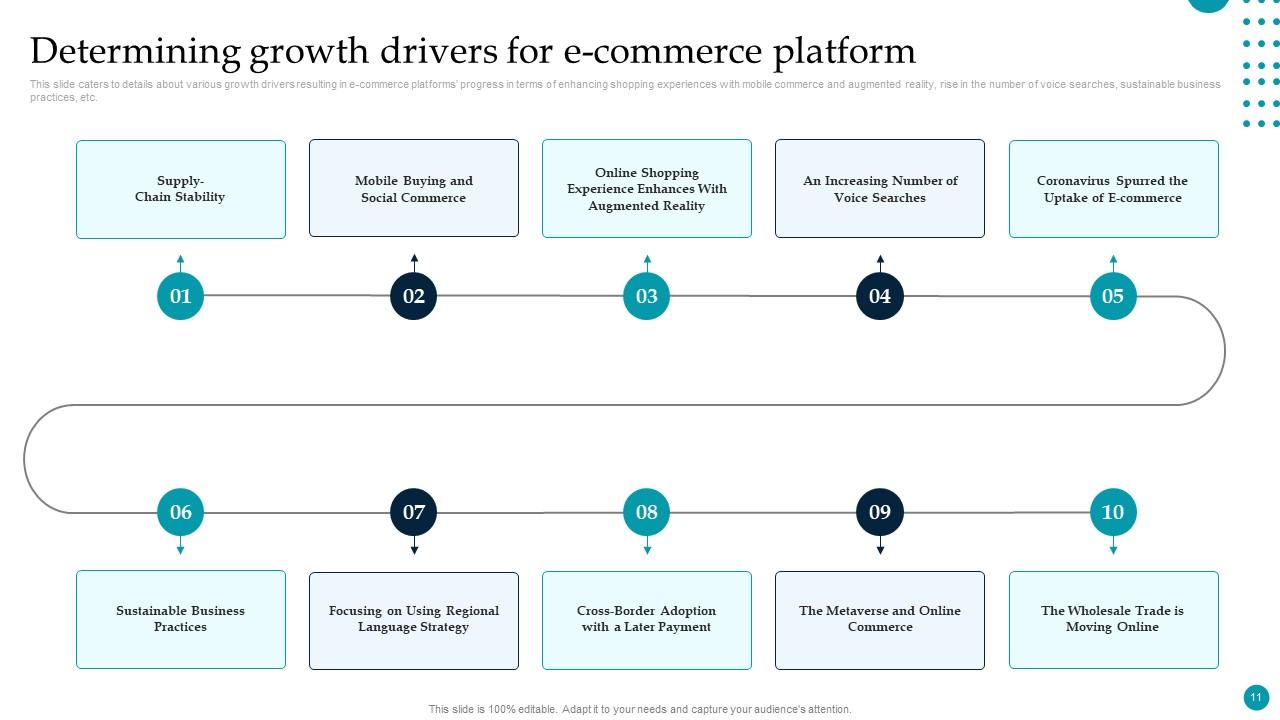
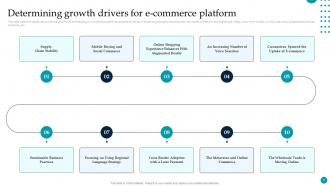
Slide 11: This slide showcases Determining growth drivers for e-commerce platform.
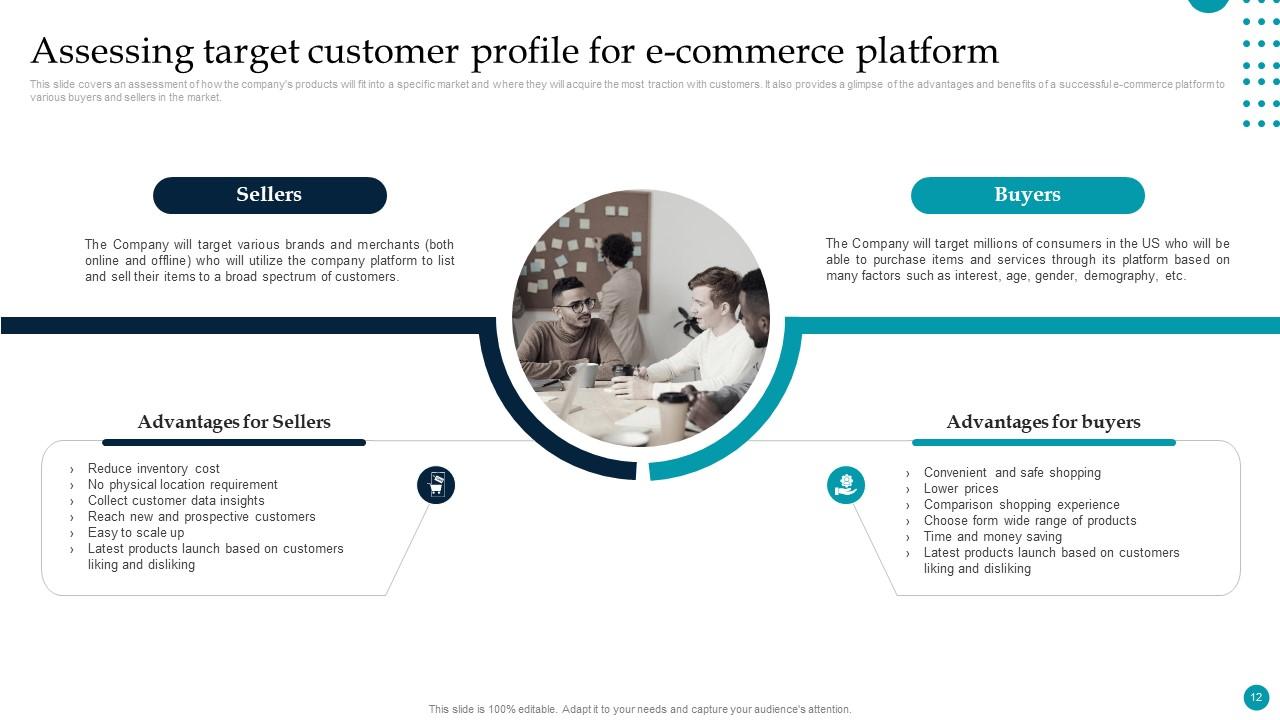
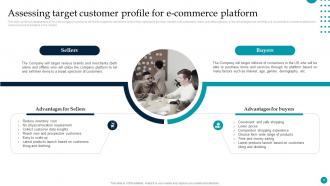
Slide 12: This slide shows Assessing target customer profile for e-commerce platform.
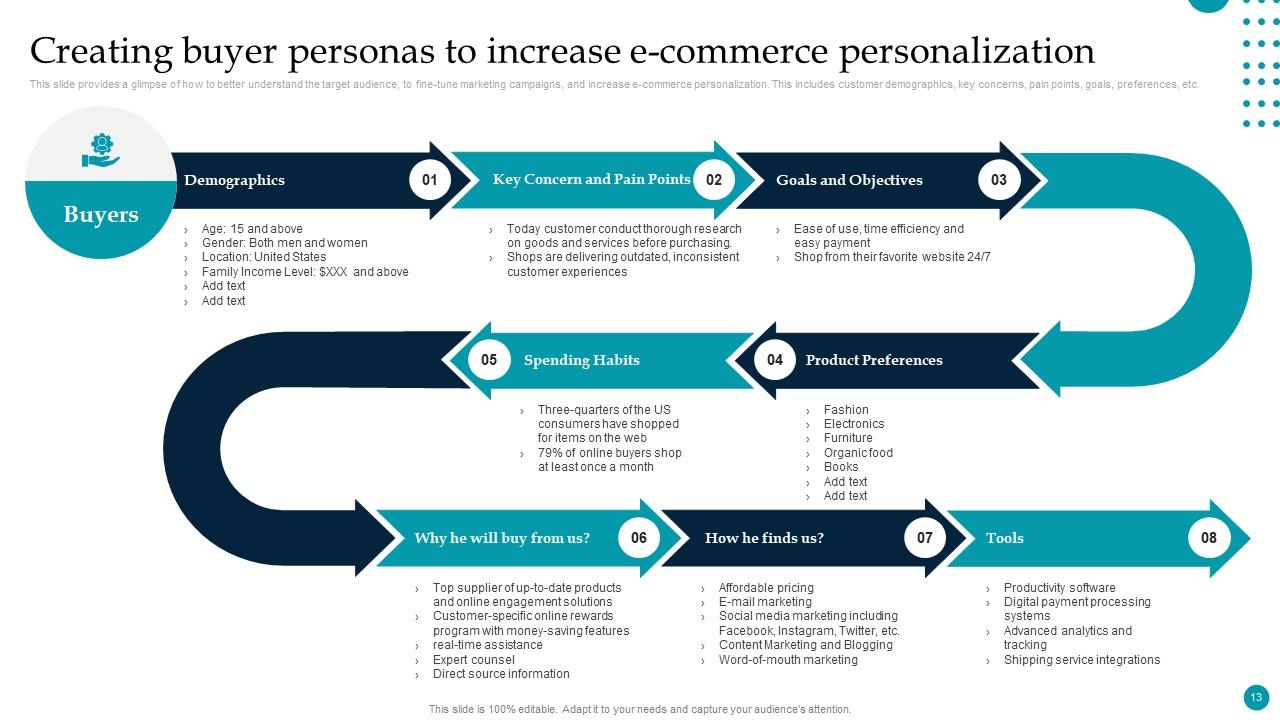
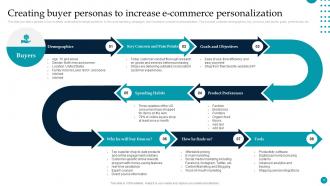
Slide 13: This slide presents Creating buyer personas to increase e-commerce personalization.
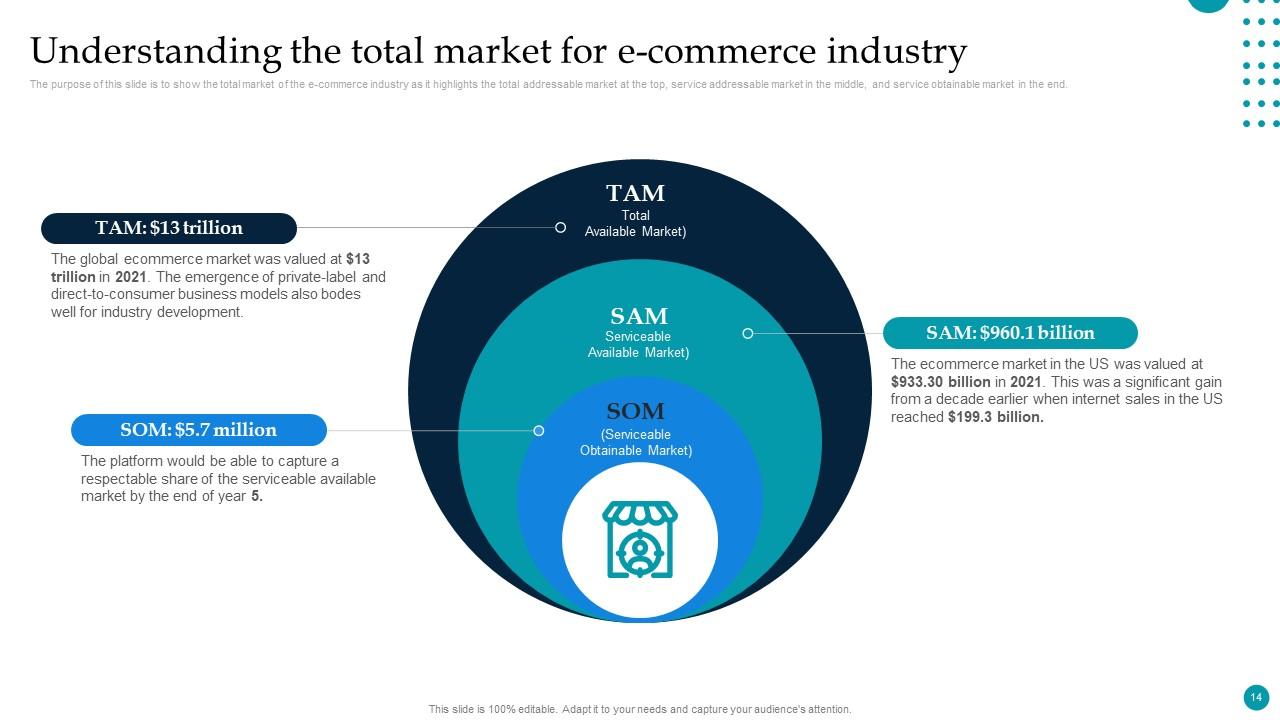
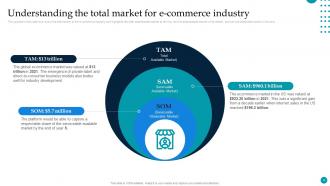
Slide 14: This slide displays Understanding the total market for e-commerce industry.
Slide 15: This is a Thank You slide with address, contact numbers and email address.

FAQs for E Commerce Industry Analysis And

Key trends driving e-commerce growth include mobile commerce expansion, AI-powered personalization, social commerce integration, omnichannel experiences, and sustainable shopping options. These technologies streamline customer journeys by enhancing product discovery, optimizing inventory management, and delivering personalized recommendations, with many retailers finding that strategic combinations of these approaches ultimately increase conversion rates and customer loyalty.

The pandemic accelerated online shopping adoption across all demographics, with consumers embracing contactless payments, curbside pickup, and subscription services for essentials. These behavioral shifts transformed retail permanently, with many businesses finding that omnichannel strategies, enhanced digital experiences, and flexible delivery options deliver sustained customer loyalty and competitive advantage in an increasingly digital marketplace.

Mobile commerce drives significant e-commerce growth by enabling shopping through smartphones and tablets, facilitating instant purchases, and reaching customers anywhere. Through mobile apps and responsive websites, retailers streamline checkout processes, personalize experiences, and capture impulse buying, with many businesses finding that mobile transactions increasingly represent their largest revenue channel, ultimately delivering enhanced accessibility and competitive advantage.

Emerging technologies transforming e-commerce include artificial intelligence, augmented reality, voice commerce, blockchain, and IoT integration. These innovations streamline operations by personalizing customer experiences, enabling virtual product trials, and automating inventory management, with retailers like Sephora and Amazon finding that AI-driven recommendations and AR try-ons significantly boost conversion rates.

The rise of social commerce compels traditional e-commerce platforms to integrate social features, enhance mobile experiences, and adopt influencer-driven marketing strategies. While this presents competitive challenges, it also creates opportunities for platforms to leverage social data for personalization, streamline discovery-to-purchase journeys, and ultimately deliver more engaging customer experiences that drive higher conversion rates.

Small businesses in e-commerce face challenges including limited marketing budgets, inventory management complexities, customer acquisition costs, logistics constraints, and intense competition from larger retailers. These obstacles significantly impact cash flow, operational efficiency, and market positioning, with many startups finding that strategic technology adoption and targeted niche marketing ultimately deliver competitive advantages and sustainable growth opportunities.

Retailers can enhance customer experience by streamlining checkout processes, offering guest checkout options, providing transparent shipping costs, implementing cart recovery emails, and displaying trust signals like security badges. These strategies address common abandonment triggers while building customer confidence, with many e-commerce businesses finding that simplified navigation and multiple payment options ultimately deliver higher conversion rates and increased revenue.

E-commerce SEO best practices include optimizing product descriptions with targeted keywords, implementing structured data markup, improving site speed and mobile responsiveness, creating user-friendly URL structures, and building quality backlinks. These strategies enhance search visibility by improving crawlability, user experience, and content relevance, with many online retailers finding that comprehensive SEO optimization significantly increases organic traffic and conversion rates.

E-commerce companies should consider data privacy protection, transparent advertising practices, honest product representations, responsible targeting of vulnerable populations, and sustainable consumption messaging. These ethical frameworks enhance customer trust, reduce regulatory risks, and build long-term brand loyalty, with many retailers finding that transparent, value-driven marketing strategies ultimately deliver stronger customer relationships and competitive advantage.

Logistics and supply chain management directly influence e-commerce success by determining delivery speed, cost efficiency, and customer satisfaction levels. Through advanced warehouse automation, real-time inventory tracking, and strategic distribution networks, retailers like Amazon and Walmart streamline operations, reduce shipping costs, and enhance customer experiences, ultimately delivering competitive advantage in an increasingly demanding marketplace.

Digital wallets like PayPal, Apple Pay, and Google Pay, buy-now-pay-later services such as Klarna and Afterpay, cryptocurrency payments, and one-click checkout solutions are gaining significant traction among online consumers. These payment methods streamline the purchasing process by reducing friction, enhancing security, and offering flexible financing options, ultimately delivering faster checkout experiences and higher conversion rates for retailers.

Data analytics transforms e-commerce strategies by enabling personalized customer experiences, optimizing inventory management, and predicting consumer behavior patterns through real-time insights. Through advanced analytics platforms, retailers streamline pricing strategies, enhance targeted marketing campaigns, and improve supply chain efficiency, with many organizations finding that data-driven approaches deliver significantly higher conversion rates and competitive advantage.

Customer reviews and ratings significantly influence purchasing decisions by providing social proof, reducing uncertainty, and building trust between consumers and unfamiliar brands or products. These user-generated insights help shoppers evaluate quality, functionality, and value, with many e-commerce platforms finding that products with higher ratings and detailed reviews consistently drive increased conversion rates and customer confidence.

E-commerce businesses leverage social media marketing by creating targeted content campaigns, utilizing influencer partnerships, implementing shoppable posts, and engaging with customers through personalized interactions and community building. Through platforms like Instagram and TikTok, retailers streamline the purchase journey, enhance brand visibility, and drive conversions, with many finding that authentic storytelling and user-generated content ultimately deliver higher engagement rates and customer loyalty.

E-commerce companies are adopting carbon-neutral shipping, sustainable packaging materials, circular economy initiatives, renewable energy operations, and ethical sourcing programs to attract eco-conscious consumers. These practices streamline environmental impact while enhancing brand reputation, with many retailers finding that sustainable operations ultimately deliver cost savings, improved customer loyalty, and significant competitive advantage in an increasingly environmentally-aware marketplace.

Ratings and Reviews

90% of 100
Write a review
Most Relevant Reviews
  1. 100%

    by Chet Cox

    Use of icon with content is very relateable, informative and appealing.
  2. 80%

    by Christoper Chavez

    The team is highly dedicated and professional. They deliver their work on time and with perfection.

2 Item(s)

per page: