E commerce sales life cycle model ppt powerpoint presentation icon pictures cpb

E commerce sales life cycle model ppt powerpoint presentation icon pictures cpb
Slide 1 of 5
Favourites Favourites

Try Before you Buy Download Free Sample Product

Audience Impress Your
Audience
Editable 100%
Editable
Time Save Hours
of Time
The Biggest Sale is ending soon in
0
0
:
0
0
:
0
0
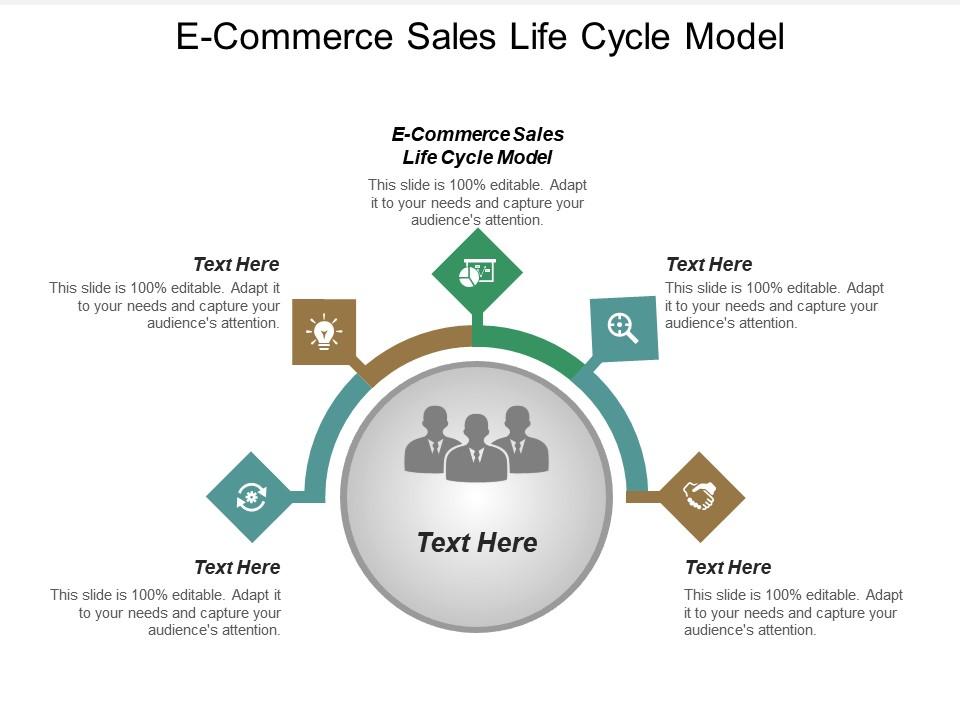
Presenting this set of slides with name E Commerce Sales Life Cycle Model Ppt Powerpoint Presentation Icon Pictures Cpb. This is an editable Powerpoint five stages graphic that deals with topics like E Commerce Sales Life Cycle Model to help convey your message better graphically. This product is a premium product available for immediate download and is 100 percent editable in Powerpoint. Download this now and use it in your presentations to impress your audience.

People who downloaded this PowerPoint presentation also viewed the following :

FAQs for E commerce sales life cycle model ppt powerpoint presentation

The key stages of the E-commerce sales life cycle model include awareness, interest, consideration, purchase, fulfillment, and retention. These stages streamline customer journey mapping by tracking engagement touchpoints, optimizing conversion funnels, and enhancing post-purchase experiences, with many retailers finding that systematic lifecycle management ultimately delivers higher customer lifetime value and competitive advantage.

Customer acquisition serves as the foundation of the e-commerce sales lifecycle, driving traffic through targeted marketing campaigns, search engine optimization, social media engagement, and strategic partnerships. These efforts enable retailers to attract qualified prospects, build brand awareness, and establish initial customer touchpoints, while successful acquisition strategies ultimately deliver higher conversion rates and sustainable revenue growth across diverse market segments.

Businesses should track conversion rates, customer acquisition costs, average order values, cart abandonment rates, and customer lifetime value throughout their sales life cycle. These metrics enable organizations to identify bottlenecks, optimize marketing spend, and enhance customer experiences, with many e-commerce companies finding that comprehensive tracking ultimately delivers improved profitability and sustainable growth.

Businesses can optimize conversion rates through targeted landing pages, personalized product recommendations, streamlined checkout processes, retargeting campaigns, and A/B testing messaging at each stage. Through strategic email sequences, cart abandonment recovery, and mobile optimization, companies in retail, fashion, and electronics enhance customer experiences, reduce friction points, and ultimately deliver higher sales volumes and improved customer lifetime value.

Customer personas significantly influence the E-commerce sales life cycle by enabling targeted marketing strategies, personalized product recommendations, customized user experiences, and tailored communication approaches throughout each stage. These detailed customer profiles streamline conversion optimization, enhance retention strategies, and improve customer service interactions, with many retailers finding that persona-driven approaches ultimately deliver higher conversion rates, increased average order values, and stronger customer loyalty across their digital platforms.

Customer retention strategies include personalized email campaigns, loyalty reward programs, targeted product recommendations, exclusive member benefits, and proactive customer service support. These approaches enhance retention by creating emotional connections, delivering consistent value, and anticipating customer needs, with many e-commerce businesses finding that integrated retention strategies significantly reduce churn while increasing lifetime customer value and competitive advantage.

Data analytics improves e-commerce decision-making by providing customer behavior insights, inventory optimization data, pricing intelligence, and sales forecasting capabilities that enable strategic choices. Through predictive analytics and real-time dashboards, retailers can streamline product recommendations, minimize stockouts, and enhance personalization strategies, ultimately delivering improved conversion rates and competitive advantage.

Customer feedback serves as a critical refinement tool for the e-commerce sales life cycle, identifying friction points, optimizing conversion pathways, and enhancing customer experience across awareness, consideration, and retention stages. This feedback enables businesses to streamline checkout processes, improve product recommendations, and personalize marketing touchpoints, with many retailers finding that systematic feedback integration ultimately delivers higher conversion rates and increased customer lifetime value.

Businesses can effectively transition leads by implementing targeted content marketing, personalized email campaigns, retargeting advertisements, social proof integration, and streamlined checkout processes. Through strategic nurturing sequences, companies like retail brands and subscription services enhance customer engagement, reduce cart abandonment rates, and accelerate conversion timelines, ultimately delivering higher sales volumes and improved customer acquisition costs.

Seasonality significantly impacts the E-commerce sales life cycle by compressing acquisition phases during peak periods, accelerating conversion rates through urgency-driven purchasing, and extending retention efforts through post-season engagement strategies. Retailers leverage seasonal patterns to optimize inventory management, personalize marketing campaigns, and maximize customer lifetime value, with many finding that strategic seasonal planning delivers 20-40% higher revenue during peak periods.

Automation tools streamline e-commerce sales by automating inventory management, personalizing customer recommendations, processing payments seamlessly, and triggering follow-up communications based on customer behavior. These technologies enhance operational efficiency through faster order processing, reduced manual errors, and improved customer experiences, with many retailers finding that automated workflows ultimately deliver higher conversion rates and significant cost savings.

Content marketing, influencer partnerships, targeted advertising, user-generated content campaigns, and strategic hashtag optimization are most effective at generating awareness. These strategies enhance brand visibility by engaging authentic audiences, leveraging social proof, and creating shareable experiences, with many e-commerce businesses finding that consistent cross-platform presence ultimately delivers broader reach and higher conversion rates.

Payment options significantly influence customer purchasing behavior by reducing cart abandonment, accommodating diverse preferences, and building trust through secure, familiar methods. Multiple payment choices, including digital wallets, buy-now-pay-later services, and traditional credit cards, enable retailers to capture broader market segments while streamlining checkout processes, ultimately delivering higher conversion rates and enhanced customer satisfaction across demographics.

Post-purchase challenges include managing returns and exchanges, ensuring timely delivery fulfillment, maintaining customer service quality, handling product defects or complaints, and securing positive reviews and repeat purchases. These operational hurdles can significantly impact customer retention and brand reputation, with many e-commerce businesses finding that streamlined post-purchase processes ultimately deliver enhanced customer loyalty and reduced operational costs.

Email marketing enhances each sales life cycle stage through personalized campaigns, automated sequences, and targeted messaging based on customer behavior and preferences. Businesses can deliver welcome series for awareness, product recommendations during consideration, abandoned cart reminders for conversion, and loyalty programs for retention, ultimately increasing engagement rates and maximizing customer lifetime value across all touchpoints.

Ratings and Reviews

0% of 100
Write a review
Most Relevant Reviews

No Reviews