Ecclesiastes 3 1 there is a time for everything powerpoint church sermon

Rating:
100%
Ecclesiastes 3 1 there is a time for everything powerpoint church sermon
Slide 1 of 8
Favourites Favourites

Try Before you Buy Download Free Sample Product

Audience Impress Your
Audience
Editable 100%
Editable
Time Save Hours
of Time
The Biggest Sale is ending soon in
0
0
:
0
0
:
0
0
Rating:
100%
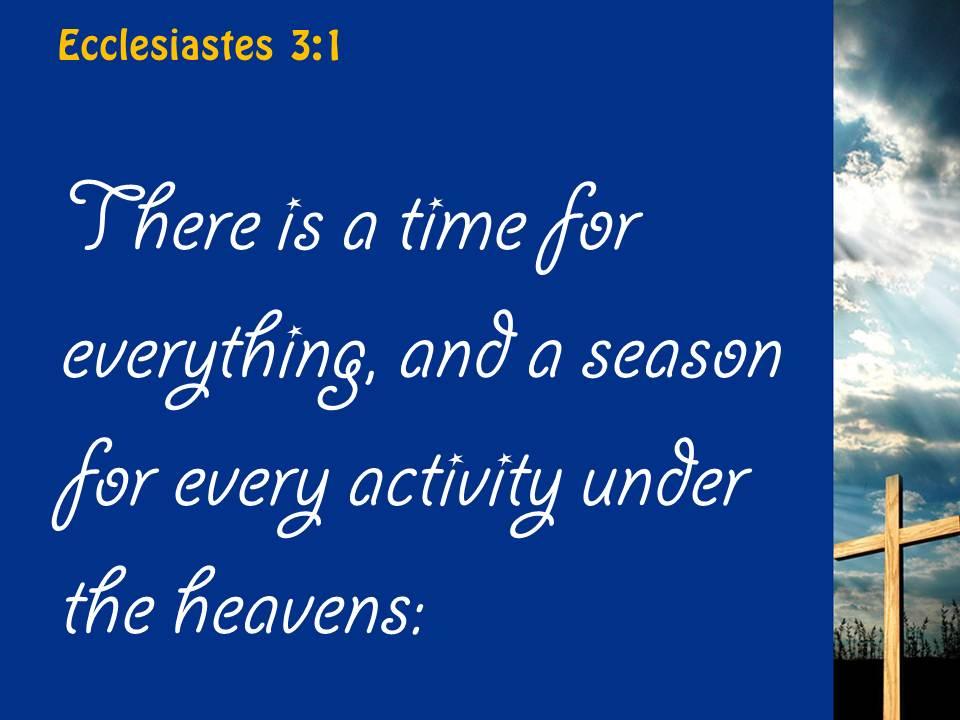
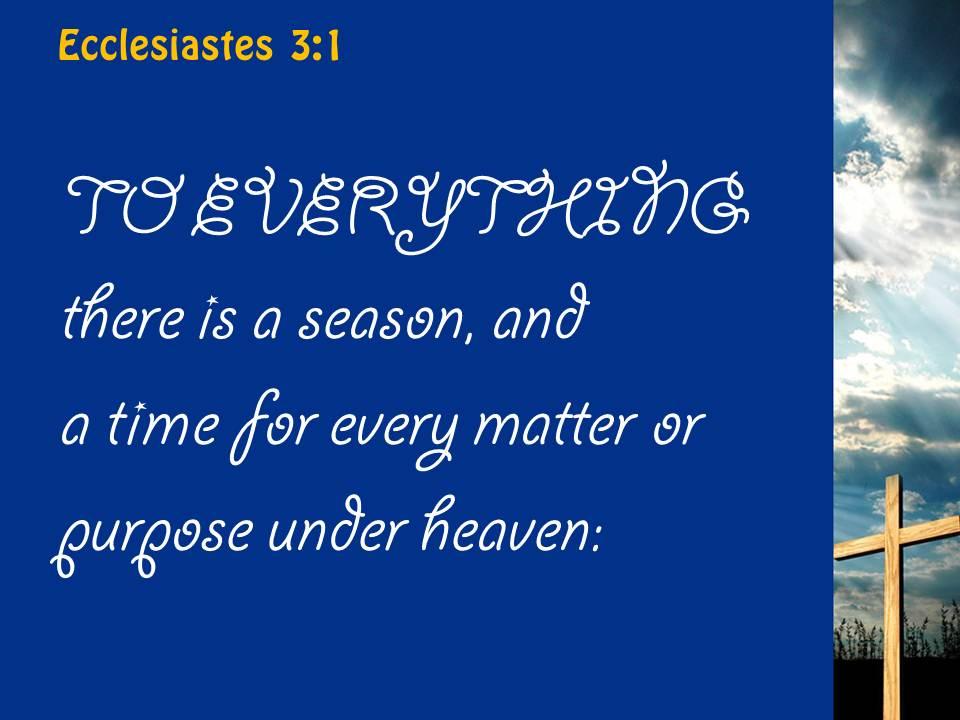
We are proud to present our ecclesiastes 3 1 there is a time for everything powerpoint church sermon. Ecclesiastes 3.1 There is a time for everything, and a season for every activity under the heavens. Bless their good souls with our Ecclesiastes 3 1. They will express eternal gratitude. Our Time PowerPoint sermon slides for pastors generate eternal gratitude. All good souls will feel blessed.

People who downloaded this PowerPoint presentation also viewed the following :

FAQs for Ecclesiastes 3 1 there is a time for everything

The phrase "a time for everything" in Ecclesiastes 3:1 establishes life's fundamental rhythm of seasons, transitions, and divine timing that governs all human experiences and natural cycles. This biblical wisdom emphasizes that every situation, whether challenging or beneficial, serves a purpose within life's larger framework, with many finding that embracing these natural rhythms enhances decision-making, resilience, and strategic patience in both personal and professional contexts.

Ecclesiastes 3:1 reflects life's seasons by acknowledging that human experiences, relationships, and circumstances naturally cycle through distinct phases of growth, challenge, transition, and renewal. This biblical wisdom parallels how individuals and organizations navigate periods of expansion, consolidation, transformation, and adaptation, with many finding that embracing these rhythms enables better decision-making, strategic planning, and ultimately sustainable success.

Ecclesiastes 3:1 teaches that effective time management requires recognizing life's natural seasons and rhythms, allowing us to allocate energy appropriately across different priorities, responsibilities, and opportunities. This biblical wisdom enables individuals and organizations to embrace strategic timing, avoid forcing outcomes during inappropriate periods, and ultimately achieve better work-life balance while maximizing productivity through intentional seasonal approaches.

Ecclesiastes 3:1 inspires resilience by reminding us that difficult seasons are temporary and purposeful, encouraging acceptance of current struggles while maintaining hope for future change. This biblical wisdom helps individuals and organizations navigate challenges by recognizing that hardship, growth, loss, and renewal are natural cycles, ultimately delivering perspective, patience, and strategic endurance during adversity.

Different cultures interpret Ecclesiastes 3:1's "time for everything" through their unique philosophical, religious, and social frameworks, including Buddhist concepts of impermanence, Hindu cyclical time, and Indigenous seasonal wisdom traditions. These diverse perspectives enhance cross-cultural dialogue by revealing universal human experiences with timing, change, and life transitions, while respecting distinct cultural values, ultimately fostering deeper intercultural understanding and shared wisdom.

Ecclesiastes 3:1 introduces temporal determinism into philosophical debates, suggesting predetermined seasons and times for human experiences, which challenges pure free will theories while supporting structured determinism arguments. Philosophers reference this passage when examining whether human actions occur within divinely orchestrated timeframes or natural cycles, with many theological and secular thinkers finding that it presents both predestination elements and human agency within temporal boundaries.

Ecclesiastes 3:1's "time for everything" principle applies to mental health by acknowledging that healing includes seasons of struggle, recovery, reflection, and growth. This biblical wisdom helps individuals and counselors embrace natural emotional rhythms, recognizing that depression, anxiety, and trauma recovery involve necessary phases of processing, rest, and renewal, ultimately delivering more sustainable mental wellness approaches.

Ecclesiastes 3:1 teaches that patience involves recognizing divine timing and accepting that life unfolds according to predetermined seasons beyond human control. This biblical wisdom encourages individuals to embrace waiting periods as opportunities for spiritual growth, discernment, and preparation, ultimately delivering deeper faith, resilience, and trust in God's perfect orchestration of life's circumstances.

The cyclical structure of Ecclesiastes mirrors the seasonal rhythm described in 3:1, with repetitive patterns and refrains that reinforce life's temporal nature. This literary framework creates philosophical depth through contrasts and parallelisms, with many scholars finding that the book's oscillating tone between despair and acceptance ultimately delivers profound wisdom about embracing life's inevitable seasons and transitions.

Ecclesiastes 3:1 has profoundly influenced artistic expression through iconic works like Pete Seeger's "Turn! Turn! Turn!" adapted by The Byrds, countless paintings depicting seasonal cycles, and literary works exploring life's rhythms and timing. This biblical passage continues to inspire contemporary artists, writers, and musicians who find universal resonance in its message about life's seasons, ultimately delivering timeless themes that transcend cultural boundaries and connect human experiences across generations.

Ecclesiastes 3:1 serves as a career guiding principle by encouraging strategic timing awareness, recognizing when opportunities align with personal readiness, and understanding that professional transitions require patience and discernment. This biblical wisdom enables professionals to navigate career pivots, job changes, and skill development phases more thoughtfully, ultimately delivering better alignment between personal values and professional choices while avoiding impulsive decisions.

Ecclesiastes 3:1's "time for everything" philosophy aligns with mindfulness by emphasizing present-moment awareness, acceptance of life's natural rhythms, and embracing seasonal changes without resistance. This ancient wisdom increasingly resonates with modern wellness practices, therapeutic approaches, and workplace mental health initiatives, with many organizations finding that seasonal thinking reduces anxiety, enhances decision-making, and ultimately delivers greater emotional resilience and life satisfaction.

Community leaders can use Ecclesiastes 3:1 to normalize change as part of life's natural rhythm, helping residents understand that transitions—whether challenging or celebratory—are temporary and purposeful. By framing community changes like economic shifts, demographic transitions, or policy updates within this biblical context, leaders foster acceptance and patience, while encouraging stakeholders to view current difficulties as seasonal phases that will ultimately give way to periods of growth and renewal.

Ecclesiastes 3:1's concept of appointed times parallels Buddhist teachings on impermanence, Hindu cyclical time concepts, Greek philosophical seasons of existence, and Stoic acceptance of temporal rhythms. These traditions share the understanding that life operates within natural cycles and predetermined moments, with many finding that recognizing these patterns enables better decision-making, reduces resistance to change, and ultimately delivers greater wisdom and peace.

Interpreting Ecclesiastes 3:1 in modern contexts helps address anxiety by reframing uncertainty as natural seasonal cycles, reminding us that current difficulties are temporary phases rather than permanent states. This perspective enables individuals to accept present challenges while maintaining hope for future seasons, ultimately delivering emotional resilience and reducing the overwhelming nature of uncertainty through biblical wisdom about life's rhythms.

Ratings and Reviews

100% of 100
Write a review
Most Relevant Reviews
  1. 100%

    by Damion Ford

    Use of different colors is good. It's simple and attractive.
  2. 100%

    by Chung Bennett

    Unique design & color.

2 Item(s)

per page: