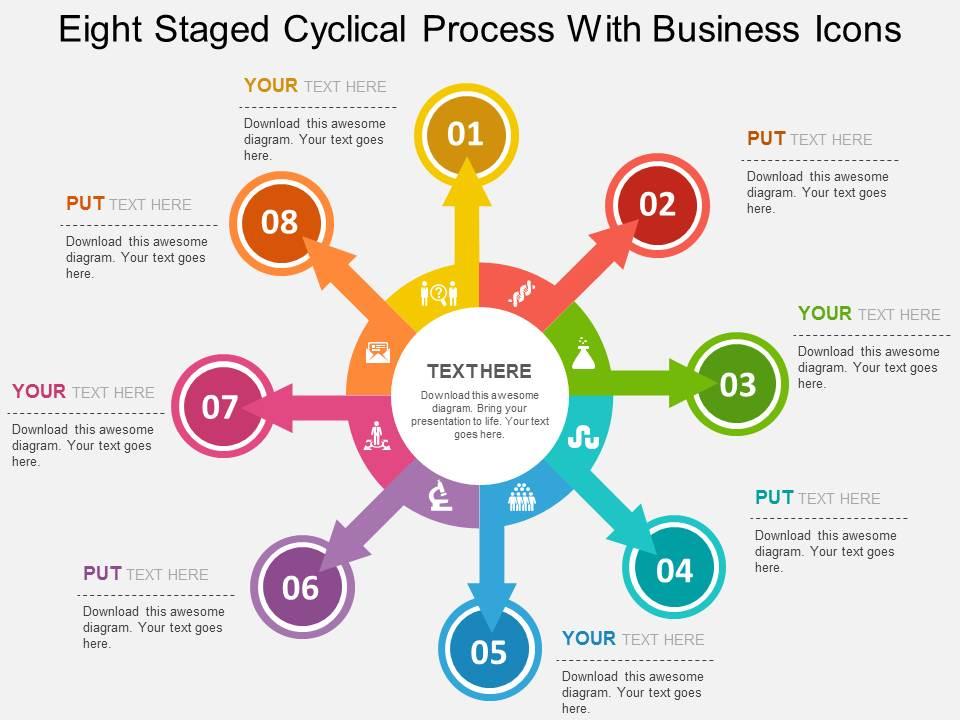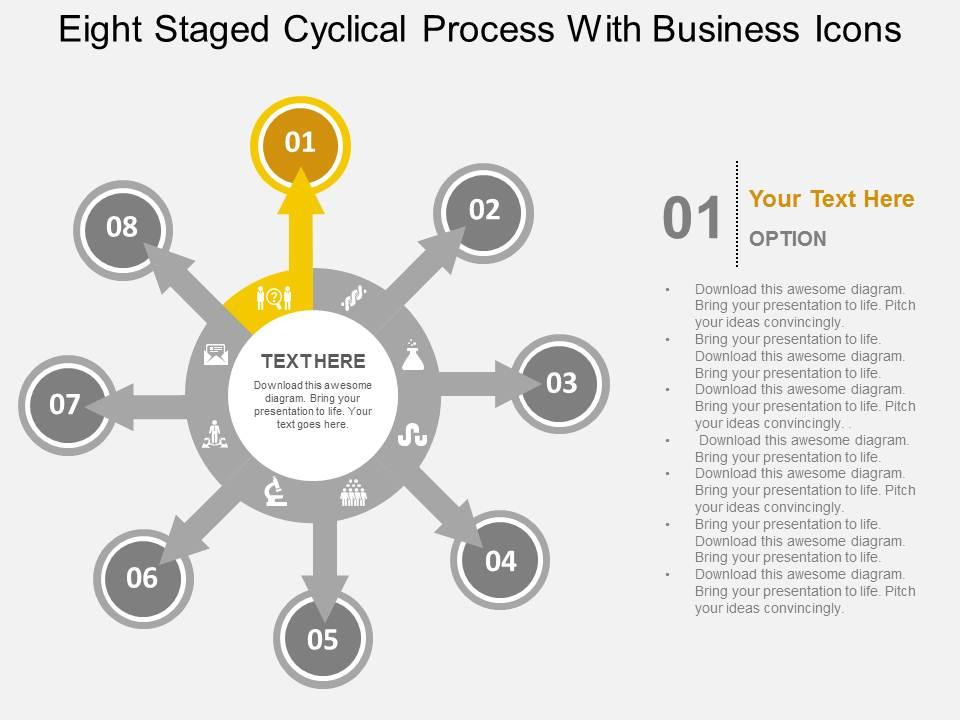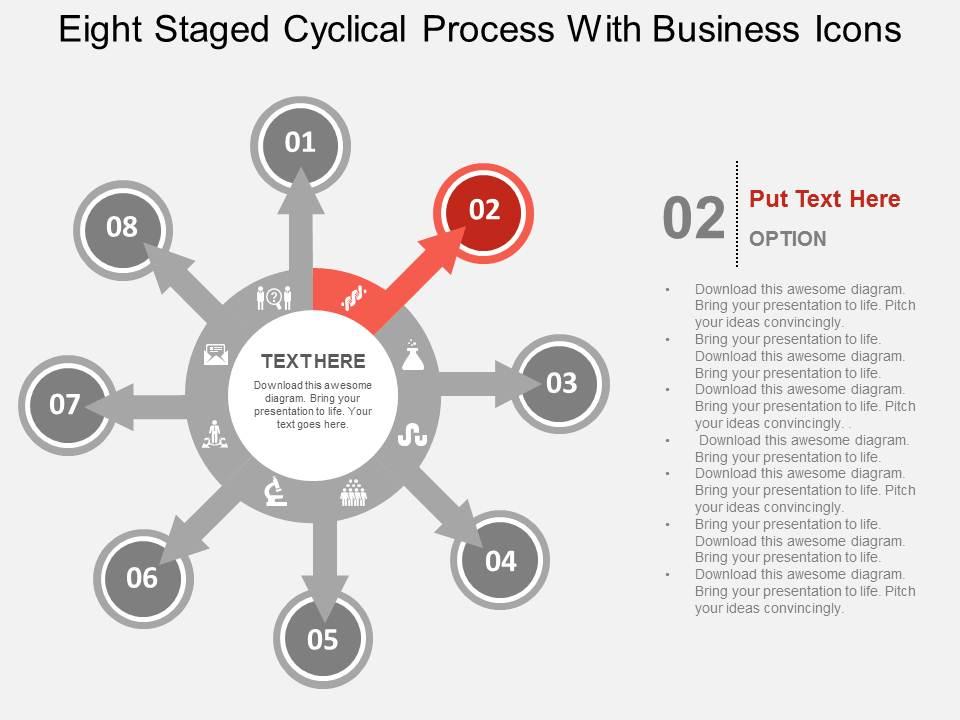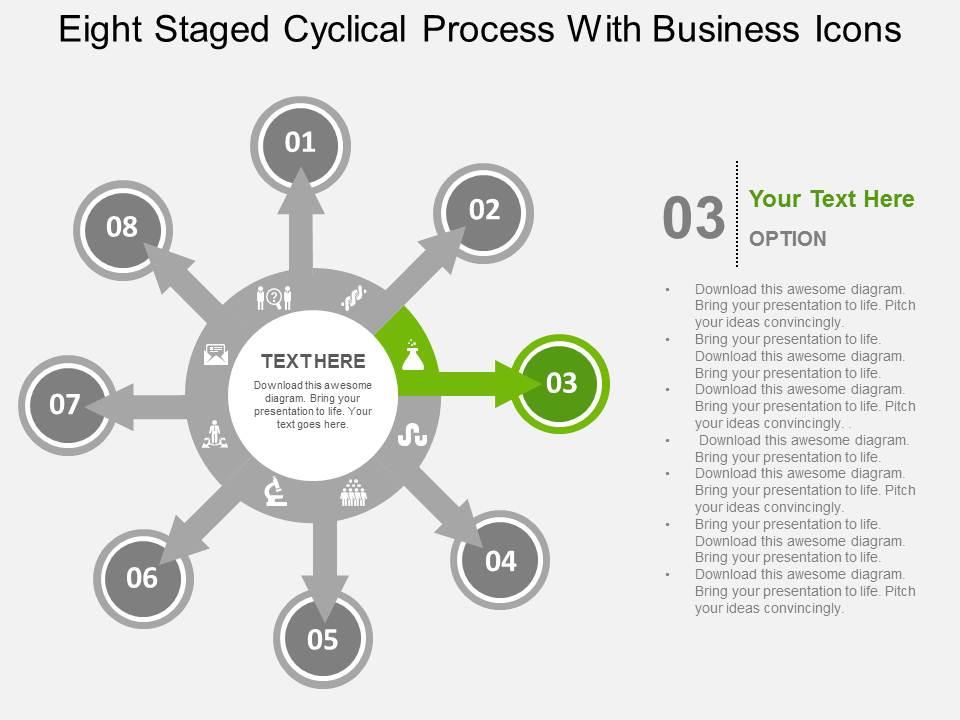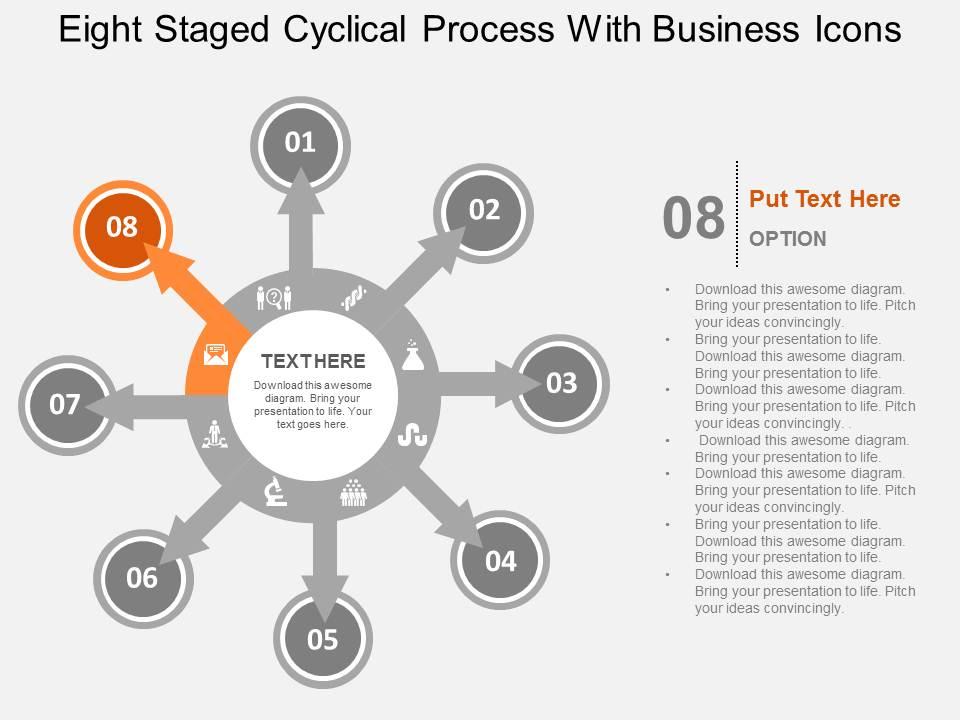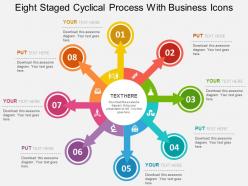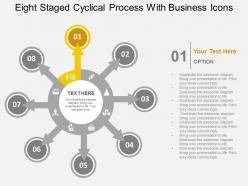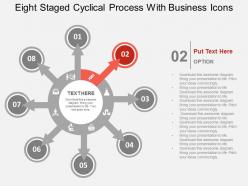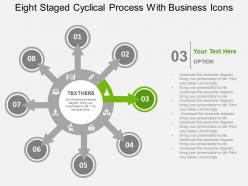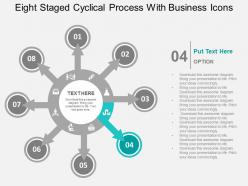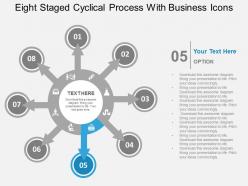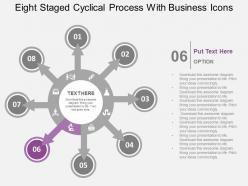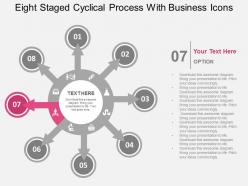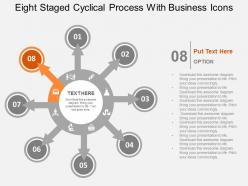
Eight staged cyclic process with business icons flat powerpoint design

Rating:
80%
Eight staged cyclic process with business icons flat powerpoint design
Slide 1 of 12
Favourites Favourites

Try Before you Buy Download Free Sample Product

Audience Impress Your
Audience
Editable 100%
Editable
Time Save Hours
of Time
The Biggest Sale is ending soon in
0
0
:
0
0
:
0
0
AI-Ready
Upload this template to AI and ask it to make any changes to content or color
100% editable Powerpoint Template for AI-assisted presentations. Finish your work in less time. Download Prompt Kit ​
Works with
Microsoft PowerPoint
Microsoft 365
Claude for PowerPoint
ChatGPT
Google Slides
Microsoft Copilot
Rating:
80%
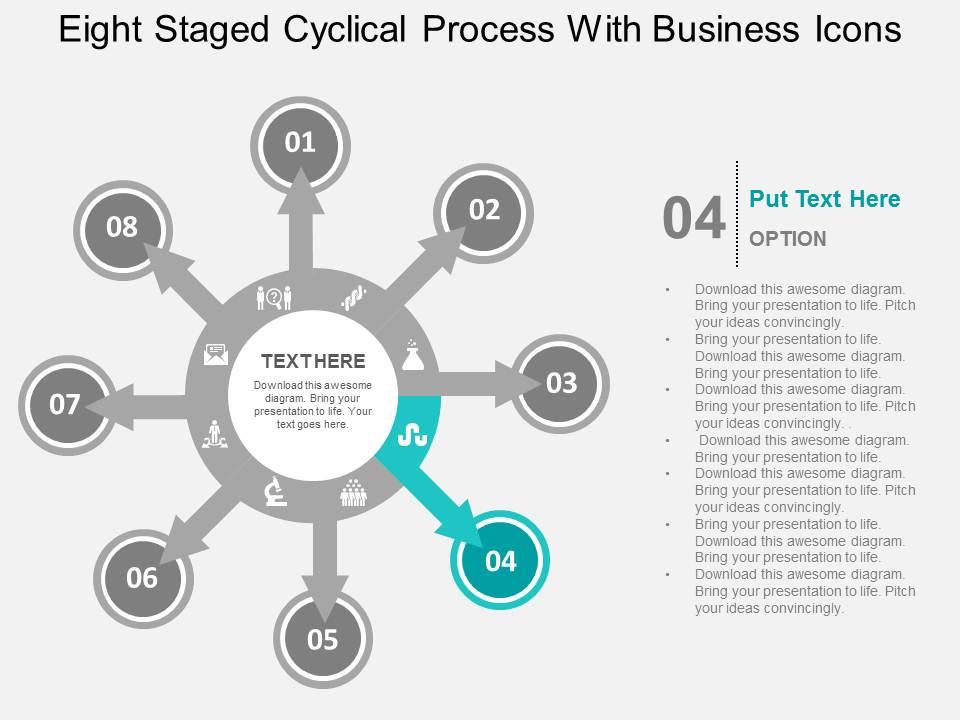
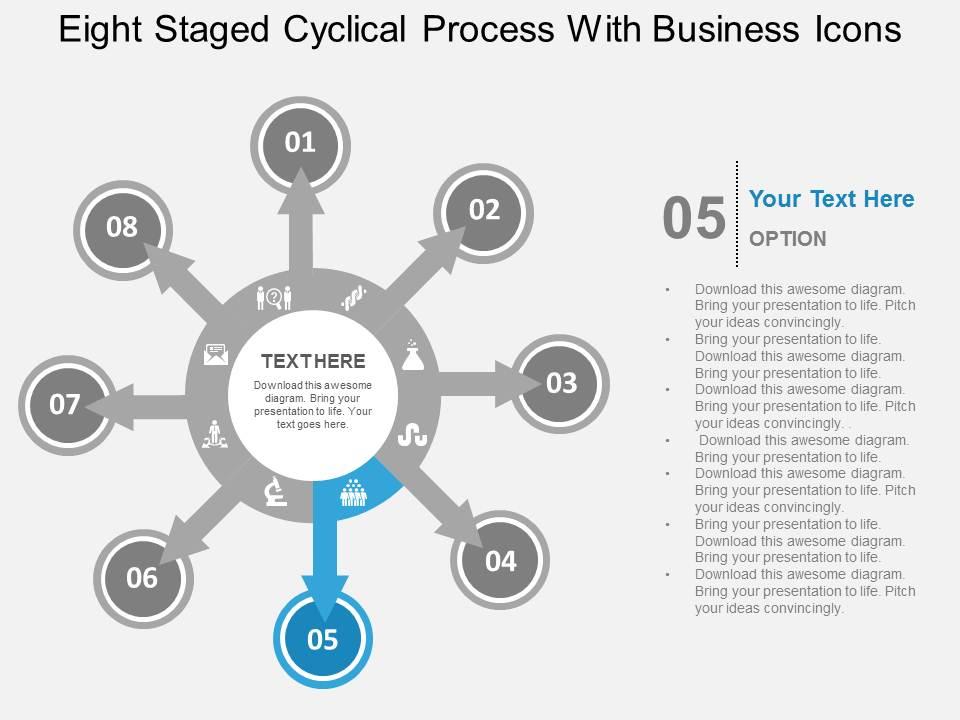
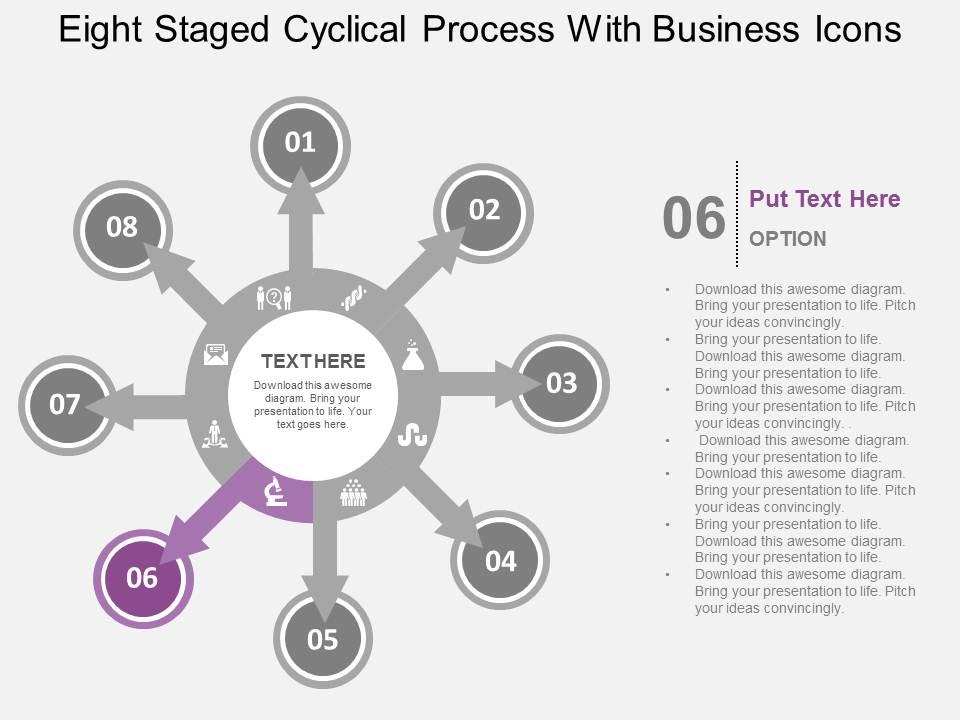
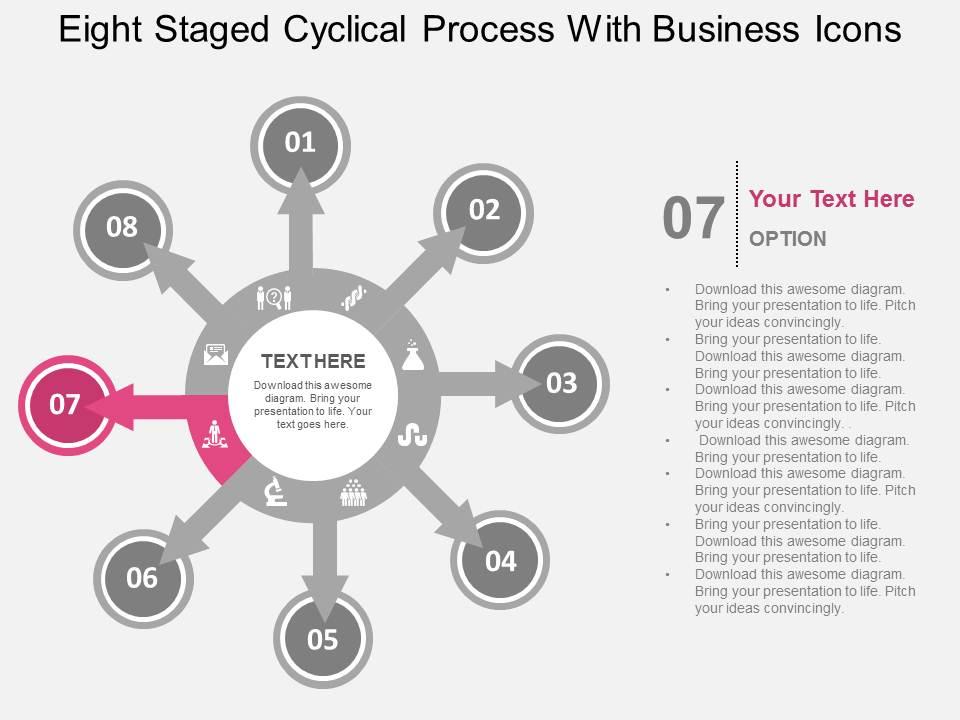
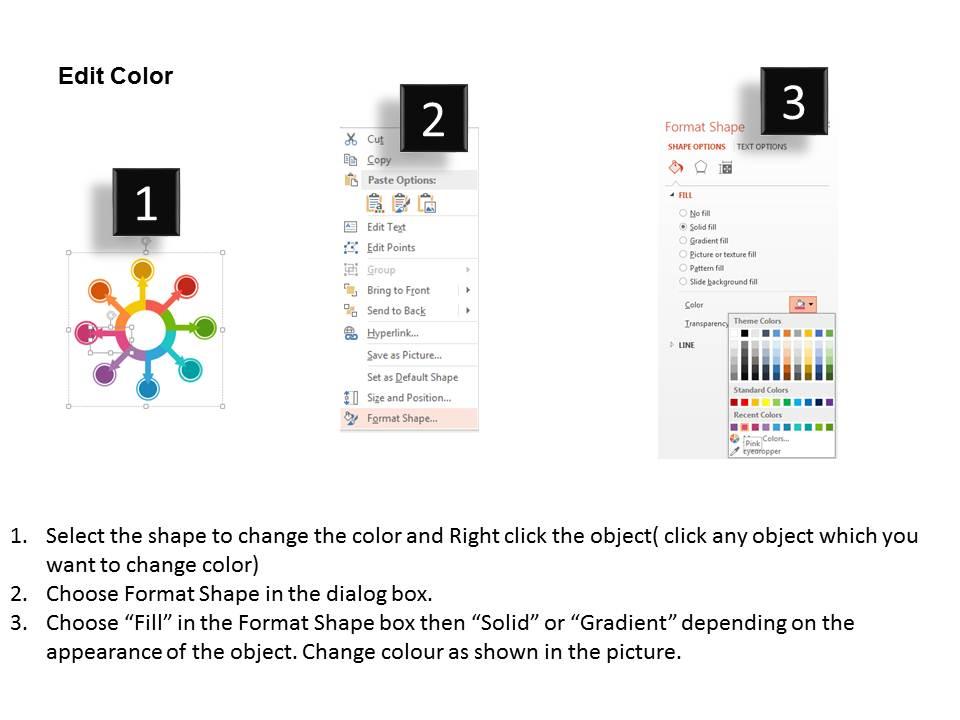
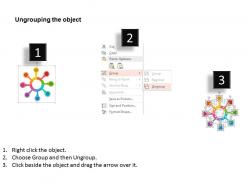
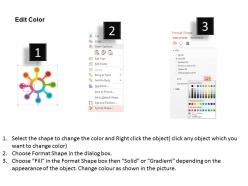
Eight staged cyclic process with business icons flat PowerPoint Slide Template. Capable of displaying error-free performance. Access to transform the Presentation design into JPG and PDF. Easily amendable as color, text and font can be changed as per your choice. Adaptable PPT slides as fully compatible with Google slides. Beneficial for industry professionals, managers, executives, researchers, sales people, etc.

FAQs for Eight staged cyclic process with business icons

So there are eight stages you cycle through: planning, preparation, action, monitoring, evaluation, reflection, adjustment, and integration. Think of it like "plan, do, check, act" but way more detailed - which is honestly overkill sometimes but actually works better. Each stage feeds the next one. Your reflection becomes input for the next planning phase. Integration is where the real magic happens though - that's when you actually lock in what you learned instead of just forgetting about it next week. I'd start by looking at your current process and see which of these eight you're already doing vs. skipping entirely.

So basically, linear models act like you master something once and boom - done forever. But the cyclic thing? Way more real. You'll actually circle back to earlier stuff like trust issues or identity questions throughout your whole life - not because you're broken, but because that's just how growth works. Life keeps throwing weird situations at you, right? And suddenly you're dealing with autonomy struggles again at 35. That's totally normal with this framework. Don't think of it as going backwards when adults wrestle with "basic" developmental stuff. It's actually healthy integration happening.

Look, manufacturing and software dev are obvious picks since they're already built around iteration cycles. Tech startups eat this stuff up too. Project management loves it - actually, any consultant will tell you frameworks like this are gold because clients think they're getting something revolutionary (even though it's mostly common sense dressed up). Construction works well too, surprisingly. The key thing? You need industries where you can actually track improvements between cycles. Start with whatever process you do most often - that's where you'll get the clearest picture of whether it's actually working or just making you feel productive.

Yeah definitely! Toyota's probably the best example - they use that whole cycle thing in manufacturing and it basically changed how quality control works. Healthcare places have gotten way better patient results when they actually follow all the steps for treatment stuff. Oh and Spotify does something similar for their product development too. The main thing is you can't skip parts or you'll miss the feedback loops that actually matter. Honestly, I'd just pick one process on your team first and see what happens. Track the changes and you'll know pretty quick if it's worth doing more.

Feedback is what actually makes the whole process cyclic instead of just some linear to-do list. You're gonna hit multiple feedback points, but here's the thing - use it to go back and fix earlier stages, don't just barrel ahead. It's honestly like debugging code (which is probably a weird comparison but whatever). Each stage gives you new insights that should change your next round - maybe your initial assumptions were off, or your approach needs tweaking, or hell, maybe you need to pivot completely. I always think of feedback as GPS for your process. Not just a grade at the end.

So basically, you're gonna treat each of those eight stages like checkpoints in whatever PM framework you're already using. Instead of the usual planning → execution → done thing, you'll cycle through assessing, strategizing, implementing, reviewing - but at multiple levels throughout the project. Way more iterative than waterfall (which honestly makes sense since projects never go as planned anyway). Build these stage transitions into your sprint reviews or milestone meetings. Oh, and don't try to implement all eight at once - start by figuring out which stages match what you're doing now, then slowly add the cyclical parts. Creates way more flexible project flows.

Honestly, most companies hit the same three walls with this process. People hate change - they're used to their current setup and eight stages sounds like a nightmare. Momentum dies fast too since you need everyone committed long-term, and let's be real, the urge to cut corners is strong. Plus coordination becomes a mess because each stage depends on the last one going right. My take? Don't go all-in immediately. Try it small first with like one team or project. Once they figure out the flow, then scale it up. Way less painful that way.

Honestly, tech can save you so much time on that eight-stage process. Start by mapping everything digitally first - sounds boring but trust me on this one. Automation tools handle the annoying handoffs between stages, plus you get real-time tracking of bottlenecks. Analytics dashboards show patterns you'd never spot otherwise. Cloud workflow systems keep everyone synced across all stages. The cool part? AI actually predicts delays before they hit. Focus your automation on wherever you're doing the most manual work right now.

Different stages need different metrics - don't use the same ones everywhere. Early on, focus on input quality and whether you're actually following your process. Throughput and error rates matter more in the middle stages so you can catch issues before they snowball. Later stages? That's when output quality and whether stakeholders are happy becomes key. I've watched teams obsess over metrics that make pretty dashboards but tell you nothing useful. Look for signals that predict problems instead of just confirming what already went wrong. Figure out what success means for each stage first, then pick metrics that actually measure that.

So basically, this process keeps you from getting stuck in old patterns because you're always circling back and questioning what you just did. You can't just plow ahead blindly - each cycle forces you to look at things differently. What I love about it is how those "setbacks" are actually features, not bugs. Short cycles mean you're constantly testing new ideas and tweaking your approach. By the time you've done a few rounds, your solution is way better than what you started with. Plus it kills that "we've always done it this way" mentality, which honestly needed to die anyway.

Honestly, the mental game changes completely at each stage. Early on you're fighting that "oh god what am I doing" feeling - totally normal btw. Then you hit the middle where your brain feels like mush from information overload. Later stages are weird because you start actually feeling confident, which is almost scarier? The biggest thing though is catching your internal voice. Are you going "I suck at this" or "I'm figuring it out"? Your self-talk at those transition moments makes a huge difference. I'd track which parts mess with your head the most so you can brace yourself next time.

Oh man, stakeholder engagement is HUGE for that Eight Staged process thing. You really can't skip it. Getting them involved early means better requirements and way less pushback later. They'll spot issues you'd totally miss when you're buried in project details. Skip this step though? Good luck dealing with scope creep and people fighting your deliverables because they felt left out of decisions. I learned this the hard way on my last project - should've listened to my PM mentor! Map out who you need at each stage. Then actually schedule those check-ins and stick to them.

Definitely do the official certification workshop first - it'll give you the solid foundation for all eight stages. Get your team to work through the methodology handbook together, and honestly, those practice scenarios are clutch. I'd get two people certified right away because having internal champions is a game changer. The online forums are actually pretty decent for troubleshooting weird issues that come up. Most teams jump into a pilot project their first month to really nail down the concepts. Oh, and book that workshop ASAP - wait times are getting ridiculous lately.

So this Eight Staged thing is built around people, planet, profit - you know, the triple bottom line stuff. What I like about it is how each stage makes you think long-term instead of chasing quick wins (which honestly kills most projects anyway). You're constantly checking resource use and environmental impact throughout the whole cycle, not just slapping sustainability on at the end. The feedback loops catch bad practices early so you can pivot. I'd start by just mapping your current project against each stage - see where your sustainability metrics need work. Way better than the "oops we forgot about the environment" approach.

Look, culture is everything with this process. Teams that hate change will get completely stuck - I've watched groups camp out in Stage 3 for months because their leaders couldn't handle being transparent. It's honestly painful to watch. But when you've got people who actually like learning and working together? They fly through the evaluation parts. The real test is whether your team thinks in cycles or expects everything to work perfectly the first time (spoiler: it won't). Check how open they are to trying, failing, and tweaking before you even start.

Ratings and Reviews

80% of 100
Review Form
Write a review
Most Relevant Reviews
  1. 80%

    by Clarence Mendoza

    Very well designed and informative templates.
  2. 80%

    by Cyrus Ellis

    Graphics are very appealing to eyes.

2 Item(s)

per page: