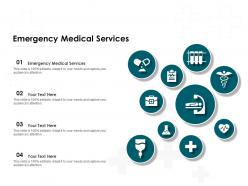
Emergency medical services ppt powerpoint presentation inspiration files
Try Before you Buy Download Free Sample Product
Audience
Editable
of Time
The following is a completely editable Medical Powerpoint Template Slide that discusses the topic Emergency Medical Services. It is designed for medical professionals to discuss Emergency Medical Services and can be completely customized to suit their needs. Add more items to this list and include this in your deck to impress your audience.
People who downloaded this PowerPoint presentation also viewed the following :
Emergency medical services ppt powerpoint presentation inspiration files with all 2 slides:
Give your audience a fulfilling experience. They will find our Emergency Medical Services Ppt Powerpoint Presentation Inspiration Files elevating.
FAQs for Emergency medical services ppt powerpoint
You'll need four main things: trained EMTs/paramedics, properly stocked ambulances, communication systems that don't crash when you need them most, and solid protocols everyone actually follows. Integration between hospitals and fire departments is crucial too. Honestly, the communication part makes or breaks everything - I've seen response times tank because teams couldn't coordinate. Regular drills help, but make sure they involve all the components working together instead of just individual skills. Oh, and having backup systems for when dispatch inevitably goes down at the worst possible moment.
So there's basically three ways countries handle this stuff. The Anglo-American model sends paramedics to you with all the fancy equipment. Franco-German systems actually put doctors in the ambulances - honestly seems like overkill but whatever works. Then you've got hybrid approaches mixing both. Smart placement of stations using geographic data helps a ton. Denmark's killing it with sub-8-minute response times, which is insane. They use tiered responses so basic calls don't hog the advanced units, plus integrated dispatch that sends whoever's closest. Oh and multiple response levels so a heart attack gets priority over someone's twisted ankle.
Dude, the tech changes in EMS are insane right now. GPS routing gets crews there way faster, and those electronic records sync straight to hospitals instantly. Real-time monitoring sends vitals while you're driving - pretty wild stuff. Mobile apps handle drug calculations and protocol lookups too. Oh, and paramedics can literally video chat with ER doctors for tricky cases now. The hospital notification systems are probably the biggest win though. They prep everything before you even arrive. Honestly, if your service isn't using this stuff yet, they're behind the curve on response times and patient care.
So for mass casualty stuff, we use START triage - basically you've got like 60 seconds max per patient to check breathing, circulation, and mental status. Red tags are for people who need immediate help but you can actually save them, yellow's for delayed care, green's the walking wounded, and black is... well, you know. The whole thing's crazy intense when you're actually doing it. Don't overthink it though - just trust what you've learned and stick to the system. Oh and definitely practice scenarios whenever you can because when the adrenaline hits, you want this stuff to be automatic.
Dude, urban vs rural EMS is night and day. Cities mean crazy call volumes and sitting in traffic forever - the burnout is brutal, not gonna lie. But at least you've got resources nearby. Rural teams? They're driving 30+ minutes to hospitals and handling everything solo. Farm accidents, heart attacks, you name it. Training's different too - city crews see tons of trauma and ODs, while rural folks need to know a bit of everything since backup isn't coming anytime soon. Really depends what kind of chaos you prefer dealing with, honestly.
Honestly, regular training is huge for EMS teams - it keeps everyone sharp on new protocols and equipment. Your crews will make way better decisions under pressure when they've practiced those crazy scenarios over and over. Plus it actually helps with retention because people feel like you're investing in them (which sounds cheesy but it's true). The classroom stuff is boring though - make it hands-on with real scenarios. I'd do monthly skills sessions and throw in quarterly simulations. When your team feels confident, response times improve and patients get better care. It's really that simple.
Dude, you're gonna run into some tough stuff. The biggest thing? Balancing what patients want vs. what's actually good for them medically. Consent becomes a nightmare when someone's unconscious and you've got minutes to act. Resource allocation is brutal too - like who do you prioritize when there's not enough to go around? Oh and somehow you still gotta keep patient info private even when everything's complete chaos. My advice? Get your protocols sorted ahead of time. Trust me, you don't want to figure out these moral dilemmas while your heart's racing.
So paramedics radio in with vitals and ETA while they're en route - gives your team time to get stuff ready. Most places use standardized protocols, plus electronic records that sync directly with hospital systems. Some even do video calls between medics and ER docs, which honestly seems pretty slick. The real magic happens during bedside handoff though. That's when the paramedic walks you through everything while you're starting your assessment. Don't forget to ask about med timing and anything that changed during transport - those details matter way more than you'd think.
Dude, those community training programs are actually game-changers for EMS. People learn CPR and basic first aid, then they're way more likely to jump in and help before paramedics arrive. Response times get better too because callers know what info to give dispatchers - instead of just screaming "someone's hurt!" The bystander CPR rates shoot up like crazy after these programs. Honestly kinda wild how a 4-hour class can save lives like that. Plus crews show up to way less chaotic scenes. Everyone's calmer, more organized. If your department's on the fence about funding these things, the data's pretty clear - patient outcomes improve across the board.
So EMS agencies basically track a bunch of stuff to see if they're doing their job right. Response times are huge - like how fast they get to you. Patient survival rates matter too, especially for things like cardiac arrests where they measure if they can get your heart beating again. They'll also look at patient satisfaction (which honestly can be all over the place depending on the day), how well crews follow protocols, and cost per call. Most compare themselves to national standards or other similar agencies. But here's what I'd actually ask about if I were you - their cardiac arrest save rates and average response times for the really serious calls. Those two numbers will tell you way more than all the other data combined.
Hey! So the coolest stuff happening right now - telemedicine lets you video call specialists while you're literally in the ambulance. Wild, right? Portable ultrasounds are everywhere now, plus we've got these instant blood test machines that work on scene. AI diagnostic tools are honestly pretty mind-blowing when they work right. Oh, and some places are testing drones for supply drops and AR headsets for tricky procedures. Your regional EMS council probably sends updates about what's rolling out in your area, so definitely stay on their email list.
Yeah, culture plays a huge role in EMS calls. Some families will try everything - traditional healers, home remedies - before they'll call 911. Language barriers make everything harder when people can't explain what's wrong. Religious stuff matters too, like if someone refuses blood transfusions or wants a female paramedic. Honestly, some communities just don't trust government services at all. You'll see this vary wildly depending on your area. Getting to know your local demographics helps. Maybe work with community leaders or get your crews some cultural training - it really does make responses go smoother.
Honestly, better training for dispatchers is probably your best bet - teach them to ask the right screening questions upfront. Public education helps a ton too, like showing people when they should hit up urgent care instead of dialing 911. Most places do callback protocols now where they'll ring back hang-ups to double-check if it's real. You've got repeat offenders sometimes who just need outreach programs, especially if there's mental health stuff going on. Some systems charge penalty fees for fake calls, but that's kinda risky since you don't want people hesitating during real emergencies. Start with dispatcher training though - that'll give you the most impact right away.
Honestly, think of mental health support like changing your oil regularly - way better than waiting for your engine to blow up. Your team bounces back quicker from brutal calls when you've got counseling and peer support available. Burnout and PTSD can knock someone out for months, so catching stuff early makes a huge difference. Here's the thing though - when people feel safe talking about their struggles, they actually work together better during emergencies. Weird how that works, right? The whole crew stays more solid because you're dealing with trauma before it snowballs. Don't wait until someone's already falling apart to start those check-ins.
Talk to people before stuff hits the fan, not after. Town halls work, but honestly the best intel comes from just showing up at community events and actually listening. Partner with schools, senior centers - they'll tell you what's really broken. Too many EMS departments think they've got it figured out without asking residents about response times or language barriers. Survey people about their actual experiences. Find those community leaders who won't sugarcoat things when your service sucks. Oh, and make it regular - not just when you need budget approval.
No Reviews