Employee Productivity Improvement Powerpoint PPT Template Bundles

Rating:
80%
Employee Productivity Improvement Powerpoint PPT Template Bundles
Slide 1 of 27
Favourites Favourites

Try Before you Buy Download Free Sample Product

Audience Impress Your
Audience
Editable 100%
Editable
Time Save Hours
of Time
The Biggest Sale is ending soon in
0
0
:
0
0
:
0
0
Rating:
80%
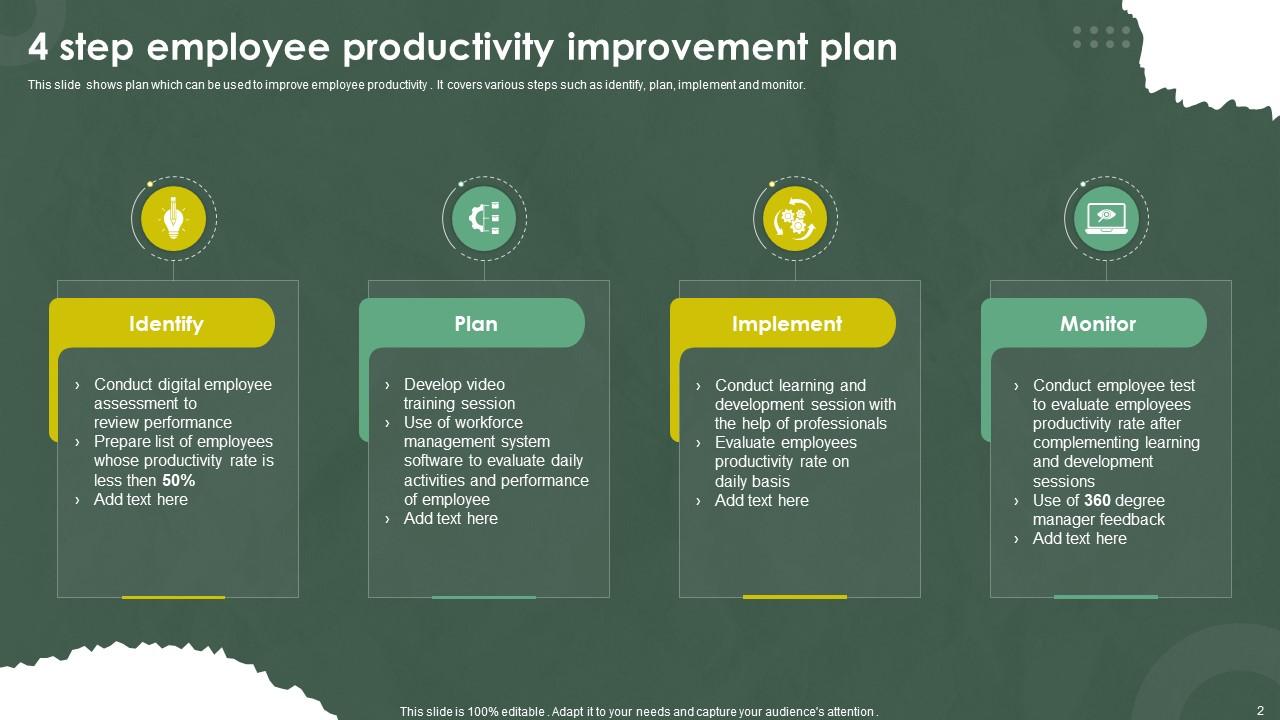
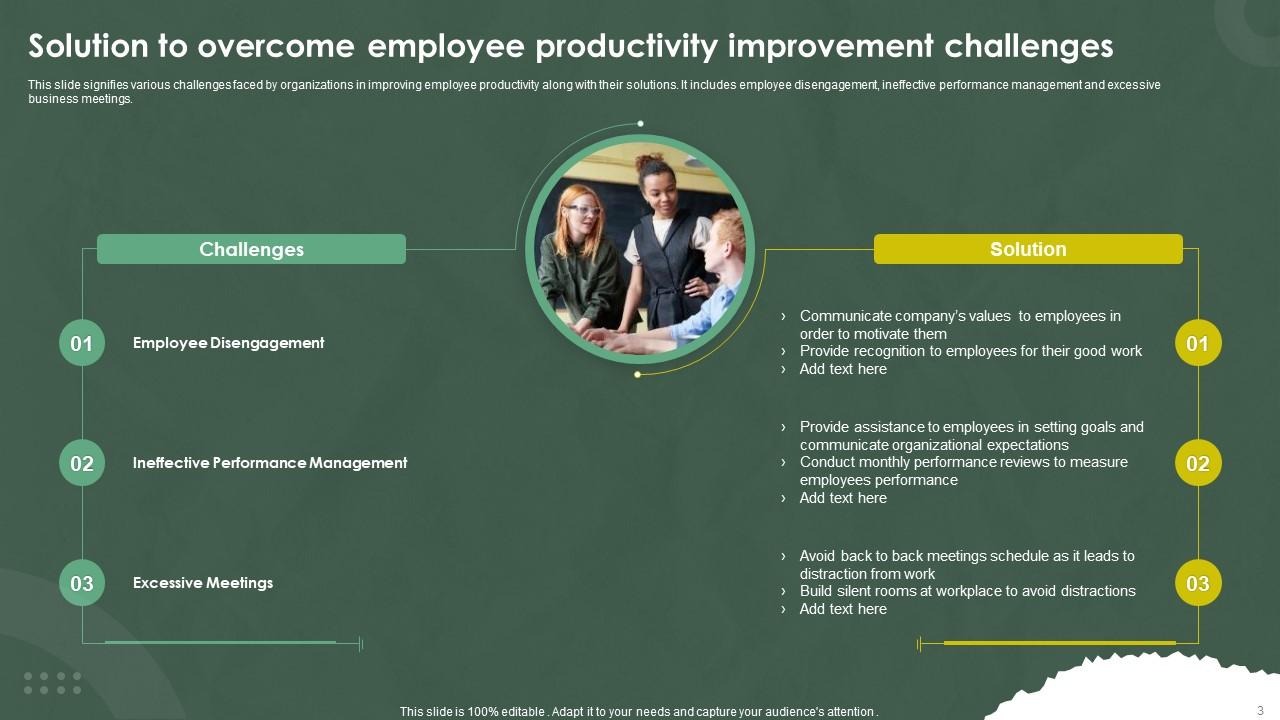
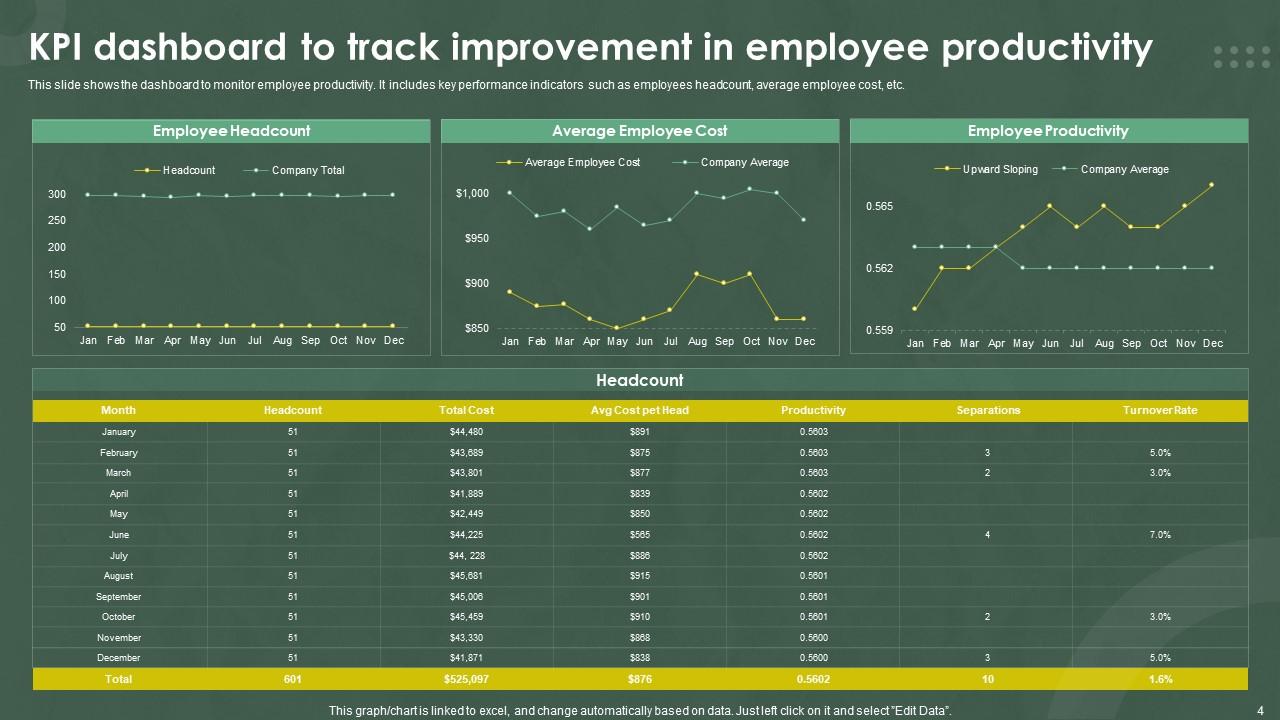
If you require a professional template with great design, then this Employee Productivity Improvement Powerpoint PPT Template Bundles is an ideal fit for you. Deploy it to enthrall your audience and increase your presentation threshold with the right graphics, images, and structure. Portray your ideas and vision using twenty two slides included in this complete deck. This template is suitable for expert discussion meetings presenting your views on the topic. With a variety of slides having the same thematic representation, this template can be regarded as a complete package. It employs some of the best design practices, so everything is well-structured. Not only this, it responds to all your needs and requirements by quickly adapting itself to the changes you make. This PPT slideshow is available for immediate download in PNG, JPG, and PDF formats, further enhancing its usability. Grab it by clicking the download button.

FAQs for Employee Productivity Improvement Powerpoint

Dude, your workspace setup is probably killing your team's productivity and most managers are totally clueless about it. Good lighting and comfortable temps make such a difference - people actually stay focused instead of constantly fidgeting or complaining. Open offices are tricky though. Sure, they help with collaboration, but honestly? They can be distracting as hell too. Even random stuff like having plants around helps people concentrate better. My advice? Just walk around and ask what's bugging everyone about their setup. You'd be surprised how easy fixes can boost output.
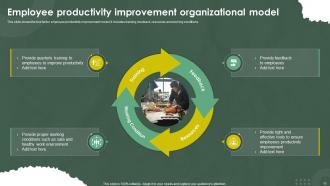
Honestly, regular feedback is a game-changer for team productivity. People waste so much mental energy wondering if they're screwing up or doing things right. Give them consistent check-ins and suddenly they're not second-guessing every decision. You'll spot problems way earlier too, before they snowball into major headaches. I learned this the hard way with my old manager who'd disappear for months then dump criticism on us. Don't make it some big annual review thing - quick monthly or quarterly touchpoints work way better. Keeps everyone on the same page without the drama.

Honestly, remote work is kinda messy when it comes to collaboration and productivity. Sure, you lose those random hallway chats that actually solve problems. But here's the thing - most people get way more focused work done at home once they figure out their groove. Less office noise and interruptions, you know? The trick is being really deliberate about staying connected. Regular check-ins are crucial, good project tools help tons, and maybe throw in some virtual coffee breaks so people don't feel totally isolated. It's not perfect but it can work.

Honestly, once you find the right tools, it's pretty amazing how much time you save. Automation handles all that boring stuff - data entry, scheduling, whatever. Project management software keeps everyone on the same page, which is huge. Real-time data means you can actually make quick decisions instead of waiting around. Cloud platforms are solid too since your whole team can work on the same doc simultaneously. Just don't go crazy picking random tech - find what fits your actual workflow first. I'd start with automating one annoying process and build from there.

Honestly, just ask your team what's actually blocking them - sounds stupid but most managers never do this. Set up regular check-ins where people can safely complain about stuff like confusing priorities or too many damn meetings. Half the time it's something totally fixable that you just didn't know was happening. Look for patterns when the same issues keep coming up across different people. Quick wins first to get some momentum going, then you can tackle the bigger messes. Oh, and make sure these conversations actually feel safe - nobody's gonna tell you the real problems if they think you'll get defensive about it.

Start with time-blocking - teach people to chunk out specific tasks instead of jumping around constantly. The Eisenhower Matrix works really well too for sorting urgent vs important stuff. I'd set up regular check-ins to figure out where everyone's wasting time, then make custom plans from there. Tools like Asana help, but honestly don't go crazy with apps or people won't use them. Oh, and definitely roll out one thing at a time - I've seen companies try everything at once and it just overwhelms everyone. The accountability piece is huge for making habits stick.

Oh man, this is huge - studies show engaged employees are like 23% more productive. Makes total sense though, right? People who actually give a damn about their job work harder and call in sick way less. But here's the thing - real engagement isn't about fancy office snacks or whatever. Your team needs meaningful work and to feel genuinely valued. Clear expectations help too. Honestly, if you're noticing productivity issues, just ask people how they're feeling about work. Sometimes the answer's more obvious than you think.

Honestly, the best training is stuff people can actually use right away at work. Hands-on workshops for technical skills work great. So does cross-training between departments or pairing people with experienced mentors. Online courses? They're convenient but most people forget half of it within a week. What actually works is mixing formal training with real practice time, plus giving feedback along the way. Oh, and skip the generic professional development fluff - focus on the actual skill gaps your team's dealing with. That's where you'll see real productivity improvements.

Dude, seriously - when people aren't completely fried, they actually get way more done. I know it sounds backwards but hear me out. Stressed, exhausted employees make terrible decisions and everything takes forever. Give them real breaks though? Let them actually disconnect after work? They come back so much sharper. Better work quality, fewer people calling in sick, way less turnover. Plus honestly, micromanaging people's lunch breaks is just weird. I've seen this play out at my old job - once management started respecting boundaries, productivity went through the roof. It's like magic but not really.

Make your goals SMART - you know, specific, measurable, achievable, relevant, time-bound. Like instead of "better customer service," go with "90% of tickets answered under 2 hours by month-end." Way more concrete. I totally bombed this once with super vague goals that just... died. Get your team involved in setting them too - people actually care when they help create the plan. Write stuff down (obvious but half of us don't). Check in weekly. Oh and connect everything back to the big picture so they see why their work matters beyond just hitting random numbers.

Honestly, those wellness programs aren't just feel-good fluff - they actually work. Less stressed employees make way better decisions and don't zone out during meetings. Walking meetings are surprisingly effective, or try "mindful Mondays" to start. The trick is making it feel real, not like some HR initiative nobody asked for. I've watched companies nail this with simple stuff like meditation breaks or just... letting people actually take lunch? When people aren't running on fumes all day, performance goes up. Start small and see what clicks with your team first.

Honestly, culture makes or breaks productivity. People work harder when they feel trusted and actually connected to what they're doing. I've watched entire teams flip around just because management started communicating better and recognizing good work. It's wild how much that stuff matters. Bad culture kills collaboration - people just phone it in instead of bringing real ideas. Good culture? Total opposite. Ask your team what's bugging them and what's working. They'll tell you exactly what needs fixing, and you won't have to guess.

Honestly, the way you lead makes a huge difference in how productive your team actually is. Micromanaging kills creativity fast - people hate that stuff. But when you're more collaborative and give people room to breathe? That's where the magic happens. Transformational leaders do this really well. They give clear direction without being controlling about every little detail. Democratic approaches work too since people care more when they get a say. I've seen it myself - teams perform way better when they feel supported instead of suffocated. Trust goes a long way.

Dude, recognition is everything for keeping people motivated. When someone feels appreciated, they'll bust their ass for you - studies show productivity jumps like 31% when employees feel valued. The trick is being specific about what they did well, not just throwing out some lazy "thanks for your hard work" email. I've seen people riding high for weeks just from getting called out in a team meeting. It's basically giving their brain a little dopamine reward. Even small stuff works. Honestly, most managers are terrible at this, so you'll stand out just by trying.

Honestly, first figure out what "productive" even means for your team - like are we talking tasks done, money made, or quality stuff? Pick maybe 2-3 things you can actually track consistently. Output per hour works, or how fast projects get wrapped up. Don't go crazy collecting data though, that gets overwhelming super quick! Time tracking apps or basic dashboards are solid for watching trends weekly (not daily - you'll drive yourself nuts). Focus on real results, not just busy work. Oh and definitely do regular team check-ins to look at the numbers together. You'll probably need to tweak your goals based on what's actually happening vs what you thought would happen.

Ratings and Reviews

80% of 100
Review Form
Write a review
Most Relevant Reviews
  1. 80%

    by Darrin Porter

    I am not the best at presentations but using SlideTeam’s PPT template made it easier for me. Thank you SlideTeam!
  2. 80%

    by Claud Hughes

    Informative and engaging! I really like the design and quality of the slides.

2 Item(s)

per page: