Employee survey results with comparison to previous year

Employee survey results with comparison to previous year
Slide 1 of 2
Favourites Favourites

Try Before you Buy Download Free Sample Product

Audience Impress Your
Audience
Editable 100%
Editable
Time Save Hours
of Time
The Biggest Sale is ending soon in
0
0
:
0
0
:
0
0
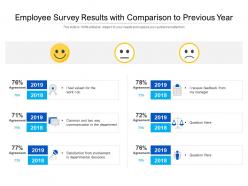
Presenting this set of slides with name Employee Survey Results With Comparison To Previous Year. This is a six stage process. The stages in this process are Communication, Involvement, Departmental Decisions. This is a completely editable PowerPoint presentation and is available for immediate download. Download now and impress your audience.

FAQs for Employee survey results with comparison

Honestly, recognition is huge - people want to feel seen. Growth opportunities matter too, but what really gets people engaged is feeling like their work actually connects to something bigger. Don't micromanage (seriously, worst thing you can do). Fair pay helps, obviously, but good relationships with your boss and teammates often matter more than you'd expect. Work-life balance is non-negotiable these days. Oh, and clear communication from leadership - can't stress that enough. If you want to fix engagement issues, just start having real conversations with your team about what would make their work feel more meaningful. Simple as that.

Honestly, your leadership style is probably the biggest thing affecting how engaged your team feels. Micromanage people or brush off their ideas? Engagement dies pretty quick. Trust them and actually listen though, and you'll see a huge difference. I've noticed transformational leaders - the ones who coach and inspire - get way better results than the authoritarian types. My last boss was super controlling and it killed everyone's motivation, so I speak from experience lol. Recognition matters too, but consistency is key. Oh, and create that psychological safety thing where people aren't afraid to speak up. Just ask your team what makes them feel valued - they'll tell you.

Dude, culture is everything when it comes to keeping people engaged at work. Bad environment = people mentally check out, no matter what perks you throw at them. Think of it like this - you can't grow anything in crappy soil, right? But when there's actual trust and psychological safety? That's when the magic happens. People start caring more, get creative, bring their best stuff to the table. Honestly, I've seen teams completely transform just from having managers who listen and recognize good work. My advice? Start small - just ask your team what's actually bugging them about their day-to-day. You'd be surprised what you'll learn.

Honestly, feedback is everything - but not the annual review BS. Give people real, specific feedback regularly so they actually know how they're doing. The magic happens when communication flows both ways though. You can't just dump info on your team and expect them to be engaged. Make space for them to push back, share ideas, whatever. I've found weekly check-ins work way better than waiting months. Be upfront about company stuff while asking their input on decisions that hit their day-to-day work. People just want to feel heard and like their work actually matters, you know?

Honestly, ditch those awful annual surveys nobody likes filling out. Try pulse surveys instead - way better response rates. I'd also do regular one-on-ones where you ask real questions about what's actually bugging people. Oh, and stay interviews are amazing (asking why people stick around rather than waiting till they quit). Track stuff like turnover and who's getting promoted internally too. The whole thing needs to be ongoing though, not some once-a-year checkbox exercise. Just pick 2-3 things and actually do something with the feedback you get.

You know what really works? Making people feel like their work actually matters. Recognition is such a game-changer - but timing matters way more than people think. Don't just say "good job" three weeks later. Call out specific stuff right when it happens. Honestly, I've seen a simple shout-out in a team meeting get someone more pumped than a gift card. Mix up public praise with those quick private thank-yous too. People eat that up. Oh, and it doesn't have to cost anything - appreciation hits different when it feels genuine.

Dude, engaged employees are literally money makers. Your turnover drops like crazy - no more burning cash on constant hiring and training new people. Productivity goes up, customers get better service, and honestly? People actually start giving a damn about their work quality. I've seen teams where everyone's checked out vs engaged ones, and it's night and day. The innovation difference alone is wild. Companies with engaged teams see about 21% higher profits on average. If you're not tracking this stuff yet, that's probably your first move. Way better predictor than most metrics people obsess over.

Tech companies throw perks and flexibility at people, while healthcare workers care more about making a difference with patients. Manufacturing focuses on safety and clear promotion paths. Retail? They do quick feedback and seasonal pushes - makes sense with all that turnover. Financial services puts money into training and job security messaging. Here's the thing though: you can't just copy what Google does and expect it to work in your warehouse. Each industry has different motivators. Sometimes I think companies forget this and wonder why their "innovative" engagement program flopped.

Yeah, remote work totally kills engagement sometimes. People get lonely and communication becomes this weird mess. I've seen it happen so many times with teams I've worked with. Weekly one-on-ones help a ton though - that face-to-face time matters more than you'd think. Try setting up random Slack channels for non-work stuff, maybe do virtual coffee breaks? Sounds cheesy but it works. You'll basically need to overcommunicate everything and get creative about replacing those random office conversations. Oh, and don't forget to actually recognize people's work - it's way too easy for good stuff to go unnoticed when everyone's scattered.

Honestly, training makes such a difference for keeping people engaged. Nobody wants to feel stuck doing the same thing forever, you know? When you invest in someone's growth, they actually start caring about the company's success too. It's like you're saying "hey, we want you here long-term" instead of just using them for what they already bring to the table. The trick is asking your team what they actually want to learn - don't just throw random workshops at them. I've seen too many companies waste money on training nobody asked for. Make it relevant to where they want their careers to go.

So I've actually seen some pretty good results with different tech tools for this. Slack or Teams help tons with day-to-day communication - way less email chains. Those quick pulse surveys are clutch for getting honest feedback without making it a huge thing. Recognition platforms where people can shout each other out work surprisingly well too. Gamification sounds cheesy but honestly? Leaderboards and badges actually get people engaged - who knew, right. One-on-one scheduling apps, peer feedback tools, learning platforms... there's a bunch of options. I'd probably just pick whatever fixes your biggest problem first, then add more as you go.

Oh man, bad managers are hands down the worst culprit here. They'll kill motivation faster than anything else. Poor communication from the top is huge too - like when leadership just doesn't share what's going on. People also check out when they feel micromanaged or can't see how their work actually matters to the bigger picture. No recognition? That's brutal for morale. Limited growth opportunities will make anyone start job hunting. And honestly, rigid company structures where nobody listens to employee input... yeah, that's a recipe for people mentally checking out. Does your workplace actually make people feel valued day-to-day?

Eh, demographics do matter but not the way you'd think. Younger folks usually want constant feedback and growth stuff. Older employees? They care more about job security and getting credit for their years of experience. Women prioritize work-life balance way more than guys do - that's just what I've noticed. But honestly, don't get too caught up in generational BS because I've seen tons of exceptions. Skip the cookie-cutter approach entirely. Just survey your actual teams instead of guessing based on age or whatever, then build strategies around what they tell you.

Honestly, skip the pizza parties - nobody cares about those anymore. First thing you gotta do is actually ask people what they want through surveys or focus groups. Different people want totally different stuff. Career growth, flexible hours, better recognition, whatever. I'd probably start with like 1-2 small pilot programs instead of going crazy trying to fix everything. Maybe mentorship for the ambitious ones and wellness perks for people juggling kids or life stuff. Track what actually works before expanding. Oh, and make those surveys anonymous or you won't get real answers.

Dude, engagement and retention are totally connected. People who actually like their jobs? They don't bail for the first decent offer that comes along. Makes sense, right? When employees feel valued and connected to what they're doing, they stick around. The flip side is also true - disengaged workers are basically always browsing LinkedIn during lunch breaks. I read somewhere that companies with high engagement have retention rates 40% better than the slackers. Honestly, if turnover's killing you, work on making people actually want to be there first. Way more effective than exit interviews after the fact.

Ratings and Reviews

0% of 100
Review Form
Write a review
Most Relevant Reviews

No Reviews