Executive compensation benefits showing incentive plans with funding

Rating:
80%
Executive compensation benefits showing incentive plans with funding
Slide 1 of 5

or

Favourites Favourites

Try Before you Buy Download Free Sample Product

Audience Impress Your
Audience
Editable 100%
Editable
Time Save Hours
of Time
The Biggest Sale is ending soon in
0
0
:
0
0
:
0
0
Rating:
80%
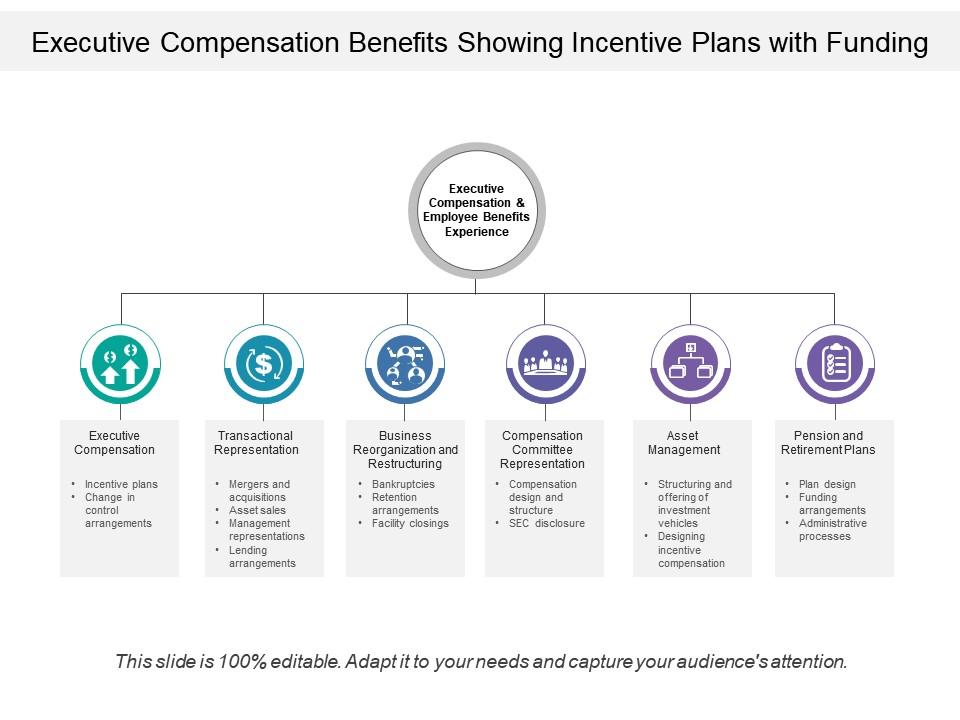
Presenting this set of slides with name - Executive Compensation Benefits Showing Incentive Plans With Funding. This is a six stage process. The stages in this process are Compensation Benefits, Fixed Monetary, Fixed Cash.

People who downloaded this PowerPoint presentation also viewed the following :

FAQs for Executive compensation benefits showing incentive

Effective executive compensation incentive plans include base salary alignment, performance-based bonuses, long-term equity incentives, clawback provisions, and clear performance metrics tied to strategic objectives. These components work together by balancing short-term achievements with sustainable growth, ensuring accountability through measurable outcomes, and aligning leadership decisions with shareholder value, ultimately delivering enhanced organizational performance and competitive executive retention.

Short-term incentive plans drive immediate performance focus through quarterly or annual targets, often emphasizing operational metrics like revenue and cost control, while long-term plans encourage strategic thinking, risk management, and sustainable growth through multi-year equity-based rewards. These complementary approaches enable organizations to balance quarterly execution with strategic vision, with many companies finding that the strategic combination ultimately delivers both immediate results and enduring competitive advantage.

Performance measurement serves as the foundation for incentive plan design, establishing clear metrics like revenue growth, profit margins, market share expansion, and operational efficiency targets that directly link executive actions to organizational outcomes. These measurement frameworks enable companies across industries, from manufacturing to financial services, to align leadership behavior with strategic objectives while providing transparent benchmarks for compensation decisions, ultimately delivering accountability and driving sustainable business performance.

Organizations can align executive compensation with shareholder interests by implementing performance-based equity awards, long-term stock options, clawback provisions, and multi-year vesting schedules tied to specific financial metrics. These mechanisms ensure executives focus on sustainable value creation rather than short-term gains, with many companies finding that linking compensation to stock performance, earnings growth, and return on investment ultimately drives strategic decision-making that benefits both leadership and shareholders.

Common executive performance metrics include financial measures like revenue growth, profit margins, and return on equity, alongside operational indicators such as customer satisfaction scores and market share expansion. These metrics enable boards to align compensation with strategic objectives across revenue generation, cost management, and stakeholder value creation, with many organizations finding that balanced scorecards incorporating both quantitative and qualitative measures drive sustainable long-term performance.

Regulatory oversight significantly influences executive compensation structures by mandating disclosure requirements, establishing pay ratio reporting, and implementing clawback provisions for performance-based incentives. Through SEC regulations and shareholder advisory votes, companies must balance competitive executive packages with transparency requirements, ultimately creating more accountable compensation frameworks that align leadership rewards with long-term shareholder value and regulatory compliance.

Companies face challenges including setting measurable performance metrics, balancing short-term versus long-term goals, ensuring fairness across different roles, managing market volatility impacts, and maintaining regulatory compliance. These complexities require strategic planning and regular adjustments, with many organizations finding that clear communication and flexible frameworks help navigate changing business conditions while preserving executive motivation and shareholder alignment.

Companies ensure transparency and fairness in incentive plans through clear performance metrics, regular stakeholder communication, independent compensation committee oversight, and comprehensive disclosure practices. These approaches enable organizations to build trust with investors, employees, and boards while minimizing regulatory risks, with many companies finding that transparent frameworks ultimately enhance executive accountability and strengthen overall corporate governance.

Cultural differences significantly impact executive compensation through varying risk tolerance, individualistic versus collective reward preferences, regulatory frameworks, and social expectations around pay equity. Multinational organizations increasingly adapt their strategies by balancing local cultural norms with global consistency, with many finding that flexible compensation models incorporating regional preferences for long-term incentives, team-based rewards, and transparent reporting ultimately deliver better executive retention and stakeholder acceptance.

Misaligned incentive plans can create toxic competition among employees, erode trust in leadership, and foster short-term thinking that undermines long-term strategic goals. These cultural disruptions often lead to increased turnover, reduced collaboration, and decreased employee engagement, with many organizations finding that poorly structured compensation ultimately damages both performance and retention across all levels.

Firms can effectively communicate incentive plan benefits through transparent reporting, clear performance metrics alignment, regular stakeholder updates, and detailed documentation of compensation philosophy. By showcasing how these plans drive strategic objectives, retain top talent, and deliver shareholder value, companies build stakeholder confidence, with many organizations finding that proactive communication enhances trust and supports long-term business performance.

Executive compensation trends significantly impact talent retention and recruitment by influencing competitive positioning, career advancement expectations, and organizational culture alignment. Companies with innovative compensation structures, including equity participation, performance-based incentives, and comprehensive benefits packages, attract top-tier executives more effectively, while outdated approaches risk losing talent to competitors offering more strategic and flexible compensation models.

Companies balance competitiveness with ethical compensation practices by implementing transparent pay equity audits, establishing clear performance metrics tied to long-term value creation, and incorporating ESG goals into executive incentive structures. Through stakeholder engagement and independent compensation committees, organizations like major banks and healthcare systems ensure competitive packages while maintaining public trust, ultimately delivering sustainable growth and enhanced shareholder confidence in an increasingly scrutinized executive compensation landscape.

Innovative approaches include performance-based equity with ESG metrics, clawback provisions, long-term value creation incentives, stakeholder-focused compensation models, and AI-driven performance analytics. These strategies enhance accountability by aligning executive rewards with sustainable growth, environmental responsibility, and shareholder value, with many organizations finding that comprehensive incentive structures ultimately deliver improved corporate governance and competitive market positioning.

Technology and data analytics enhance incentive plans by automating performance tracking, providing real-time dashboards, and enabling predictive modeling for goal setting. Through advanced analytics platforms, organizations can identify performance patterns, benchmark against industry standards, and customize incentive structures based on individual and team data, ultimately delivering more targeted rewards and improved strategic alignment.

Ratings and Reviews

80% of 100
Review Form
Write a review
Most Relevant Reviews
  1. 80%

    by Darwin Mendez

    Amazing product with appealing content and design.
  2. 80%

    by Coleman Henderson

    The Designed Graphic are very professional and classic.

2 Item(s)

per page: