


Fast Food Restaurant Business Powerpoint Presentation Slides
Our Fast Food Restaurant Business Powerpoint Presentation Slides are topically designed to provide an attractive backdrop to any subject. Use them to look like a presentation pro.
Our Fast Food Restaurant Business Powerpoint Presentation Slides are topically designed to provide an attractive backdrop t..












-

- Google Slides is a new FREE Presentation software from Google.
- All our content is 100% compatible with Google Slides.
- Just download our designs, and upload them to Google Slides and they will work automatically.
- Amaze your audience with SlideTeam and Google Slides.
-

Want Changes to This PPT Slide? Check out our Presentation Design Services
-

- WideScreen Aspect ratio is becoming a very popular format. When you download this product, the downloaded ZIP will contain this product in both standard and widescreen format.
-

- Some older products that we have may only be in standard format, but they can easily be converted to widescreen.
- To do this, please open the SlideTeam product in Powerpoint, and go to
- Design ( On the top bar) -> Page Setup -> and select "On-screen Show (16:9)” in the drop down for "Slides Sized for".
- The slide or theme will change to widescreen, and all graphics will adjust automatically. You can similarly convert our content to any other desired screen aspect ratio.
Compatible With Google Slides

Get This In WideScreen
You must be logged in to download this presentation.


Do you want to remove this product from your favourites?
PowerPoint presentation slides
It has PPT slides covering wide range of topics showcasing all the core areas of your business needs. This complete deck focuses on Fast Food Restaurant Business Powerpoint Presentation Slides and consists of professionally designed templates with suitable graphics and appropriate content. This deck has total of fifty nine slides. Our designers have created customizable templates for your convenience. You can make the required changes in the templates like colour, text and font size. Other than this, content can be added or deleted from the slide as per the requirement. Get access to this professionally designed complete deck PPT presentation by clicking the download button below.

People who downloaded this PowerPoint presentation also viewed the following :
Content of this Powerpoint Presentation
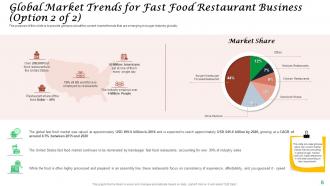
The worldwide fast-food market is predicted to reach $1001.78 billion by 2032. Its popularity is growing rapidly because the product, fast food, is tasty, affordable, and easy to eat.
Explore SlideTeam’s ready-to-download Food Startup Business PPT to discover how to create a business plan for your food-related venture.
Subway, McDonald’s, Starbucks, KFC, Pizza Hut, Burger King, and others are instantly recognizable all over the world as burger behemoths to worldwide pizza places, famed for their mouthwatering sandwiches, french-fries, nuggets, tacos, pizza, hot dogs, and ice creams.
A fast-food restaurant is among the most lucrative ventures. If you’re thinking about starting a food business, this blog will help you get started. This comprehensive deck includes a business plan to help you flourish in the competitive food industry. It is an all-inclusive guide with all necessary components to ensure your new business is adequately designed.
Not sure where to begin with online restaurant advertising? Check out our Online Promotion Plan for Food Business PPT to help you attract new consumers and expand your business.
Template 1: Company Description for Fast Food Restaurant Business
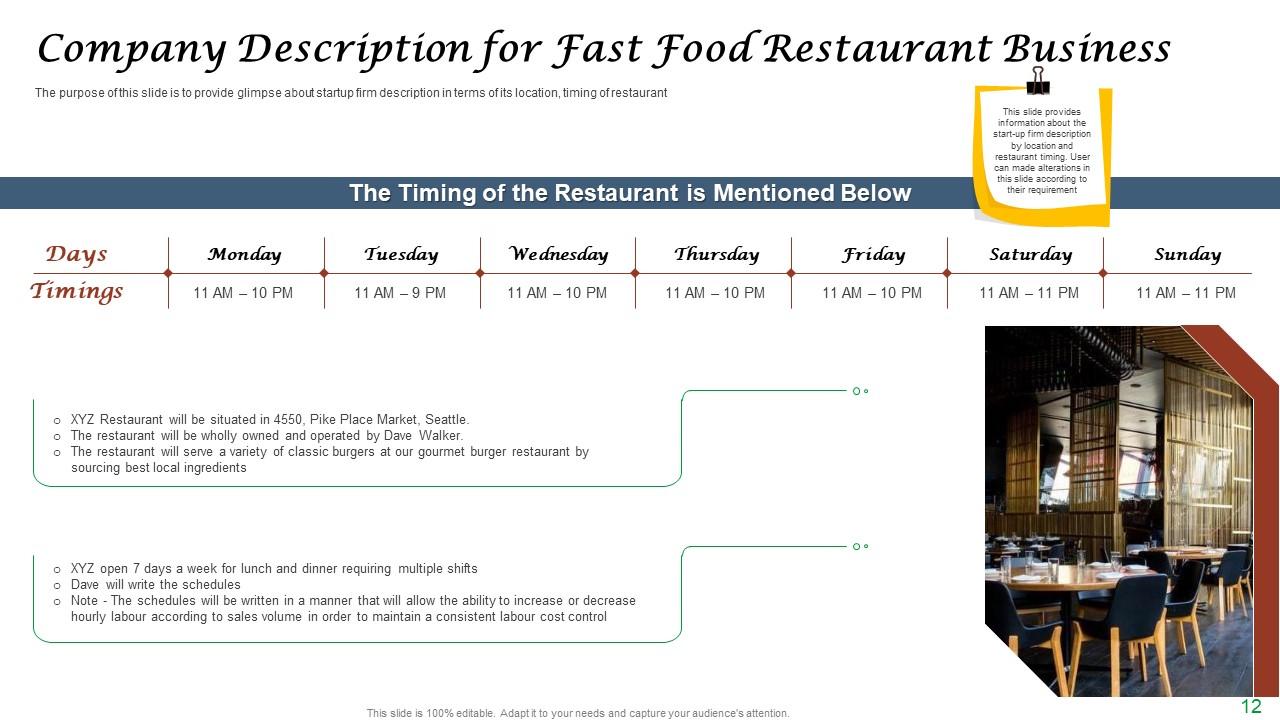
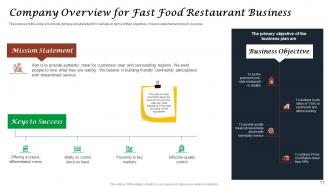
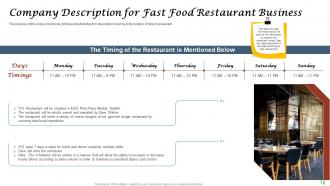
Company descriptions are essential for communicating with lenders, investors, employees, and prospective clients. Use this PPT Template to present an overview of your fast-food startup business. It emphasizes the description of the restaurant’s location and opening hours to ensure people recall and remember where they saw your advertisement or flyer. This also gives a quick overview of your company.
Template 2: Daily Operations for Fast Food Restaurant Business

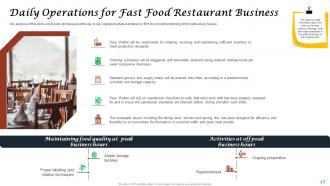
Use this PowerPoint Slide to give an overview of tasks performed to ensure seamless operation of your fast-food setup. It covers every aspect of operations management, including purchasing, roles and responsibilities, peak hours activities, restaurant layout, and more. This will help maintain the restaurant’s financial health and speed up the preparation procedure. Remember, efficient operations of your restaurant is critical to its success.
Template 3: Operational Checklist for Fast Food Restaurant Business
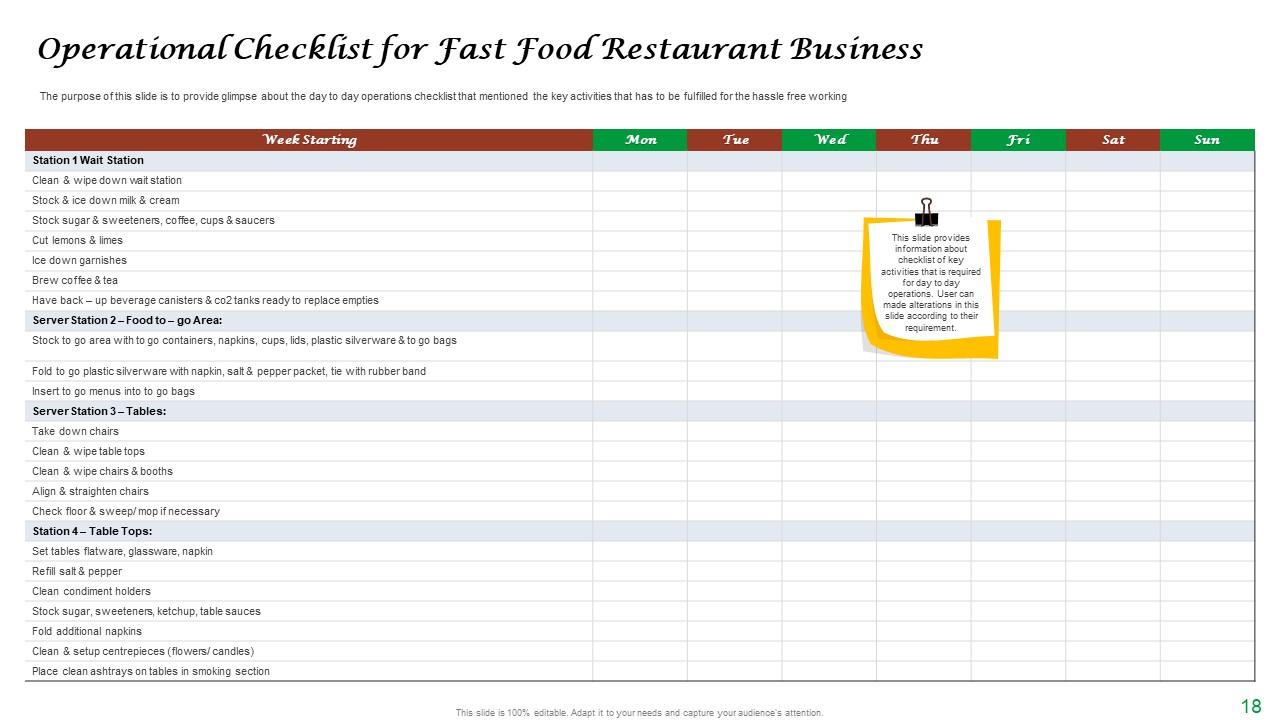
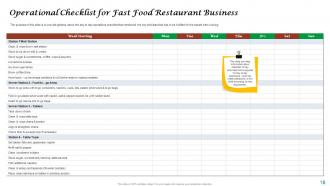
Do you need to create a restaurant checklist to maintain order and efficiency? Use this PPT Design as a daily operational checklist to ensure that key activities are accomplished. This slide gives an overview of important tasks that must be completed for hassle-free working and daily operations. This set of tasks and processes will help the team keep the restaurant functioning.
Template 4: Competitive Analysis for Fast Food Restaurant Business
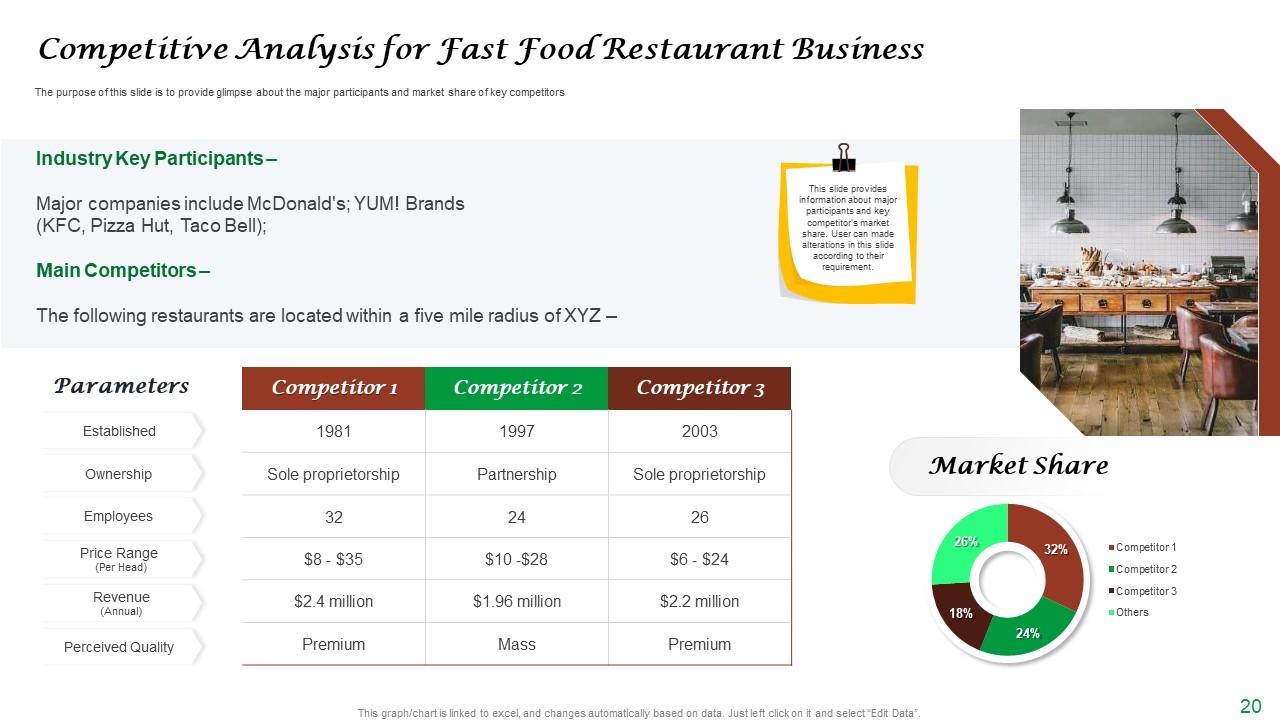
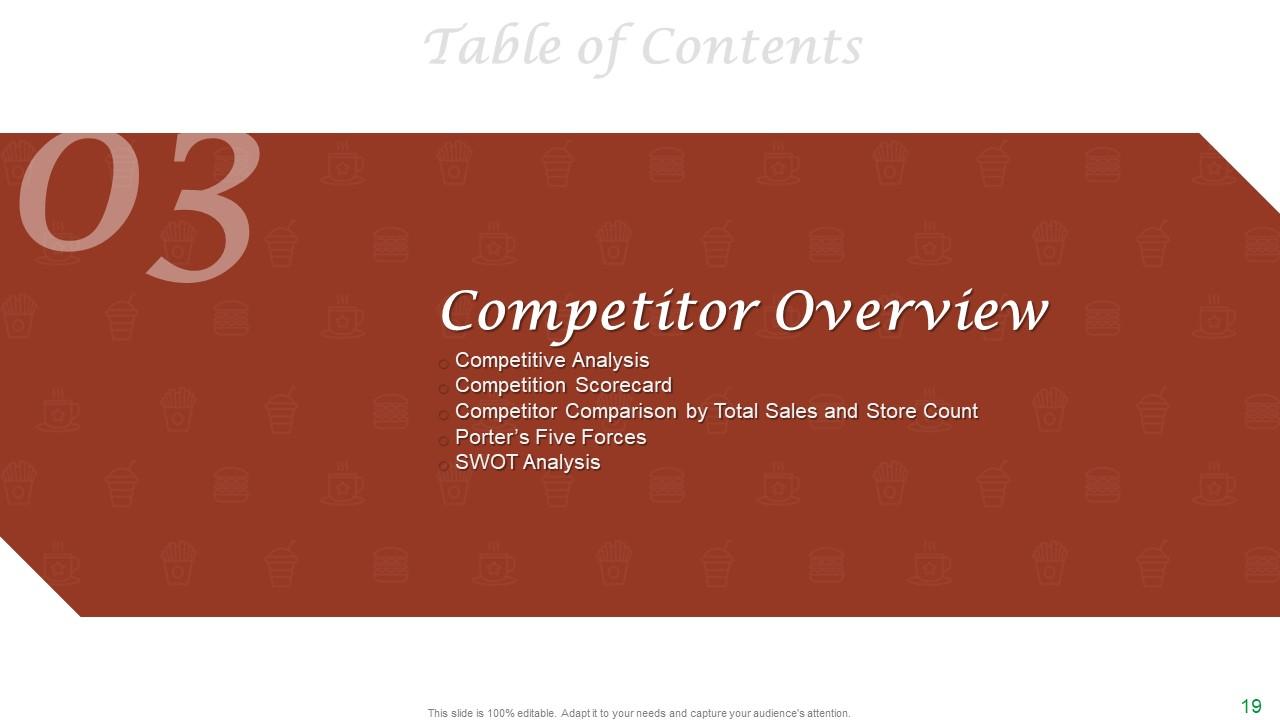
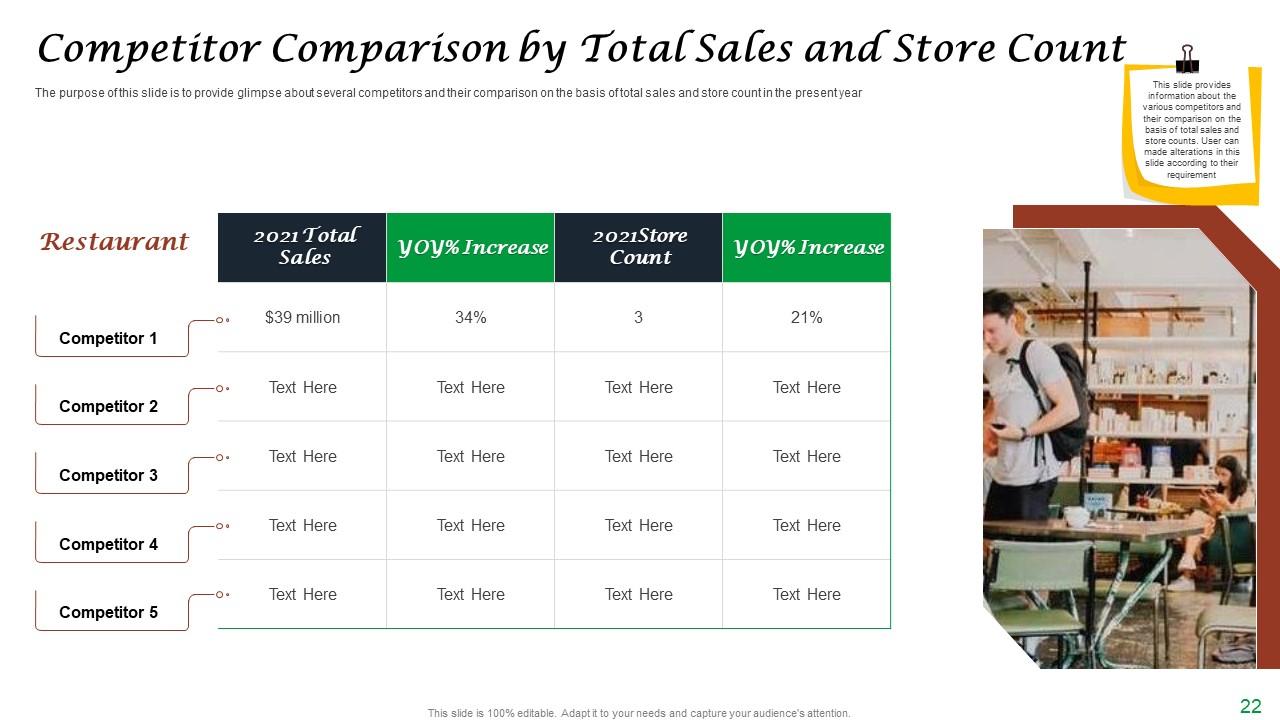
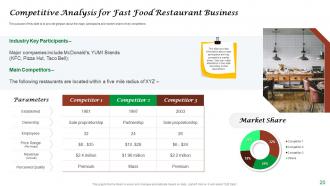
Use this PPT Template to determine your restaurant’s distinct selling characteristics and comprehend the competition landscape. This presentation summarizes significant participants and the market share of key competitors, which will help improve the fast-food restaurant business plan. Employ this slide to get insights into the industry and establish your position.
Template 5: Competition Scorecard for Fast Food Restaurant Business
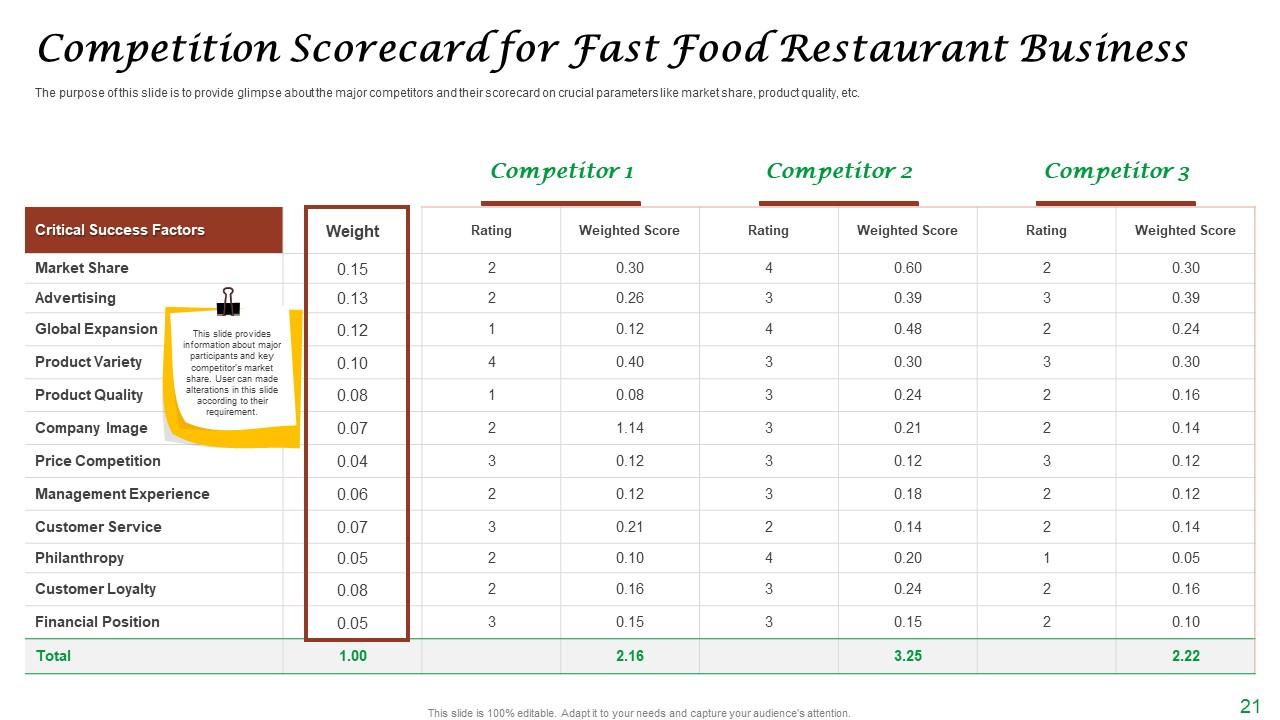
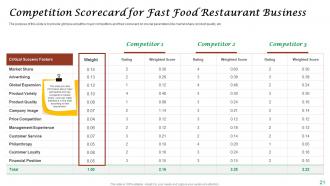
This PPT Layout will help you evaluate your fast-food restaurant company competition and increase your chances of success. This offers clear perspective on how your restaurant compares against its rivals in the industry. This slide provides an example of a competitive scorecard for important factors, such as product quality, market share, pricing, customer service, advertising, and financial situation. This will help you understand the essential elements to consider to ensure success.
Template 6: Porter’s Five Forces for Fast Food Restaurant Business
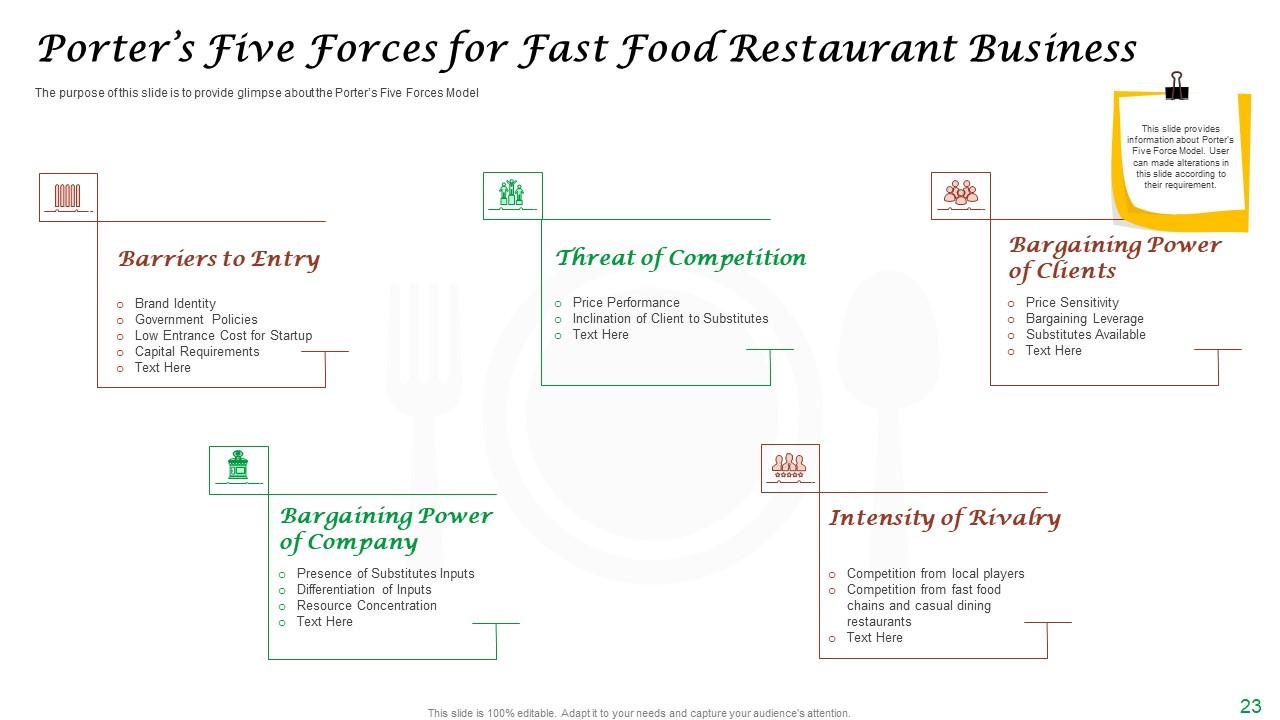
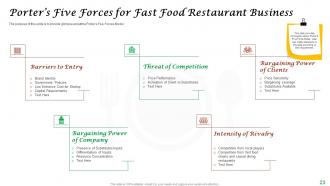
This PPT Layout provides an overview of Porter’s Five Forces Model for analyzing the competitive landscape of the fast-food business. It examines five major elements that drive market dynamics: entrance barriers, competition threat, client bargaining power, firm, and rivalry intensity. This will make it easier to evaluate your company’s profitability prospects against those of your competitors.
Template 7: SWOT Analysis for Fast Food Restaurant Business
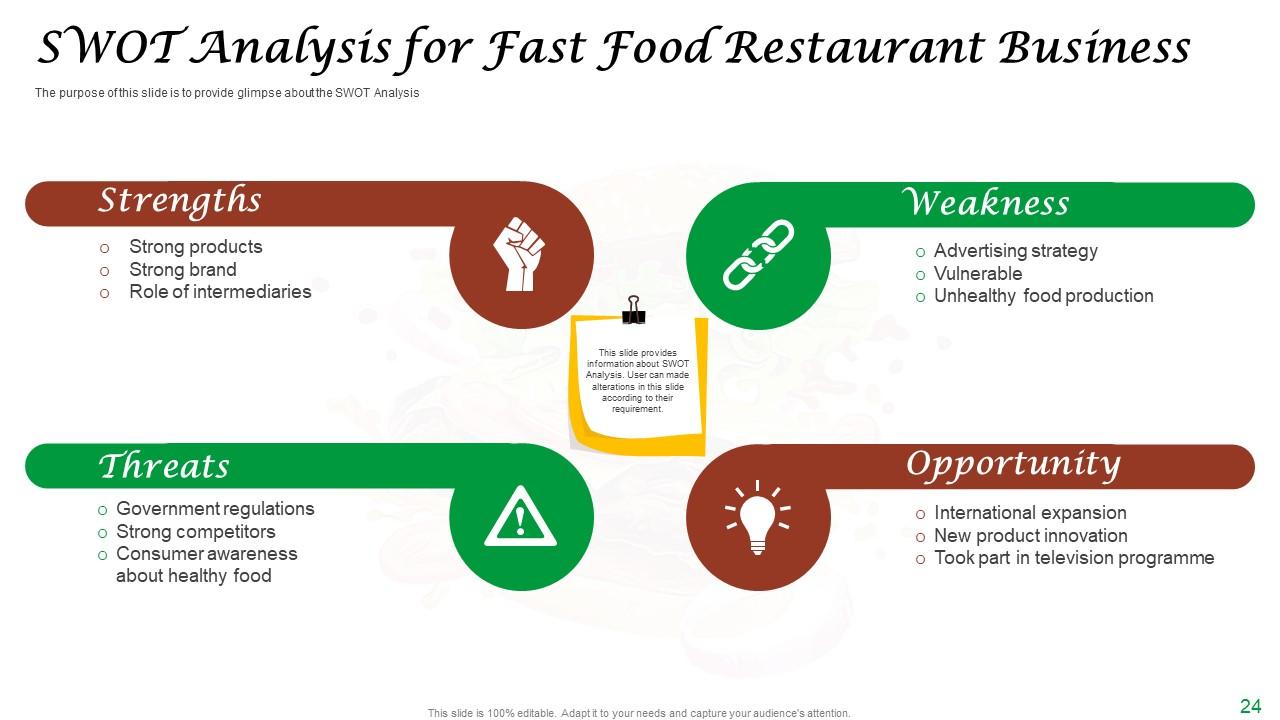
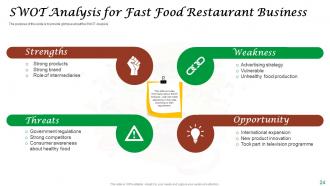
Do you need to evaluate your position in comparison to competitors? Use this PowerPoint Presentation to conduct a SWOT analysis for your fast-food restaurant. This helps analyze the restaurant’s strengths, weaknesses, opportunities, and threats. You’ll be able to determine what needs to change and how to advance your business.
Template 8: Market Segmentation for Target Customer
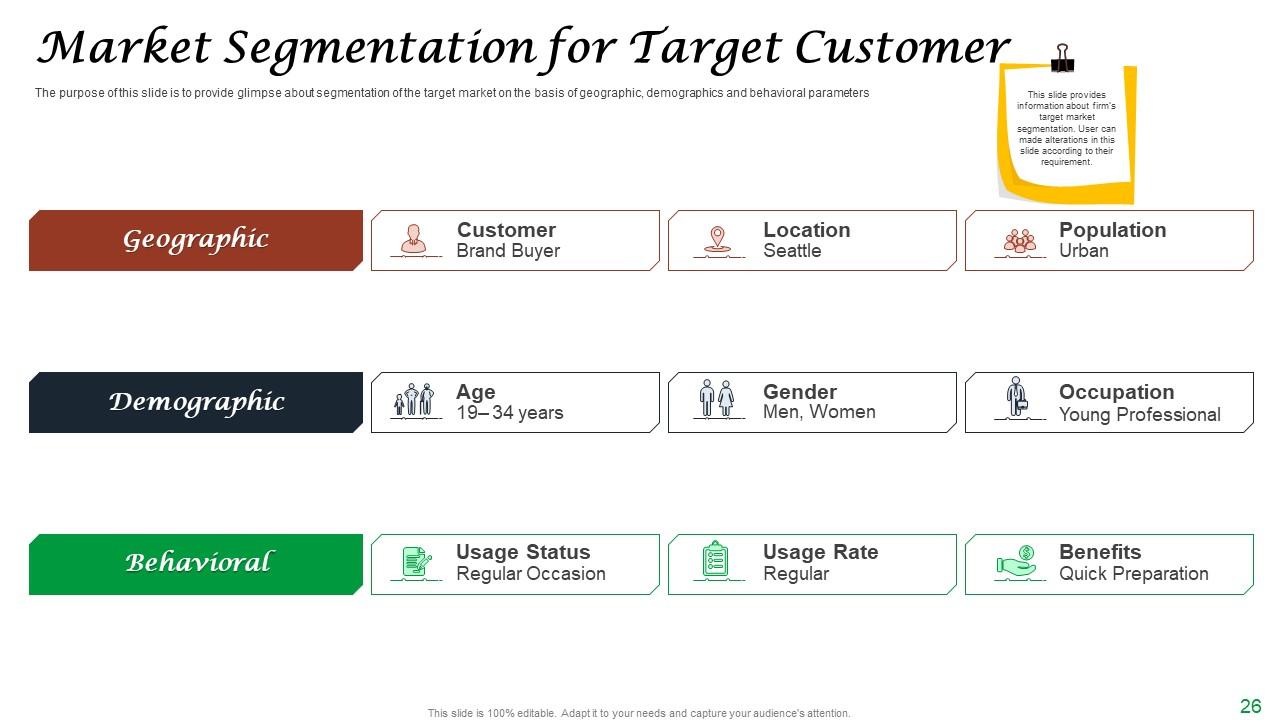
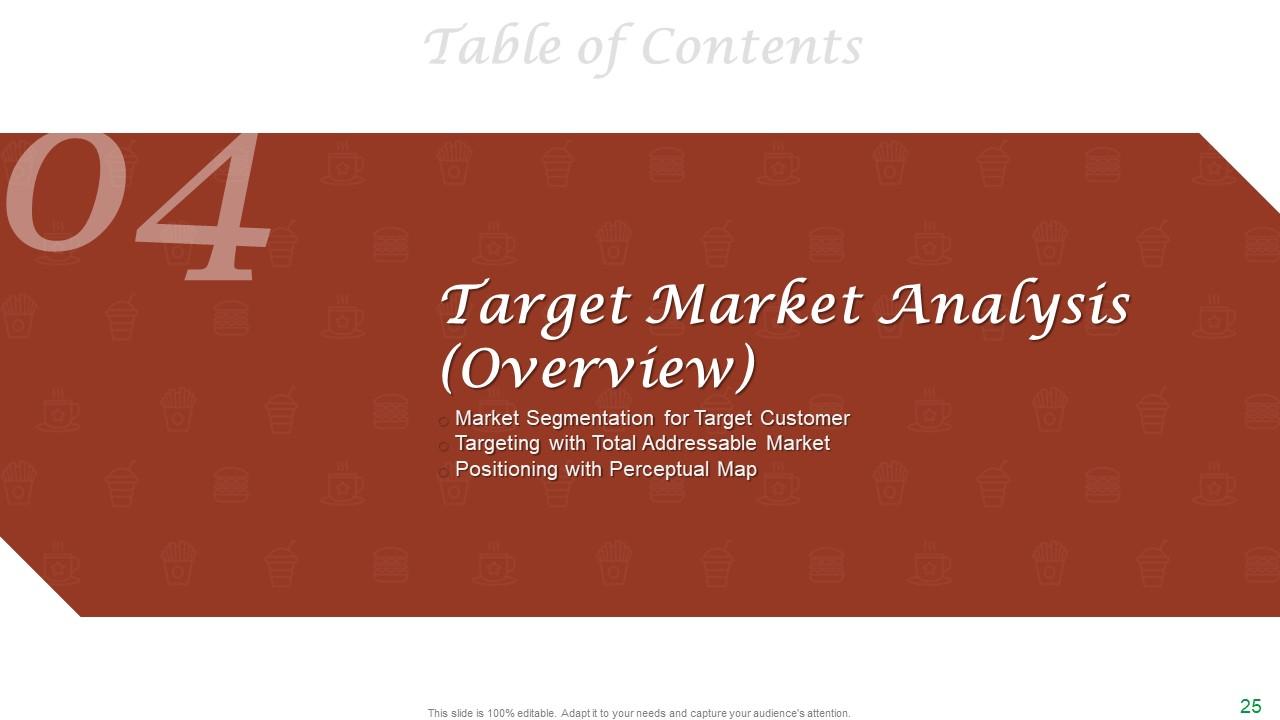
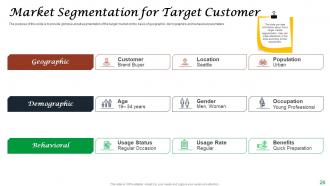
Target market segmentation allows you to better sell to potential clients. This PPT Slide will help you categorize your potential consumers based on regional, demographic, and behavioral factors. Use it to develop a marketing plan and include it in a business plan for more targeted audiences.
Template 9: Targeting with Total Addressable Market
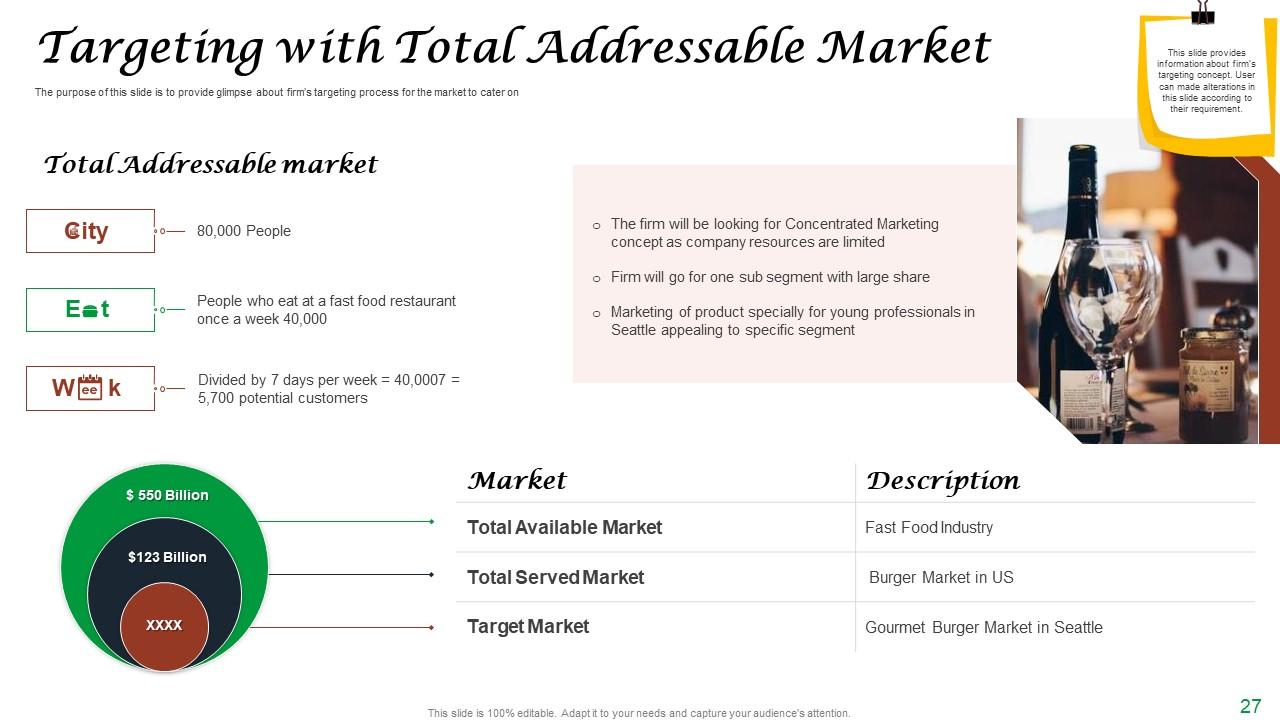
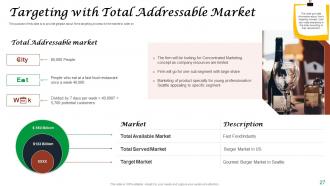
The Total Addressable Market (TAM) is useful in determining a company’s potential. This PPT Slide depicts your fast-food restaurant’s targeting method with the aim to improve your company’s market position. It shows figures such as the total available market, total served market, and total market.
Template 10: Product Promotion Strategy for Fast Food Restaurant Business
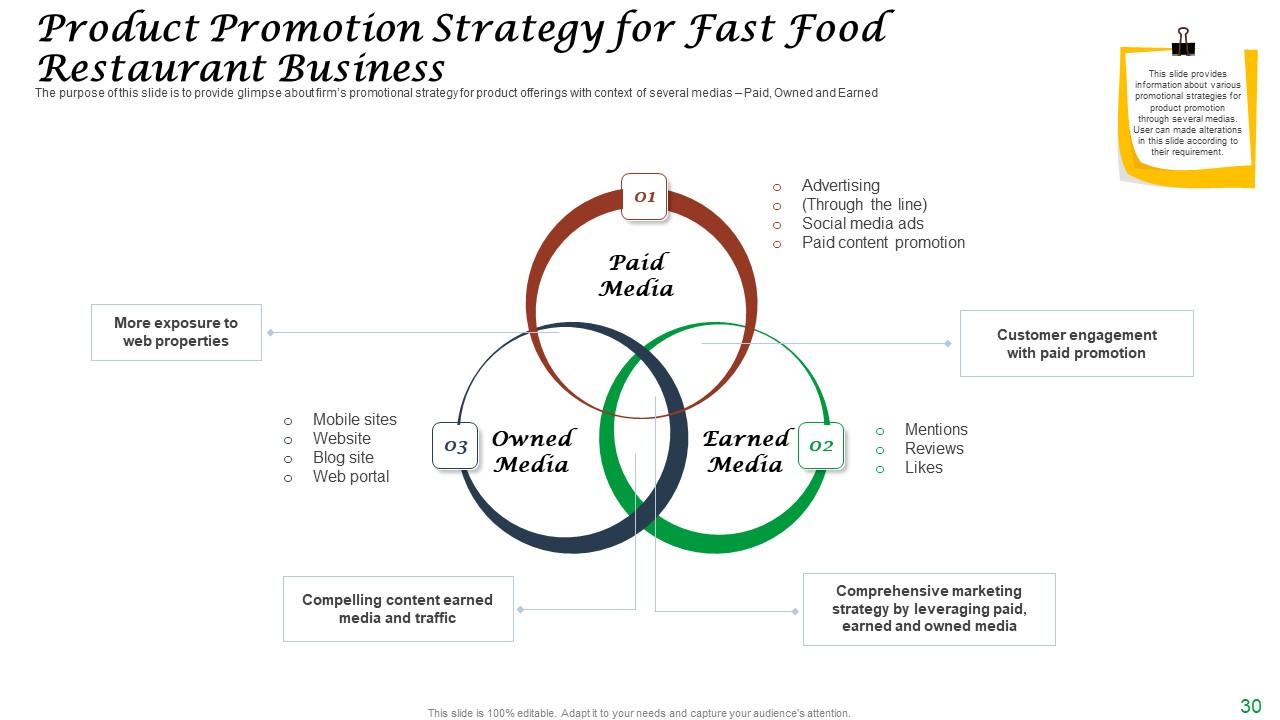
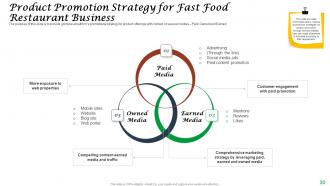
This PPT Framework provides an overview of the company’s promotional strategy for product offerings. It presents three types of media, paid, owned, and earned, to enhance income and maximize market visibility. Use it to summarize your marketing strategies.
Succeed in the competitive food industry.
Fast-food restaurants have long been popular with salaried employees, tourists, and commuters worldwide. Use SlideTeam’s PPT Template as a quick guide to launch your fast-food establishment.
PS Need to determine the viability of your fast-food venture? Browse and download the Fast-Food Business Plan Templates.
Fast Food Restaurant Business Powerpoint Presentation Slides with all 59 slides:
Use our Fast Food Restaurant Business Powerpoint Presentation Slides to effectively help you save your valuable time. They are readymade to fit into any presentation structure.
-
Great designs, Easily Editable.
-
Excellent Designs.
-
Easily Editable.
-
Unique and attractive product design.
-
Unique design & color.
-
Editable templates with innovative design and color combination.
-
Awesome presentation, really professional and easy to edit.
-
It saves your time and decrease your efforts in half.
-
Great product with highly impressive and engaging designs.
