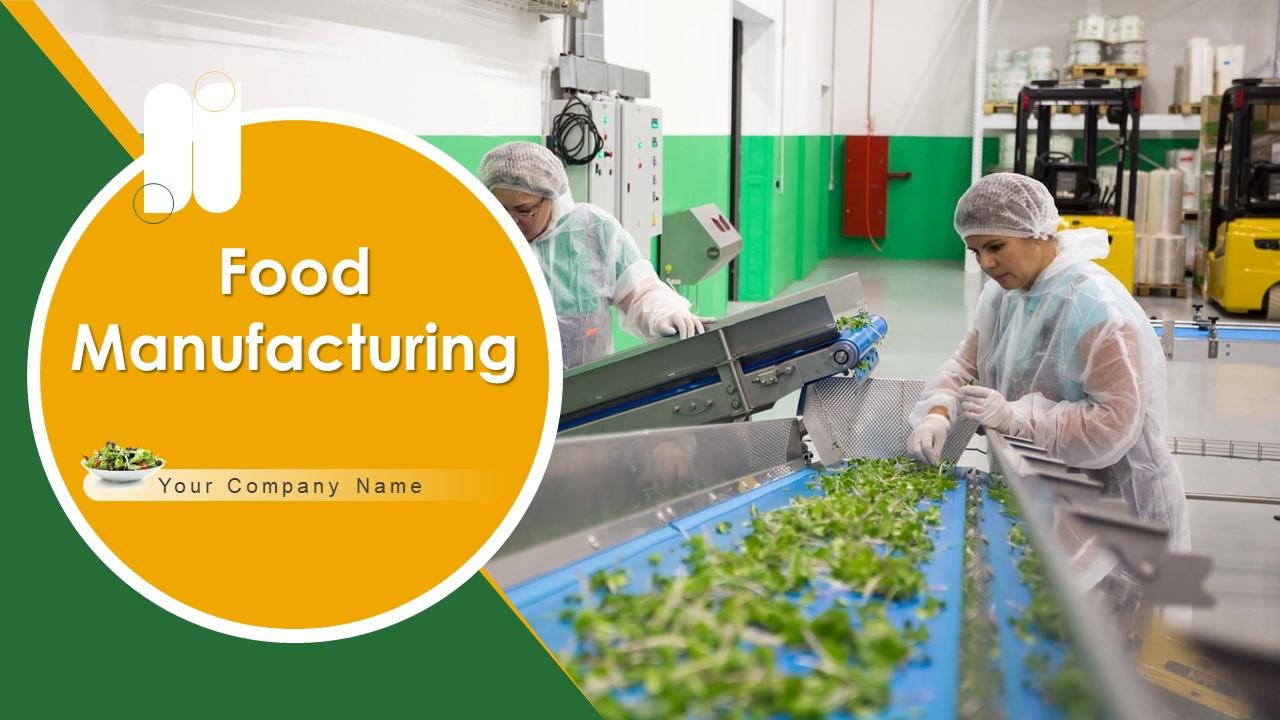
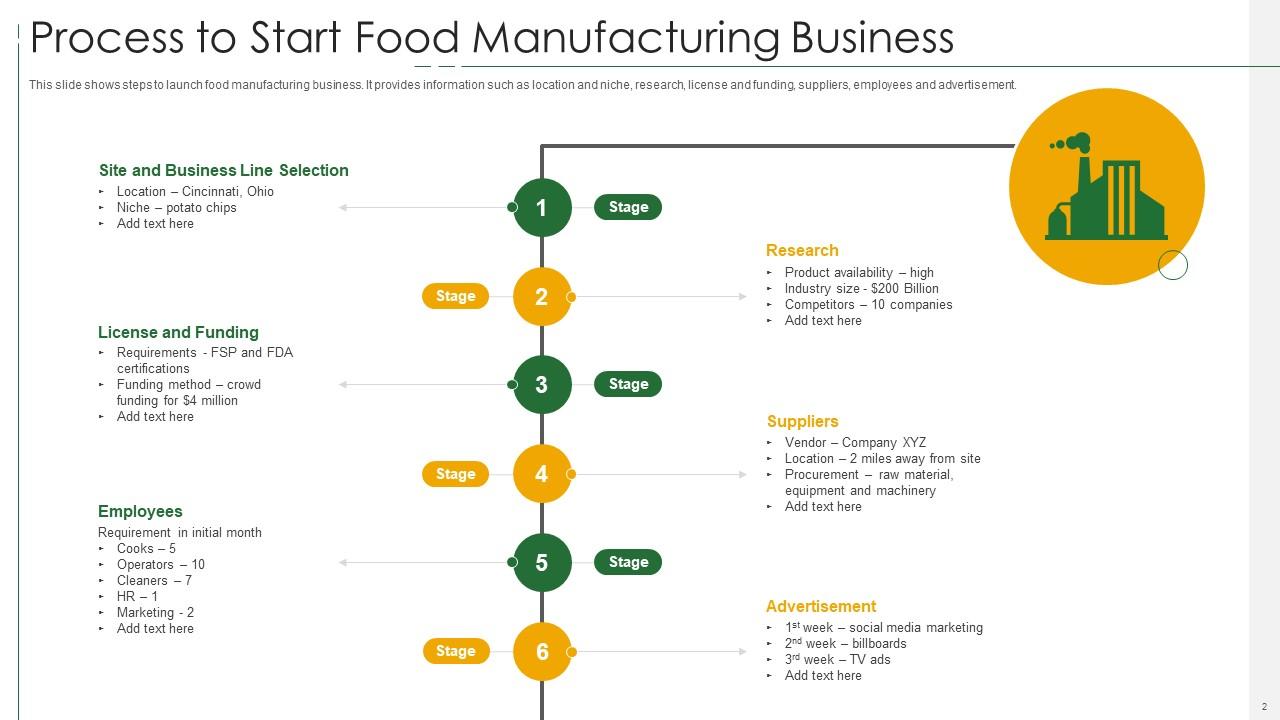
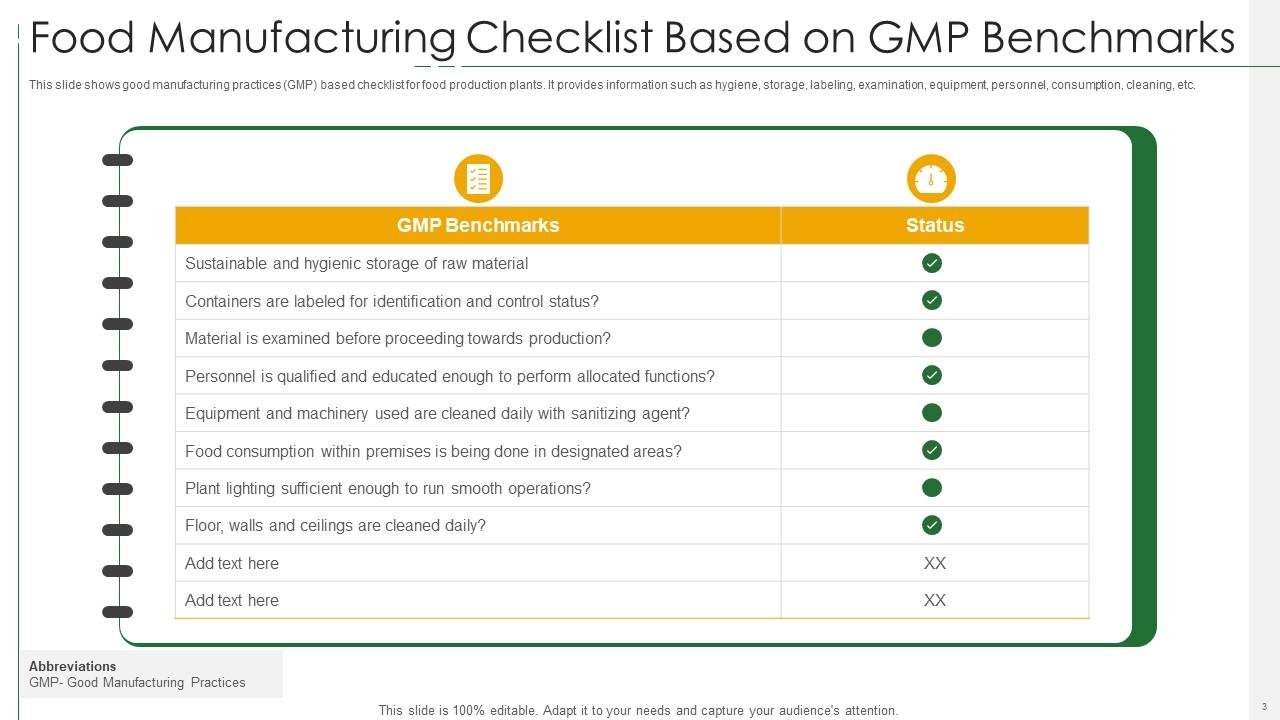
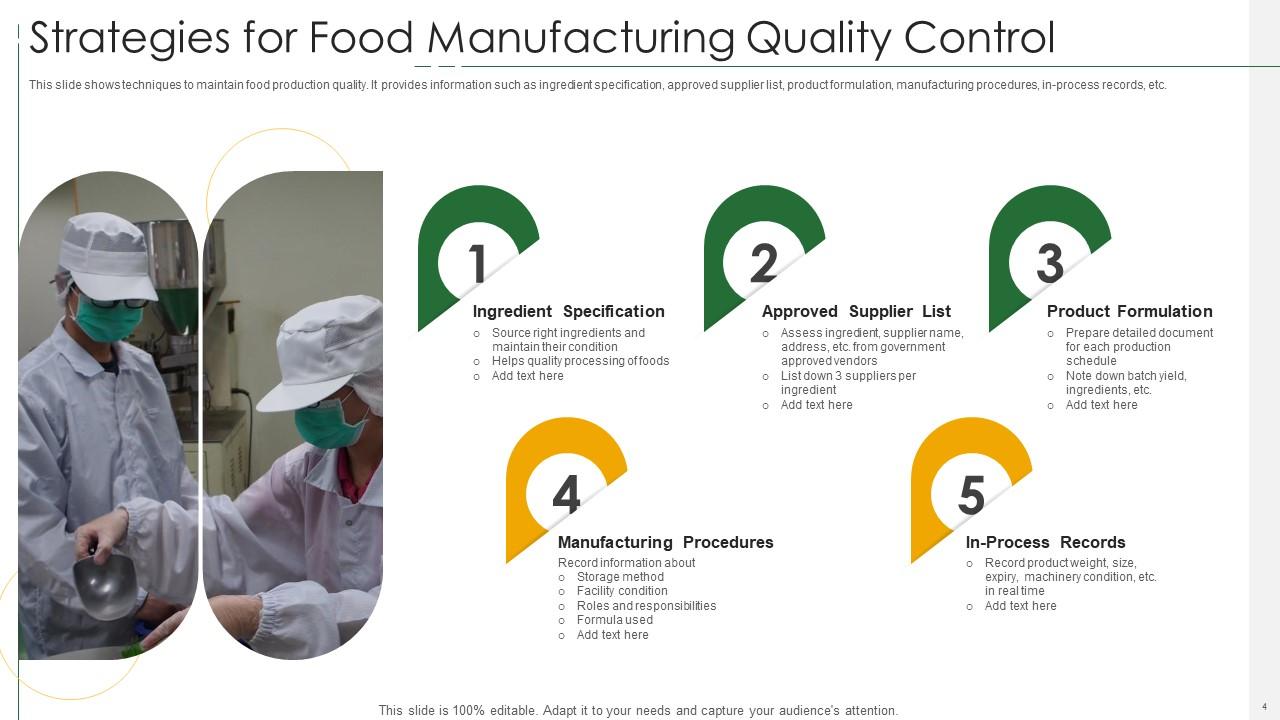
Food Manufacturing Powerpoint Ppt Template Bundles
Try Before you Buy Download Free Sample Product
Audience
Editable
of Time
Our Food Manufacturing Powerpoint Ppt Template Bundles are topically designed to provide an attractive backdrop to any subject. Use them to look like a presentation pro.
People who downloaded this PowerPoint presentation also viewed the following :
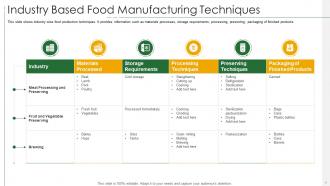
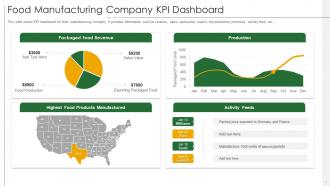
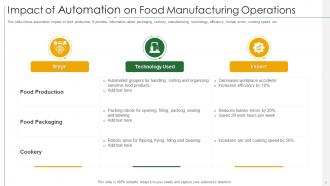
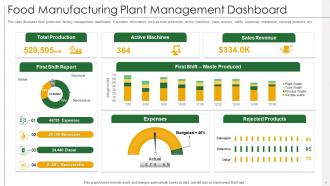
Food Manufacturing Powerpoint Ppt Template Bundles with all 18 slides:
Use our Food Manufacturing Powerpoint Ppt Template Bundles to effectively help you save your valuable time. They are readymade to fit into any presentation structure.
FAQs for Food Manufacturing Powerpoint
Dude, automation is huge right now - smart sensors catching contamination before it's even a problem. Plant-based processing equipment is everywhere since that market's still hot (and profitable tbh). Your competitors are probably already using cobots for packaging. Way easier to implement than you'd think, and they don't require gutting your whole setup. 3D food printing's actually becoming viable for custom nutrition stuff too. Oh, and blockchain for supply chain tracking - it's pretty much expected now, not optional. Customers want to know where everything comes from. I'd start with the cobots though, biggest bang for your buck.
Dude, automation is honestly a game-changer for production lines. Robots work way faster than people - they're packaging and sorting 24/7 without coffee breaks or sick days. The consistency is what really gets me though. No more "oops I was distracted" moments that mess up quality control. You'll slash labor costs too, plus there's way less contamination risk since fewer hands touch the product. My cousin's factory saw crazy speed improvements after automating their bottleneck areas. That's where I'd start - find your slowest process first and automate that.
Honestly, sustainability is running the show in food manufacturing right now. Companies are switching to renewables, cutting water waste, rethinking packaging - the whole deal. Sure, consumers care more, but the real drivers? Cost savings and regulations breathing down everyone's necks. Your sourcing decisions, equipment, supply chain - everything has to consider environmental impact now. I'd start by looking at where you're wasting the most stuff. That's usually your biggest opportunity for change. My buddy's company saved crazy money just by fixing their water systems first.
Start with HACCP - it's your basic framework for spotting and controlling food safety risks throughout production. Temperature control is absolutely critical, can't emphasize that enough. You'll want to set up supplier verification programs and train staff regularly on safety protocols. FDA compliance and proper documentation are non-negotiable too. Oh, and build a solid traceability system so you can track products fast if something goes wrong. Regular facility inspections help catch issues early. Honestly, I'd begin by auditing what you're doing now against regulatory requirements. That'll highlight exactly where you need to focus first.
Honestly, temperature control will drive you crazy - one hiccup and boom, whole shipments ruined. Traceability's another nightmare because if something gets contaminated, you need to track it back through every single step immediately. Consumer tastes shift so fast too, making demand forecasting brutal with perishables. Transportation costs? They just keep going up, especially for cold storage stuff. Different regions have their own regulatory mess to deal with (ugh). My buddy learned this the hard way - invest in real-time monitoring from day one. Also get multiple suppliers lined up so you're not totally screwed when one bails.
So data analytics is completely changing how food companies operate these days. Instead of guessing when machines might break down, you can actually predict failures ahead of time. Quality problems get caught way earlier too. Real-time supply chain optimization is huge - plus you can track consumer trends and adjust what you're making accordingly. Oh, and monitoring ingredient costs becomes way easier (energy usage patterns too, though that's honestly less exciting). My advice? Don't try tackling everything at once. Pick one problem area first and you'll see results much faster.
Smart sensors in packaging are getting crazy good - they literally tell you when food's about to spoil. Biodegradable stuff is everywhere now too, made from seaweed and mushroom fibers (weird but it works). Active packaging's probably the coolest though - releases antimicrobials to keep food fresh longer. There's even edible packaging, which honestly still weirds me out a bit. Plant-based coatings are replacing plastics left and right. My advice? Start looking into biodegradable options ASAP. Customers won't shut up about sustainability these days, so you'll need it to stay competitive.
Companies are throwing way more info on labels now because people demand it. Clean ingredient lists, sourcing details, all that "real ingredients" stuff is everywhere. Some brands are going crazy with transparency - like full supply chain breakdowns and factory tours (honestly smart move). The biggest thing? They're simplifying recipes to ditch those chemical-sounding names that scare people, even if they're harmless. My cousin won't buy anything with ingredients she can't pronounce, which is kinda ridiculous but whatever. If you're dealing with food brands, definitely push them on this - customers will literally jump ship over confusing labels now.
Dude, climate change is gonna mess with your food manufacturing big time. Extreme weather wrecks crops, so your supply chains get all screwed up. Energy costs shoot up too since you'll need way more cooling when it's hot as hell outside. Water becomes scarce - can't exactly make food without it, right? Storage gets tricky with all the temperature swings. Your equipment won't run as efficiently either. Honestly, upgrading cooling systems and getting backup power is probably smart. Oh, and do a climate risk assessment for your area first - figure out what's gonna hit you hardest before you start throwing money at solutions.
So manufacturers are basically gutting their whole setup to get into plant-based stuff. They're buying new equipment that can actually handle pea protein, soy, mushroom ingredients - all that. Plus reformulating everything they already make. Some of these oat milks are honestly way better than regular milk now, which is weird to say. Smart companies are hiring food scientists who know plant chemistry and partnering with specialty suppliers. Oh and supply chains get completely flipped since sourcing quality plant proteins is nothing like dealing with animal products. I'd start by figuring out which products you could switch over easiest.
Honestly, start with tracking your waste patterns - the data's gonna blow your mind about where you're actually losing product. Three big areas to hit: better demand forecasting, optimizing production schedules, and figuring out what to do with byproducts. Lean manufacturing helps cut overproduction. Try flexible packaging sizes so you can tweak batch amounts. Partner with food recovery groups for stuff that's safe but won't sell. But real talk - the biggest win I've seen? Just getting your sales forecasting and production teams to actually talk to each other regularly.
Honestly, globalization is wild - you're juggling food safety rules that are all over the place depending on where you're selling. Some countries are super strict, others not so much. If you want to go global though, you basically have to hit the highest standards across all markets. Supply chains become a nightmare when you're sourcing from different countries since everyone's got their own rules. But hey, at least you get access to way cooler ingredients and can scale up big time. My advice? Figure out each market's regulations before you dive in. Trust me, changing your whole process later will cost you a fortune and probably your sanity too.
So R&D is like your innovation team - they take your "what if we made this cool product" idea and figure out how to actually make it happen. They'll research what's trending, mess around with ingredients and formulas, test nutrition stuff. Plus all the boring regulatory paperwork (ugh). But here's the thing - they're the bridge between your wild ideas and something you can actually produce at scale. Testing prototypes, shelf-life studies, working out manufacturing bugs. Trust me, get them involved from day one if you're launching anything new. Don't wait until later.
Honestly, social media is perfect for showing off how you make stuff - people are weirdly obsessed with behind-the-scenes content. Instagram and TikTok are your best bet for that. Share recipes with your products too. Facebook's better for longer posts about your story and what you stand for. Twitter works for quick updates and handling customer questions. Don't just spam ads though - that's annoying. Post cooking tips, highlight cool ingredients, stuff that's actually useful. Oh, and respond to comments fast! Consistency matters way more than being perfect. Building real relationships with customers is what actually moves the needle.
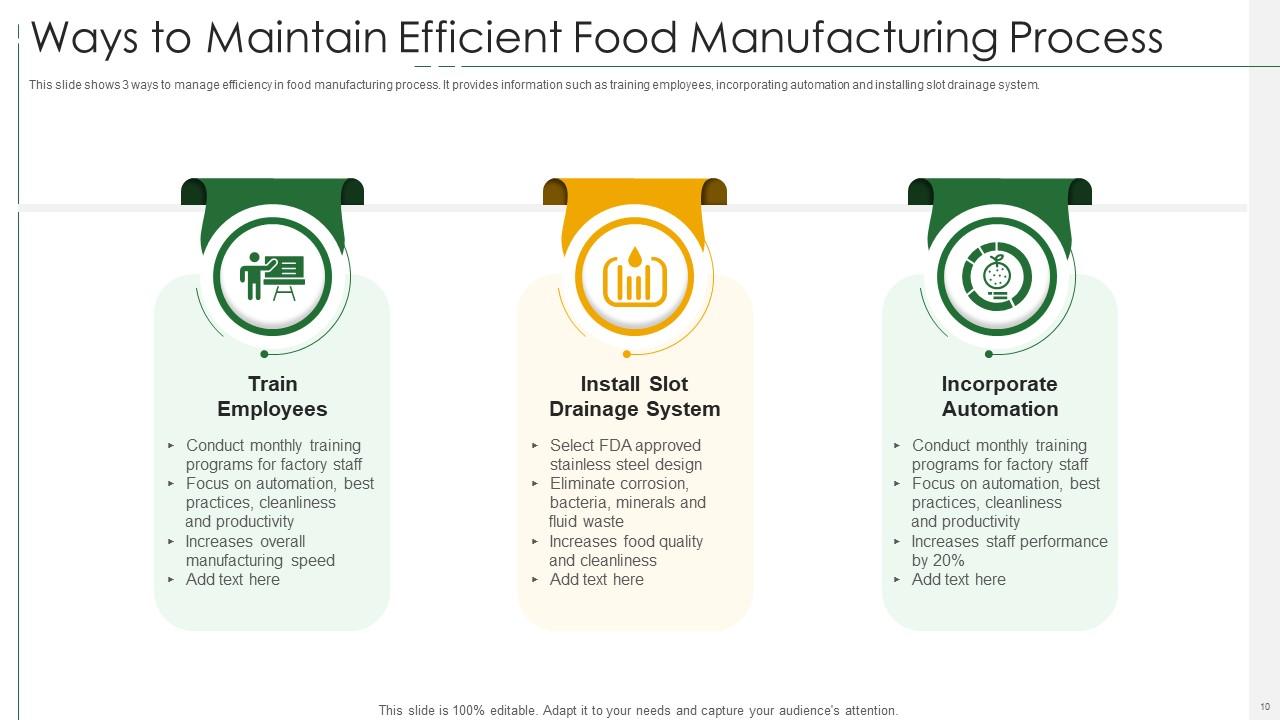
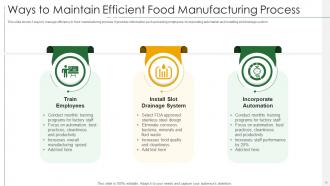
Honestly, start with lean manufacturing - cuts out so much waste it's not even funny. Get real-time monitoring going so you can actually see what's happening on your lines. Cross-training is clutch because people can cover different stations when things get crazy. Predictive maintenance will save your ass (trust me on this one). Map out your workflow first though - you'll spot bottlenecks way easier that way. Oh, and time those changeovers religiously then standardize the process. Pick one line to test everything on before you go nuts with changes everywhere.
-
It saves your time and decrease your efforts in half.
-
Easily Understandable slides.