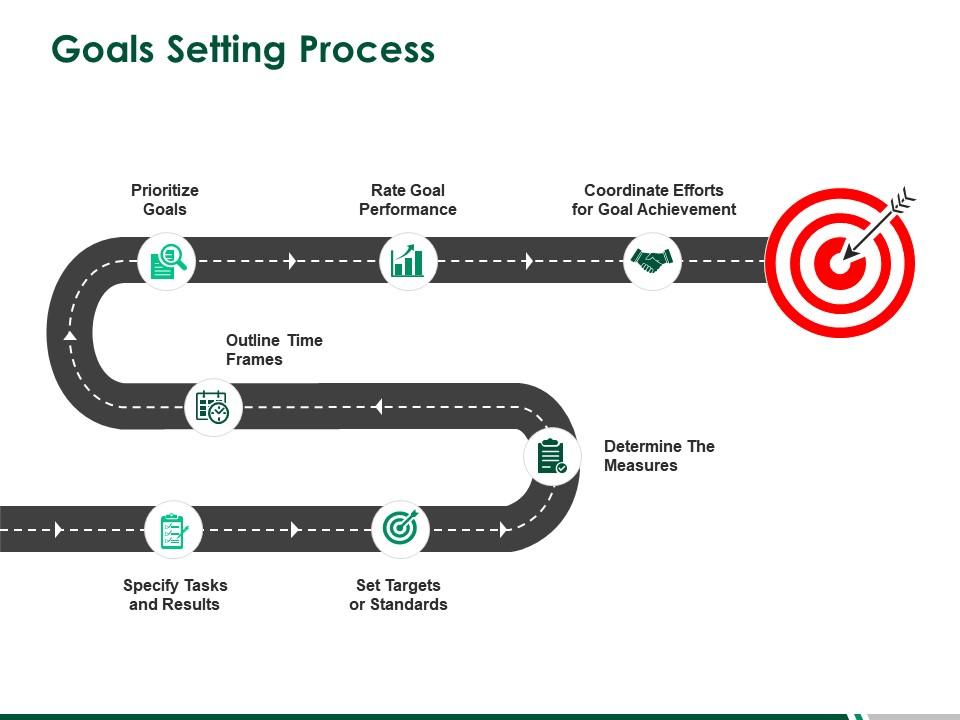
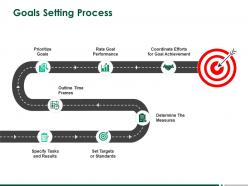
Goals setting process achievement arrow ppt powerpoint presentation infographics background
Try Before you Buy Download Free Sample Product
Audience
Editable
of Time
Dazzle the audience with your thoughts. Add extra sparkle with our Goals Setting Process Achievement Arrow Ppt Powerpoint Presentation Infographics Background.
People who downloaded this PowerPoint presentation also viewed the following :
Goals setting process achievement arrow ppt powerpoint presentation infographics background with all 5 slides:
Create the mood with our Goals Setting Process Achievement Arrow Ppt Powerpoint Presentation Infographics Background. Their colour combos are designed to excite.
FAQs for Goals setting process achievement arrow ppt powerpoint
Effective goal setting in professional environments includes specificity, measurability, achievability, relevance, and time-bound parameters, along with clear accountability structures and regular progress reviews. These components streamline organizational alignment by establishing transparent expectations, enabling performance tracking, and facilitating resource allocation, with many companies finding that structured goal frameworks ultimately deliver enhanced productivity and competitive advantage.
Visual presentation templates enhance goal-setting by providing structured frameworks for clarity, standardized formats for consistency, and collaborative spaces for team input. These templates streamline the planning process through clear objective mapping, progress tracking dashboards, and milestone visualization, with many organizations finding that visual goal frameworks improve team alignment, accountability, and achievement rates significantly.
SMART criteria ensures goals are Specific, Measurable, Achievable, Relevant, and Time-bound, providing a structured framework that transforms vague aspirations into actionable objectives. This methodology enhances goal clarity and accountability across organizations, with many teams finding that SMART parameters significantly increase completion rates, streamline progress tracking, and ultimately deliver better strategic outcomes through focused execution.
Goal-setting techniques can be integrated into team presentations through collaborative SMART goal frameworks, visual progress tracking dashboards, milestone celebration segments, and interactive commitment ceremonies. These approaches enhance team alignment by establishing shared accountability, creating transparent progress monitoring, and fostering collective ownership, with many organizations finding that structured presentation-based goal setting significantly improves project completion rates and team engagement.
Common pitfalls include setting vague objectives, creating unrealistic timelines, lacking measurable metrics, failing to break down large goals, and not accounting for potential obstacles. These challenges often derail progress in organizations and personal development, with many professionals finding that strategic planning, regular review processes, and flexible adaptation ultimately deliver sustained achievement and competitive advantage.
**INPUT**: How can tracking progress towards goals be effectively visualized in a presentation? **OUTPUT**: Effective goal progress visualization includes milestone timelines, progress bars, comparative charts, dashboard-style metrics, and before-and-after snapshots that clearly demonstrate advancement. These visual elements streamline stakeholder communication by transforming complex data into digestible formats, enabling teams across sectors like sales, project management, and strategic planning to identify trends, celebrate achievements, and adjust strategies, ultimately delivering enhanced accountability and accelerated goal attainment.
Company culture significantly influences goal-setting through shared values, communication patterns, risk tolerance, and leadership styles that shape how objectives are established and pursued. Organizations with collaborative cultures typically encourage participatory goal-setting and cross-functional alignment, while performance-driven environments emphasize ambitious targets and accountability, ultimately determining whether goals inspire innovation or create pressure, affecting employee engagement and achievement rates.
Feedback mechanisms enhance goal-setting by creating continuous communication loops, enabling real-time adjustments, tracking progress transparently, and fostering collaborative problem-solving among team members. Through regular check-ins and digital dashboards, organizations streamline accountability while identifying obstacles early, with many teams finding that structured feedback cycles ultimately deliver faster goal achievement and stronger team alignment.
Successful goal achievement relies on self-efficacy, implementation intentions, progress monitoring, and intrinsic motivation principles. These psychological frameworks enhance performance by building confidence through incremental wins, creating specific action plans, and maintaining accountability systems, with many organizations finding that employees who apply structured goal-setting psychology deliver significantly higher productivity and sustained engagement.
Goal setting adapts to different learning styles through visual progress charts and infographics for visual learners, interactive discussions and peer coaching for auditory learners, and hands-on simulations and role-playing exercises for kinesthetic learners. Training programs increasingly incorporate these multi-modal approaches, with organizations finding that tailored goal-setting methods enhance engagement, accelerate skill development, and ultimately deliver higher completion rates across diverse learning preferences.
Methods for ensuring accountability include regular check-ins, progress tracking systems, peer review sessions, milestone celebrations, and transparent reporting dashboards. These approaches streamline team coordination by establishing clear expectations, fostering collaborative oversight, and creating shared responsibility, with many organizations finding that combining structured reviews with peer support ultimately delivers enhanced performance and stronger goal completion rates.
Milestone charts visually break down long-term goals into manageable phases, creating clear checkpoints that maintain team focus and momentum throughout extended projects. These presentations enable organizations to track progress systematically, identify potential bottlenecks early, and celebrate incremental achievements, with many finding that visual timelines enhance accountability and strategic alignment across departments.
Aligning individual goals with organizational objectives significantly enhances employee engagement, productivity, and retention while driving strategic outcomes. Through this strategic alignment, organizations streamline resource allocation, accelerate goal achievement, and foster accountability, with many companies finding that synchronized objectives deliver improved performance metrics, reduced turnover, and ultimately stronger competitive advantage in increasingly complex markets.
Storytelling techniques in presentations motivate teams by creating emotional connections, illustrating successful outcomes, and making abstract goals tangible through relatable narratives. These approaches enhance engagement by connecting personal experiences to organizational objectives, demonstrating real-world achievements from similar teams, and ultimately delivering increased buy-in and sustained motivation toward goal achievement.
Innovative goal-setting presentation formats include interactive workshops with live polling, gamified challenges using leaderboards and progress tracking, storytelling sessions featuring real success cases, visual mapping exercises, and collaborative breakout sessions. These approaches enhance audience engagement by combining hands-on participation with data-driven insights, ultimately delivering higher retention rates and actionable commitment to strategic objectives across organizations.
No Reviews