Health And Safety Key Performance Indicator Dashboard

Rating:
80%
Health And Safety Key Performance Indicator Dashboard
Slide 1 of 7
Favourites Favourites

Try Before you Buy Download Free Sample Product

Audience Impress Your
Audience
Editable 100%
Editable
Time Save Hours
of Time
The Biggest Sale is ending soon in
0
0
:
0
0
:
0
0
Rating:
80%
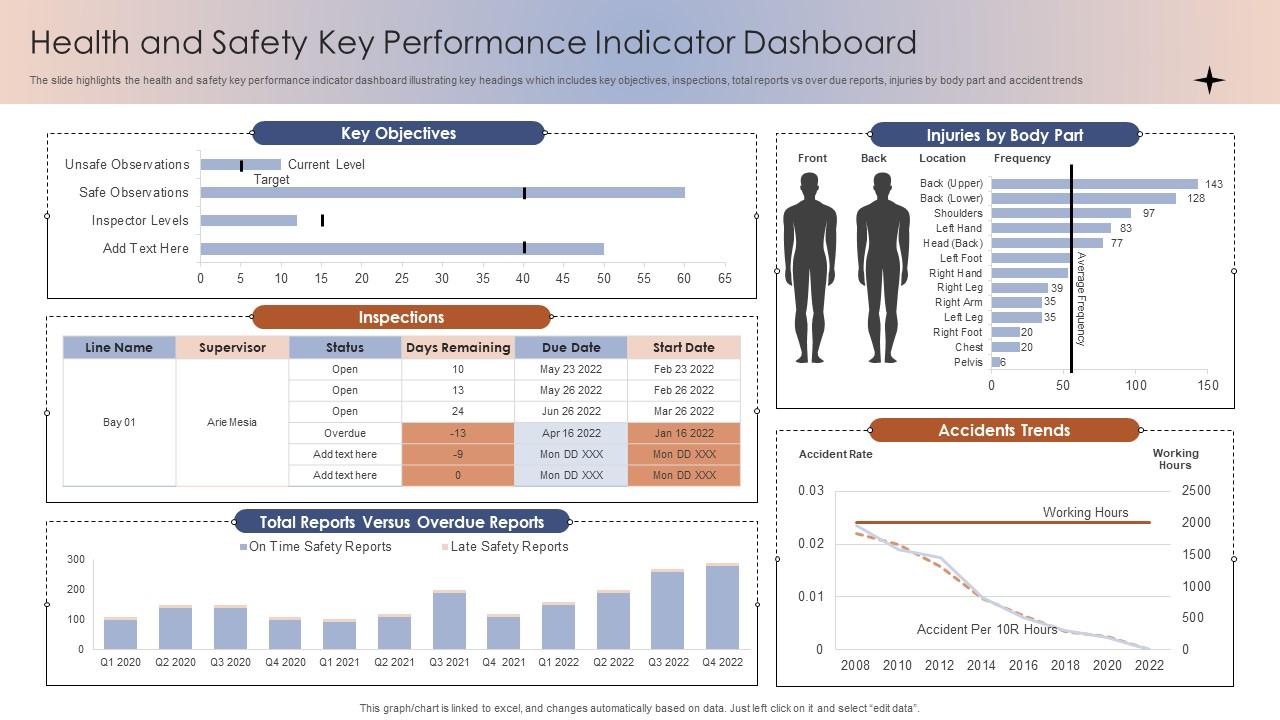
The slide highlights the health and safety key performance indicator dashboard illustrating key headings which includes key objectives, inspections, total reports vs over due reports, injuries by body part and accident trends Introducing our Health And Safety Key Performance Indicator Dashboard set of slides. The topics discussed in these slides are Key Objectives, Inspections, Overdue Reports, Accidents Trends. This is an immediately available PowerPoint presentation that can be conveniently customized. Download it and convince your audience.

People who downloaded this PowerPoint presentation also viewed the following :

FAQs for Health And Safety Key

Start with your LTIR and TRIR - those are your bread and butter incident rates. Near-miss reporting tells you if people actually feel safe speaking up (which tbh is huge). Training completion rates matter too, obviously. But here's what really gets leadership's attention: show them the money side. Workers' comp costs and days away from work hit the budget directly. Oh, and don't sleep on leading indicators like safety inspections and how fast you're closing corrective actions. Way better to prevent stuff than just count it after someone gets hurt. These basics will give you a solid handle on what's really going on.

Track meeting attendance and how many safety suggestions people actually submit - that's where you'll see real engagement. Near-miss reports are gold too. Voluntary training participation tells you a lot, plus who's joining safety committees (though yeah, sometimes it's just for snacks lol). Survey people regularly about whether they feel comfortable reporting stuff and if management actually listens. Honestly, the biggest tell is when employees start safety conversations themselves instead of just sitting there. Measure this monthly and you'll catch trends fast. Way better than just checking if they signed some form.

Near-misses are honestly your best friend when it comes to safety metrics. Track how often people report them, how fast you respond, and whether they actually lead to fixes. This stuff predicts injuries way better than waiting for someone to get hurt. Think of it like... getting a heads up before things go sideways. The tricky part? People won't report near-misses if they think they'll get in trouble for it. You've got to make reporting feel safe. Start comparing your near-miss numbers to actual incidents - you'll spot patterns and figure out where to spend your safety budget first.

Honestly, track the stuff that actually matters - not just who showed up. Incident rates before/after training are huge. Test scores show if people retained anything, and watching behavior on-site tells the real story. Completion rates? Pretty meaningless if nobody's applying it. Here's what's cool though - near-miss reporting usually spikes after good training. That's actually a win because people are finally noticing hazards. Set up a basic monthly dashboard comparing these numbers to your pre-training baseline. Way more useful than attendance sheets.

Think of it this way - leading indicators are like your early warning system. Stuff like safety training rates or near-miss reports actually let you fix problems before someone gets hurt. Lagging indicators? They're still useful for the big picture, but honestly, you're just counting what already happened. Injury rates won't prevent the next accident, you know? I'd grab 2-3 leading metrics your team can actually control, then see how they line up with your injury numbers over time. That combo works way better than either alone.

Look at what actually hurts people in your specific industry first. Construction? Track falls and equipment breakdowns. Healthcare has needlestick injuries and infections to worry about. Manufacturing should watch machine incidents and chemical exposure - you get the idea. Honestly, too many companies just steal generic safety metrics from wherever and wonder why they're useless. Dig into your own incident data and near-misses instead. Those patterns will show you what KPIs actually matter. Build your dashboard around those leading indicators, not some template you found online. Review monthly and tweak as new risks pop up.

So incident frequency rates are basically how you track safety issues before they blow up. They measure incidents against total hours worked - way better than just counting raw numbers. You'll want to compare your rates to industry benchmarks and watch for patterns over time. Maybe you're seeing more accidents on Fridays or in certain departments? That's gold right there. Honestly, most companies just look at monthly snapshots and miss the bigger picture. Calculate your current baseline first, then track consistently. It's like having a safety dashboard that actually tells you something useful.

Honestly, start with whatever's driving you crazy right now - that's your biggest win. IoT sensors give you real-time monitoring, which is pretty sweet. Mobile apps make incident reporting way faster too. Wearables are where it gets interesting though - they'll track fatigue, environmental stuff, all that. Dashboards help you actually see what's happening with trends instead of drowning in spreadsheets. AI can even predict issues before they blow up, which still feels like sci-fi to me. The trick is making sure everything talks to each other. Nobody wants data stuck in random places.

Start with industry associations or safety councils - they've got the most solid benchmarking data for your sector. Make sure you're calculating your KPIs the same way as their benchmarks (seriously, this catches everyone off guard). Pick 3-5 key metrics like TRIR and DART rates instead of going crazy trying to benchmark everything. Grab data from multiple sources since one might be totally off. Oh, and don't just stare at the numbers - figure out what the top performers are actually doing differently and see if it works for your situation.

Honestly, your employees are the best source for figuring out what KPIs actually matter. They're dealing with safety issues every day, so they know what's really going wrong out there. I'd start with anonymous surveys about near-misses and what's making it hard to follow safety rules. Management misses so much stuff that workers see constantly. When people help build the metrics, they'll actually care about hitting them too. Quick pulse surveys work great - keeps it simple. Oh, and suggestion boxes still work if you actually read them regularly.

So basically, you take safety stuff and turn it into numbers everyone can actually see. Pick like 2-3 things to track - maybe near-misses, training completion, response times, whatever makes sense for you guys. Post those numbers where everyone can see them. Sounds boring but trust me, people get weirdly competitive about it (in a good way though). You'll start catching problems before they blow up because you're actually looking at the data regularly. Don't overthink it - just pick your metrics and make them visible. Teams really do rally around this stuff once they can see the progress.

Honestly, you've gotta connect your safety metrics directly to money stuff - show how fewer injuries = lower insurance costs and better productivity. CEOs don't care about compliance boxes being checked. Track things like incident-free days, training completion, and near-miss reports, but always tie them back to how they help operations run smoother and keep good employees around. I've watched so many safety dashboards just sit there gathering dust because leadership couldn't see the financial impact. The whole point is proving that investing in safety protects people AND the bottom line. Set up quarterly check-ins with leadership to keep this stuff front and center.

Honestly, the two biggest headaches are getting clean data and dealing with people who think you're just adding busywork. Can't really blame them there. Get your team involved in picking which metrics actually matter - way better buy-in that way. Make sure your tracking systems don't suck, because manually pulling data every week will make everyone hate this real quick. I'd start with maybe 2-3 KPIs max. Don't go overboard right away. Once you get some wins under your belt, then you can add more stuff. The "why" conversation is huge too - people need to see the point.

Look, compliance metrics are your baseline - OSHA stuff, inspection scores, training completions. You can't skip these or you're screwed. But they only show what already happened, which honestly isn't that helpful for prevention. Near-miss reports and safety observations? Way better for catching problems early. I'd focus on getting your compliance tracking solid first - it's boring but necessary. Then add the proactive stuff on top. Oh, and behavioral indicators are clutch too. Start simple though, don't overwhelm yourself with like fifty different metrics right away.

Good safety teams track way more than just accidents. Near-miss reports are huge - the more people report close calls, the better your culture actually is. They also measure stuff like how fast safety issues get fixed and whether employees feel okay shutting down dangerous work. That last one's probably the most telling metric honestly. Some places track safety conversations between workers or how many improvement suggestions actually get used. The cool thing? All this predicts problems before they blow up, instead of just counting what already went sideways.

Ratings and Reviews

80% of 100
Review Form
Write a review
Most Relevant Reviews
  1. 80%

    by Edmund Ortega

    Great designs, really helpful.
  2. 80%

    by Eddy Guerrero

    Been using SlideTeam for some time now…can’t imagine why I wasted all that time in front of the screen trying to make the perfect presentation.

2 Item(s)

per page: