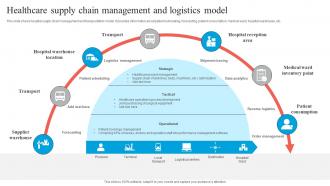
Healthcare Supply Chain Management And Logistics Model
Try Before you Buy Download Free Sample Product
Audience
Editable
of Time
This slide shows hospital supply chain management and transportation model. It provides information about patient scheduling, forecasting, patient consumption, medical ward, hospital warehouse, etc.
People who downloaded this PowerPoint presentation also viewed the following :
Healthcare Supply Chain Management And Logistics Model with all 6 slides:
Use our Healthcare Supply Chain Management And Logistics Model to effectively help you save your valuable time. They are readymade to fit into any presentation structure.
FAQs for Healthcare Supply Chain Management
So you'll need four main things: procurement, inventory management, distribution, and demand forecasting. Build solid relationships with your vendors through procurement. Track everything in real-time - from basic gauze to those crazy expensive machines. Distribution's honestly the hardest part because you're dealing with temperature-sensitive stuff and people who need things NOW. Not exactly like Amazon deliveries, you know? Forecasting helps you predict what you'll actually need so you don't run out of critical supplies. The trick is connecting all these systems so departments can talk to each other and patients never notice when something goes wrong behind the scenes.
Honestly, automated inventory tracking is where I'd start - you can't fix what you can't see. Set up proper par levels for your critical stuff first. Try getting vendors to do consignment deals where they own the inventory until you actually use it (saves a ton of cash flow headaches). Standardizing products across departments is boring but gives you way more buying power. Oh, and definitely set up automatic reorder points so you're not constantly scrambling when things run out. Nothing worse than tying up money in stuff just sitting there.
Honestly, the difference is night and day compared to tracking stuff on spreadsheets. RFID tags and IoT sensors give you real-time visibility on where everything is - inventory levels, shipments, even if your cold-chain products are staying at the right temp. You'll catch shortages before they become disasters and spot those annoying bottlenecks that slow everything down. AI analytics can predict demand patterns too, which is pretty cool. Just make sure whatever systems you pick actually integrate with each other (learned that one the hard way). Start by figuring out where your biggest blind spots are right now.
Oh man, regulations are everywhere in healthcare supply chains. FDA rules for medical devices, cold chain stuff for pharmaceuticals - you'll be documenting literally everything for audits. The traceability requirements make sense though, even if they're a pain. Your vendor qualification and inventory systems have to follow specific protocols too. Honestly? Start building compliance in from the beginning. I learned this the hard way - retrofitting compliance later is such a nightmare and costs way more. Trust me on this one.
Honestly, start by spreading out your suppliers - that whole "eggs in one basket" thing bit everyone hard during COVID. Map out where you're most vulnerable first, then tackle those spots. Stock up on critical stuff, get some forecasting tools running, and figure out backup shipping routes. Real-time tracking is clutch because you'll catch problems early instead of scrambling later. Local sourcing helps too, though I know it's not always realistic cost-wise. Oh, and having backup plans for your backup plans sounds paranoid but it's not anymore.
Honestly, data analytics is huge for supply chain stuff. Instead of just winging it with spreadsheets (which we've all done), you can actually predict when you'll run low on supplies and figure out demand patterns. It catches cost savings you'd miss otherwise. Plus you'll finally know which suppliers are solid vs the ones that constantly screw you over - and trust me, there's always at least one. I'd start small though, maybe just focus on forecasting for your busiest items first. Way less overwhelming that way.
Dude, it's brutal out there during crises. Demand goes absolutely crazy while supply chains fall apart everywhere. PPE, ventilators - everyone's fighting over the same stuff and prices go insane. Your regular suppliers? They're either drowning in orders or can't ship because their government blocked exports. Plus you end up working with sketchy new vendors you've never vetted properly, which is terrifying honestly. My advice? Start building backup supplier relationships now. Don't wait until you're scrambling. Oh, and map out which supplies you absolutely can't live without - that helps prioritize when everything's on fire.
Honestly, getting everyone to actually talk makes a huge difference. Hospitals working with their suppliers and distributors to share real data? Game changer. You'll see way fewer stockouts and less stuff expiring on shelves. The problem is everyone's usually doing their own thing instead of looking at the same info. Once you get that visibility going, you can do cool stuff like having vendors manage your inventory directly. Just-in-time delivery becomes possible too. My advice? Start with one supplier you trust and focus on sharing better data with them first. Don't try to fix everything at once.
Honestly, AI demand forecasting has been huge for us - cuts excess inventory by around 30%. Just-in-time systems work great too, though they make me nervous sometimes lol. Your ERP can handle automated reordering once you set it up right. RFID tracking is pretty sweet for knowing where everything is in real time. Oh, and vendor-managed inventory is clutch - basically they deal with all the stock headaches for you. I'd probably start with the forecasting piece first since it gives you the biggest bang for your buck.
So basically, predictive modeling looks at way more than just last month's numbers. It pulls in historical data, seasonal stuff, patient demographics - even weather patterns that might spike demand. Pretty wild what these algorithms can catch that we'd totally miss. They'll spot trends and adjust for things like flu season hitting or when surgical schedules ramp up. Disease outbreaks too, obviously. I'd say start small though - pick your most critical supplies and test it there first. You'll notice the difference in your inventory levels fast, and honestly it beats the old guessing game by miles.
Okay so three big things to watch out for: patient safety, fair access, and being upfront about your supply chain stuff. Never compromise on quality or authenticity just to save money - even when budgets suck (which they always do). Make sure all patient groups can actually get essential supplies, not just the ones that make you more profit. Also be honest about pricing, conflicts of interest, any supply issues. I'd start by looking at your current vendors and asking yourself - could I explain these decisions directly to patients without feeling weird about it? That's usually a good test.
So hospitals are getting pretty smart about this. They're partnering with suppliers who actually care about the environment, not just talk about it. Switching to reusable devices where it makes sense clinically. Some are even tracking carbon footprints through their whole buying process - which honestly blows my mind that we're finally doing this. Local sourcing helps too, cuts down on shipping emissions. Oh, and they're ditching unnecessary single-use stuff in areas where it won't hurt patient care. If you're thinking about starting, just audit what your current suppliers are doing sustainability-wise. There's probably some easy wins hiding there.
Honestly, JIT inventory could be a game-changer for you guys. Storage costs drop big time, plus you won't have expired meds cluttering up space anymore. Cash flow improves too since money isn't just sitting there in overstocked supplies. Start with basic stuff first though - bandages, gauze, whatever. Test how reliable your suppliers actually are before moving to critical items. You'll get way better data on what you're really using vs. what you think you need. Healthcare facilities are always desperate for space anyway, so this frees up room for things that actually matter.
So basically, good supply chain stuff keeps patients safe in a bunch of ways. You need the right meds and equipment available when doctors need them - no expired or recalled junk making it to patients. Proper sterilization tracking prevents infections too. Temperature control for vaccines is huge (learned that one the hard way during COVID). Having backup suppliers saves your butt when shortages hit. The tracking systems let you trace everything back if something goes wrong - honestly wish more places took this seriously. It's all about qualifying your vendors and staying on top of inventory.
Look, COVID taught us not to rely on just one supplier - that's a disaster waiting to happen. Get multiple vendors for your critical stuff, mix some local ones with the global players. Better forecasting tech will save you from always being in crisis mode. Keep buffer stock for the essentials too. Your procurement team should actually understand what the clinical side needs - cross-train them. Oh, and map out where you're most vulnerable right now. Start there and work your way down the list. Trust me, having options beats scrambling every single time.
-
Their designing team is so expert in making tailored templates. They craft the exact thing I have in my mind…..really happy.
-
Great quality product.