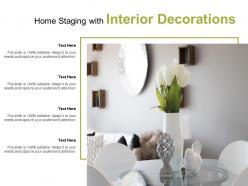
Home staging with interior decorations

Home staging with interior decorations
Slide 1 of 6

or

Favourites Favourites

Try Before you Buy Download Free Sample Product

Audience Impress Your
Audience
Editable 100%
Editable
Time Save Hours
of Time
The Biggest Sale is ending soon in
0
0
:
0
0
:
0
0
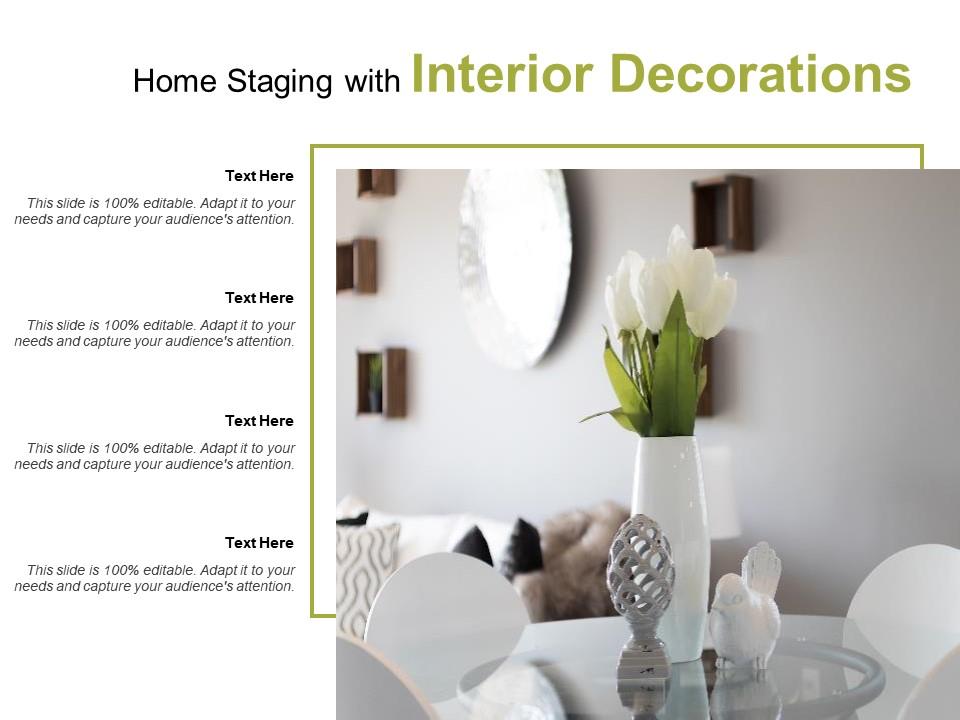
Presenting this set of slides with name - Home Staging With Interior Decorations. This is a four stage process. The stages in this process are Home Staging, Planning, Management.

People who downloaded this PowerPoint presentation also viewed the following :

FAQs for Home staging

Home staging principles include decluttering spaces, neutralizing décor, maximizing natural light, creating functional room layouts, and enhancing curb appeal through strategic furniture placement and accessories. These approaches significantly influence buyer perception by enabling faster emotional connections, streamlining decision-making processes, and ultimately delivering higher sale prices and reduced market time, with many real estate professionals finding that staged homes sell 73% faster than unstaged properties.

Colors significantly influence buyer emotions and perceptions during home staging by creating feelings of warmth, spaciousness, and tranquility through strategic palette selection. Neutral tones like soft grays and warm beiges appeal to broader audiences, while accent colors in living spaces and bedrooms can evoke comfort and sophistication, ultimately helping properties sell faster and at higher prices.

The most critical rooms for home staging include the living room, master bedroom, kitchen, main bathroom, and entryway, as these spaces create lasting first impressions and emotional connections with buyers. These areas drive purchasing decisions by showcasing lifestyle potential, functionality, and move-in readiness, with many real estate professionals finding that strategically staged primary spaces significantly reduce time on market while maximizing sale prices.

Furniture arrangements that enhance space perception include floating furniture away from walls, creating clear pathways through rooms, using appropriately scaled pieces, establishing conversational groupings, and maximizing natural light flow. These strategic placements streamline traffic patterns, minimize visual clutter, and showcase room functionality, with many real estate professionals finding that thoughtful arrangements ultimately deliver faster sales and higher buyer engagement.

Effective lighting highlights architectural features through strategic layering of ambient, task, and accent lighting, maximizing natural light sources and using warm LED bulbs to create inviting atmospheres. Professional stagers enhance focal points like fireplaces, artwork, and spacious rooms with targeted illumination, ultimately delivering brighter, more appealing spaces that help buyers envision comfortable living experiences.

Cost-effective DIY home staging includes decluttering and depersonalizing spaces, deep cleaning all surfaces, rearranging existing furniture for better flow, adding fresh flowers or plants, and improving lighting through strategic lamp placement. These approaches enhance property appeal by maximizing space perception, creating neutral environments, and highlighting key features, with many sellers finding that small investments in staging significantly reduce time on market while increasing buyer interest.

Curb appeal is absolutely critical in home staging, as it creates the crucial first impression that influences buyers' entire perception of the property. Strategic exterior enhancements like fresh landscaping, clean walkways, updated front doors, and well-maintained paint significantly impact buyer interest and perceived value, with real estate professionals finding that strong curb appeal often determines whether potential buyers will even enter the home.

Common home staging mistakes include over-personalizing with family photos, cluttering spaces with excessive furniture, neglecting curb appeal, using bold paint colors, and failing to address odors or lighting issues. These oversights can significantly impact buyer perception and property value, with real estate professionals finding that strategic staging corrections often deliver faster sales, higher offers, and enhanced market competitiveness in today's demanding housing landscape.

Virtual staging offers cost-effectiveness, flexibility, and speed compared to traditional staging, allowing properties to be digitally furnished and styled without physical furniture costs or logistics. While traditional staging provides tangible buyer experiences, virtual staging enables real estate professionals to showcase multiple design styles instantly, significantly reducing time-to-market and staging expenses, ultimately delivering broader marketing reach.

Decluttering plays a fundamental role in home staging by creating spacious, clean environments that allow potential buyers to envision themselves in the space, while eliminating distractions that detract from key architectural features. This strategic approach enhances room flow, maximizes perceived square footage, and enables buyers to focus on the home's potential rather than personal belongings, ultimately accelerating sales timelines.

Personal items can be strategically curated by keeping select meaningful pieces while removing excessive family photos, personal collections, and highly specific décor that might distract buyers. This approach maintains warmth through carefully chosen artwork, tasteful books, and subtle personal touches like fresh flowers or quality linens, ultimately creating an inviting yet neutral environment that allows potential buyers to envision their own lives in the space.

Sellers should typically allow 1-2 weeks for comprehensive home staging, including decluttering, deep cleaning, minor repairs, and furniture arrangement or rental coordination. This timeframe enables staging professionals to transform spaces systematically while addressing lighting, color schemes, and curb appeal, with many real estate agents finding that properly staged homes sell 73% faster than unstaged properties.

Market trends significantly influence home staging by driving shifts toward contemporary aesthetics, sustainable materials, smart home integration, and buyer demographic preferences. Staging professionals increasingly adapt to trends like minimalism, biophilic design, and flexible spaces, with many finding that incorporating current color palettes, furniture styles, and lifestyle-focused arrangements ultimately delivers faster sales and higher offers in competitive markets.

Professional home stagers deliver market expertise, objective design perspective, access to quality furnishings, and proven staging strategies that maximize buyer appeal. While DIY staging offers cost savings, professionals streamline the process by creating cohesive, market-targeted presentations that enhance property value, reduce time on market, and ultimately deliver faster sales with higher offers.

Home staging enhances property appeal by optimizing layout, incorporating neutral décor, maximizing natural light, and highlighting key features that resonate with buyers. This strategic approach typically increases sale prices by 5-15% while reducing market time, with real estate professionals finding that staged homes sell 73% faster than non-staged properties, ultimately delivering competitive advantage in crowded markets.

Ratings and Reviews

0% of 100
Review Form
Write a review
Most Relevant Reviews

No Reviews