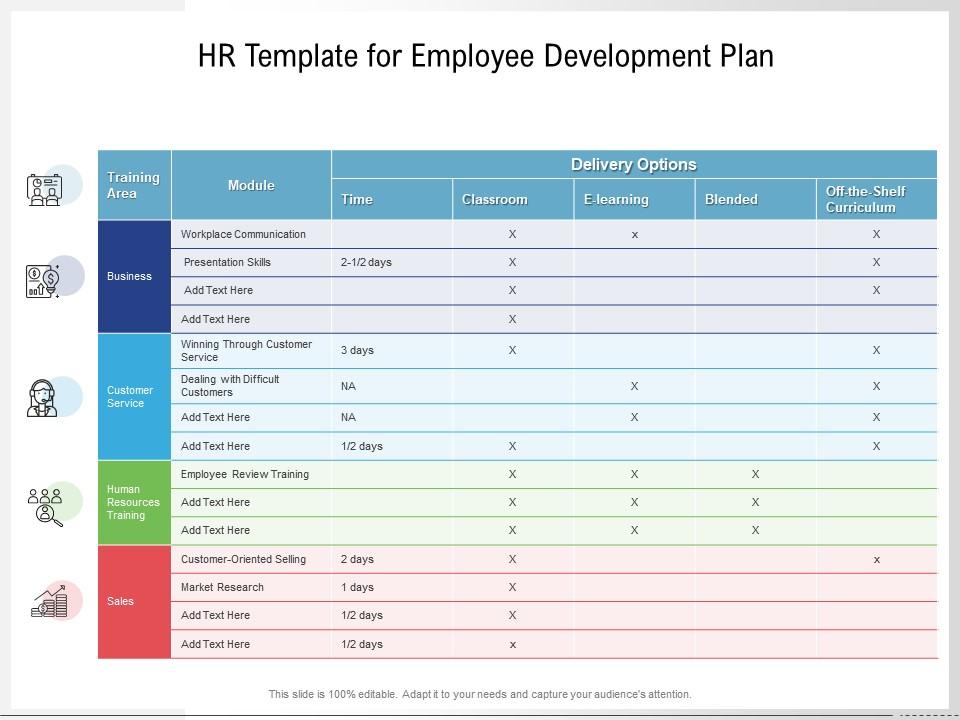
Hr template for employee development plan
Try Before you Buy Download Free Sample Product
Audience
Editable
of Time
Our HR Template For Employee Development Plan are topically designed to provide an attractive backdrop to any subject. Use them to look like a presentation pro.
People who downloaded this PowerPoint presentation also viewed the following :
Hr template for employee development plan with all 2 slides:
Use our HR Template For Employee Development Plan to effectively help you save your valuable time. They are readymade to fit into any presentation structure.
FAQs for Hr template for
You'll want current skills assessment and specific development goals for sure. Add concrete action steps with deadlines - most people totally blow off the timeline part but it's what keeps things moving. Learning resources are key too, like courses or mentoring opportunities. Regular check-ins help a ton. Oh, and success metrics so you can actually see if it's working instead of just crossing your fingers. The collaborative piece matters - get input from both the employee and manager. Nobody likes development plans that feel like orders from above.
Look, when you show employees there's actually a path forward, they stick around. Simple as that. Development plans make people feel like you give a damn about their future instead of just using them until they burn out. I've seen it work - give someone clear goals and training opportunities, suddenly they're way more engaged. Why? Because nobody wants to feel trapped in a dead-end job forever. It's like giving them a roadmap instead of leaving them wandering around confused. The trick is making it personal though, not some cookie-cutter BS everyone gets.
Honestly, just grab a free template from SHRM or Google "employee development plan template" - saves you tons of time. Then throw in some 360 feedback surveys and maybe a skills gap worksheet. SMART goals are pretty much the standard for this stuff. If your company has an LMS, definitely use that for tracking (though I know most small companies don't). Look, even a basic spreadsheet works fine when you're starting out. The main thing is getting input from both the employee and their manager, plus setting actual deadlines. Oh, and don't overcomplicate it - I've seen people get stuck planning the perfect system instead of just... doing it.
Quarterly check-ins work best, then do a bigger review once a year. Trust me, I've watched so many development plans just sit there collecting digital dust because people create them and never look back. Every three months you can tweak goals based on what's actually happening - new projects, skills they're learning, role changes, whatever. The yearly one is where you really dig deep into career stuff and figure out what's working. Oh and definitely put those quarterly meetings on your calendar now or you'll keep saying "we should do this soon" forever. Been there!
So SMART goals are honestly where it's at for employee development. You know how people set these super vague goals like "get better at presenting"? That's useless. Instead, you want something like "finish that public speaking workshop and give two team presentations by September." Way more concrete, right? The whole SMART thing - Specific, Measurable, Achievable, Relevant, Time-bound - it just works because it forces you to actually think through what success looks like. I always start by figuring out what skills people are missing, then build goals around fixing those gaps. Makes the whole development process way less random and actually gets results.
Honestly, you've gotta stay on top of check-ins without being annoying about it. Regular one-on-ones are huge - celebrate their wins, help solve problems together. Don't just set goals and vanish! Hook them up with mentors, fight for training money, give them challenging projects that actually match what they want to grow into. Sometimes you'll need to be their shield against other random priorities so they can focus. Oh, and here's what actually works: set calendar reminders to ask "how can I help?" instead of just "how's progress?" Way more useful.
Honestly, the worst thing you can do is use some cookie-cutter template for everyone. Have actual conversations with your people first - find out what they actually want, not what you think they need. I see managers mess this up constantly by being way too ambitious with timelines. Like, nobody's becoming a senior dev in 3 months, you know? Don't forget regular check-ins either. Plans just die without them. Oh, and make sure they're involved in creating it - if they don't buy into the plan, it's basically worthless. Build around their strengths and real goals.
Honestly, just ask your team what they actually want - most managers totally skip this obvious step! Build different tracks like technical specialist vs leadership vs cross-functional stuff. People hate being crammed into cookie-cutter plans. Mix up the learning formats too since some folks love workshops while others are all about mentoring or stretch projects. I'd make your template super modular so you can swap sections around. Oh and definitely check in quarterly because people's goals shift way more than you'd think. Start with a quick survey about career interests and how they like to learn - that'll tell you everything.
Look at both the hard numbers and the fuzzy stuff. Promotion rates, retention, how people score on skill tests - that's your concrete data. But don't ignore engagement scores and 360 feedback either. Are folks actually moving up internally? That tells you a lot. Oh, and time-to-productivity when someone learns new skills - that's where you really see if training pays off. Honestly though, pick maybe 3-4 things max that match what you're actually trying to achieve. Otherwise you'll drown in spreadsheets and still won't know if it's working.
Build feedback sessions right into your template from the start. Monthly or quarterly manager check-ins work great, plus add peer reviews and self-assessments. Honestly, most development plans just collect dust without ongoing conversations! Ask specific questions about goal progress instead of generic "how's it going" stuff. For leadership roles, throw in 360-degree feedback too. Calendar reminders are clutch - otherwise you'll forget to actually do the check-ins. The whole point is making it feel like a real conversation, not some formal evaluation thing.
Honestly, I'd start by figuring out where your skills gaps actually line up with what the business needs - that's everything. Check in on this every quarter because priorities change way too fast these days. Your managers need to get how their team's development connects to company goals, not just personal stuff. Build development paths that work for both what employees want career-wise and what you need strategically. When business priorities shift (and they will), regular check-ins help you pivot. Oh, and definitely connect development outcomes to performance reviews and promotions - people need to see that their growth actually matters for getting ahead.
Honestly, going digital with development tracking is a game changer. You can set up automatic reminders so you're not constantly bugging people for updates. Real-time progress monitoring actually shows what's working and what isn't. Learning management systems are great because employees can access training whenever they want - way better than scheduling around everyone's calendar. The analytics give you instant visibility into completion rates and skill gaps. Mobile apps let people update stuff on the go too. Some AI tools will even suggest personalized learning paths, though that might be overkill depending on your team size. I'd start simple - maybe just a basic LMS or project management tool to digitize what you're already doing.
Dude, mentorship seriously works. Pair people with someone who's actually been there and can give real feedback - not just surface-level cheerleading. The magic happens when they meet regularly (like every few weeks, not some random quarterly coffee chat that goes nowhere). Make sure both sides know what they're signing up for upfront. I've watched this transform careers when it's done right, but honestly? Most companies treat it like an afterthought. Don't do that. Build it straight into your development plans as something that actually matters.
Honestly, just ask your people what they actually want to learn first - that's where I'd start. Then back it up with real budget and time, not just empty promises. Mix things up: mentoring, letting people shadow other departments, conferences if you can swing it, online courses. Cross-department stuff is gold because people get bored in their silos. The trick is connecting everything to where they want their career to go, not just throwing random training at them. Nobody needs another pointless compliance module, you know? Make it feel like you're investing in them personally, not checking boxes.
Dude, development plans are seriously a game-changer. Your best people stick around longer when they see you actually care about their growth. Performance goes up too - who would've thought? I mean, it makes sense when you think about it. People work harder when they're not just collecting a paycheck. You'll stop bleeding talent to competitors, plus you won't have to hire externally as much since you're growing people internally. Honestly, the whole vibe shifts from "just do your job" to actually investing in each other. Start with your top performers first - they'll spread the word way better than any company memo ever could.
-
Graphics are very appealing to eyes.
-
Unique and attractive product design.
-
Amazing product with appealing content and design.