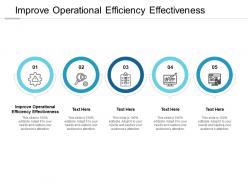
Improve operational efficiency effectiveness ppt powerpoint presentation outline brochure cpb
Try Before you Buy Download Free Sample Product
Audience
Editable
of Time
Give in to your desires with our Improve Operational Efficiency Effectiveness Ppt Powerpoint Presentation Outline Brochure Cpb. They have the attributes you always dreamt of.
People who downloaded this PowerPoint presentation also viewed the following :
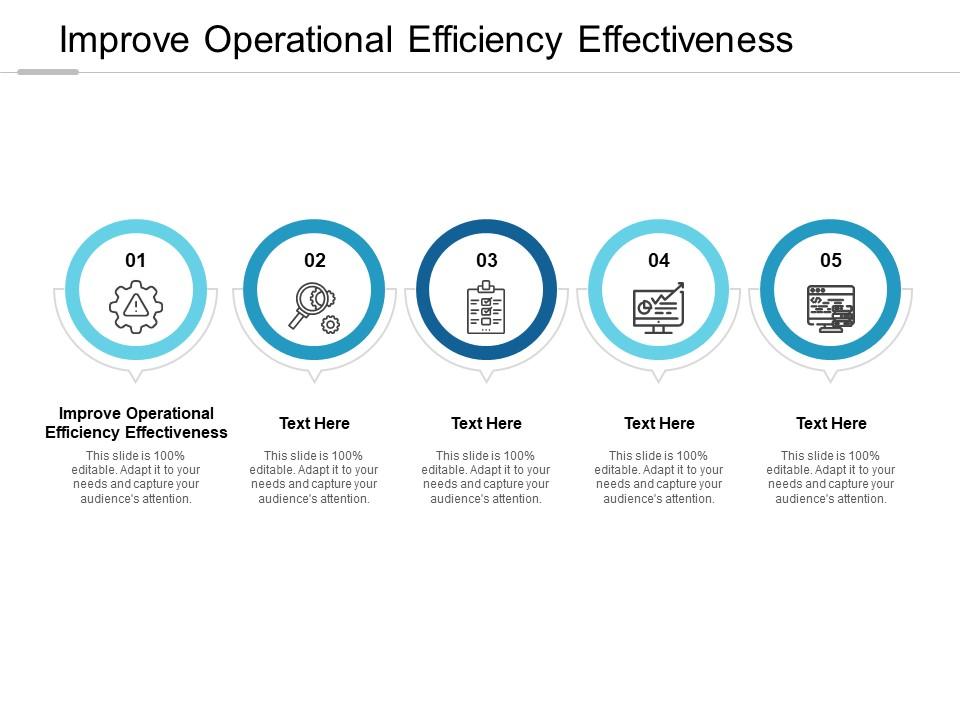
Improve operational efficiency effectiveness ppt powerpoint presentation outline brochure cpb with all 2 slides:
Our Improve Operational Efficiency Effectiveness Ppt Powerpoint Presentation Outline Brochure Cpb give you an enormous boost. You will feel almost like a giant.
FAQs for Improve operational efficiency effectiveness ppt powerpoint presentation
Organizations can measure operational efficiency through key metrics including cost per unit, throughput rates, resource utilization percentages, cycle times, and error rates. These metrics enable businesses to identify bottlenecks, optimize resource allocation, and streamline processes across departments, with many finding that consistent tracking ultimately delivers reduced operational costs and enhanced competitive positioning.
Companies identify bottlenecks through process mapping, performance metrics analysis, employee feedback, and workflow observation to pinpoint delays and inefficiencies. By implementing automation tools, redistributing resources, streamlining approval chains, and establishing continuous monitoring systems, organizations eliminate these constraints, ultimately delivering faster cycle times, reduced costs, and enhanced operational efficiency across departments.
Technology streamlines operational efficiency by automating repetitive tasks, optimizing resource allocation, enhancing data analytics, and facilitating seamless communication across departments. Through AI-powered systems and integrated platforms, organizations in manufacturing, healthcare, and financial services significantly reduce processing times, minimize human errors, and deliver faster customer experiences, ultimately gaining competitive advantage in increasingly demanding markets.
Employee feedback contributes to operational efficiency by identifying process bottlenecks, highlighting resource gaps, and revealing workflow inefficiencies that management might overlook. Through regular surveys and suggestion programs, organizations streamline operations, reduce redundant tasks, and enhance productivity, with many companies finding that frontline insights deliver faster service delivery and significant cost reductions.
Businesses should adopt regular process audits, employee feedback systems, data-driven performance metrics, cross-functional collaboration frameworks, and technology integration for automation. These practices streamline operations by identifying bottlenecks, reducing redundancies, and enhancing workflow efficiency, with many organizations finding that systematic improvement cycles ultimately deliver lower operational costs and significantly improved customer experiences.
Outsourcing non-core activities significantly enhances operational efficiency by allowing organizations to focus resources on strategic priorities, reduce overhead costs, and access specialized expertise. Companies in manufacturing, healthcare, and financial services streamline operations through outsourced IT support, payroll processing, and customer service, ultimately delivering faster response times and improved resource allocation.
Common pitfalls include over-automation without human oversight, neglecting employee training during process changes, focusing solely on cost-cutting rather than value creation, implementing changes too rapidly, and lacking proper performance metrics. While these challenges can initially disrupt workflows, organizations that address them systematically through strategic planning, comprehensive training, and balanced automation ultimately achieve sustainable efficiency gains and competitive advantage.
Data analytics drives operational efficiency by identifying bottlenecks, predicting maintenance needs, optimizing resource allocation, and automating decision-making processes across workflows. Manufacturing companies streamline production schedules, healthcare systems reduce patient wait times, and retail organizations optimize inventory management, ultimately delivering cost reductions, faster service delivery, and enhanced competitive advantage in an increasingly data-driven marketplace.
Workflow automation tools enhance operational efficiency by eliminating manual tasks, reducing processing times, minimizing human errors, and standardizing procedures across departments. These technologies streamline operations by automatically routing approvals, triggering notifications, and integrating data systems, with many organizations finding that automation delivers faster task completion, improved resource allocation, and ultimately significant cost reductions.
Organizational culture significantly impacts operational efficiency by shaping employee engagement, decision-making processes, communication flows, and adaptability to change initiatives. A collaborative, transparency-focused culture enables faster problem-solving, streamlined workflows, and strategic resource allocation, with many organizations finding that strong cultural alignment delivers enhanced productivity, reduced operational costs, and sustained competitive advantage.
Cross-departmental collaboration enhances operational effectiveness by eliminating silos, streamlining workflows, and accelerating decision-making processes across organizational boundaries. When departments like finance, operations, and IT work together, companies achieve faster project delivery, reduced resource duplication, and improved customer experiences, ultimately delivering significant cost savings and competitive advantage.
Small businesses can boost operational efficiency through automation of routine tasks, streamlined workflows, inventory management systems, employee cross-training, and digital communication tools. These strategies enable faster decision-making, reduced operational costs, and improved resource allocation, with many small retailers and service providers finding that strategic technology adoption delivers competitive advantages previously available only to larger organizations.
Lean management principles adapt across sectors by eliminating waste, optimizing workflows, and emphasizing continuous improvement through value stream mapping and standardized processes. Manufacturing companies streamline production lines, healthcare organizations reduce patient wait times, and financial services accelerate loan processing, with many finding that these adaptations deliver significant cost reductions and enhanced customer experiences.
Customer feedback serves as a critical diagnostic tool for identifying operational bottlenecks, inefficiencies, and service gaps that internal metrics might overlook. Through systematic feedback analysis, organizations streamline processes, reduce response times, and enhance service delivery, with many companies finding that customer insights drive more targeted operational improvements than internal assessments alone, ultimately delivering competitive advantage.
A balanced scorecard approach facilitates better operational decision-making by integrating financial metrics, customer satisfaction data, internal process indicators, and learning capabilities into a comprehensive framework. This strategic combination enables organizations to identify performance gaps, align departmental objectives with company goals, and make data-driven decisions that enhance operational efficiency while delivering sustainable competitive advantage.
No Reviews