Incremental growth salary with upward arrows

Rating:
90%
Incremental growth salary with upward arrows
Slide 1 of 5
Favourites Favourites

Try Before you Buy Download Free Sample Product

Audience Impress Your
Audience
Editable 100%
Editable
Time Save Hours
of Time
The Biggest Sale is ending soon in
0
0
:
0
0
:
0
0
Rating:
90%
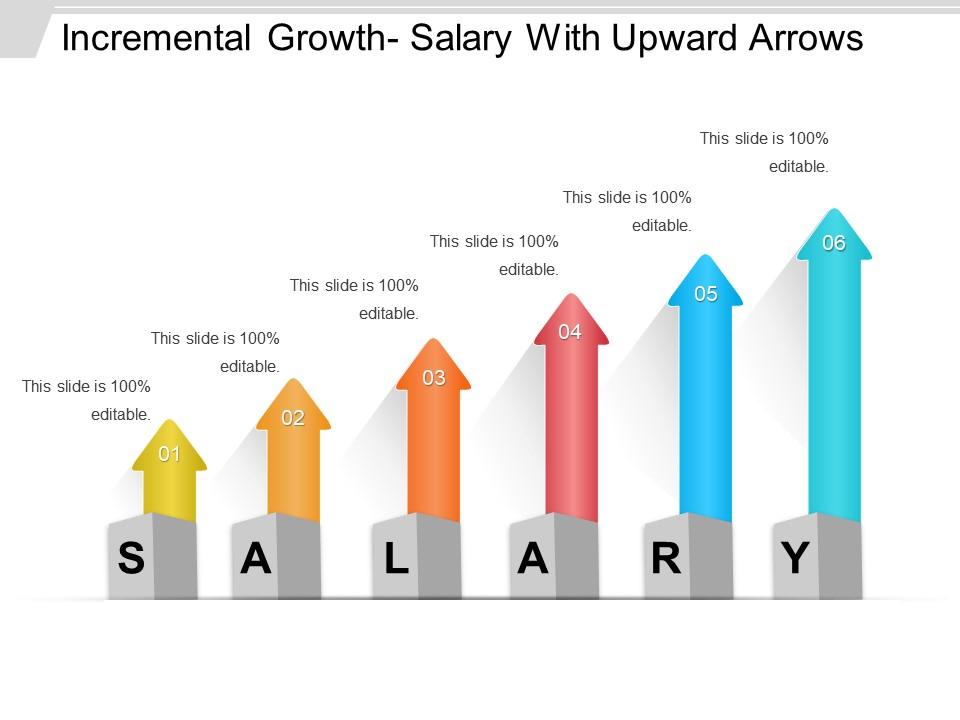
Presenting incremental growth salary with upward arrows. This is a incremental growth salary with upward arrows. This is a six stage process. The stages in this process are incremental growth, business growth, revenue increment.

People who downloaded this PowerPoint presentation also viewed the following :

FAQs for Incremental growth salary

Key factors driving salary growth include skills shortages in technology and healthcare, remote work flexibility, inflation adjustments, competitive talent acquisition, and demand for specialized expertise. These dynamics create opportunities for professionals by enhancing negotiating power, accelerating career advancement, and enabling strategic job transitions, with many organizations finding that competitive compensation packages ultimately deliver better talent retention and operational performance.

Industry trends significantly impact salary growth through technological advancement, skill demand shifts, regulatory changes, and market expansion or contraction patterns. Sectors like technology and healthcare experience accelerated growth due to digital transformation needs, while traditional manufacturing faces slower increases, with many organizations finding that adapting to emerging trends ultimately determines their competitive advantage in talent acquisition and retention.

Geographic location significantly impacts salary growth potential through cost of living variations, regional economic conditions, industry concentrations, and local talent demand. Major metropolitan areas like San Francisco, New York, and Seattle typically offer higher compensation growth trajectories, while emerging tech hubs and financial centers increasingly provide competitive advancement opportunities, with many professionals finding that strategic relocation enhances long-term earning potential.

Employees can effectively negotiate salary increases by researching market rates, documenting achievements, timing requests strategically, and presenting compelling business cases that demonstrate value delivered. Through preparation with specific metrics, performance examples, and competitive data, professionals across industries like technology, healthcare, and finance secure meaningful increases, while building stronger relationships with management and positioning themselves for continued career advancement.

Professionals can align their skills with market demands through continuous learning, industry research, networking, strategic certifications, and data-driven career planning. By identifying emerging trends in their sectors, pursuing relevant upskilling opportunities, and leveraging professional connections, they can position themselves for high-demand roles, ultimately delivering enhanced market value and accelerated salary progression.

Company size significantly impacts salary growth through structured advancement paths, budget allocation for raises, and promotion frequency, with larger organizations typically offering more formal salary bands and advancement opportunities. While startups may provide equity compensation and rapid role expansion, established corporations deliver systematic merit increases, comprehensive benefits packages, and clearer progression trajectories, ultimately enabling employees to strategically plan long-term career advancement.

Entry-level positions typically see 5-15% annual salary increases during the first five years, while senior-level roles experience 3-8% growth with larger jumps during promotions or role transitions. While entry-level professionals benefit from rapid skill acquisition and market adjustment increases, senior employees leverage strategic moves, leadership responsibilities, and specialized expertise to maximize compensation growth.

Performance reviews contribute to salary growth by documenting achievements, identifying skill gaps, and establishing clear advancement pathways through structured goal-setting and competency assessments. These formal evaluations enable employees to demonstrate quantifiable value, negotiate raises with concrete evidence, and align development efforts with organizational priorities, ultimately delivering enhanced career progression and competitive compensation outcomes.

Professional certifications significantly enhance salary growth by demonstrating specialized expertise, validating technical competencies, and positioning professionals for advanced roles within their industries. In sectors like IT, healthcare, and finance, certified professionals often command 15-25% higher salaries than non-certified peers, with many organizations increasingly prioritizing credentials for promotions and strategic project assignments.

Understanding compensation structures enhances salary growth discussions by revealing performance metrics, market benchmarks, promotion pathways, and bonus opportunities within your organization. This knowledge enables professionals to present data-driven cases for increases, negotiate strategically around multiple compensation elements, and align growth requests with company frameworks, ultimately delivering more successful outcomes and accelerated career advancement.

Economic indicators significantly influence salary growth through inflation rates, employment levels, GDP growth, productivity measures, and consumer spending patterns. These metrics guide organizational compensation strategies, with companies in expanding sectors like technology and healthcare often experiencing accelerated wage increases, while economic downturns typically suppress raises, ultimately creating workforce-wide salary fluctuations that reflect broader market conditions.

Gender and diversity significantly impact salary growth through wage gaps, promotion disparities, networking limitations, and unconscious bias in performance evaluations. Organizations increasingly recognize that diverse teams deliver enhanced innovation and better financial performance, with many companies implementing structured pay equity audits, mentorship programs, and inclusive leadership development to minimize disparities while unlocking competitive advantage.

Employee benefits and bonuses significantly enhance total compensation beyond base salary increases, often comprising 20-30% of overall compensation packages. Strategic benefits like health insurance, retirement contributions, stock options, and performance bonuses enable organizations to attract talent while managing cash flow, with many companies finding this approach delivers competitive advantage in tight labor markets.

Stagnant salaries create significant retention challenges, leading to increased turnover, reduced employee engagement, diminished career satisfaction, and weakened organizational loyalty among workforce members. These compensation issues ultimately drive talent acquisition costs higher, reduce institutional knowledge retention, and create competitive disadvantages, with many organizations finding that proactive salary adjustments significantly enhance employee satisfaction and long-term retention rates.

Mentorship relationships significantly influence salary growth by providing strategic career guidance, expanding professional networks, and developing leadership capabilities that enhance earning potential. Through experienced mentors, professionals gain access to advancement opportunities, industry insights, and skill development that accelerate promotions, with many mentees finding salary increases of 15-25% faster than peers without mentorship support.

Ratings and Reviews

90% of 100
Review Form
Write a review
Most Relevant Reviews
  1. 100%

    by Cyril Gibson

    Easily Editable.
  2. 80%

    by Chung Bennett

    Easily Editable.

2 Item(s)

per page: