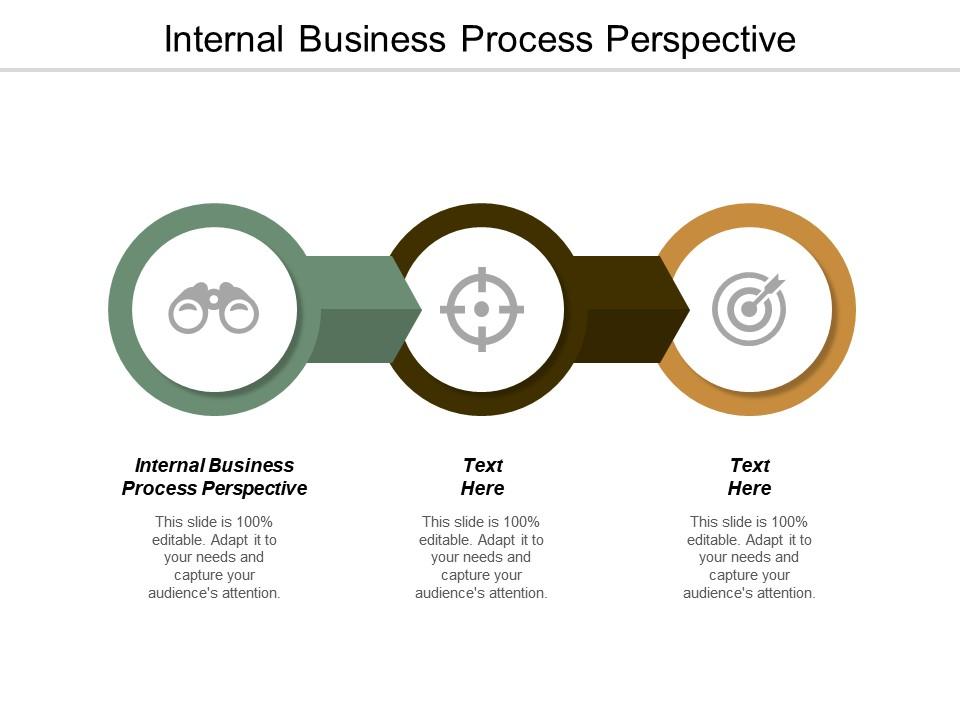
Internal business process perspective ppt powerpoint presentation infographic template outfit cpb
Try Before you Buy Download Free Sample Product
Audience
Editable
of Time
Wow everyone with streamlined design on your next presentation. With thousands of Internal Business Process Perspective Ppt Powerpoint Presentation Infographic Template Outfit Cpb available making beautiful presentations is a breeze.
People who downloaded this PowerPoint presentation also viewed the following :
Internal business process perspective ppt powerpoint presentation infographic template outfit cpb with all 5 slides:
You care about your image and always look your best. With thousands of Internal Business Process Perspective Ppt Powerpoint Presentation Infographic Template Outfit Cpb to select from your presentations can look just as good as you do.
FAQs for Internal business process perspective ppt powerpoint presentation infographic
Effective internal business process perspective components include process mapping and documentation, performance metrics and KPIs, continuous improvement frameworks, resource allocation strategies, and cross-functional integration protocols. These elements streamline operations by identifying bottlenecks, measuring efficiency, and enabling data-driven decisions, with many organizations finding that strategic process optimization ultimately delivers reduced costs, faster cycle times, and enhanced competitive advantage.
Organizations align internal processes with strategic goals by establishing clear performance metrics, mapping process workflows to strategic objectives, and implementing regular review cycles that connect operational activities to desired outcomes. Through strategic process redesign and cross-functional collaboration, companies streamline operations, eliminate redundancies, and enhance resource allocation, with many finding that this alignment delivers improved efficiency, faster decision-making, and ultimately stronger competitive advantage.
Methods for measuring internal business process efficiency include cycle time analysis, throughput metrics, cost per transaction, error rates, and resource utilization tracking. These measurement approaches enable organizations to identify bottlenecks, streamline workflows, and optimize resource allocation, with many companies finding that systematic process monitoring ultimately delivers faster service delivery, reduced operational costs, and enhanced competitive advantage.
Internal business processes directly impact customer satisfaction by determining service quality, response times, delivery accuracy, and overall experience consistency across all touchpoints. Streamlined processes enable faster order fulfillment, reduced errors, and improved communication, with many organizations finding that optimized workflows enhance customer retention while reducing operational costs, ultimately delivering competitive advantage through superior service delivery.
Technology revolutionizes internal business processes by automating routine tasks, enhancing data analytics capabilities, streamlining workflows, and enabling real-time monitoring across departments. Through AI-powered systems and integrated platforms, organizations significantly reduce processing times, minimize human errors, and improve resource allocation, with many finding that strategic technology integration ultimately delivers greater operational efficiency and competitive advantage.
Organizations identify bottlenecks by conducting process mapping, analyzing workflow data, monitoring cycle times, tracking resource utilization, and gathering employee feedback through surveys and observations. Through these assessment methods, companies like manufacturing firms and financial services can pinpoint delays in production lines or loan approvals, ultimately streamlining operations and enhancing overall efficiency.
Best practices for continuous improvement of internal business processes include process mapping and analysis, regular performance monitoring, employee feedback integration, automation implementation, and cross-functional collaboration. These approaches streamline operations by identifying bottlenecks, eliminating redundancies, and enhancing workflow efficiency, with many organizations finding that systematic process optimization delivers reduced costs, faster service delivery, and improved customer experiences while maintaining competitive advantage.
Employee feedback enhances internal business processes by identifying bottlenecks, revealing inefficiencies, and uncovering improvement opportunities that management might overlook. Through regular surveys, suggestion systems, and cross-functional reviews, organizations streamline workflows, reduce processing times, and boost operational efficiency, with many companies finding that employee insights drive faster innovation and significantly improve customer service delivery.
Key internal process metrics include cycle time, process efficiency ratios, quality scores, cost per transaction, and throughput rates. These measurements enable organizations to identify bottlenecks, streamline workflows, and optimize resource allocation, with many companies finding that systematic tracking of these indicators delivers improved operational efficiency and enhanced customer satisfaction.
Process mapping assists in understanding and improving internal workflows by visualizing current processes, identifying bottlenecks and redundancies, standardizing procedures, and revealing automation opportunities. Through detailed workflow documentation, organizations streamline operations, reduce cycle times, and enhance resource allocation, with many companies finding that mapped processes deliver improved efficiency, better compliance, and ultimately stronger operational performance.
Cross-departmental collaboration eliminates silos, reduces redundancies, and accelerates decision-making by aligning teams toward shared operational goals. This strategic coordination enables organizations to streamline workflows, minimize bottlenecks, and enhance resource allocation, with many companies finding that integrated approaches deliver faster project completion, improved customer experiences, and significant competitive advantages.
Turnover affects internal business processes through knowledge loss, workflow disruptions, training delays, reduced productivity, and communication gaps during transition periods. These personnel changes create temporary inefficiencies in operations, with many organizations finding that strategic succession planning, comprehensive documentation, and cross-training programs minimize disruptions while maintaining service quality and operational continuity.
Organizations ensure compliance and risk management through automated monitoring systems, standardized procedures, regular audits, employee training programs, and integrated governance frameworks. These strategic approaches streamline regulatory adherence by embedding controls directly into workflows, enhancing transparency, and enabling real-time risk detection, ultimately delivering operational confidence and competitive advantage in increasingly regulated business environments.
Common pitfalls include inadequate stakeholder consultation, insufficient change management planning, over-complicating workflows, neglecting employee training needs, and failing to establish clear success metrics. These oversights often derail process improvements by creating resistance, confusion, and operational disruptions, with many organizations finding that thorough preparation and phased implementation ultimately deliver smoother transitions and sustainable efficiency gains.
Internal business processes can be adapted through agile methodologies, cross-functional collaboration, real-time data analytics, flexible supply chain management, and responsive customer feedback systems. These approaches enable organizations to streamline decision-making, accelerate product development cycles, and enhance operational efficiency, with many companies finding that strategic process redesign ultimately delivers competitive advantage and faster market responsiveness.
No Reviews