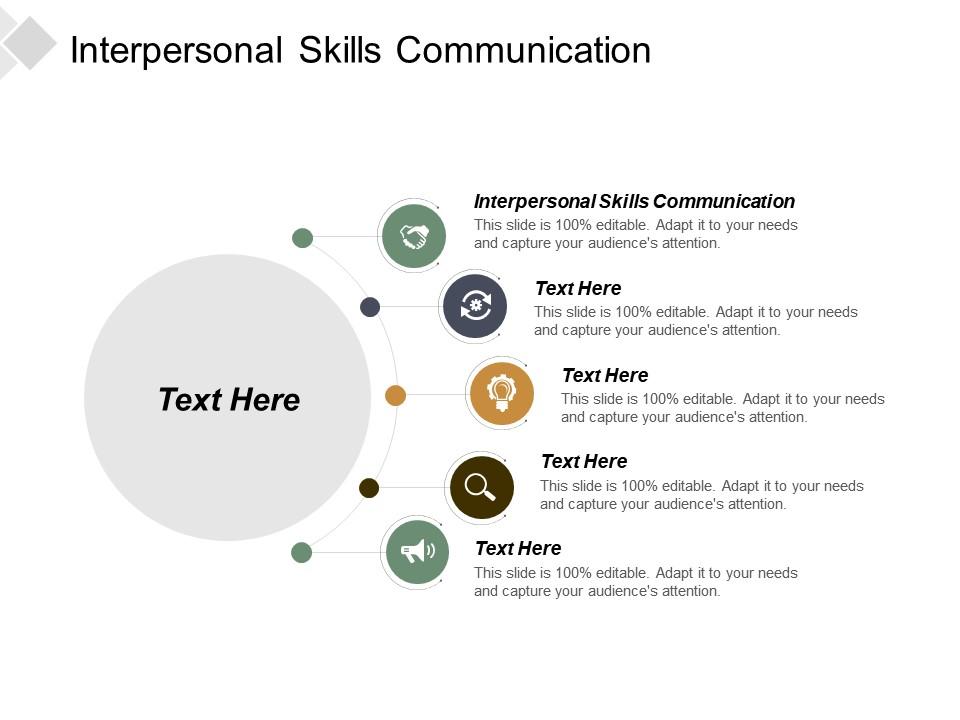
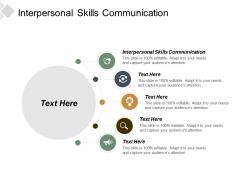
Interpersonal skills communication ppt powerpoint presentation inspiration designs cpb
Try Before you Buy Download Free Sample Product
Audience
Editable
of Time
Charge their grey cells with our Interpersonal Skills Communication Ppt Powerpoint Presentation Inspiration Designs Cpb. Give them great ideas to chew upon.
People who downloaded this PowerPoint presentation also viewed the following :
Interpersonal skills communication ppt powerpoint presentation inspiration designs cpb with all 5 slides:
Accurately display the design with our Interpersonal Skills Communication Ppt Powerpoint Presentation Inspiration Designs Cpb. They help explain the geometry.
FAQs for Interpersonal skills communication ppt powerpoint presentation
Key components of effective interpersonal skills include active listening, clear communication, empathy, emotional intelligence, and conflict resolution abilities. These skills enhance workplace collaboration, team productivity, and client relationships by fostering trust, reducing misunderstandings, and creating positive work environments, with many organizations finding that employees with strong interpersonal skills deliver better customer experiences and drive business success.
Active listening improves interpersonal communication by fostering deeper understanding, building trust, and reducing misunderstandings through focused attention and empathetic responses. This approach enhances workplace collaboration, strengthens client relationships, and enables more effective conflict resolution, with many organizations finding that employees with strong active listening skills deliver better customer experiences and drive improved team performance.
Empathy serves as the foundation for strong interpersonal relationships by enabling deeper understanding, building trust, and fostering authentic connections through active listening and emotional awareness. Through empathetic communication, professionals enhance team collaboration, resolve conflicts more effectively, and create supportive work environments, with many organizations finding that empathy-driven leadership ultimately delivers stronger employee engagement and improved business outcomes.
Body language significantly impacts interpersonal interactions by conveying confidence, openness, and engagement through positive posture, eye contact, and appropriate gestures, while closed postures and poor eye contact create barriers. These nonverbal cues enhance professional relationships, team collaboration, and client interactions across industries, with many organizations finding that employees with strong body language awareness deliver better customer experiences and build stronger workplace partnerships.
Conflict resolution strategies include active listening, empathy demonstration, collaborative problem-solving, emotional regulation, and finding common ground through open dialogue. These interpersonal approaches streamline workplace disputes by addressing underlying concerns, fostering mutual understanding, and creating win-win solutions, with many organizations finding that skilled mediators ultimately enhance team productivity and reduce costly turnover.
Cultural differences significantly impact interpersonal communication through varying nonverbal cues, communication styles, relationship hierarchies, and conflict resolution approaches. These differences create both challenges and opportunities in increasingly global workplaces, with many organizations finding that culturally aware teams enhance collaboration, reduce misunderstandings, and ultimately deliver stronger client relationships and competitive advantage.
Best practices for giving constructive feedback include being specific and timely, focusing on behaviors rather than personality, offering actionable suggestions, and creating a supportive environment for dialogue. When receiving feedback, actively listen without defensiveness, ask clarifying questions, and express appreciation for the insights, with many professionals finding that this balanced approach enhances team collaboration, accelerates personal development, and ultimately strengthens workplace relationships and performance outcomes.
Emotional intelligence enhances interpersonal skills by improving self-awareness, empathy, and social regulation, enabling individuals to recognize emotions, understand others' perspectives, and respond appropriately in various situations. Through better emotional management, professionals in healthcare, sales, and leadership roles build stronger relationships, resolve conflicts more effectively, and create collaborative environments that ultimately drive team performance and organizational success.
Rapport-building techniques include active listening, mirroring communication styles, finding common ground, asking thoughtful questions, and showing genuine interest in others' perspectives. These approaches enhance workplace relationships by fostering trust, improving collaboration, and creating positive interactions, with many organizations finding that strong interpersonal connections ultimately drive better project outcomes and client retention.
Storytelling enhances interpersonal communication in presentations by creating emotional connections, simplifying complex concepts, and making content more memorable and relatable. Through narrative techniques, presenters build trust, engage diverse audiences more effectively, and facilitate better understanding across different organizational levels, with many business leaders finding that stories drive stronger audience engagement and more persuasive outcomes than data alone.
Digital communication presents both challenges and opportunities for workplace interpersonal skills, reducing face-to-face interaction while enabling broader collaboration across teams and locations. While virtual meetings and messaging platforms can limit non-verbal cues and spontaneous relationship-building, they also streamline communication, enhance accessibility for remote workers, and ultimately deliver faster decision-making processes across organizations.
Interpreting non-verbal cues effectively involves observing facial expressions, body language, tone variations, eye contact patterns, and gestures within their cultural context. These visual and auditory signals often reveal underlying emotions, engagement levels, and authentic reactions that complement or contradict spoken words, ultimately enabling professionals to enhance communication accuracy and build stronger workplace relationships.
Teamwork reinforces interpersonal skills by fostering active communication, building trust through collaboration, enhancing empathy through diverse perspectives, and developing conflict resolution abilities. Through shared projects and regular interactions, team members practice listening, negotiation, and emotional intelligence, with many organizations finding that collaborative environments ultimately strengthen relationship-building capabilities and workplace cohesion.
Leadership styles significantly influence group interpersonal interactions by setting communication patterns, decision-making approaches, and collaborative frameworks that shape team dynamics. Transformational leaders foster open dialogue and trust-building, while directive styles create structured interactions, with many organizations finding that adaptive leadership approaches enhance team cohesion, streamline conflict resolution, and ultimately deliver stronger collective performance and employee engagement.
Common barriers to effective interpersonal communication include cultural differences, emotional biases, poor listening habits, technology distractions, and unclear messaging styles. These challenges can be overcome by developing active listening techniques, practicing cultural awareness, establishing clear communication protocols, and creating structured feedback mechanisms, with many organizations finding that regular interpersonal skills training ultimately enhances team collaboration and operational efficiency.
No Reviews