Inventory flow with customer retailer supplier
Try Before you Buy Download Free Sample Product
Audience
Editable
of Time
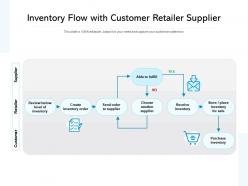
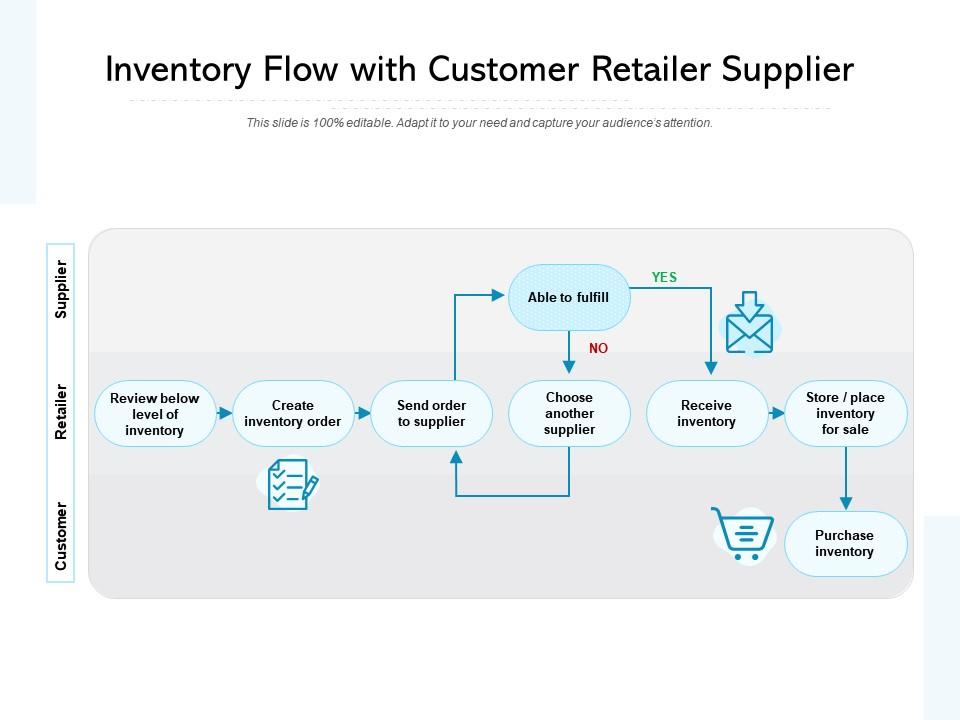
Employ our Inventory Flow With Customer Retailer Supplier PowerPoint Presentation Slide for creating a framework for effective management of your business operations. Showcase the entire process of inventory management in an organized and well-structured format by taking the aid of this content-ready PPT template. With the help of this PPT layout, you can create a plan of action for your successful supply chain management. Take advantage of our PPT visual to highlight the retail supply chain process flow in an attractive yet informative manner. Identify and assess the inventory levels, product quality, expenses, and timing of your organization with the assistance of this PPT slide. Keep up with the changing market scenarios and demand fluctuations by taking the help of this PPT graphic. Utilize this PPT theme to graphically represent the inventory flow of your company in a comprehensive manner. Download this completely customizable PPT presentation to create a visual treat for your audience.
People who downloaded this PowerPoint presentation also viewed the following :
Inventory flow with customer retailer supplier with all 2 slides:
Give your audience a fulfilling experience. They will find our Inventory Flow With Customer Retailer Supplier elevating.
FAQs for Inventory flow with
So you'll need demand forecasting, supplier relationships, inventory optimization, and logistics coordination. I know, sounds like a lot when I put it that way! But really it's just connecting the dots - figure out what customers want, keep your suppliers happy, don't overstock (or understock), and make sure stuff moves efficiently. Oh and decent analytics to catch problems early. Honestly? Just map out your current process first. See where things get stuck or wasteful. That'll tell you which piece to fix first instead of trying to tackle everything at once.
So basically, IoT sensors track everything - temperature in your trucks, inventory levels, all that stuff. Then AI crunches the data to predict delays and spot issues before they blow up. Way better than the old method of just calling people and crossing your fingers, honestly. The AI can even forecast demand and auto-adjust inventory levels, which is pretty cool. My advice? Don't try to do everything at once though. Start with something simple like shipment tracking, see how it works, then expand from there. You'll be shocked at the visibility you get compared to flying blind.
Oh man, where do I start? Supply chain visibility is probably the worst - you're basically flying blind half the time trying to track stuff across your network. Demand forecasting is a nightmare too, plus managing all those supplier relationships. Customers want everything yesterday, shipping costs keep climbing, and don't even get me started on the sustainability pressure from above. Risk management became huge after we all saw how fast things crumble during disruptions. Honestly? Map out your whole supply chain first - like actually draw it out - so you can spot the weak points before they bite you.
Definitely spread out your suppliers - putting everything with one vendor is basically suicide for your business. I'd start by mapping who you're currently using and figuring out where you're most vulnerable. Get cozy with vendors in different regions so when stuff hits the fan, you're covered. Oh, and those supply chain tracking tools are actually worth the money - helps you see problems coming instead of getting blindsided. Risk assessments sound boring but they'll save your ass. The whole game is staying ahead of disasters rather than scrambling to fix them after.
Dude, your suppliers are literally everything. If they screw up, you're toast. I've watched companies completely implode because they chased the cheapest bid without doing their homework - it's brutal. Quality, timing, costs - suppliers control all of it. You want partners who can actually grow with you, not flake when things get busy. Build real relationships instead of just ordering stuff and hoping for the best. Oh, and always audit who you're working with. Having backups saved my ass more times than I can count.
Honestly, sustainability isn't optional anymore - customers and investors will drag you if your supply chain has issues. Companies are getting roasted publicly for stuff like bad labor practices or environmental disasters with their suppliers. The weird thing is, going sustainable actually saves money through less waste and lower energy costs. But here's the catch: you can't just look at your direct suppliers anymore. You need to dig deeper into the whole network. I'd start by mapping your tier-one suppliers first and just asking them straight up about their practices. That's your base to build from.
Honestly, start with the basics that actually matter. Order fulfillment rate and delivery times - customers will roast you if these suck. Cost per order and inventory turnover hit your profits directly. I'd definitely track supplier performance too because one flaky supplier ruins everything downstream (learned that the hard way). Forecast accuracy is huge since it messes with your entire planning. Oh, and don't go crazy adding metrics right away. Nail these first, then build out more specific ones when you spot problems.
Honestly, good collaboration turns your supply chain partners into actual teammates instead of just vendors passing things down the line. You'll want to share real-time data and sync up your planning - it's crazy how many delays happen just because people aren't talking to each other. I've watched companies slash delivery times by 30% once they got everyone aligned on the same goals. Problems get caught early before they spiral. Your customers notice the difference too - faster service, fewer hiccups. Set up regular check-ins and make sure you're all tracking the same metrics. Way better than playing telephone with orders!
Oh man, globalization makes supply chains so much messier. Multiple countries means juggling different rules, currencies, time zones - total headache. COVID really showed how fragile these global networks can get. But the upside? Way better cost savings and you can tap suppliers you'd never reach otherwise. Risk management becomes huge though. I'd start by mapping your main suppliers by region - see where you're most exposed. My old boss used to say visibility is everything, and honestly he wasn't wrong. The complexity is brutal but the opportunities are real.
Honestly, your size is actually your biggest advantage here. Big companies get stuck in their own bureaucracy while you can pivot on a dime. Focus on building solid relationships with maybe 3-4 key suppliers instead of trying to match Amazon's scale - that's a losing game anyway. When market conditions shift, you'll be able to adapt way faster than the corporate giants. I'd start by figuring out where your current supply chain is slow, then find some local suppliers who can move quickly. Speed beats scale every time. You can offer same-day delivery or custom products while they're still having meetings about it.
Honestly, the biggest win is freeing up cash that's just sitting there in inventory. Your warehouse space opens up too. Less waste from stuff going obsolete, which is huge. Cash flow improves since you're not buying everything upfront. Here's the thing though - it'll force you to get tight with your suppliers, and that relationship-building part can be annoying at first. But you become way more flexible when demand shifts. No more being stuck with product nobody wants. Just don't jump in unless your suppliers are solid. One hiccup in their delivery and you're screwed immediately.
Dude, when customers suddenly want faster shipping or start buying totally different stuff, your whole supply chain gets messed up. Your demand forecasting goes out the window. You'll need to move inventory around, maybe relocate warehouses, change how you distribute everything. Production schedules? Yeah, those need tweaking too. Build in flexibility from day one though - get good analytics tools and don't put all your eggs in one supplier basket. That way you can actually pivot when people's shopping habits inevitably change again. Trust me, they always do!
Honestly, three big things are totally changing supply chains right now. Companies are moving production closer after getting burned by pandemic shutdowns - which, yeah, finally makes sense. AI's handling everything from predicting what customers want to running warehouses way smarter. Plus there's all this pressure to go green and actually track your carbon impact everywhere. Resilience beats pure efficiency these days. I'd focus on getting multiple suppliers instead of just whoever's cheapest, invest in tools that show you what's actually happening, and build some flexibility in. The "lowest cost wins" era is pretty much dead.
Look, data analytics basically takes all that messy supply chain info and turns it into stuff you can actually use. No more guessing about inventory or when suppliers will flake on you. You'll see patterns in demand, catch bottlenecks early, optimize routes - the whole deal. Honestly, once you start using real numbers instead of just winging it, everything clicks. My advice? Don't try to do everything at once though. Pick something small like inventory tracking first and see how the data changes your decisions. Way less stressful than the old "hope for the best" approach.
Honestly, diversification is your best friend here. Don't put all your eggs in one geographic basket - spread suppliers across different regions. Real-time tracking systems are clutch so you can see problems coming. Yeah, keeping buffer inventory sounds boring but it's saved my ass before. Strong backup supplier relationships matter way more than people think. Oh, and definitely do scenario planning for major disruptions - sounds fancy but it's basically just "what if this goes wrong?" Start by figuring out where you're most vulnerable. Attack the scariest risks first.
No Reviews