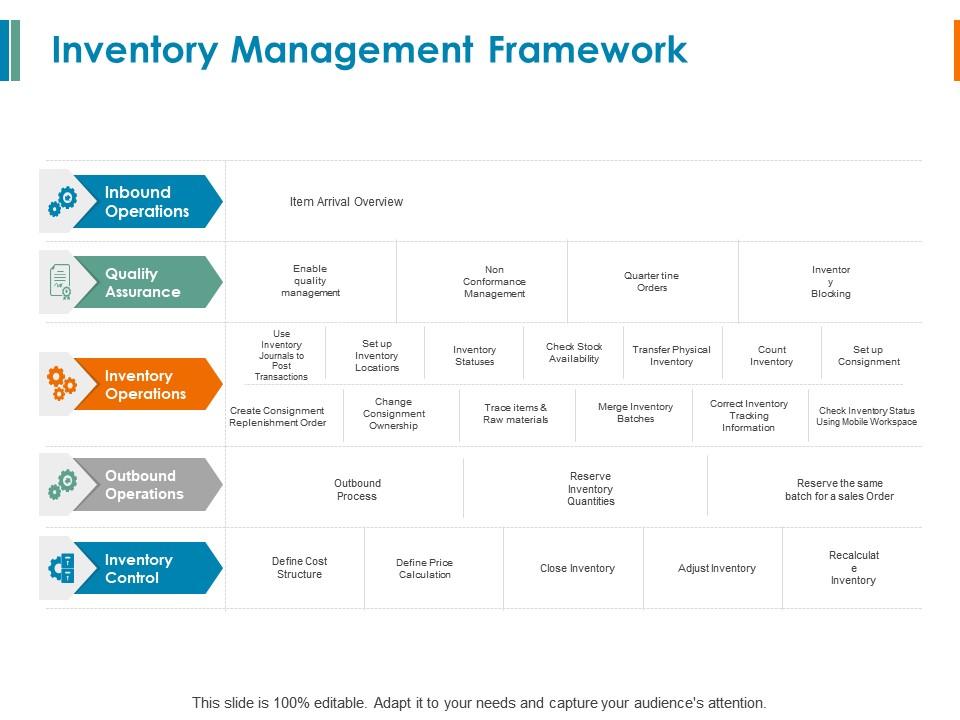
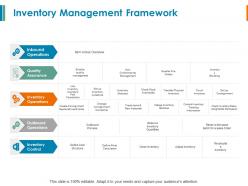
Inventory management framework quality assurance ppt powerpoint slides
Try Before you Buy Download Free Sample Product
Audience
Editable
of Time
Address disgruntled elements with our Inventory Management Framework Quality Assurance Ppt Powerpoint Slides. Declare your intention to eliminate cause for complaint.
People who downloaded this PowerPoint presentation also viewed the following :
Inventory management framework quality assurance ppt powerpoint slides with all 5 slides:
Declare your intention to eliminate cause for complaint with our Inventory Management Framework Quality Assurance Ppt Powerpoint Slides. Address disgruntled elements.
FAQs for Inventory management framework quality assurance
Balance is everything - don't tie up cash in excess stock, but also avoid those annoying stockouts. ABC analysis works great for this (focus on your valuable stuff first). Real-time tracking is a lifesaver so you actually know what's sitting where. Forecasting demand keeps you ahead instead of scrambling constantly. Lead times will absolutely wreck you if you're not paying attention - learned that one the hard way! I'd start with categorizing everything properly. Set up decent tracking systems first, then build from there. Those two things alone will solve like 80% of your headaches.
Basically, the faster you move inventory, the better your profits look. Quick turnover = less money sitting around in storage plus you're not paying to warehouse stuff forever. Cash flows better too. Slow turnover usually means you bought too much or people aren't buying - both suck for your bottom line. The tricky part is not running out of your bestsellers while you're trying to move things quickly. Every industry's different but honestly? I'd rather sell out occasionally than have tons of dead stock collecting dust. Check your numbers monthly so you catch problems before they get ugly.
Dude, you really need to get off spreadsheets if you're still using those. RFID and barcode scanning give you real-time tracking without the guesswork. AI demand forecasting is weirdly good now - like, almost creepy how accurate it gets. Automated reordering prevents those 3am panic moments when you realize you're out of stock. Cloud systems mean your team can check inventory from literally anywhere. Plus everything syncs with your accounting software so you're not doing double data entry anymore. Honestly, even a basic barcode system would save you so much headache right now.
Honestly, dig into your old sales data first - like really look at it. Seasonal stuff, weird spikes, whatever happened last year or two. Most people just ignore all that gold sitting right there! Factor in any promos you're planning or if the market's doing something funky. Get some inventory software if you can swing it, makes everything so much easier and spots things you'd totally miss. Oh and don't just set it and forget it - check your forecasts monthly or quarterly. Start basic with trend stuff, then get fancier once you figure out what actually works for your situation.
Honestly, start with demand forecasting - look at your historical data and seasonal patterns to figure out what you actually need. ABC analysis is huge too. Categorize stuff by importance so you're not sitting on tons of cheap items nobody wants. Just-in-time ordering is great for predictable products, though it'll stress you out initially! Set automated reorder points based on lead times. Safety stock is your friend. Track inventory turnover weekly and don't hesitate to dump slow movers with discounts. I learned this the hard way - those patterns show up faster than you'd think once you start paying attention.
Ugh, supply chain chaos basically means you're always tweaking your safety stock and reorder points. Unreliable suppliers? Shipping delays? You'll need bigger inventory buffers to avoid running out completely. But don't go overboard - too much stock just eats up your cash flow for no reason. I've seen companies get burned by that. You might want to spread orders across different vendors instead of putting all your eggs in one basket. The real trick is staying flexible with your ordering so when things inevitably go sideways, you can adjust fast.
Honestly, you gotta dig into like 2-3 years of your sales data first - sounds boring but it'll show you exactly when things get crazy. Once you see those patterns, start ordering way earlier than feels right. I'm talking 2-3 months before your busy seasons hit. Holiday rushes will destroy you if you're not prepared. Look into backup suppliers too while things are calm. When everyone's fighting over the same inventory, you'll be glad you did. Oh, and maybe check out flexible warehouse options or drop-shipping for when you inevitably order too much of something.
So you know all that manual inventory tracking you're doing? Software automates that mess. It watches your stock levels constantly and reorders stuff when you're running low. Way better than those nightmare spreadsheets we've all been there with! Plus it studies your sales patterns to predict what you'll actually need - pretty smart, honestly. You'll cut down on data entry big time and actually trust your numbers for once. I'd say figure out what's driving you most crazy first - is it the tracking, the reordering, or trying to forecast? Then find something that fixes that specific problem.
Ugh, inventory is such a pain for small businesses - you've got three big problems hitting you at once. Cash flow makes it hard to buy enough stock. Most places don't have any real system for predicting what they'll need. And tracking everything manually? Recipe for disaster. Without good data, you're just guessing, which means you'll either run out of stuff or have too much money tied up in products sitting around. Start with some basic cloud software that watches your sales patterns and tells you when to reorder. Even a decent spreadsheet beats winging it completely. Focus on your bestsellers first since they're doing most of the heavy lifting anyway. Set up alerts for low stock and check your numbers weekly.
So lean inventory is basically about cutting the fat and only keeping what you actually need. There's this whole "seven wastes" thing - overproduction, waiting, transportation, over-processing, inventory, motion, and defects. Honestly, inventory being a "waste" sounds weird at first, but it makes sense when you think about storage costs. Start by checking your turnover rates and lead times. Then set up just-in-time ordering or kanban systems - they're game changers for maintaining the right stock levels. Pull systems work great too. The goal is eliminating excess without running out of stuff. Focus on flow and you'll cut costs while keeping customers happy.
Start with inventory turnover ratio - that's your best friend for seeing if you're actually moving stuff or just hoarding it. Fill rate and order accuracy matter too, plus you gotta watch carrying costs and how often you're running out of things. Dead stock percentage is brutal but super telling (seriously, I helped one company find like $30K just sitting there gathering dust). Days sales in inventory gives you another angle on the whole picture. Oh, and stockout frequency - customers hate that. Pull these numbers monthly at first, then you can dial it back once you get a feel for your patterns.
Look, you gotta nail down solid supplier relationships and decent demand forecasting before anything else. Start by checking your sales patterns - figure out which vendors actually show up on time. JIT is brutal honestly, one screwup and you're toast. Don't go crazy trying to do everything at once though. Pick your fastest-moving stuff first, then expand from there. Get some inventory software that shows real-time data and set up those automated reorder alerts. Oh, and definitely have backup plans for your critical items because something will go wrong eventually.
Dude, e-commerce inventory is a whole different beast. You're dealing with way more SKUs and customers want stuff FAST - like Amazon-fast. Gone are the days of shipping pallets to Walmart and calling it good. Now it's direct-to-consumer everything, which honestly means you can't mess up orders or people will roast you online. The upside? You actually see what people want instead of guessing through retail buyers. Real-time tracking is non-negotiable these days. Start with automated systems first - trust me on this one. Maybe look into multiple fulfillment centers too since speed matters more than ever.
Ugh, shrinkage is such a pain - it's literally money disappearing with nothing to show for it. Whether stuff gets stolen, damaged, or just miscounted, you're eating those costs without any sales. The worst part? Your inventory records become totally unreliable, so you end up either running out of popular items or ordering way too much of things you don't need. I swear some businesses don't realize how much this adds up over time. You should definitely start checking your shrinkage numbers monthly though. Once you see the patterns, it's way easier to figure out what's actually going wrong.
Look, environmental stuff in inventory is mostly about cutting waste and emissions. Order smarter so you don't get stuck with expired products rotting in storage - been there, it's awful. Shipping's where you'll see big wins though. Consolidate orders and pick closer suppliers when you can. Oh, and bug your vendors about recyclable packaging. Most of this actually saves cash too, which honestly makes convincing the boss way easier. I'd start by just tracking how much inventory you're tossing - those numbers don't lie and usually shock people into action.
No Reviews