Iso 9001 results after implementation of iso 9001 quality systems
Try Before you Buy Download Free Sample Product
Audience
Editable
of Time
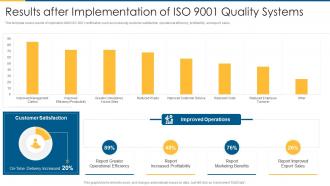
This template covers results of implication QMS ISO 9001 certification such as increasing customer satisfaction, operational efficiency, profitability, and export sales.
People who downloaded this PowerPoint presentation also viewed the following :
Iso 9001 results after implementation of iso 9001 quality systems with all 7 slides:
Use our Iso 9001 Results After Implementation Of Iso 9001 Quality Systems to effectively help you save your valuable time. They are readymade to fit into any presentation structure.
FAQs for Iso 9001 results after implementation of iso
So you'll definitely see efficiency improvements and way happier customers. Fewer screw-ups too, which is huge. Your team gets crystal clear procedures - no more of that "wait, what's the process again?" chaos that drives everyone nuts. Better relationships with suppliers happen naturally, plus you catch problems early instead of scrambling to fix expensive messes later. Oh, and clients who require certification will actually talk to you now. Track your numbers from the start because most places see real improvements in 6-12 months. It's honestly one of those things that sounds boring but makes life so much easier.
Honestly, ISO 9001 makes you get serious about what customers actually want instead of guessing. You'll gather real feedback and track satisfaction properly - no more crossing your fingers and hoping. Better processes mean way fewer defects, which cuts down on those nightmare complaint calls (seriously, that's worth it right there). When issues do pop up, you'll handle them faster because everything's documented. Oh, and complaints get resolved more systematically too. I'd start by figuring out where customers usually interact with you and spot the problem areas first.
Ugh, people absolutely hate change - that's gonna be your biggest headache. Plus the paperwork is insane, like everything has to be documented and standardized. Resource allocation gets messy too since this stuff always takes longer than anyone expects. Oh and keeping momentum up? Good luck with that once the honeymoon phase ends. Honestly though, start with just one department and grab some quick wins. Show off those results big time - it really helps get everyone else on board. Once they see it actually works, the resistance usually dies down pretty fast.
So basically, pick 3-5 metrics that actually matter to your business - stuff like customer satisfaction, defect rates, delivery times. Track them monthly but don't go crazy with it at first. Internal audit results are honestly where you'll get the real tea about what's working and what isn't. Employee feedback is huge too, though people sometimes overlook that part. Most companies start seeing solid results around 6-12 months in. Oh, and definitely compare your numbers from before implementation - otherwise you're just guessing if it's actually helping. Process improvements usually show up pretty quick once everything clicks.
Dude, training is where ISO 9001 implementations either work or totally crash and burn. Your people need to actually get the processes, not just go through the motions. That's how quality becomes real instead of just more paperwork nobody cares about. The standard makes you document competency stuff anyway - who needs what skills, how you're training them, all that. Skip the training and you'll have confused employees finding workarounds that mess up everything. Honestly, I've seen it happen so many times. Map out your skill gaps first and bake training right into your timeline from day one.
Honestly, ISO 9001 really does work - manufacturing and healthcare see the biggest wins. Most companies get 15-25% faster cycle times plus way less waste. Yeah, the paperwork is annoying at first (everyone hates that part), but it actually helps you spot problems you didn't realize were there. IT and consulting firms report better project timelines and happier clients afterward. My advice? Map out your current processes before you start anything else. You'd be shocked at what inefficiencies pop up when you actually write everything down.
Look, everyone thinks ISO 9001 is just endless paperwork and red tape. That's totally wrong - it's really about creating systems that actually function. People also assume getting certified magically fixes everything overnight, but that's like buying running shoes and expecting to be marathon-ready, you know? Small companies think it's only for huge corporations, which is backwards since smaller businesses usually get way better returns on it. The whole point isn't ticking boxes for some auditor. You want to use it as a tool to figure out what's genuinely screwed up in how you operate. Consistency with the improvement process is where the magic happens.
Dude, ISO 9001 is like a cheat code for small businesses. That certification badge shows customers you're as legit as the corporate giants – and honestly, some clients obsess over seeing those credentials more than actual company size. Your processes get way more efficient, errors drop, and you start building real trust through consistent delivery. Oh, and here's the kicker: tons of government contracts actually require it from vendors. I'd say start by writing down what you already do well. Then just build on that foundation. It's not as scary as it sounds, and the payoff can be huge against bigger competitors.
Honestly, ISO 9001 flips your whole risk game. Instead of putting out fires, you're actually preventing them. Map out your biggest operational risks first - that's where you'll feel the difference right away. The documentation part is annoying (won't lie), but it stops stuff from falling through the cracks. Your team starts asking "what if this breaks?" way before anything actually does. You build those safety nets directly into your daily processes. It's like... you go from being surprised by problems to seeing them coming from a mile away. Pretty solid shift once you get used to it.
You'll get totally different results depending on what kind of business you're in. Manufacturing? They usually nail the defect reduction stuff pretty quickly since everything's more measurable. Healthcare and finance companies tend to focus on keeping customers happy and managing risk better. Tech companies actually have the hardest time at first - their processes are all over the place. But once they figure it out, wow, their project delivery gets so much smoother. Honestly, the biggest mistake is trying to copy what worked for someone else's industry instead of focusing on what actually matters for yours.
Start with gap analysis - that's gonna tell you what you actually need. Get a decent project management tool and some templates for tracking what's broken in your processes right now. Document control software is pretty much essential because honestly, the paperwork side will make you want to quit lol. You'll want audit checklists and training stuff for your team too. Budget for outside help if things get messy. The documentation phase kills most people - there's just endless amounts of it. Having someone dedicated to wrangle everything makes a huge difference though.
So ISO 9001 basically bakes continuous improvement into everything you do through this Plan-Do-Check-Act cycle. Internal audits happen regularly, and you're always measuring stuff and looking at data to spot problems. The standard makes you set quality goals and track how you're doing - then fix things when they inevitably go wrong. Management has to review the whole system periodically too. What's cool is your team eventually starts pitching ideas because they can see the numbers and get why it matters. Oh, and definitely tackle just one process first or you'll go crazy trying to do everything at once.
ISO 9001 isn't something you can just set and forget - treat it like it's alive and needs constant attention. Do your internal audits regularly, but make them actually useful. Auditors have this weird sixth sense for spotting BS compliance efforts, so don't fake it. Get honest feedback from your team about what's broken in your processes. Train new hires on the quality system from day one. Leadership needs to stay involved too (this is where a lot of companies mess up). Build everything into your normal workflow so you're not panicking when recertification rolls around.
Yeah so the upfront costs are kinda steep - consultant fees, training, all that documentation stuff plus the certification audit. We're talking $15K-50K depending on how big your company is. Most places break even in like 12-18 months though, which isn't terrible. You'll cut down on waste, fewer angry customers calling, operations run smoother. Insurance gets cheaper too. Plus tons of clients want to see that ISO cert now - it's basically table stakes. Oh and the yearly maintenance audits are way cheaper than that initial hit. I'd say go for it if you can swing the upfront investment.
Think of it like this - customer feedback shows you what's actually happening out there, while audits check if your processes can deliver consistently. Are customers happy? Getting fewer complaints? That's the real-world test. Audits make sure you're set up right behind the scenes. Honestly, I've seen companies focus too much on one side and miss problems. You really need both perspectives. Short version: let customer complaints guide what your auditors should dig into during reviews. It's way more effective than flying blind.
-
Great product with effective design. Helped a lot in our corporate presentations. Easy to edit and stunning visuals.
-
Commendable slides with attractive designs. Extremely pleased with the fact that they are easy to modify. Great work!