Kepner Tregoe Troubleshooting Methodology Powerpoint Presentation Slides
Try Before you Buy Download Free Sample Product
Audience
Editable
of Time
Counter numerous organizational issues using these Kepner Tregoe Troubleshooting Methodology PowerPoint Presentation Slides PPT. Take the assistance of these Kepner Tregoe method PPT templates to expound problem analysis, decision analysis, and potential problem analysis. Illustrate the stages of problem analysis process like defining the problem, specific problems, identifying differences, formulating causes, testing causes, etc. with these KT matrix PPT visuals. Elucidate the methodology for KT Matrix and reveal the components of value proposition like process integration, performance system integration, coaching on-the-job, etc. Demonstrate the pros of the KT method including coverage of root causes analysis, risk management, complexity reduction, clear thinking, etc. with these KT matrix PowerPoint infographics. Showcase the steps of decision making such as decision statements, establishing strategic requirements, ranking objectives, alternatives, assigning relative scores, etc. with these decision making PPT layouts. Download this decision-making approach PowerPoint deck to ease the problem-solving process of your organization.
People who downloaded this PowerPoint presentation also viewed the following :
Content of this Powerpoint Presentation
Slide 1: This slide introduces Kepner-Tregoe Troubleshooting Methodology. State your Company name and begin.
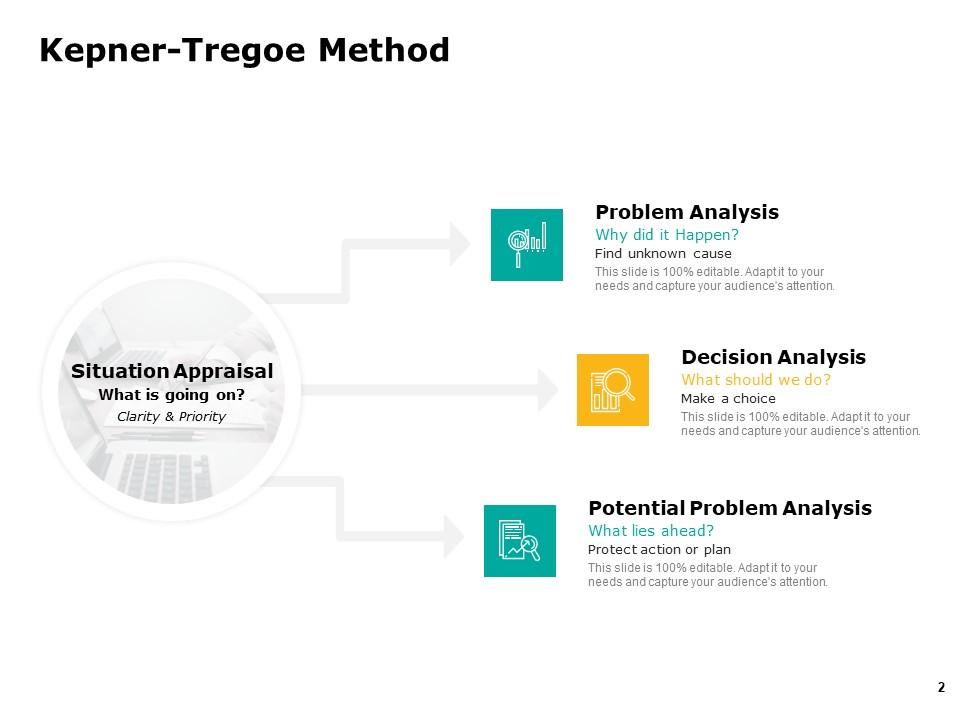
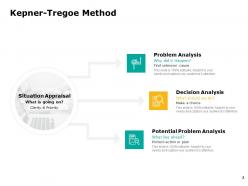
Slide 2: This slide consist of Kepner-Tregoe Method describing- Problem Analysis, Decision Analysis, Potential Problem Analysis.
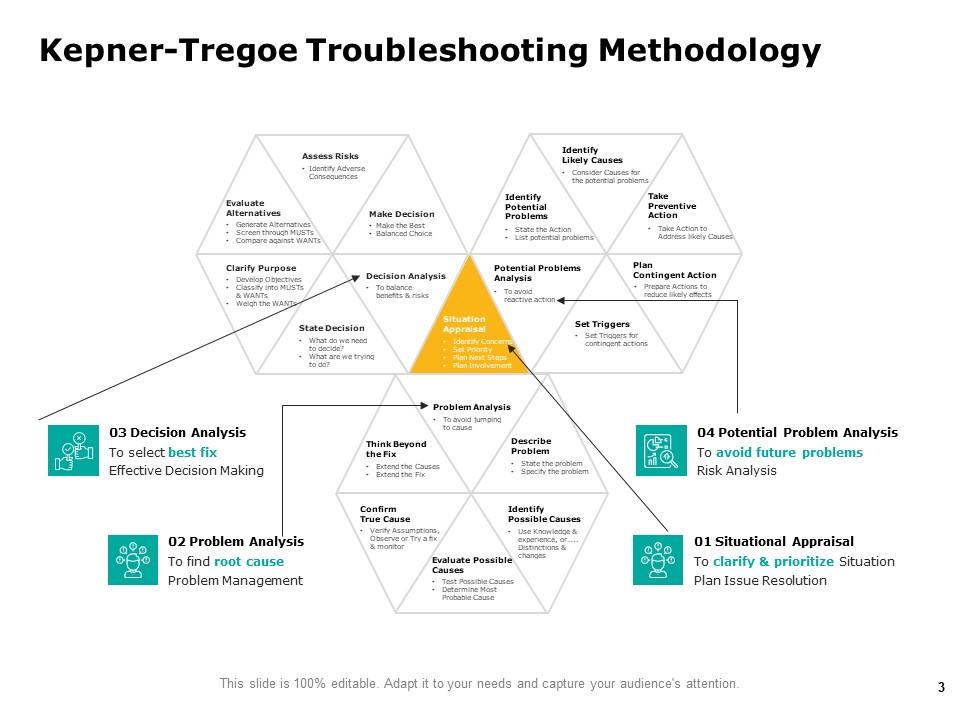
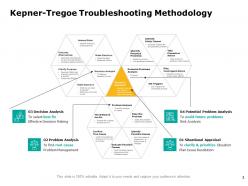
Slide 3: This slide shows Kepner-Tregoe Troubleshooting Methodology.
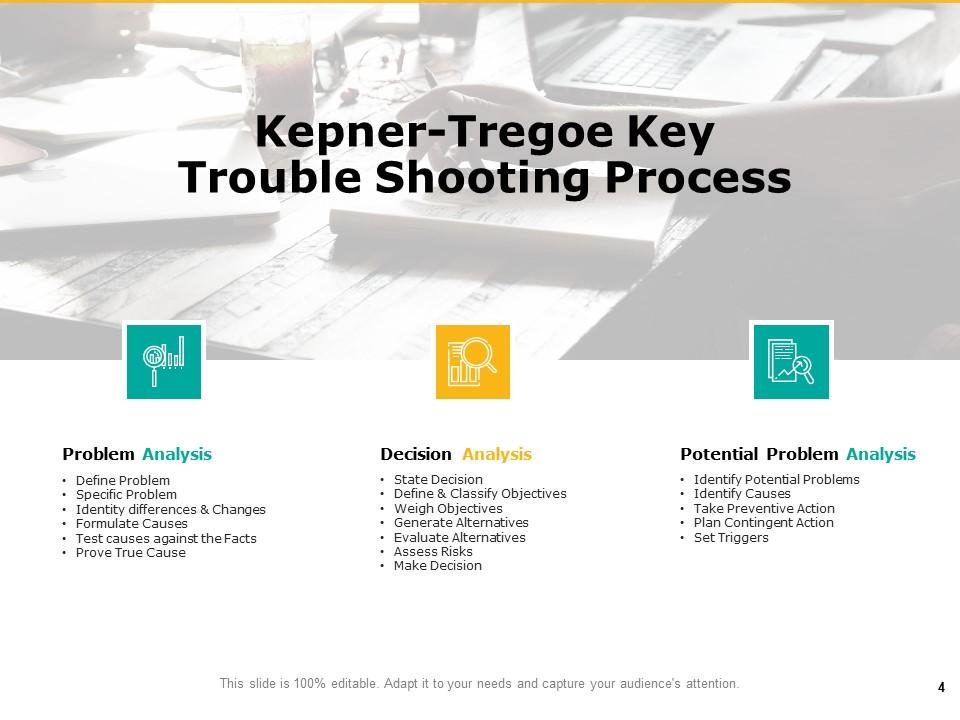
Slide 4: This slide presents Kepner-Tregoe Key Trouble Shooting Process.
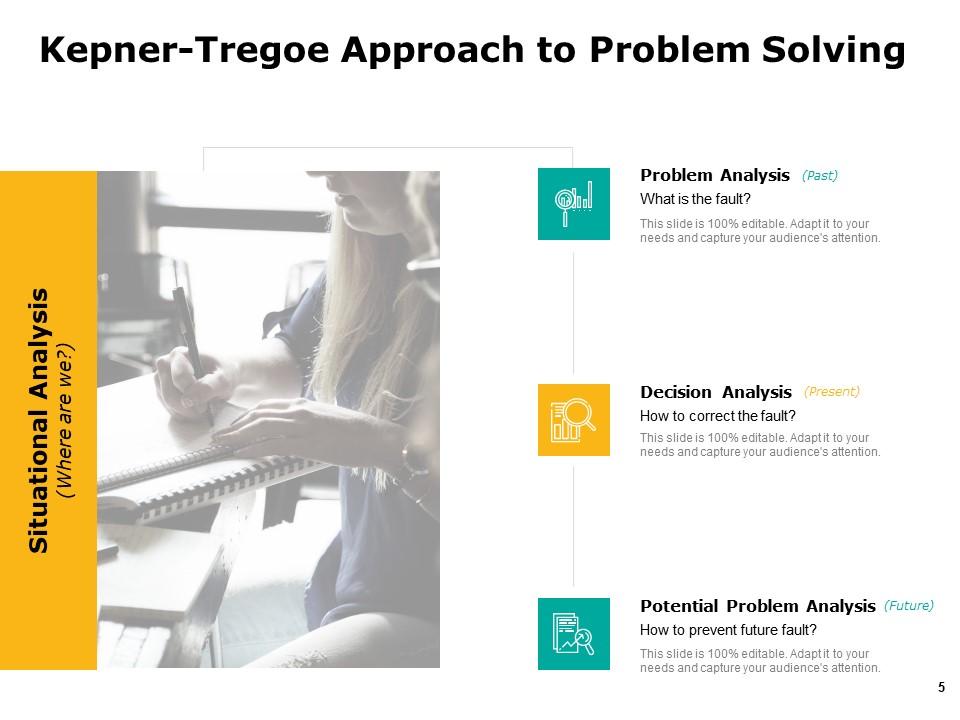
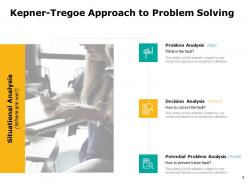
Slide 5: This slide depicts Kepner-Tregoe Approach to Problem Solving.
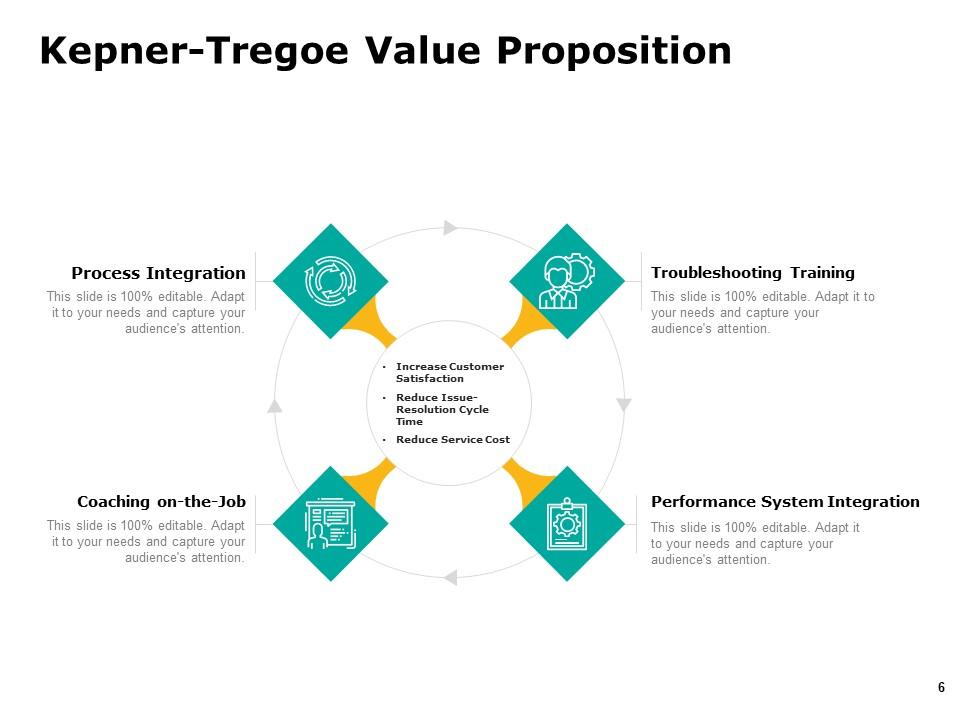
Slide 6: This slide depicts Kepner-Tregoe Value Proposition
Slide 7: This is Kepner-Tregoe Troubleshooting Methodology Icons Slide
Slide 8: This slide is titled as Additional Slides for moving forward.
Slide 9: This is About Us slide to showcase Company specifications.
Slide 10: This is Our Mission slide with Vision, Goal and Mission.
Slide 11: This is Meet Our Team slide names and designations.
Slide 12: This is Quotes slide to convey message, beliefs etc.
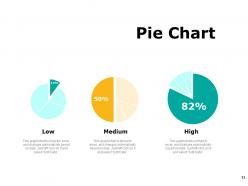
Slide 13: This is Pie Chart slide with high, medium and low.
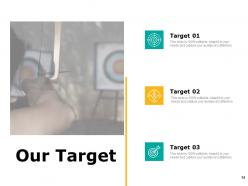
Slide 14: This is Our Target slide to showcase Company targets.
Slide 15: This is Idea Generation slide to highlight important information and facts.
Slide 16: This is Thank You slide with Contact number, Email address and address.
Kepner Tregoe Troubleshooting Methodology Powerpoint Presentation Slides with all 16 slides:
Get what gives with our Kepner Tregoe Troubleshooting Methodology Powerpoint Presentation Slides. They ensure you are ahead in the game.
FAQs for Kepner Tregoe Troubleshooting Methodology
So Kepner Tregoe breaks down into four steps that actually make sense when you use them together. First is Situation Appraisal - basically figuring out what's really happening. Then Problem Analysis to dig into root causes. Decision Analysis comes next for weighing your options. Finally there's Potential Problem Analysis to catch what might blow up later. Honestly, the hardest part is forcing yourself to gather facts first instead of jumping straight to solutions (guilty as charged lol). Try starting with that situation step next time you're stuck - it prevents you from going down random rabbit holes too early.
Oh man, Kepner Tregoe is actually pretty solid - it stops you from making those impulse decisions that seem brilliant until they totally backfire. Basically you define the problem first, gather all the facts, then evaluate options against specific criteria. Super methodical, which honestly feels annoying at first but saves your butt later. My old manager swore by their decision matrix thing and it genuinely helps figure out what actually matters vs what just sounds cool. Plus when everyone uses the same framework, you don't get those endless meetings where people argue past each other. Worth trying on your next big decision.
Think of situational analysis as your reality check before jumping into problem-solving mode. It's where you figure out what you're actually dealing with - are you fixing something that broke, choosing between options, or trying to prevent future headaches? Honestly, this step saves you so much time because people constantly grab the wrong KT tool for their situation. It's like medical triage but for business problems. Once you categorize what's going on, then you can pick the right process. I can't tell you how many people skip this and wonder why they're spinning their wheels later.
Start with training everyone on the four core processes - situation appraisal, problem analysis, decision analysis, and potential problem analysis. Problem analysis is where you'll see the biggest impact honestly. The "what is" vs "what is not" approach totally changes how teams describe issues - cuts through all the assumptions people make. Create templates for deviation analysis and use the questioning method in regular meetings. Don't just save it for big crises though, that's a mistake I see a lot. Practice on smaller stuff first so it becomes natural. Once it's your team's default way of thinking through problems, you'll wonder how you managed without it.
KT is way more structured than other problem-solving methods - you're following specific steps and criteria instead of just brainstorming freely. Honestly feels rigid at first. But here's the thing: you get consistent results every time because it's so systematic. Design thinking might be more creative, sure, but when you're dealing with serious operational problems where you can't mess up? KT's methodical approach beats winging it. Complex issues need that kind of discipline - emotions and biases just get in the way otherwise. I'd probably get annoyed with all the steps, but it works.
So there are four stages to work through: Situation Appraisal (figuring out what's actually going on), Problem Analysis (digging into the root cause), Decision Analysis (weighing your options), and Potential Problem Analysis (thinking through what might go sideways). Honestly, it's super methodical - which some people find annoying, but that's kinda the whole point. You build on each step instead of just randomly guessing at solutions. My advice? Try it out on something small first. Like, don't use this framework to decide whether to quit your job or whatever. Pick something easier to get the hang of it.
Honestly, measuring KT effectiveness is pretty straightforward - just track whether your solutions actually fix problems long-term and how fast teams resolve issues. The real test? Ask people if they feel more confident making decisions now. I've noticed companies love overcomplicating this with tons of metrics, but what really matters is seeing fewer recurring headaches and better communication between departments. Oh, and check if people are actually following the structured processes you put in place. My advice: pick 2-3 metrics that match your biggest pain points and stick with tracking those consistently.
Healthcare and manufacturing get huge benefits from Kepner Tregoe - those industries can't afford screw-ups when dealing with complex problems. Airlines use it too, which honestly makes perfect sense when people's lives depend on getting decisions right. Energy companies and pharma love the structured approach because they're drowning in regulations. Same goes for financial services. But really, if you're in any field where "winging it" isn't an option and your problems have tons of moving pieces, KT's probably worth checking out. It works best when the stakes are high and you need solid decision-making processes.
Honestly, Kepner Tregoe is a game changer for getting teams to actually think the same way. No more random opinions flying around - everyone uses the same structured process to tackle problems. Once your team gets the hang of it, conversations get so much clearer. People have to spell out their criteria and assumptions, which kills most of the usual confusion. I'd say start small though. Just bring their basic problem-solving template to one meeting and watch how differently people engage. They'll actually listen instead of just waiting for their turn to talk.
You'll want to grab structured worksheets for the main KT processes first. Problem analysis templates are probably your best starting point - get everyone comfortable with those basic worksheets before diving into the fancier stuff. The "is/is not" comparison charts are honestly incredible for figuring out root causes (seriously, they work so well). After that, add situation appraisal and decision analysis templates. Priority matrices help rank your issues, and you'll need those decision criteria grids too. Oh, and don't skip the cause-and-effect worksheets - those plus action planning templates keep everything organized. Build up slowly though, otherwise people get overwhelmed.
Honestly, start with those four KT fundamentals - situation analysis, problem solving, decision making, and potential problem analysis. Workshop format works best where they tackle real problems from your company (so much better than boring generic cases). They've gotta practice asking the right questions and separating facts from assumptions - that's huge. I'd definitely follow up with coaching sessions on current challenges. Oh, and repetition is everything here. Short sentences mixed with longer practice sessions until the structured thinking becomes automatic. Can't stress enough how hands-on beats theoretical every time.
Getting people on board is the hardest part - they think it's just more red tape slowing things down. Teams resist that structured approach because it feels bureaucratic at first. Training's another mess. People learn bits and pieces but miss how it all connects. I've watched teams bail after a few weeks when they don't see quick wins (which is totally predictable, honestly). Start small with low-stakes problems so everyone builds confidence. Once they're comfortable, you can tackle the bigger strategic stuff. Don't jump straight into the deep end or you'll lose them.
Honestly, Kepner Tregoe is solid for continuous improvement - it forces you to actually find root causes instead of just slapping band-aids on problems. The decision analysis piece is my favorite part though. No more picking solutions because they "feel right." You systematically compare options against weighted criteria, which sounds boring but actually saves you from terrible decisions later. I used it on a project last month and it totally changed how we approached things. Document whatever criteria you use so your team can copy the same approach. It's way more reliable than winging it.
Honestly, the biggest thing is it stops your brain from going in circles when everything's a mess. You get actual steps to follow instead of just panicking, which cuts way down on that decision paralysis. Once you use it a few times, it's weirdly relaxing? Plus you start trusting your choices more since you're not just winging it based on gut feelings. When you can walk someone through your reasoning using the framework, you sound way more legit too. I'd test it out on something small first - that's when it clicks and you're like "oh this actually helps."
Yeah, you can definitely make Kepner Tregoe work with agile! Break their problem-solving process into sprint-sized pieces instead of doing everything upfront. Their decision matrices are actually perfect for prioritizing your backlog - I use them all the time. During retrospectives, throw in their root cause analysis techniques. For sprint planning, their risk assessment stuff is solid. The trick is keeping their systematic questioning but not getting buried in documentation. Make it more conversational, you know? Oh, and their problem definition framework works great in standups too. Just start small with one technique and see how it feels.
No Reviews