


Key Account Management To Monitor Market Trends And Ensure Customer Satisfaction Complete Deck
The process of planning and managing a mutually beneficial partnership between an organization and its most important customers is known as key account management KAM. It is critical to an organizations long term growth and requires a significant investment of time and resources. Check out our professionally designed Key Account Management to Monitor Market Trends and Ensure Customer Satisfaction PowerPoint presentation that evaluates the objectives behind crucial account management and determines the job description of the key account manager. It includes a set up process to assess the companys essential account management portfolio, evaluate the current key account management performance indicators and implement a critical account management assessment process. This Key Client deck overviews key account management strategies that contain an essential account management portfolio, current performance indicators, fundamental account management team structure, and tool kit for crucial account management tasks. This Account management strategies presentation also details prerequisites for implementing essential and critical account management assessment processes. At last, it provides details on improving the Key business account management process, the positive impact of effective key account management, and the best practices and tools used for it. Get access to this powerful template now.
The process of planning and managing a mutually beneficial partnership between an organization and its most important custo..

















-

- Google Slides is a new FREE Presentation software from Google.
- All our content is 100% compatible with Google Slides.
- Just download our designs, and upload them to Google Slides and they will work automatically.
- Amaze your audience with SlideTeam and Google Slides.
-

Want Changes to This PPT Slide? Check out our Presentation Design Services
-

- WideScreen Aspect ratio is becoming a very popular format. When you download this product, the downloaded ZIP will contain this product in both standard and widescreen format.
-

- Some older products that we have may only be in standard format, but they can easily be converted to widescreen.
- To do this, please open the SlideTeam product in Powerpoint, and go to
- Design ( On the top bar) -> Page Setup -> and select "On-screen Show (16:9)” in the drop down for "Slides Sized for".
- The slide or theme will change to widescreen, and all graphics will adjust automatically. You can similarly convert our content to any other desired screen aspect ratio.
Compatible With Google Slides

Get This In WideScreen
You must be logged in to download this presentation.


Do you want to remove this product from your favourites?
PowerPoint presentation slides
Deliver this complete deck to your team members and other collaborators. Encompassed with stylized slides presenting various concepts, this Key Account Management To Monitor Market Trends And Ensure Customer Satisfaction Complete Deck is the best tool you can utilize. Personalize its content and graphics to make it unique and thought-provoking. All the fifty one slides are editable and modifiable, so feel free to adjust them to your business setting. The font, color, and other components also come in an editable format making this PPT design the best choice for your next presentation. So, download now.

People who downloaded this PowerPoint presentation also viewed the following :
Content of this Powerpoint Presentation
Slide 1: This slide introduces Key Account Management to Monitor Market Trends and Ensure Customer Satisfaction. Begin by stating your Company Name Here.
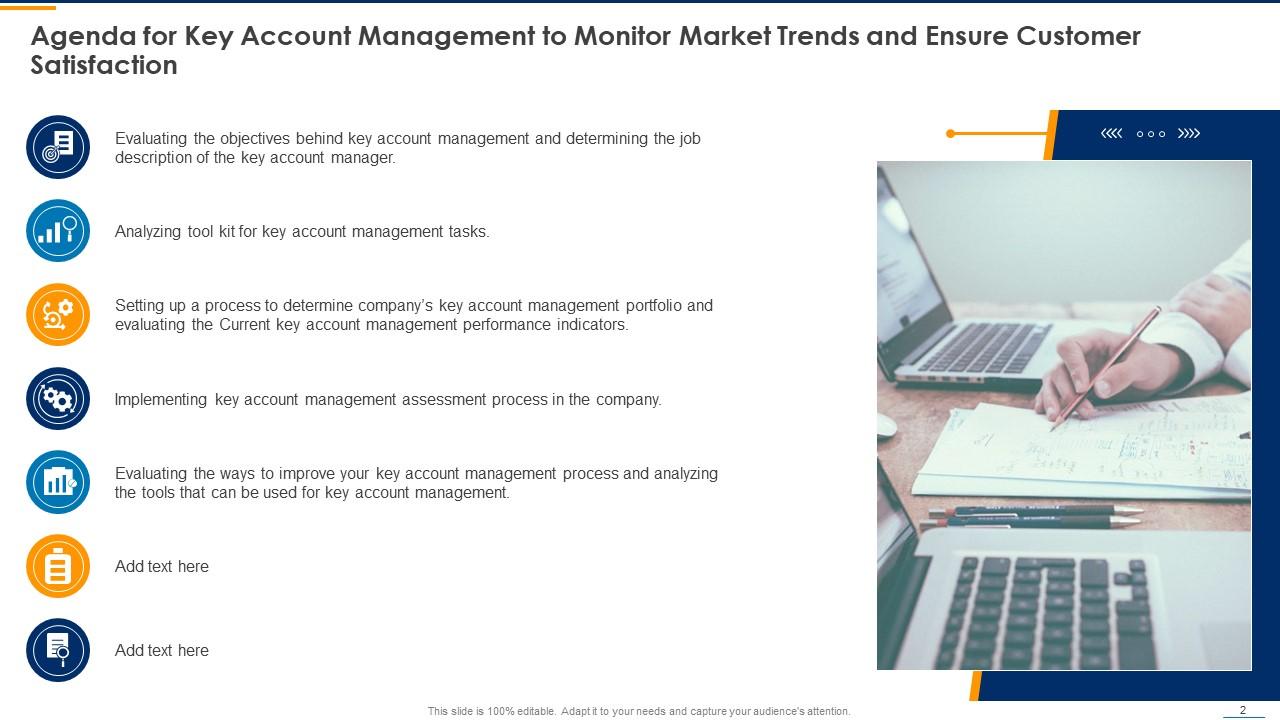
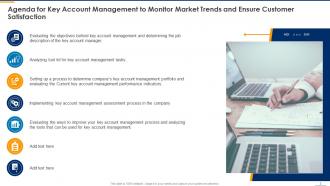
Slide 2: This slide depicts the Agenda of the presentation.
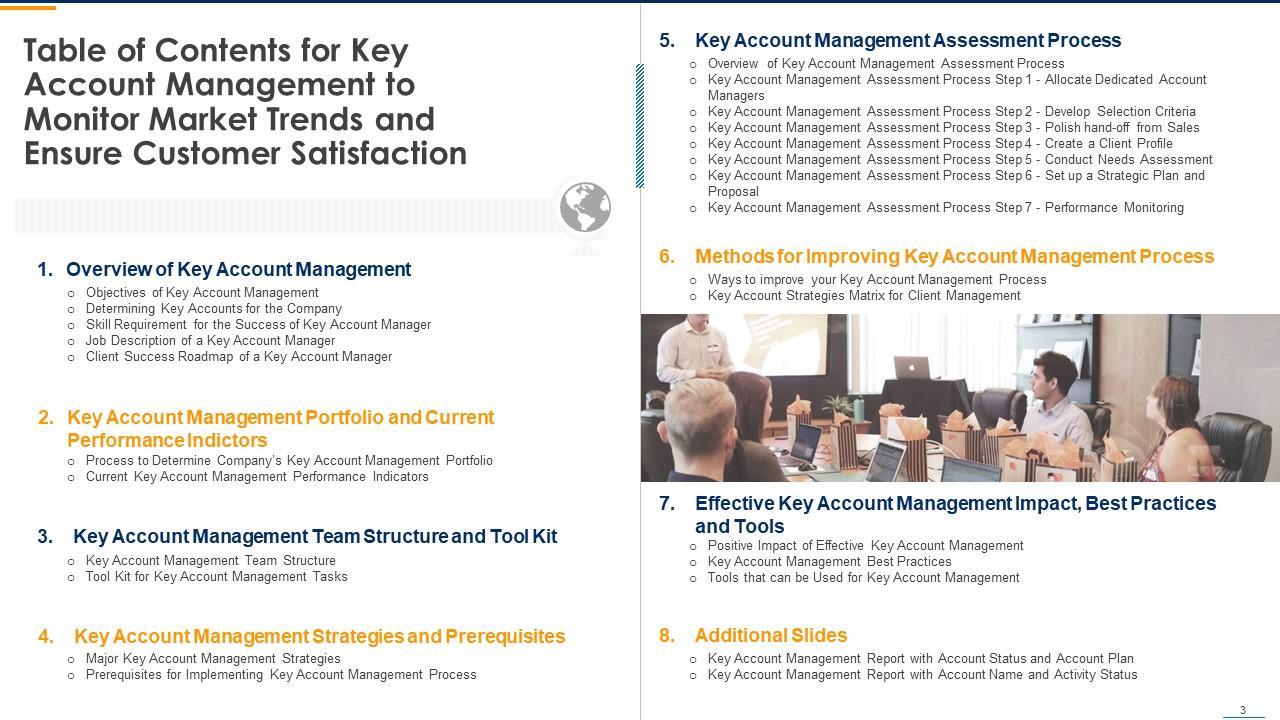
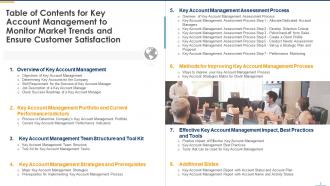
Slide 3: This slide includes the Table of Contents.
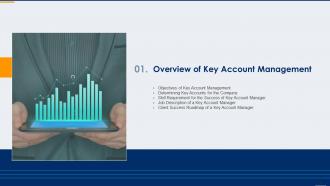
Slide 4: This slide provides an Overview of Key Account Management.
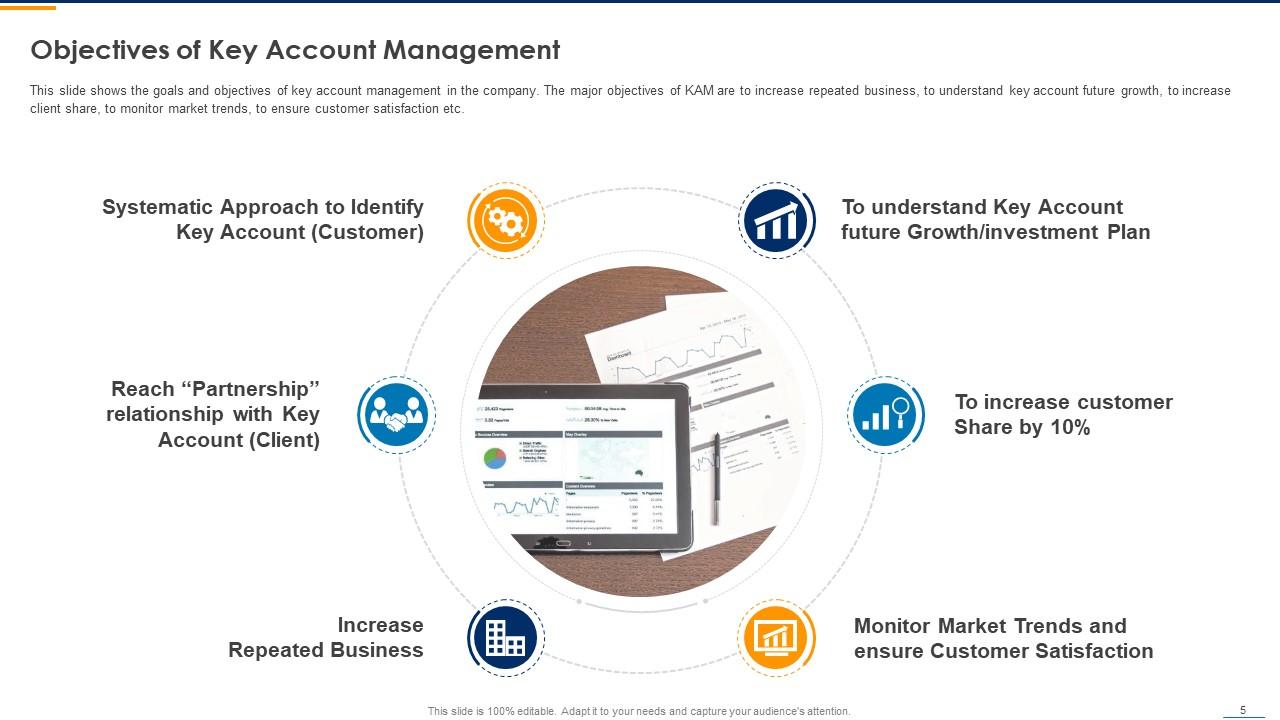
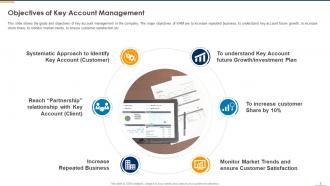
Slide 5: This slide outlines the Objectives of Key Account Management.
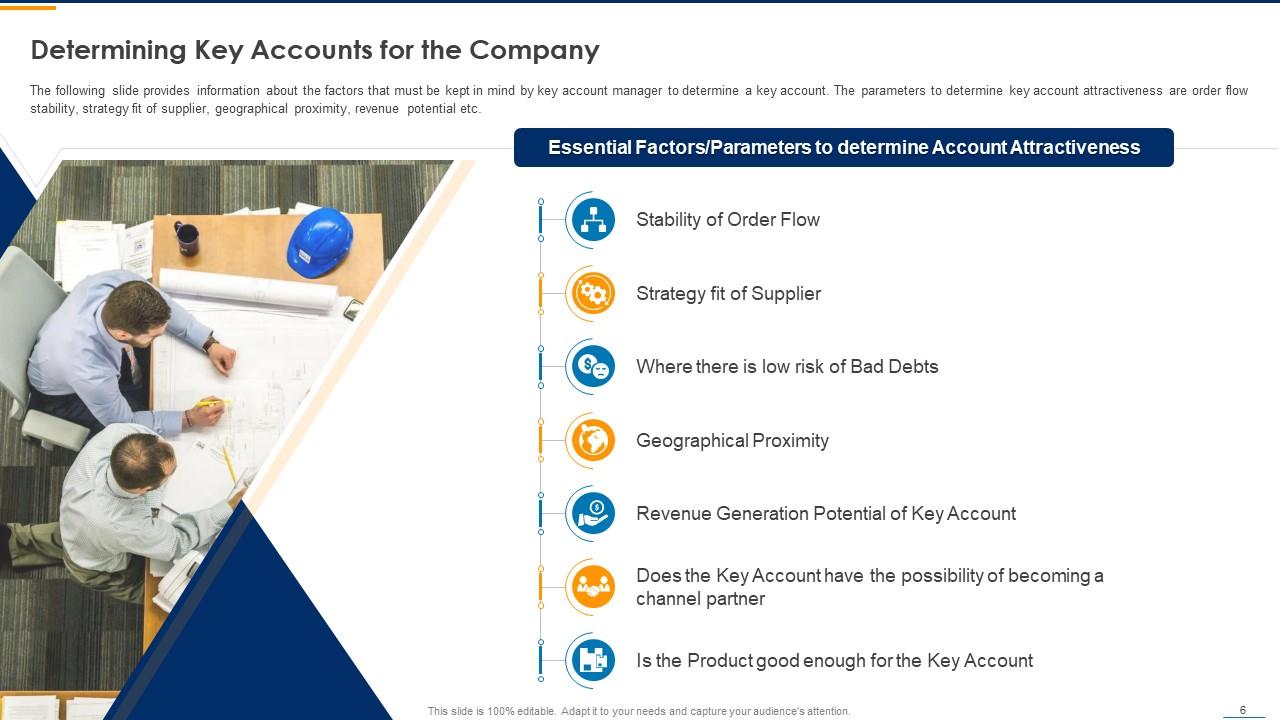
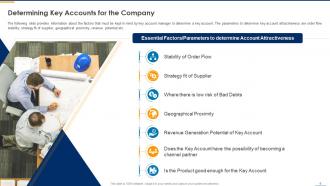
Slide 6: This slide incorporates Factors to be considered for Determining Company's Key Accounts.
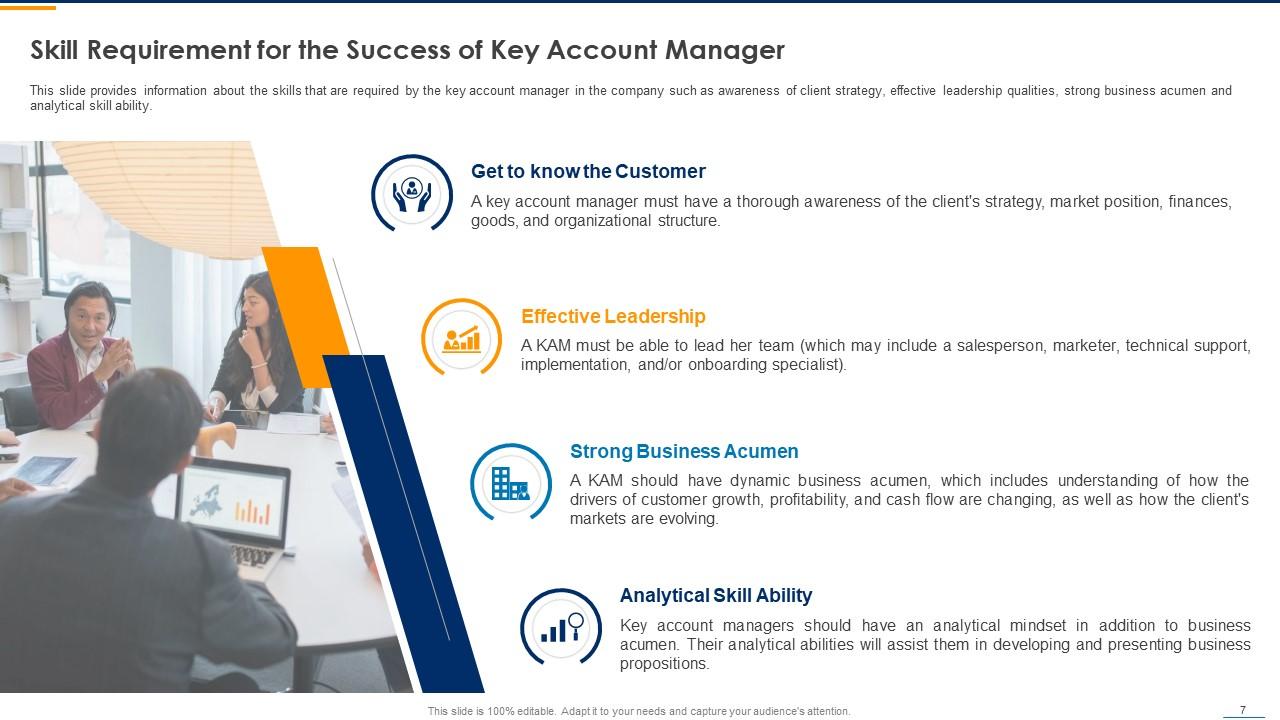
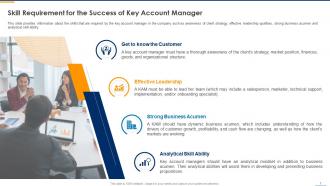
Slide 7: This slide showcases the Skill Requirement for the Success of Key Account Manager.
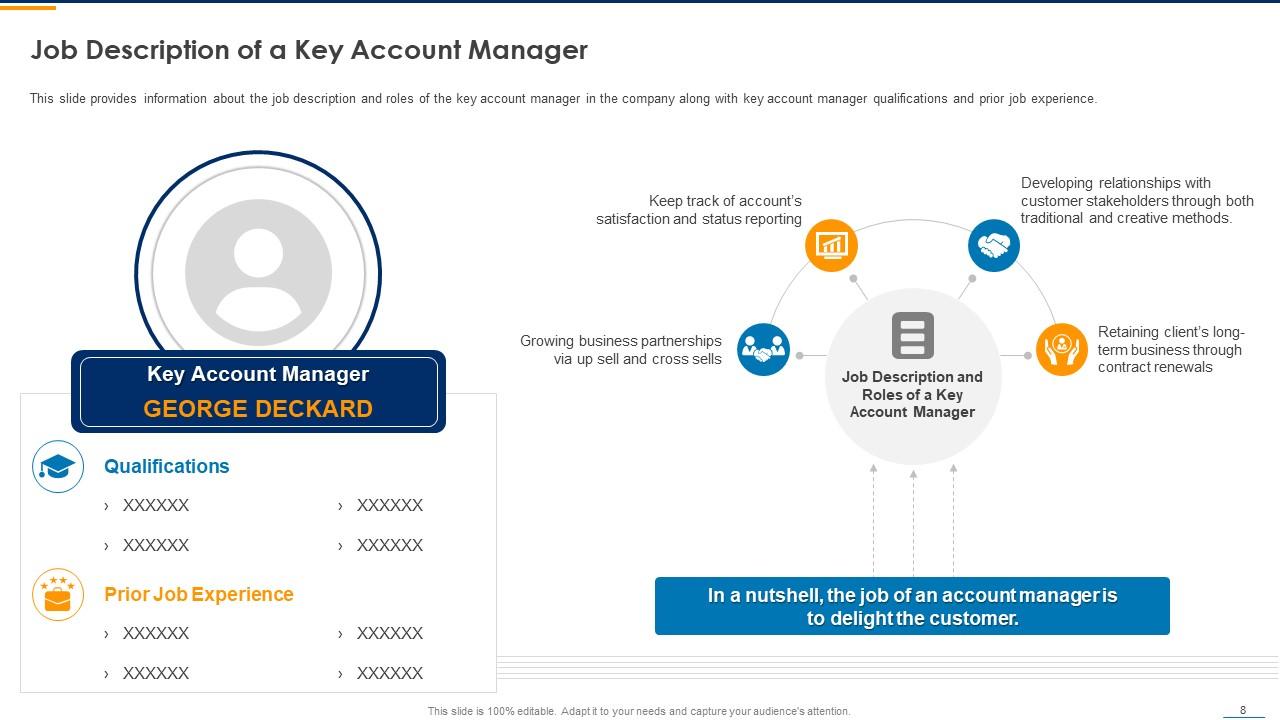
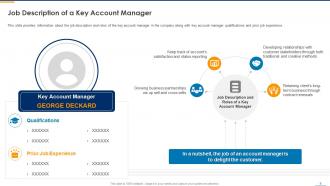
Slide 8: This slide depicts the Job Description of a Key Account Manager.
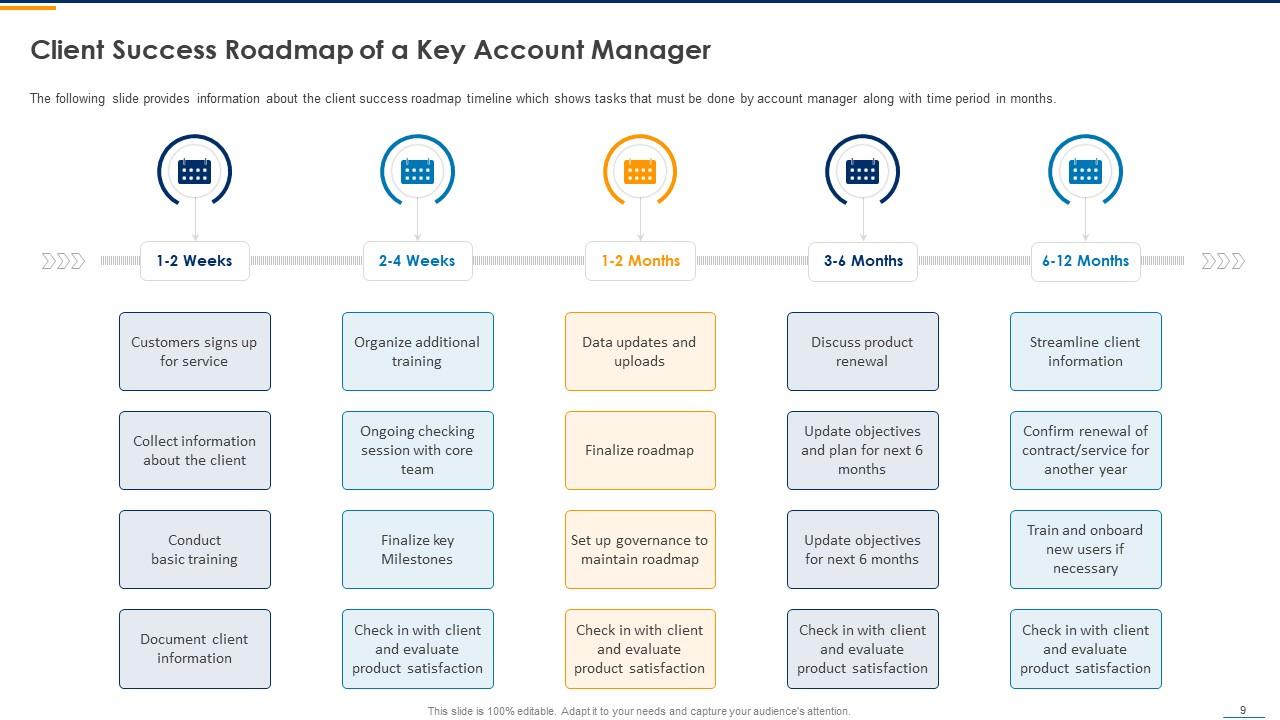
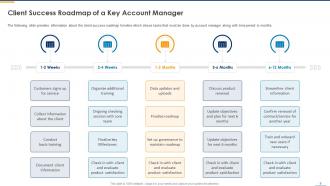
Slide 9: This slide includes the Client Success Roadmap of a Key Account Manager.
Slide 10: This slide incorporates the Title for the Topics to be covered in the next template.
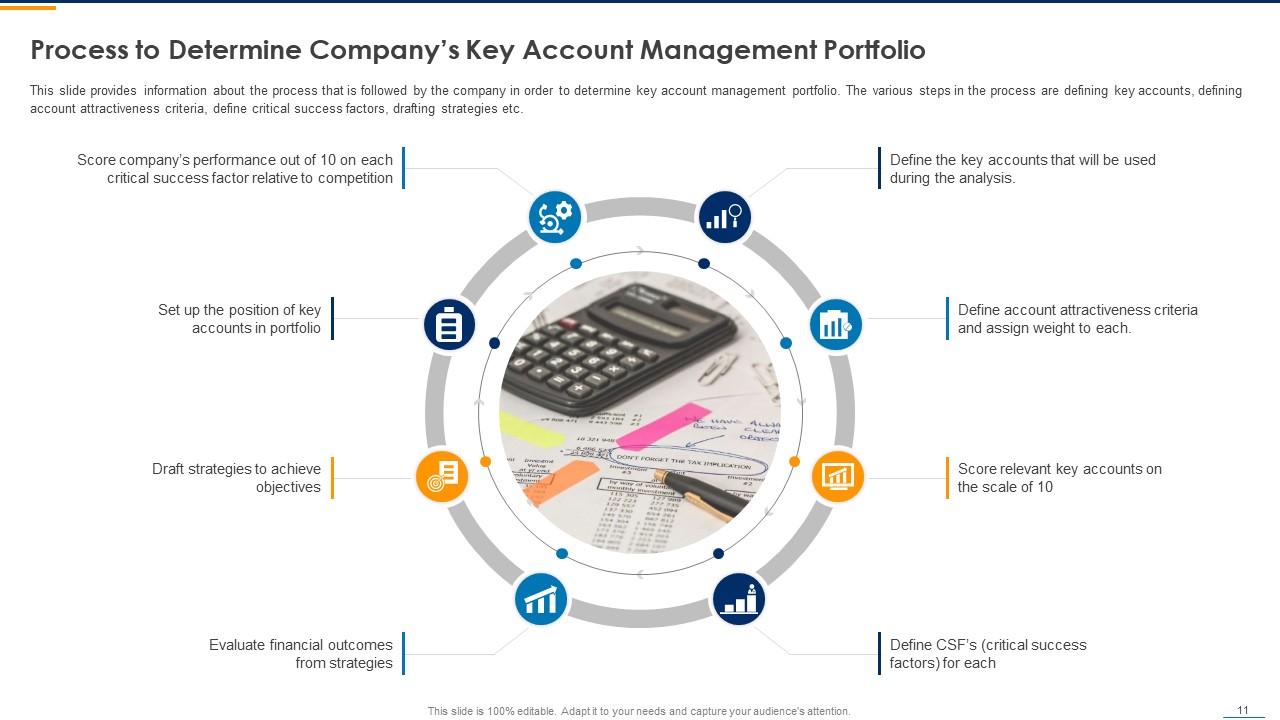
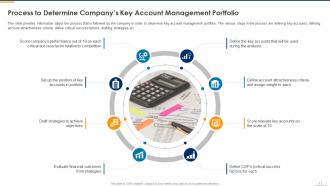
Slide 11: This slide mentions the Process to Determine Company’s Key Account Management Portfolio.
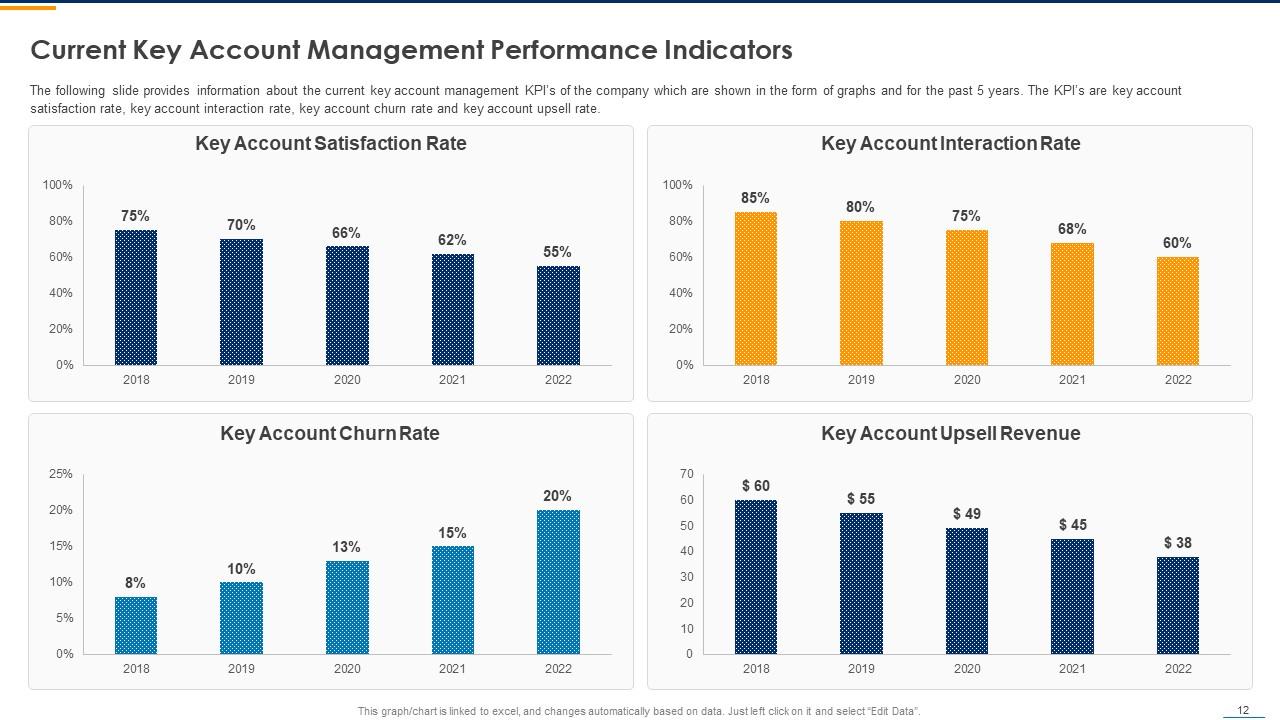
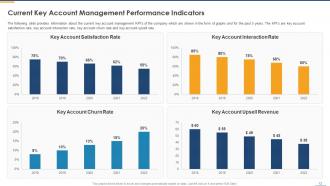
Slide 12: This slide highlights the Current Key Account Management Performance Indicators.
Slide 13: This slide shows the Heading for the Contents to be discussed further.
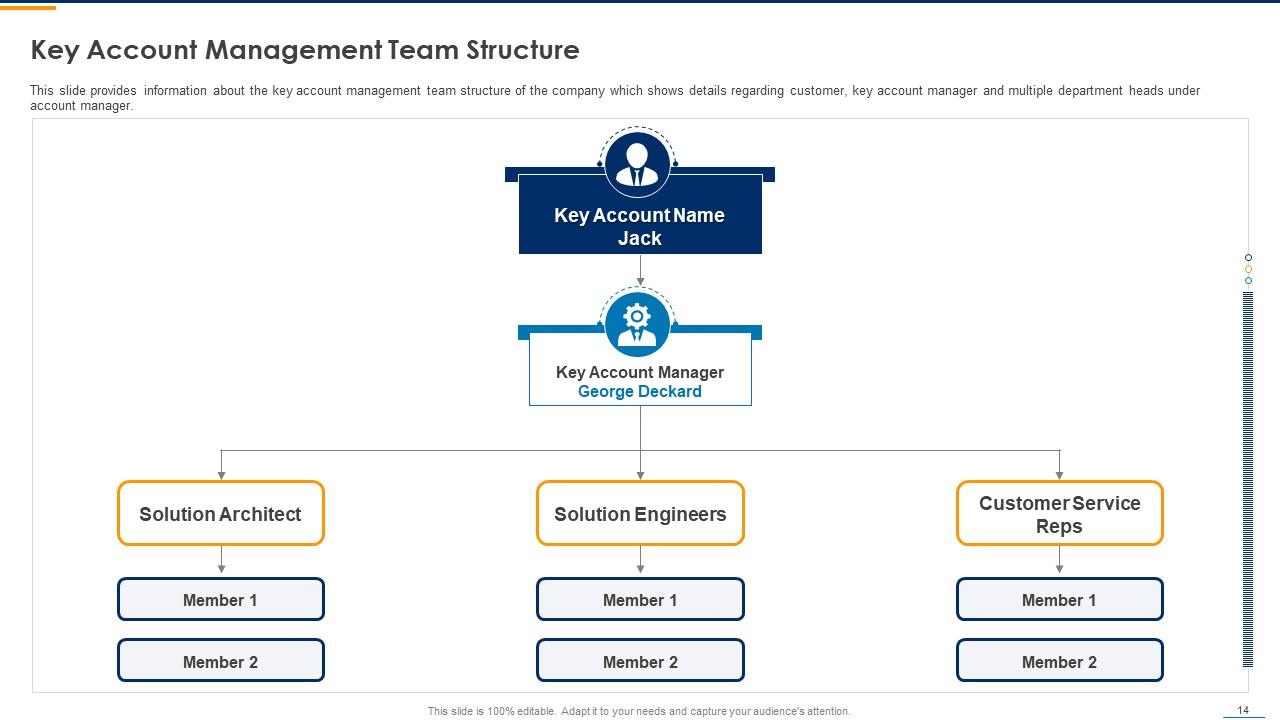
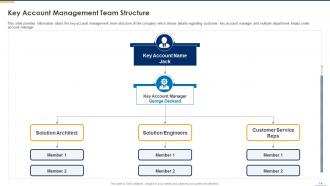
Slide 14: This slide provides information about the Key Account Management Team Structure.
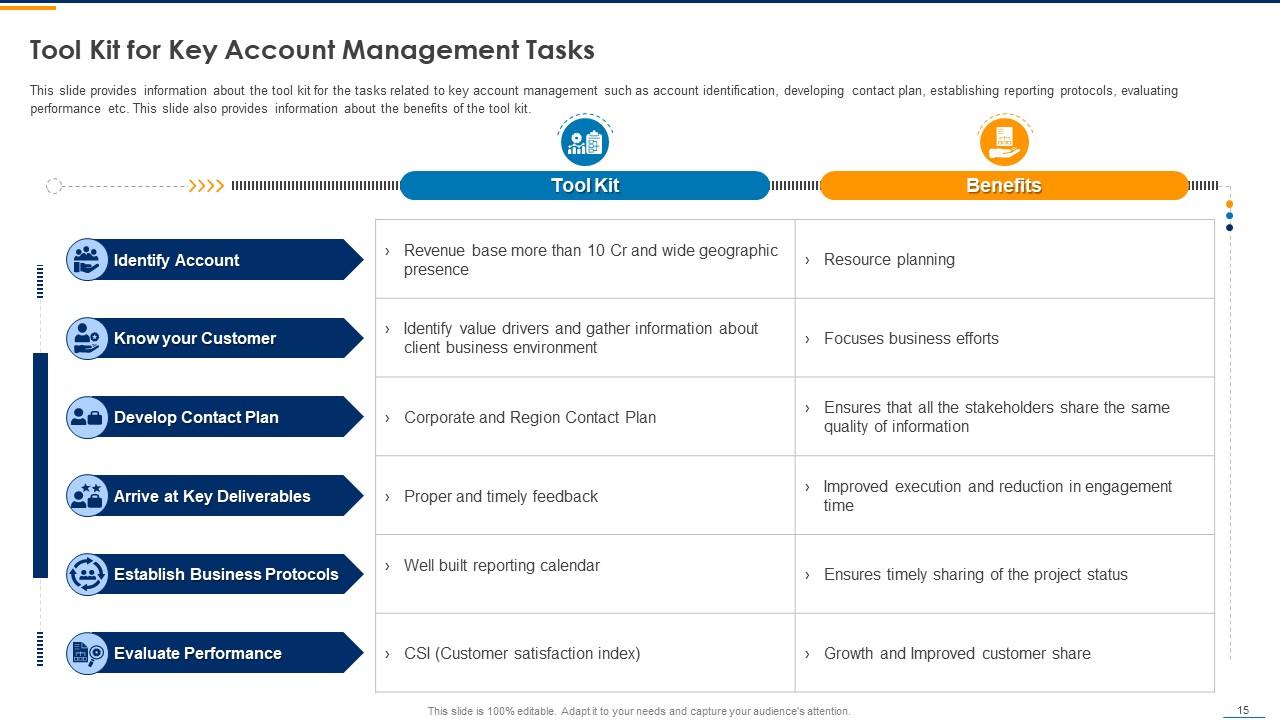
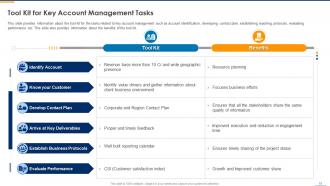
Slide 15: This slide represents the Tool Kit for Key Account Management Tasks.
Slide 16: This slide contains the Heading for the Ideas to be covered in the forth-coming template.
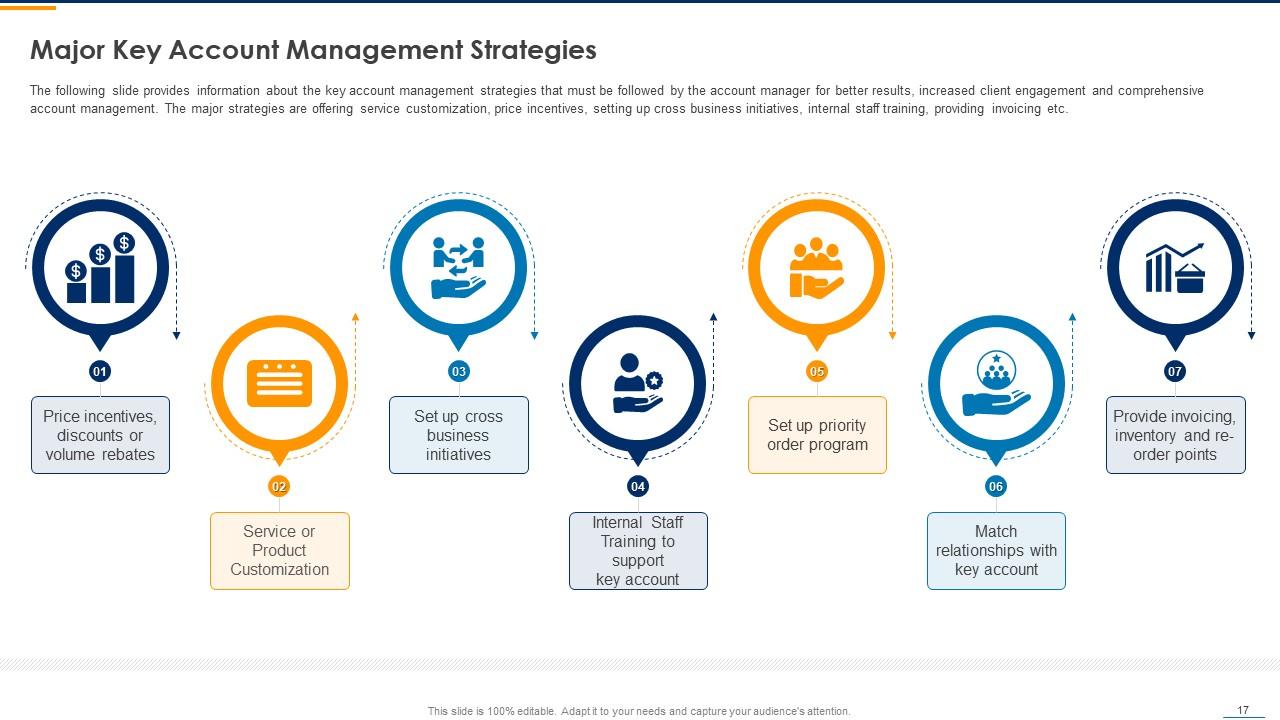
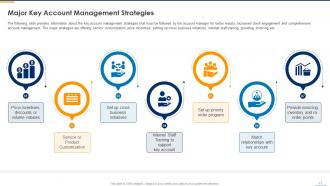
Slide 17: This slide exhibits the Major Key Account Management Strategies.
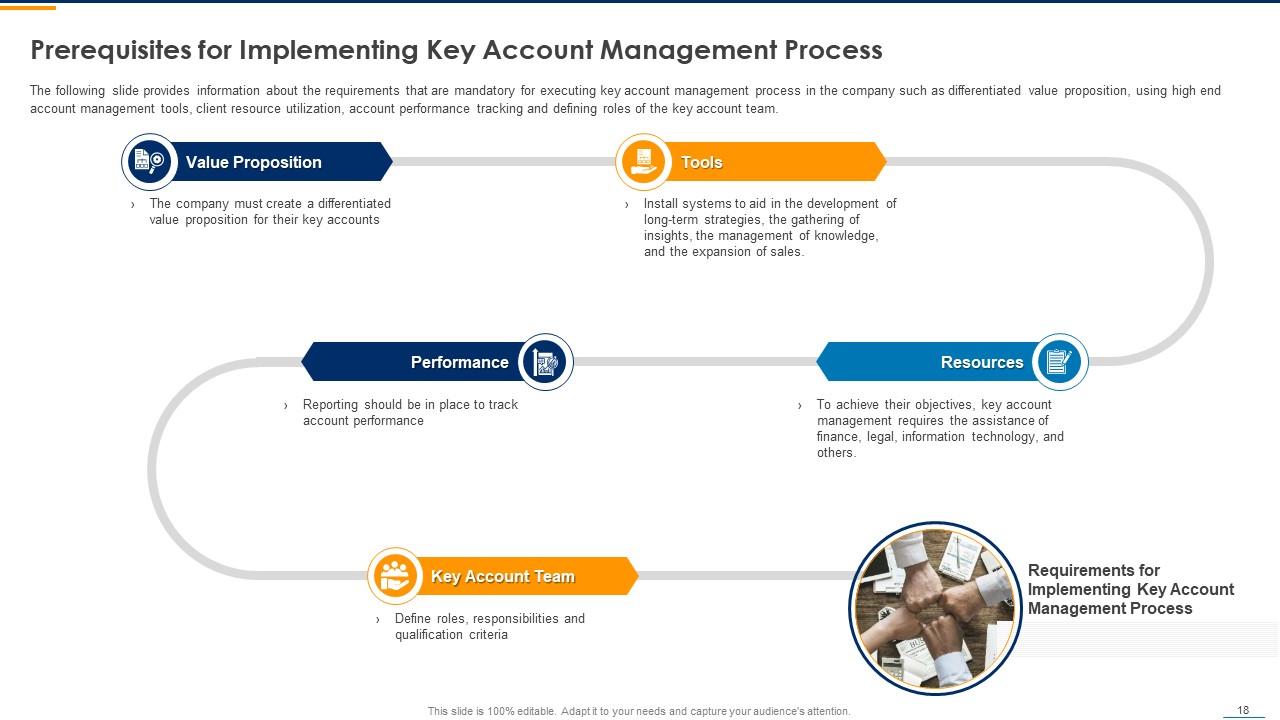
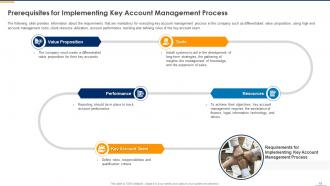
Slide 18: This slide lists the Prerequisites for Implementing Key Account Management Process.
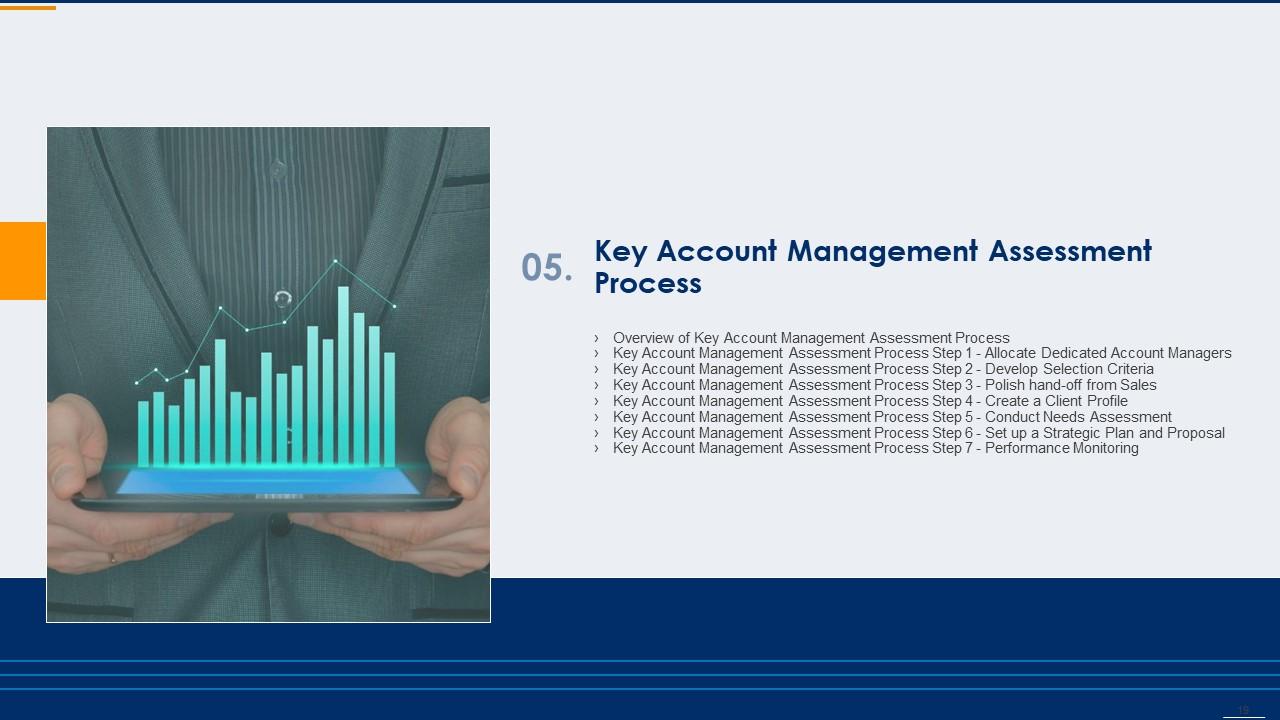
Slide 19: This slide contains the Title for the Topics to be discussed further.
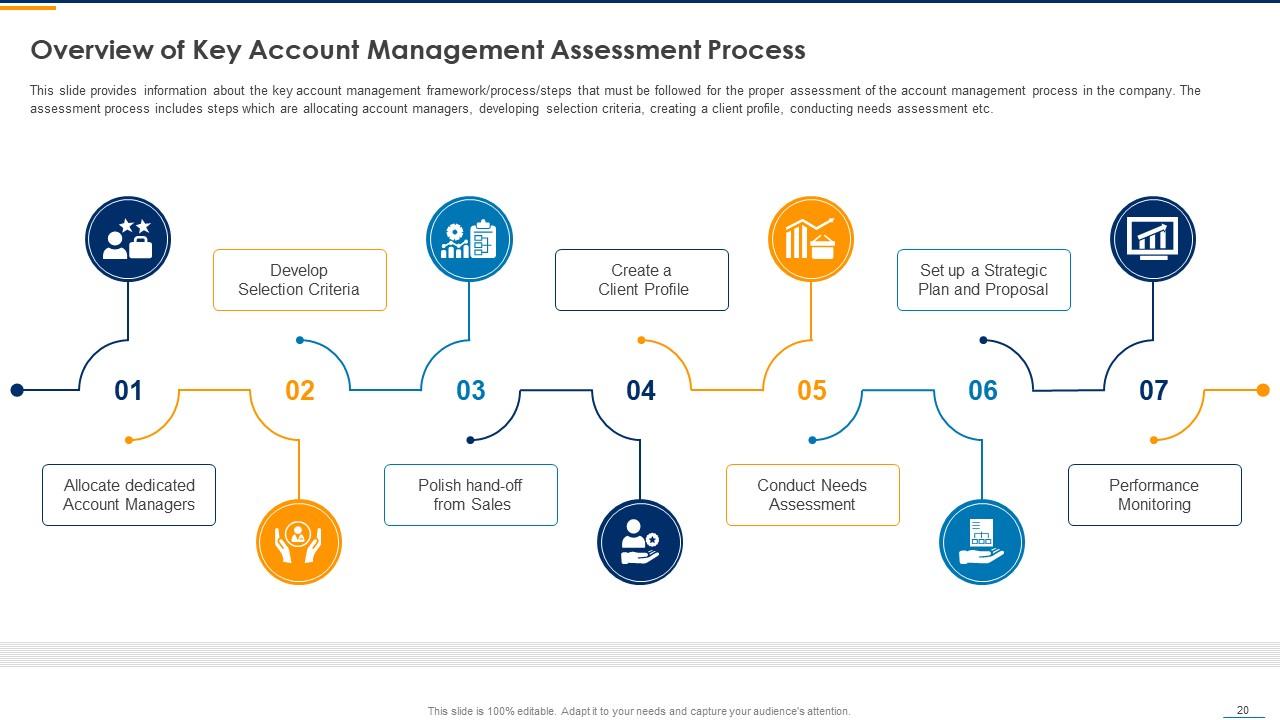
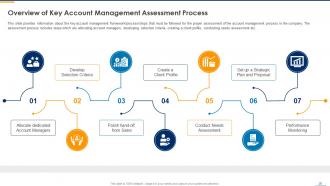
Slide 20: This slide reveals an Overview of Key Account Management Assessment Process.
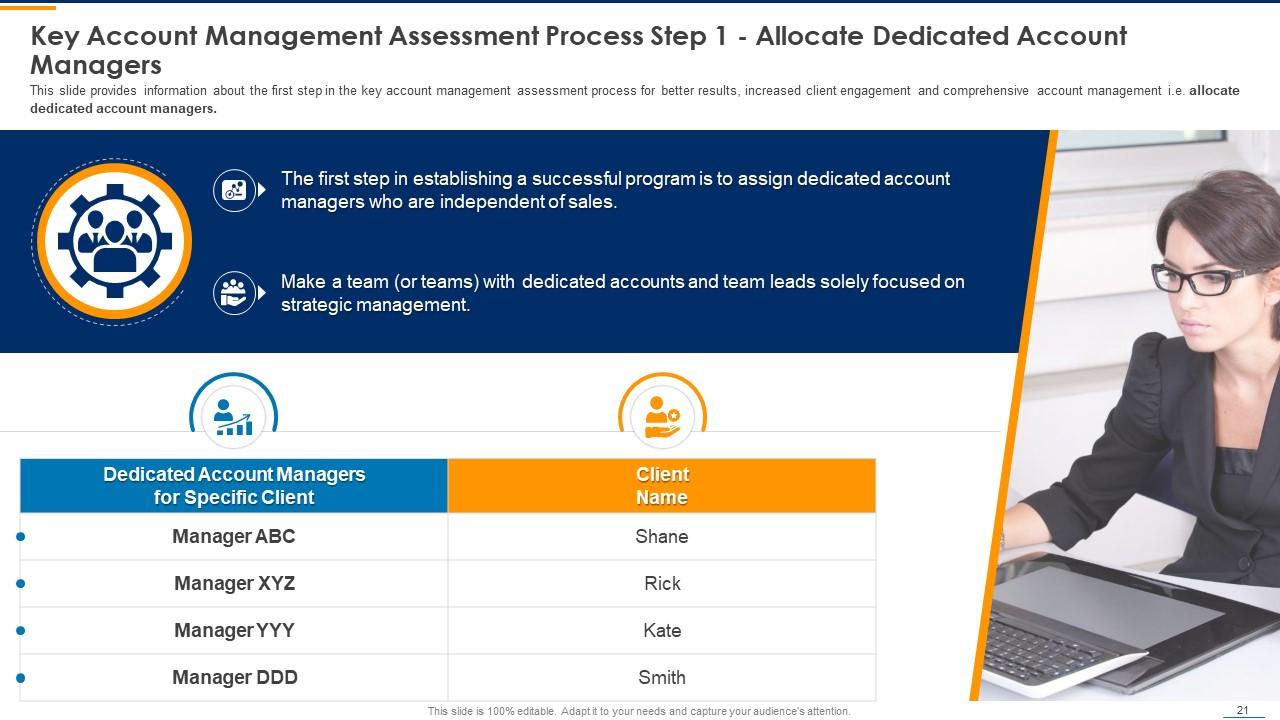
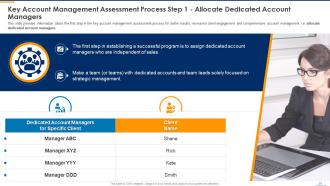
Slide 21: This slide elucidates the First step in the Key Account Management Assessment Process which is to Allocate Dedicated Account Managers.
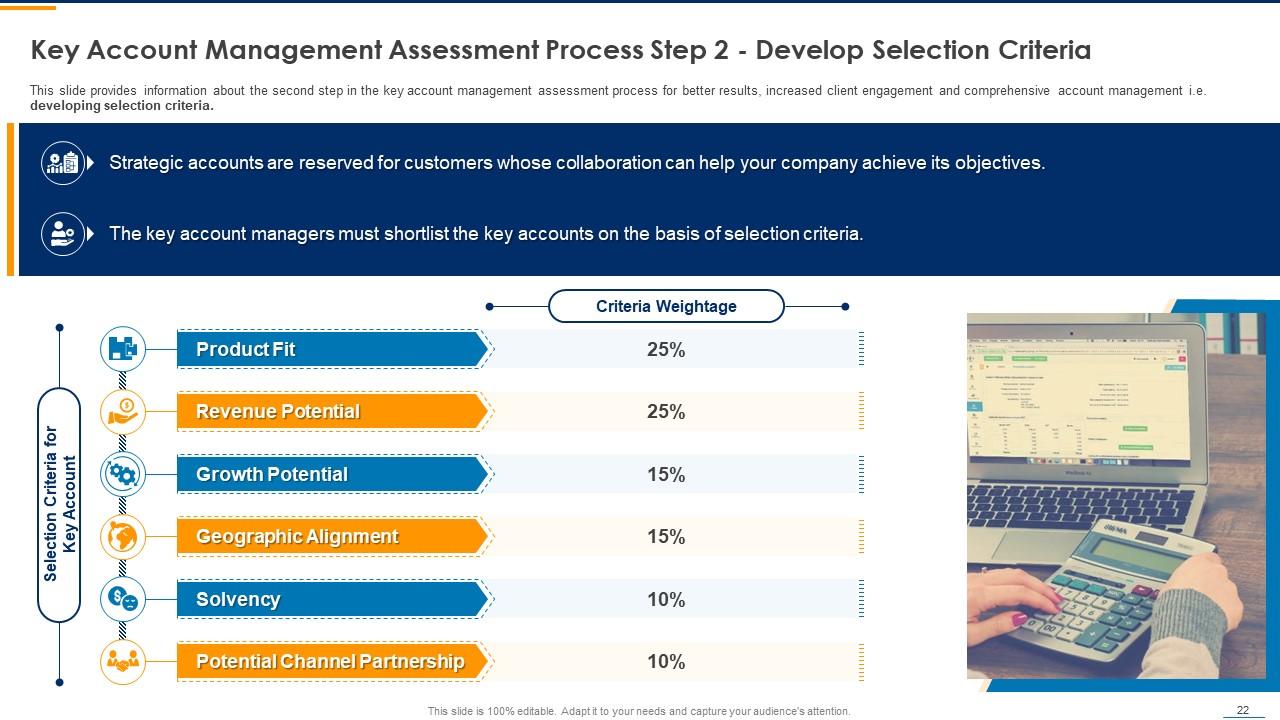
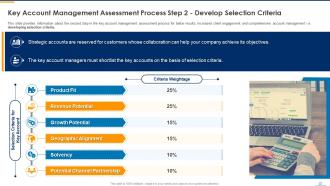
Slide 22: This slide includes the Second step of Developing Selection Criteriain in the Key Account Management Assessment Process.
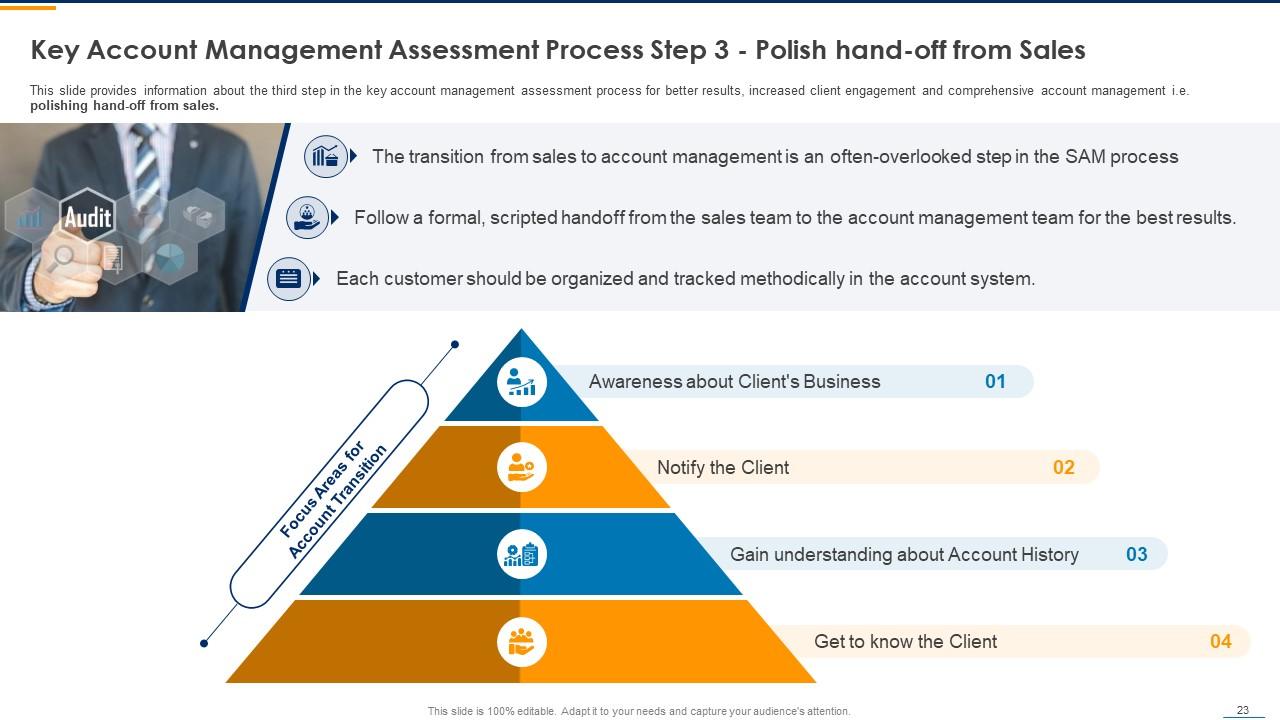
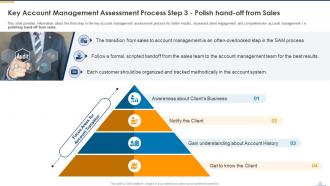
Slide 23: This slide presents the Key Account Management Assessment Process Step 3 which is Polish hand-off from Sales.
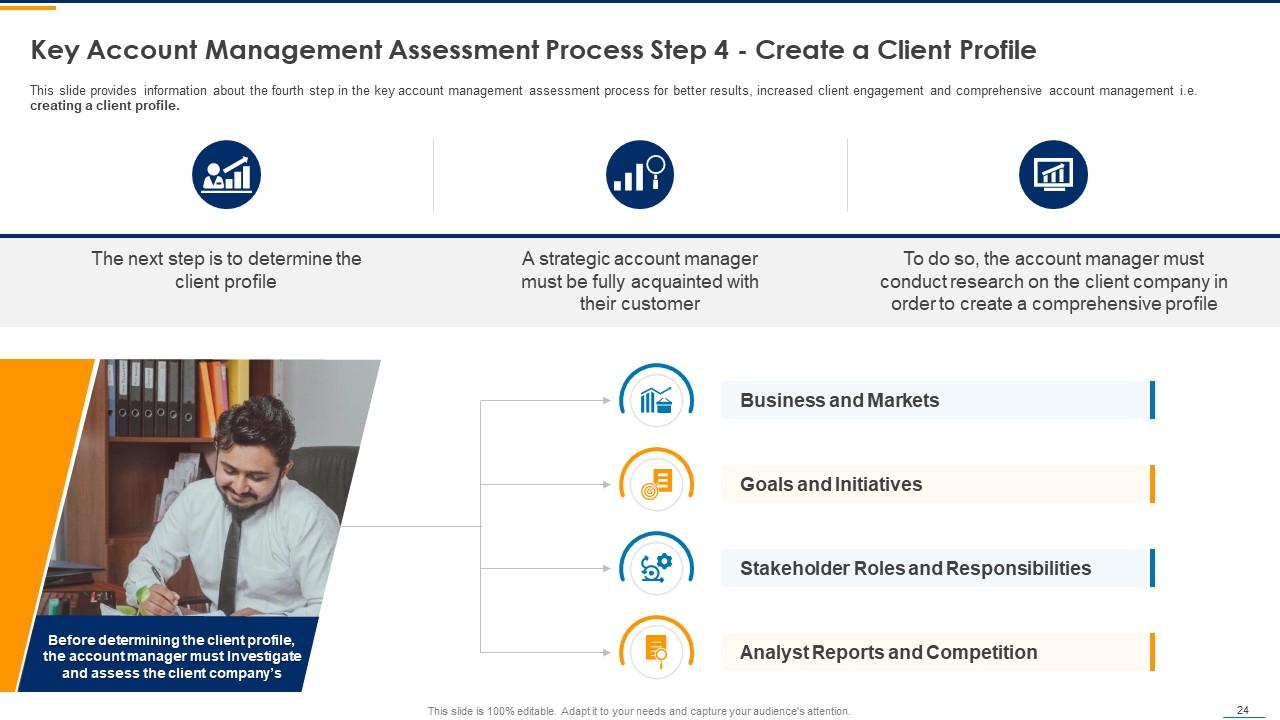
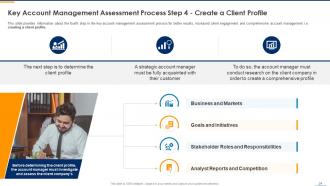
Slide 24: This slide provides information about the Fourth Step of Creating a Client Profile in the Key Account Management Assessment Process.
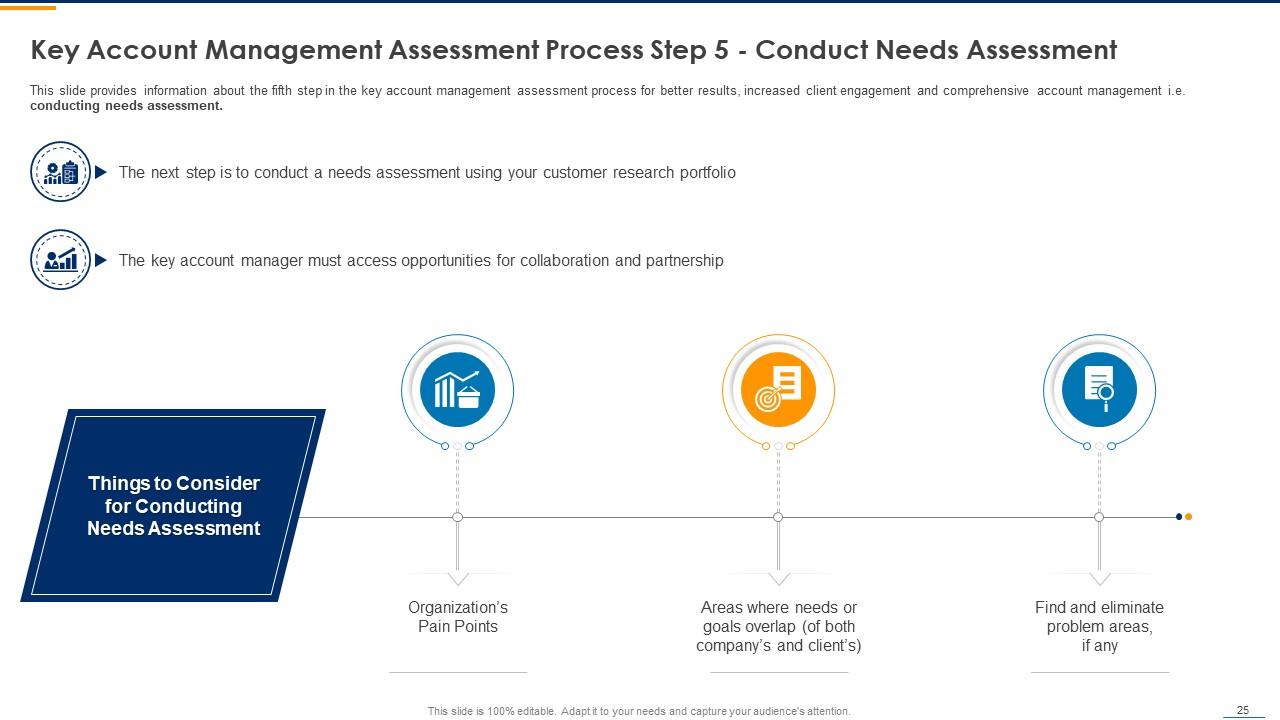
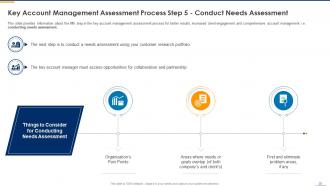
Slide 25: This slide showcases the Fifth step of the process.
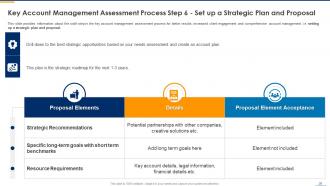
Slide 26: This slide reveals the Sixth step of the concerened process.
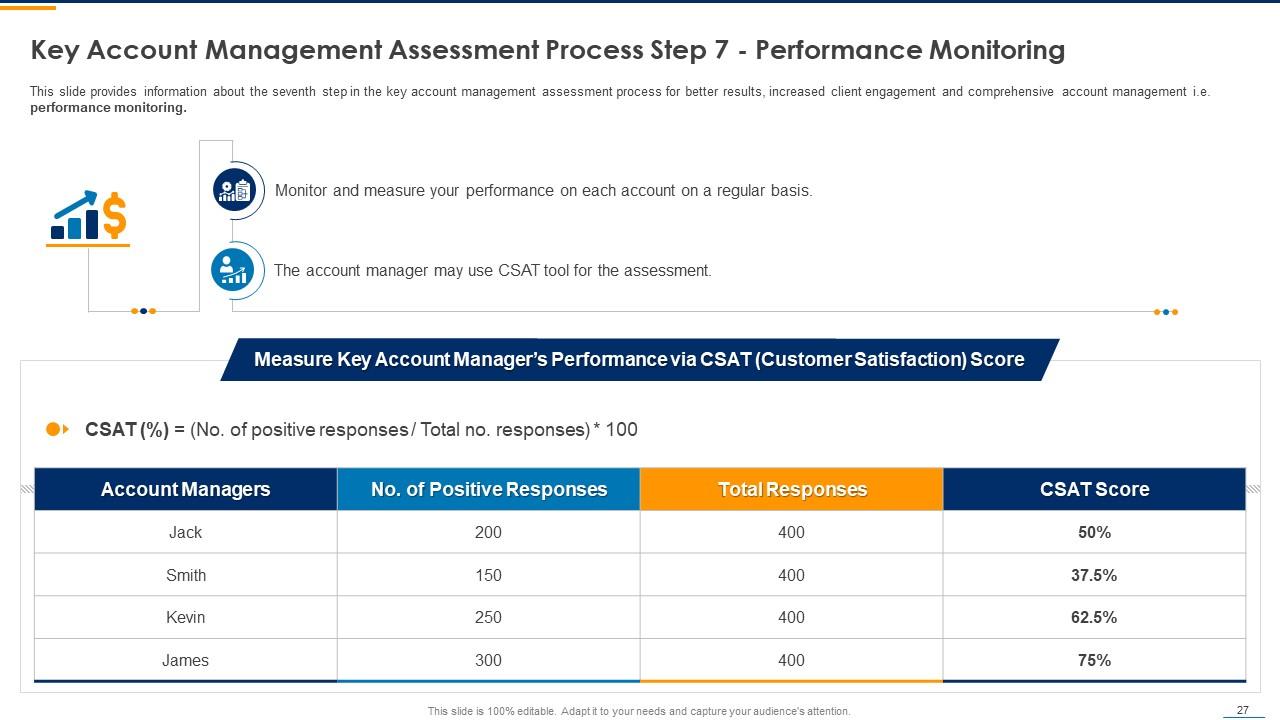
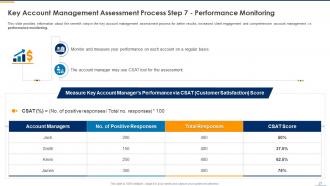
Slide 27: This slide includes the Key Account Management Assessment Process Step 7 which is Performance Monitoring.
Slide 28: This slide covers the Title for the Contents to be covered further.
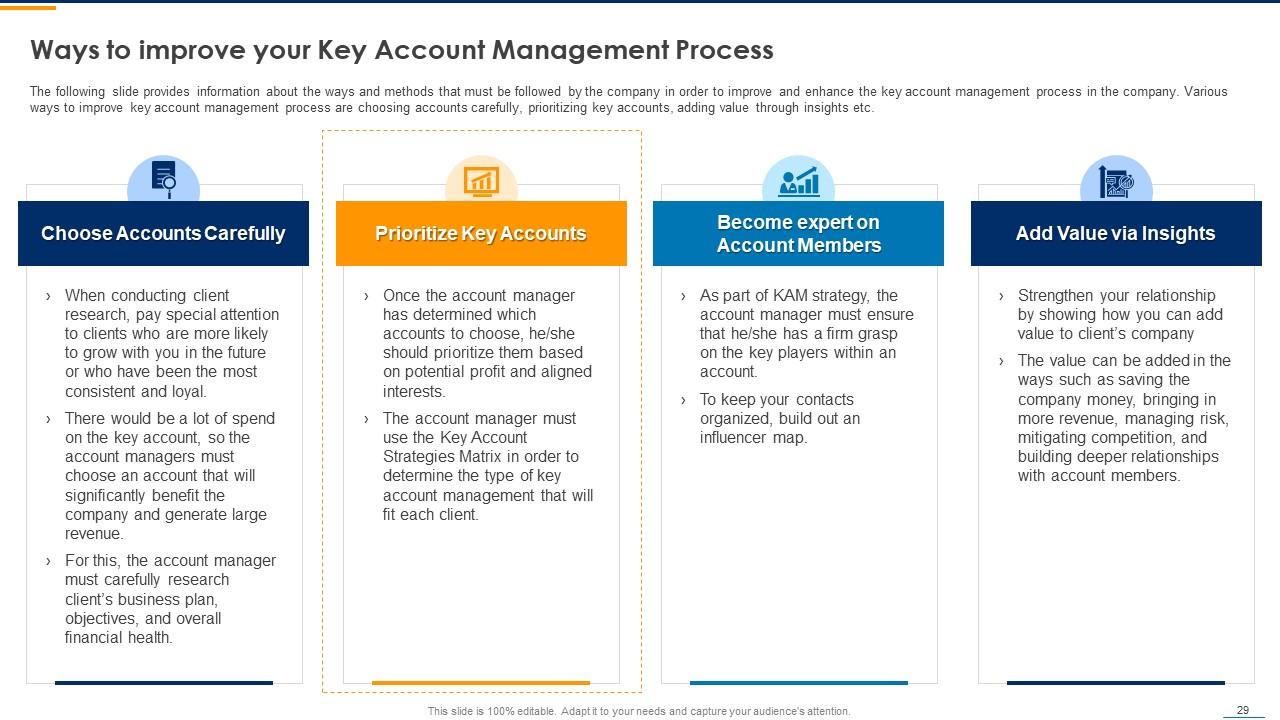
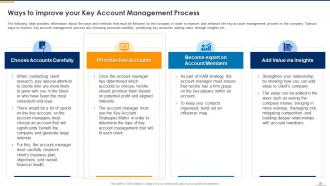
Slide 29: This slide talks about the Ways to improve your Key Account Management Process.
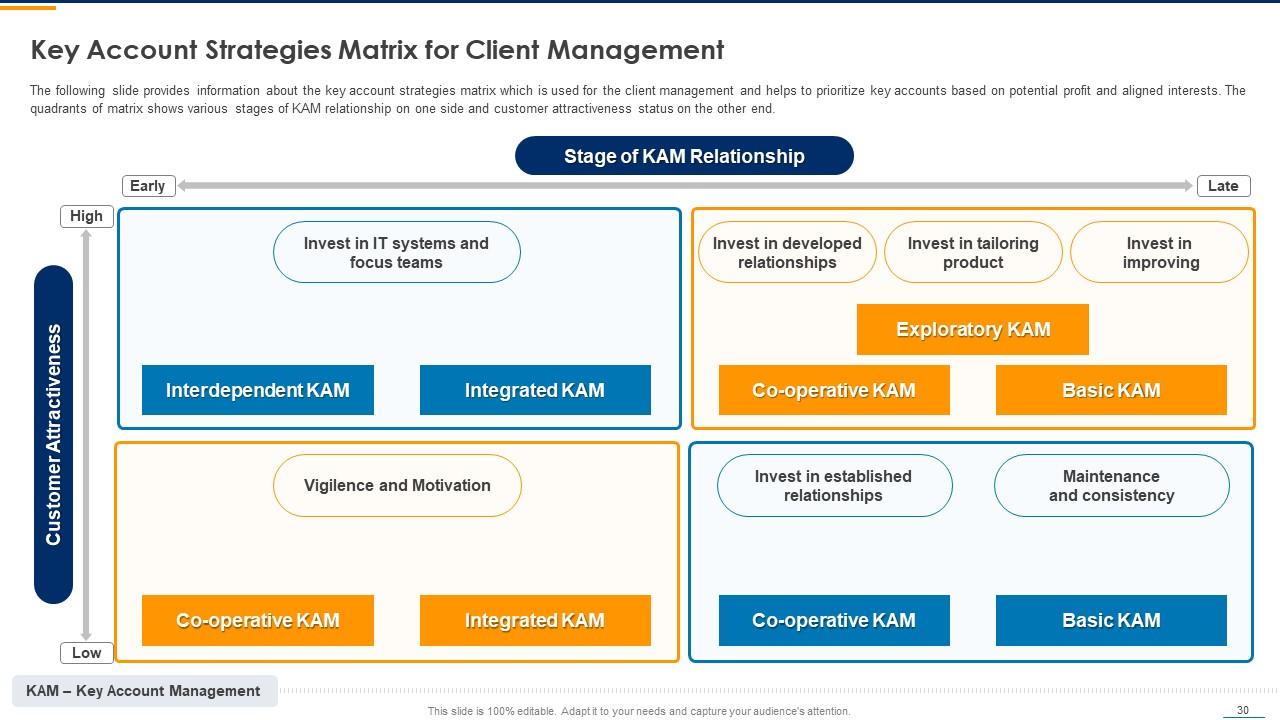
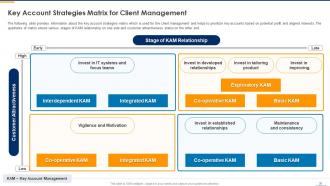
Slide 30: This slide illustrates the Key Account Strategies Matrix for Client Management.
Slide 31: This slide contains the Heading for the Topics to be discussed in the upcoming template.
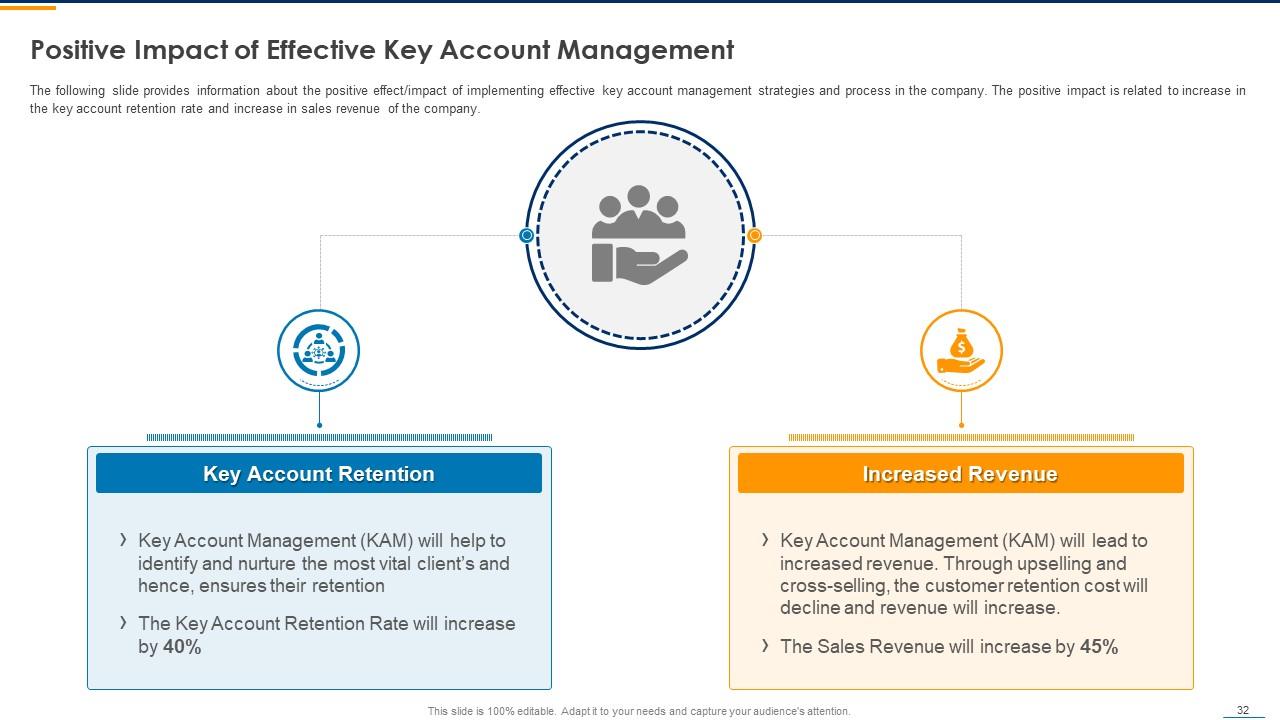
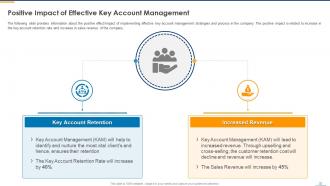
Slide 32: This slide highlights the Positive Impact of Effective Key Account Management.
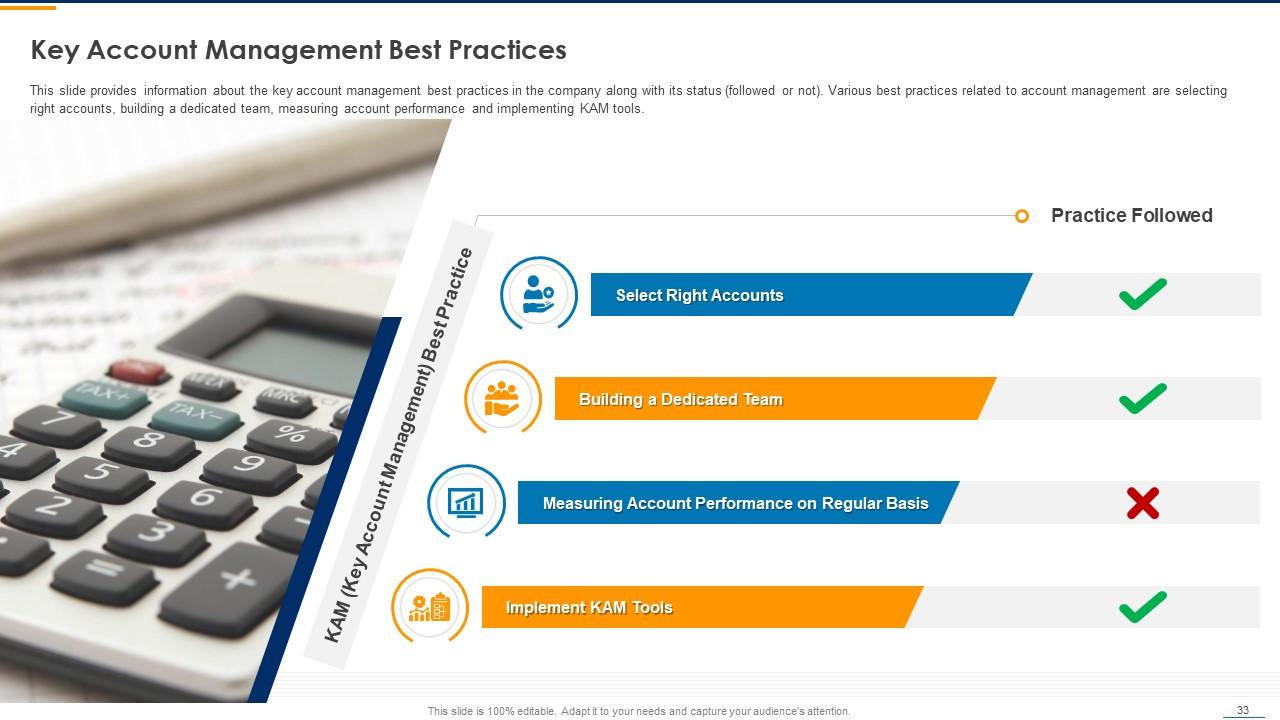
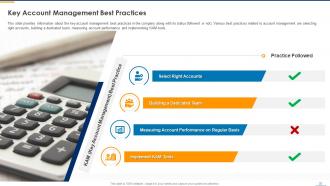
Slide 33: This slide showcases the Key Account Management Best Practices.
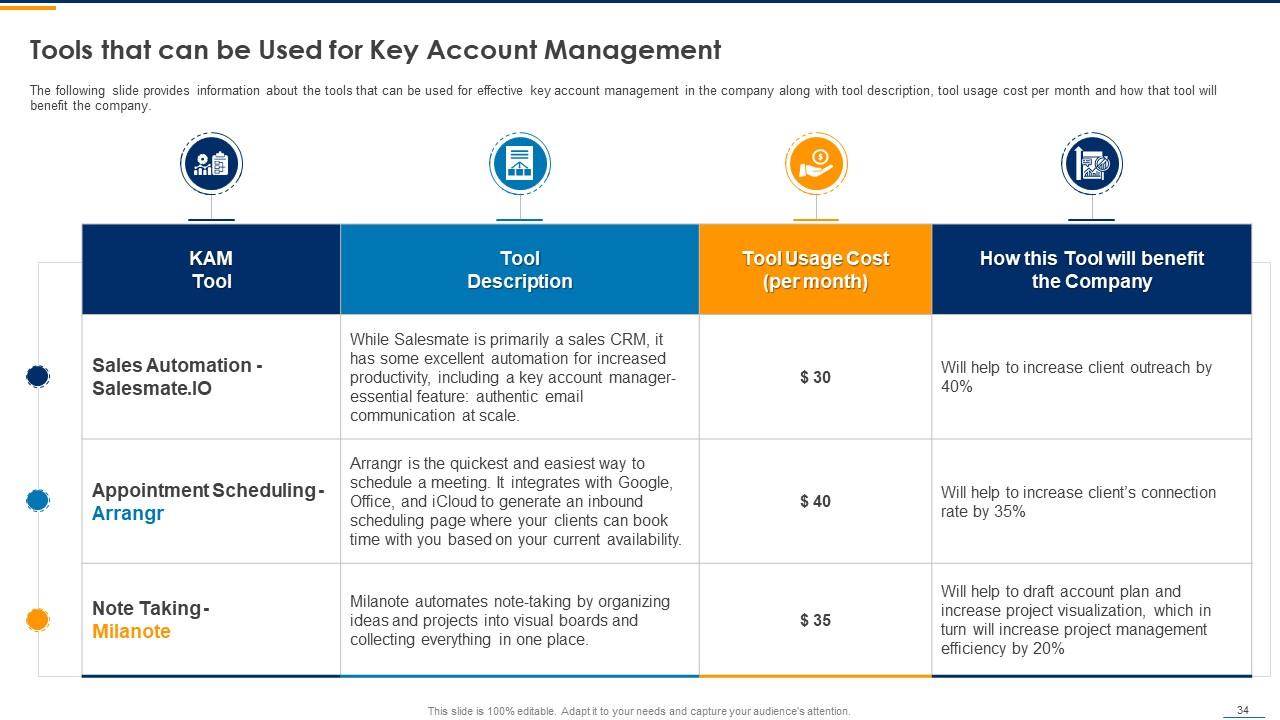
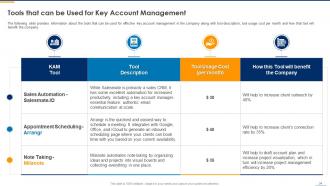
Slide 34: This slide incorporates the Tools that can be Used for Key Account Management.
Slide 35: This is titled as the Additional Slides for additional information.
Slide 36: This slide reveals some extra Company related information.
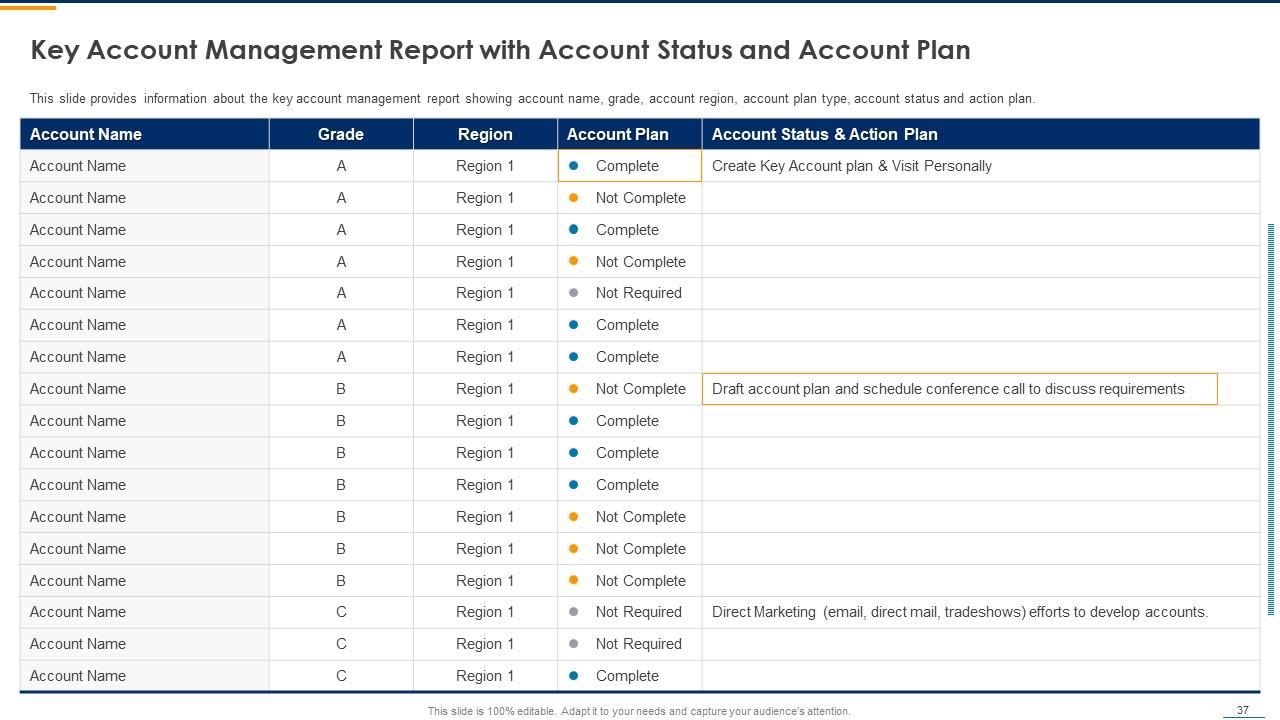
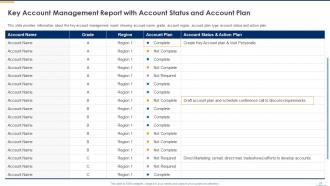
Slide 37: This slide exhibits the Key Account Management Report with Account Status and Account Plan.
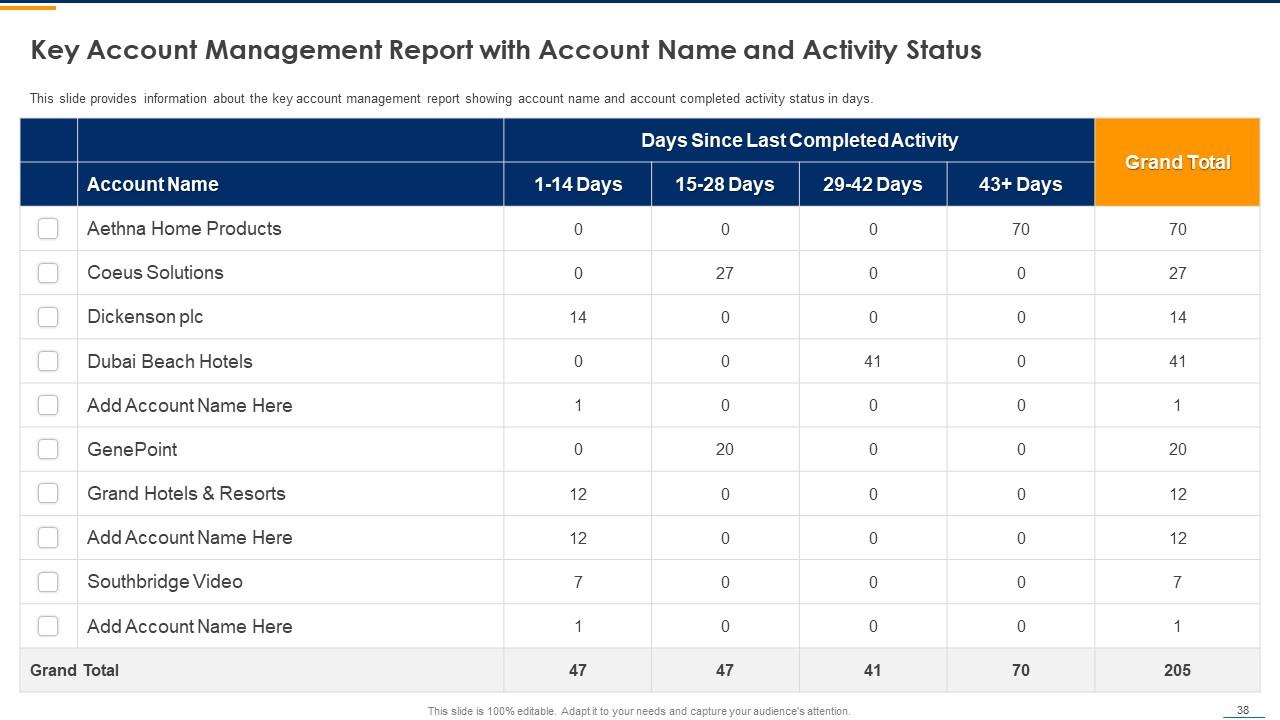
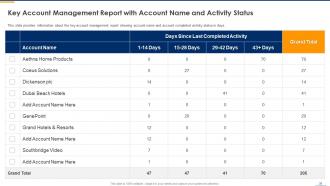
Slide 38: This slide showcases the Key Account Management Report with Account Name and Activity Status.
Slide 39: This slide reveals the Icon Slide for Key Account Management to Monitor Market Trends and Ensure Customer Satisfaction.
Slide 40: This is our About Us slide. State your Company information here.
Slide 41: This is the Mind Map slide with related imagery.
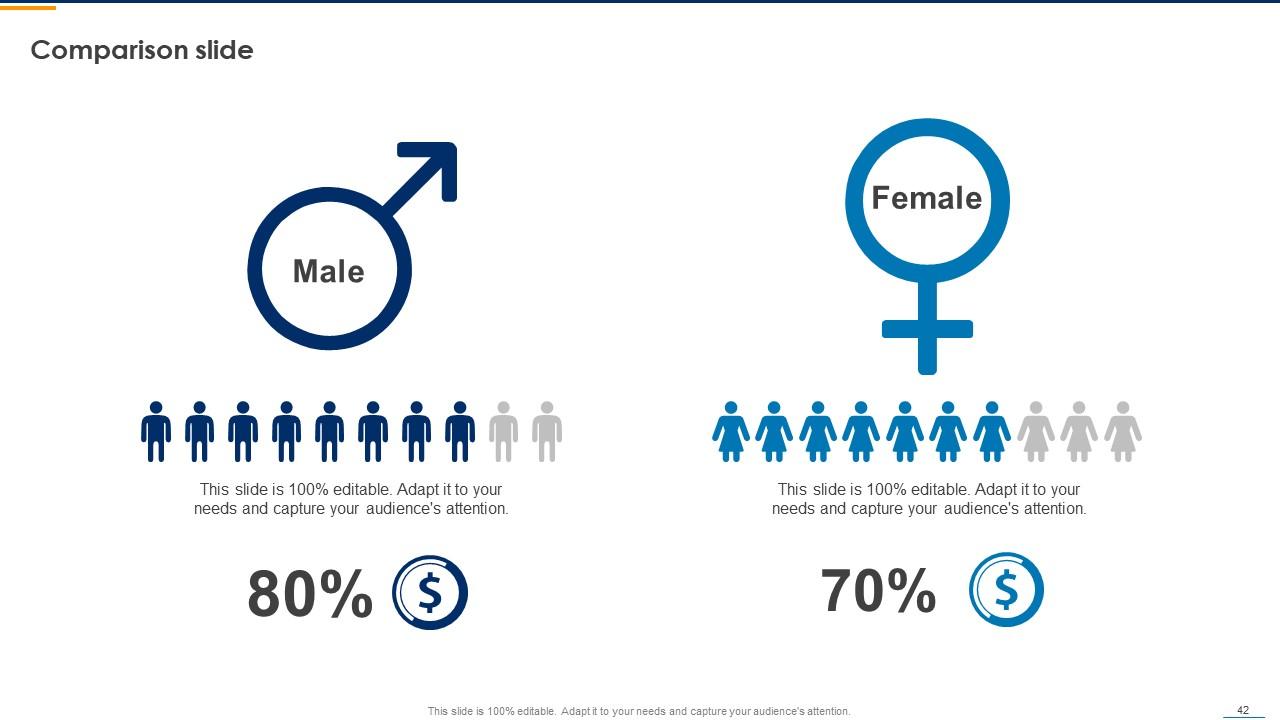
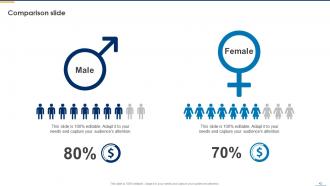
Slide 42: This is the Comparison slide for revealing differences.
Slide 43: This slide shows the Funnel Filter Icon with Arrow for depicting some relevant information.
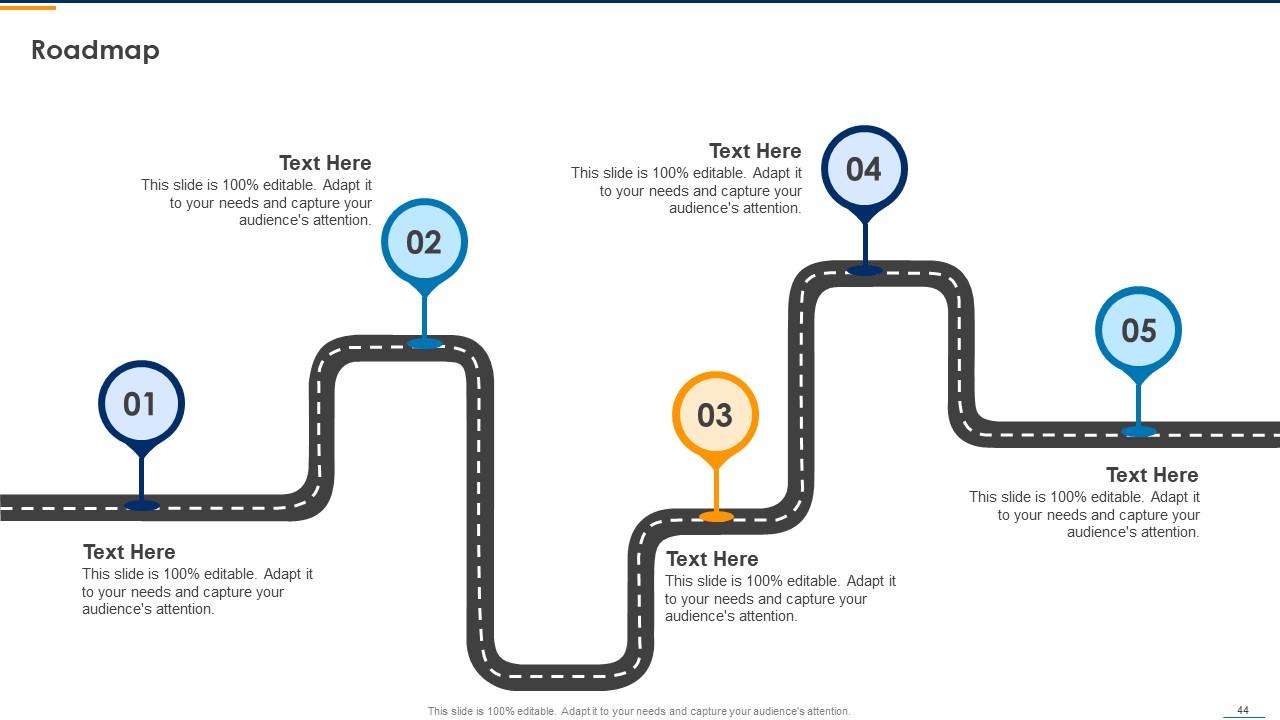
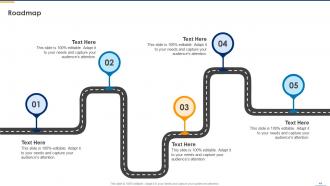
Slide 44: This slide revals the Roadmap for providing Organization related information.
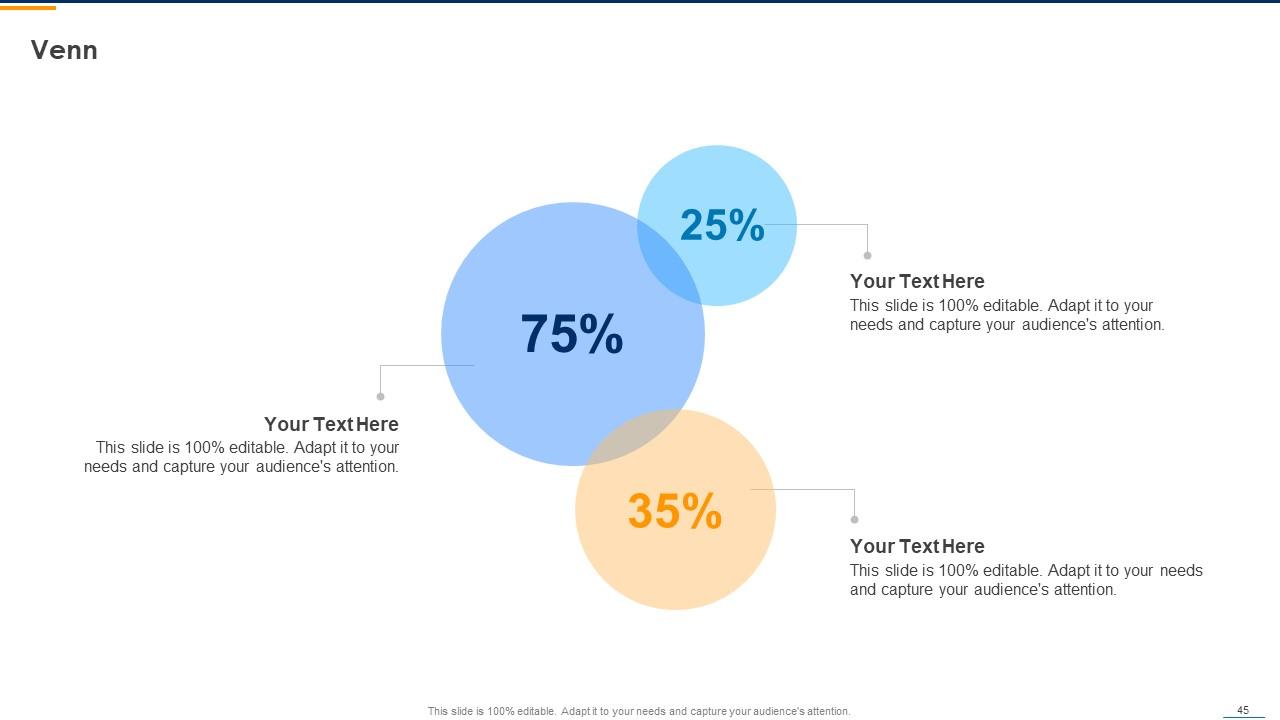
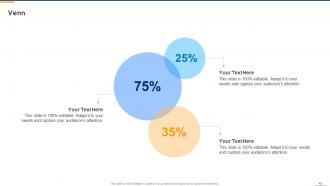
Slide 45: This is the Venn Diagram slide for showcasing some vital information.
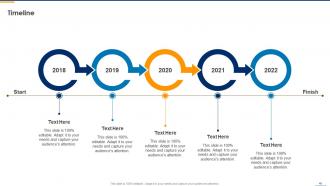
Slide 46: This is the Timeline slide representing Company information with respect to time.
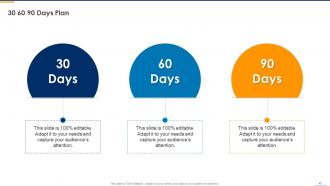
Slide 47: This slide exhibits the 30 60 90 Days Plan for efficient planning.
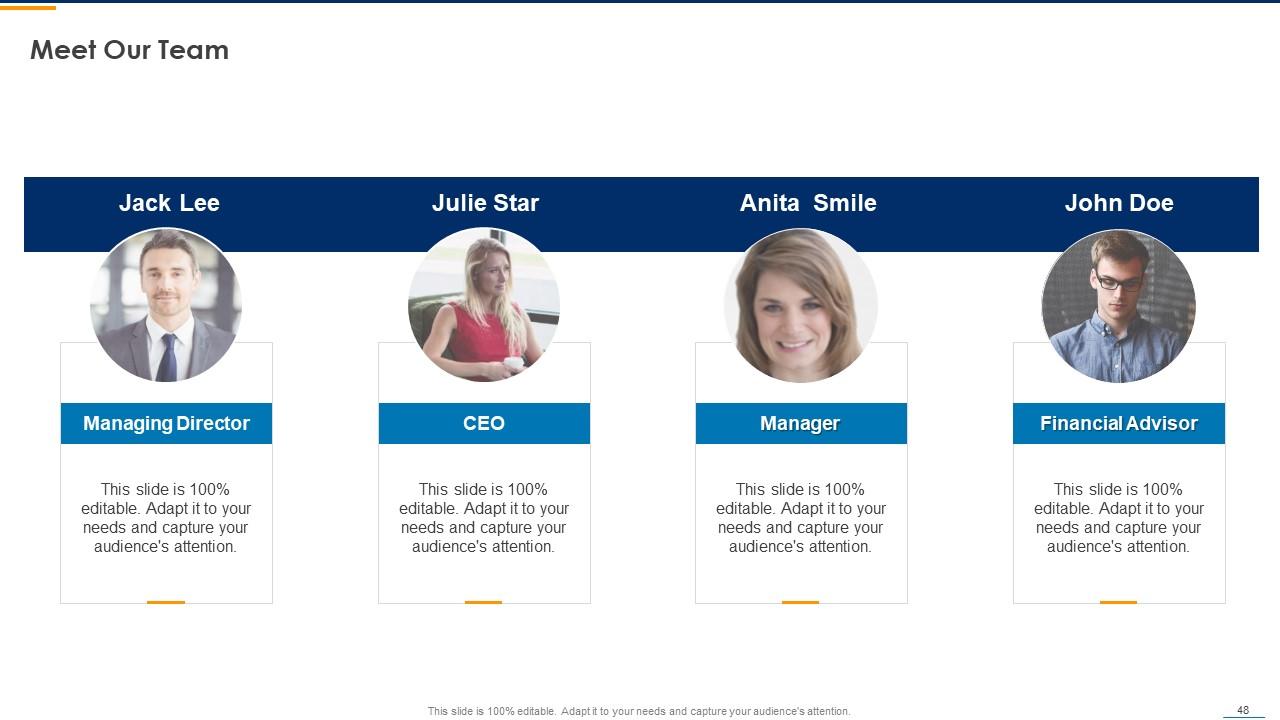
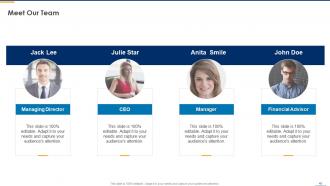
Slide 48: This is Meet Our Team slide. State the information related to your team members here.
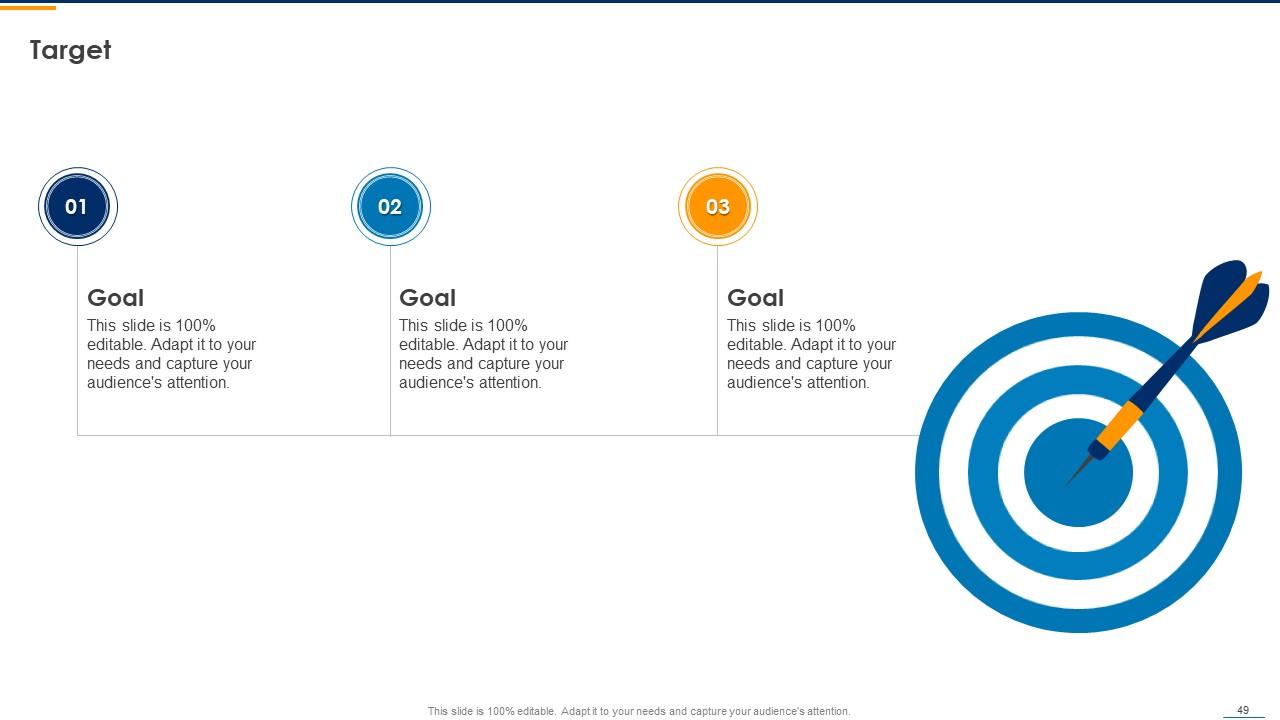
Slide 49: This is the Target slide for displaying the long-term goals of the firm.
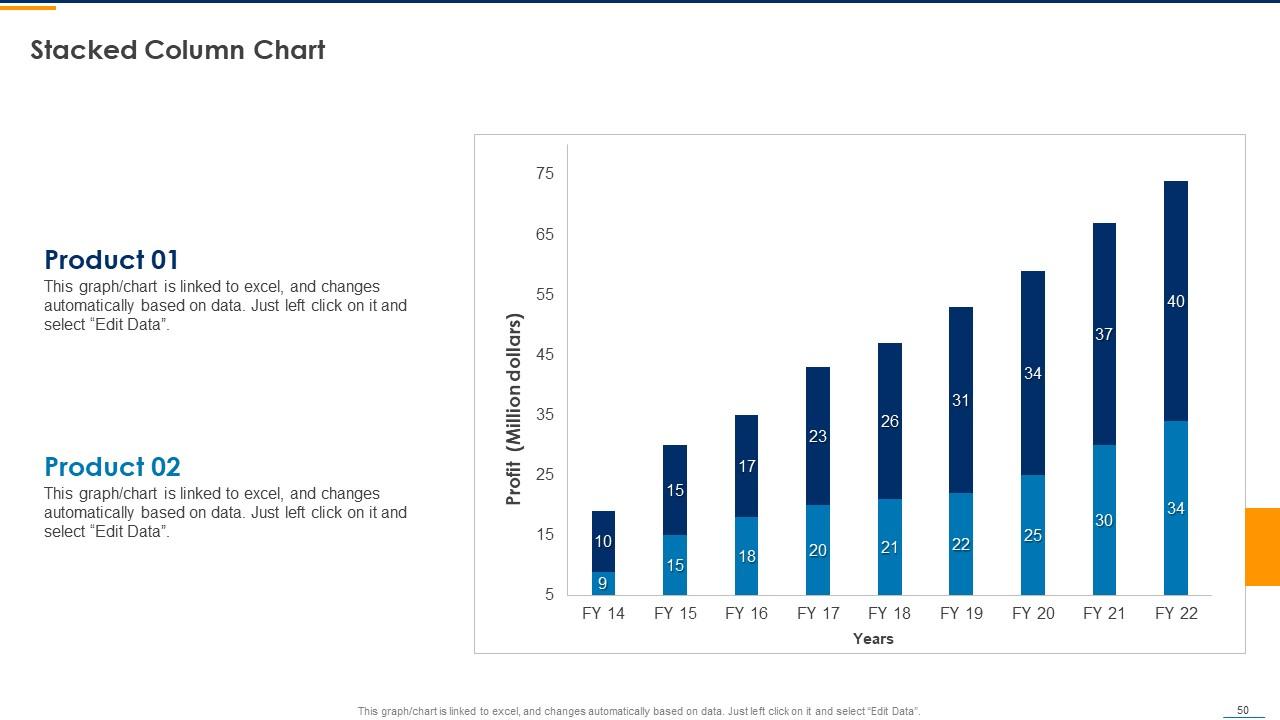
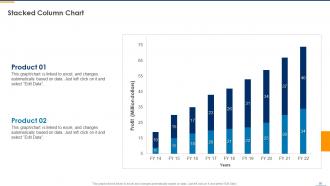
Slide 50: This slide contains the Stacked Column Chart.
Slide 51: This is the Thank You slide for acknowledegement.
Key Account Management To Monitor Market Trends And Ensure Customer Satisfaction Complete Deck with all 56 slides:
Use our Key Account Management To Monitor Market Trends And Ensure Customer Satisfaction Complete Deck to effectively help you save your valuable time. They are readymade to fit into any presentation structure.
-
“I required a slide for a board meeting and was so satisfied with the final result !! So much went into designing the slide and the communication was amazing! Can’t wait to have my next slide!”
-
SlideTeam is very efficient when it comes to saving time. I am happy that I chose them for my presentation.
