Literature review ppt gallery

Rating:
90%
Literature review ppt gallery
Slide 1 of 5
Favourites Favourites

Try Before you Buy Download Free Sample Product

Audience Impress Your
Audience
Editable 100%
Editable
Time Save Hours
of Time
The Biggest Sale is ending soon in
0
0
:
0
0
:
0
0
Rating:
90%
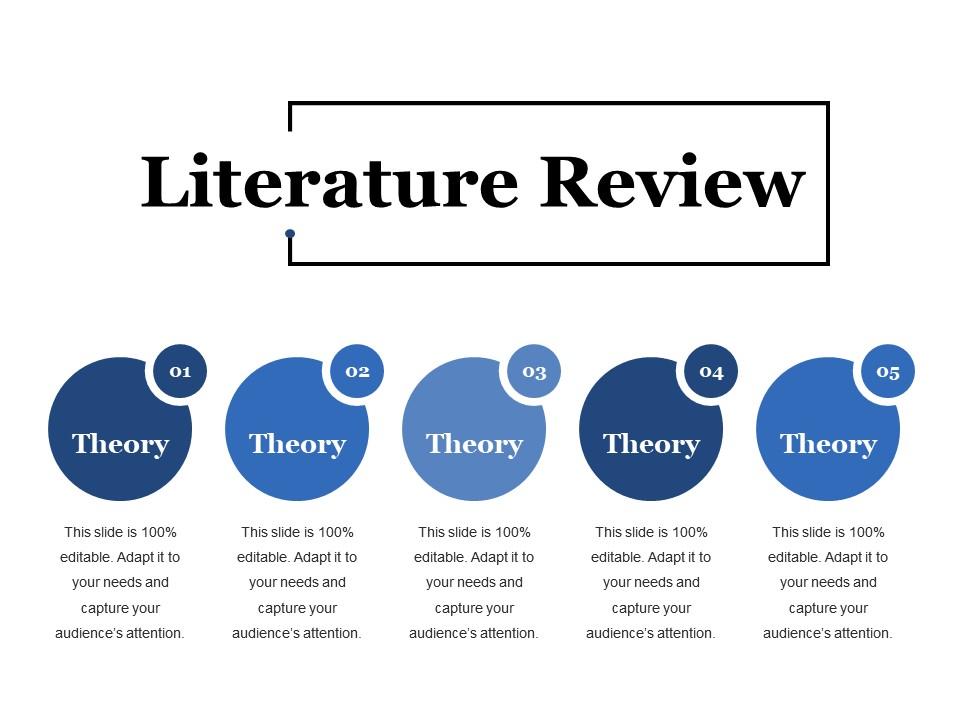
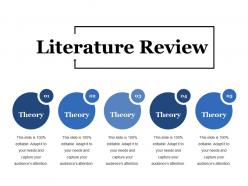
Presenting this set of slides with name - Literature Review Ppt Gallery. This is a five stage process. The stages in this process are Theory.

FAQs for Literature

Okay so for a solid lit review you need four main things. Start with an intro that sets up your research question - pretty straightforward. Then organize everything systematically (I like thematic but chronological works too). Here's the thing though: you've got to actually analyze your sources, not just summarize them like most people do. Wrap it up by identifying gaps and trends. Citations throughout are obvious but seriously, do them as you go or you'll hate yourself later. The real trick? Map out your themes first, then sort sources into those buckets. Don't just go by publication dates - that's usually boring anyway.

Basically, you're mapping out what's already been studied and hunting for the missing pieces. While reading through papers, you'll start noticing patterns - like researchers obsessing over college students but completely ignoring older adults. Methodologies get repeated constantly while other approaches sit unused. Some gaps hit you right away, others are sneaky contradictions between studies. New developments often haven't been researched yet (honestly, academia moves slow). Also watch for limitations that authors mention but never actually tackle. I'd keep notes as you go - those gaps become your justification for why your research actually matters.

Okay so first thing - make a table or spreadsheet to track everything because you'll go insane otherwise, trust me. Group your sources by theme, then look for where they agree vs. where they totally contradict each other. The contradictions are actually super interesting to dig into. Don't just list out what each study says separately - that's boring as hell. Instead, weave them together so you're showing the bigger picture. Use words like "similarly" or "however" to connect ideas. Also watch for gaps where nobody's really studied something yet. Those spots are gold for future research ideas.

Your keyword game seriously determines how thorough your lit review turns out. Stick to obvious terms? You're gonna miss a ton of relevant stuff that uses different language or tackles things from weird angles. I bombed my first review doing exactly this lol. Brainstorm synonyms, related ideas, even old-school terminology researchers used back in the day. Mix up your search combinations and Boolean operators too. Start super broad, then narrow it down - trust me, filtering out junk papers beats realizing you missed entire research areas later. Way less painful that way.

Honestly, peer-reviewed stuff is like your safety net for lit reviews. You're showing that actual experts already looked over the research and said "yeah, this checks out" instead of just grabbing whatever pops up on Google Scholar. I know it's annoying when you find this amazing study that isn't peer-reviewed yet - been there. But your professors and readers will totally respect your work more when they see those legit journal names. I'd shoot for around 80% peer-reviewed sources. Trust me, it makes your whole argument way stronger and nobody questions your credibility.

Honestly, the biggest thing is setting your search criteria first and actually sticking to them. Don't just hit up Google Scholar - use multiple databases even if they're annoying to navigate. Include studies that go against what you think you'll find (ugh, I know). Document everything so someone else could follow your exact steps. Oh, and get a colleague to double-check which studies you kept vs. tossed - they'll spot stuff you missed. Keep a simple spreadsheet tracking why each source made the cut or got rejected. Basically, be systematic instead of just grabbing whatever supports your point.

Honestly, I'd start by skimming like 10-15 sources to see what themes keep coming up. Then pick whether you want to organize by topic or chronologically - just commit to one approach from the start. If you're doing themes, concept maps work well, or Zotero with custom tags. I'm weirdly obsessed with color-coding everything in spreadsheets because it makes patterns so obvious. For chronological stuff, just make a simple timeline or table with dates and key points. The main thing is don't try forcing sources into categories you made up beforehand - let the patterns emerge first, then build your system around what you actually find.

Honestly, get Zotero or Mendeley first - they'll save your sanity with citations. Database filters are a game changer too, way better than scrolling through random papers for hours. There's AI tools now that can summarize articles, which is pretty cool, but definitely still read the originals because those summaries miss stuff sometimes. Oh, and citation analysis shows you the heavy-hitter papers everyone references. I probably should've mentioned that earlier. Start with the reference manager though - you'll thank me later when you're not frantically hunting down sources at 2am.

Check if it's peer-reviewed first - that's honestly the biggest thing. Author credentials matter too, so don't skip those bios even though they're kinda boring sometimes. How recent is the research? Make sure it actually relates to what you're studying. If there's data involved, look at their methods - some studies are just... not great. Oh and watch for obvious bias in how they present stuff. I'd make a quick checklist with these points so you're not forgetting anything when you're buried in sources. Trust me, it saves time later.

Think of your lit review as building a case for why your research actually matters. You're showing the evidence trail that led to your hypothesis and pointing out gaps you'll fill. It's way more interesting than just summarizing a bunch of sources though - you need to actively connect them to your specific research questions. The review justifies your methodology choices and gives context for interpreting results later. Plus it shows you actually understand what's been studied before (profs love that). Don't forget to demonstrate how your study fits into the bigger scholarly conversation happening in your field.

Honestly, think of it like creating a roadmap of where your field has been and where it's headed next. You're pulling together existing research, spotting the gaps, then suggesting what should happen next. It's probably the fastest way to prove you actually know your stuff too. Don't just summarize though - that's boring. Make connections between studies that maybe their authors never even thought of. Challenge the big theories if they're wrong. Sometimes you'll find contradictions everyone else missed, which is gold. Your job is curating and interpreting, not regurgitating. The real magic happens when you synthesize everything in a way that's uniquely yours.

Honestly, most people just summarize everything instead of actually analyzing it - that's like the

Ratings and Reviews

90% of 100
Review Form
Write a review
Most Relevant Reviews
  1. 100%

    by Devon Ferguson

    Informative design.
  2. 80%

    by Ethan Sanchez

    Excellent Designs.

2 Item(s)

per page: