Man climbing mountain image

Man climbing mountain image
Slide 1 of 6
Favourites Favourites

Try Before you Buy Download Free Sample Product

Audience Impress Your
Audience
Editable 100%
Editable
Time Save Hours
of Time
The Biggest Sale is ending soon in
0
0
:
0
0
:
0
0
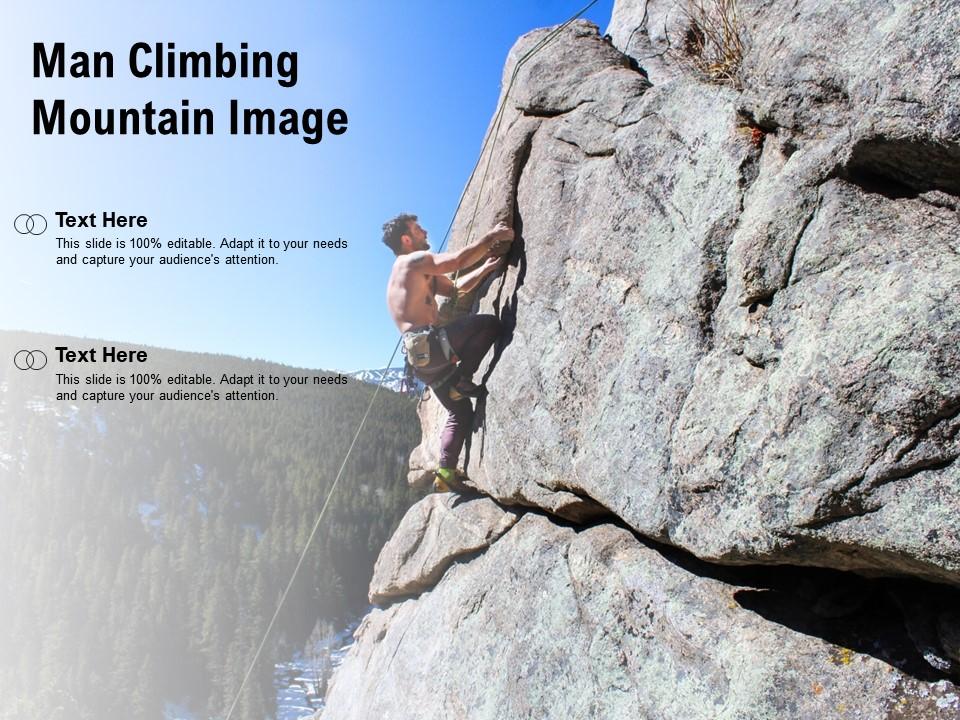
Presenting this set of slides with name Man Climbing Mountain Image. This is a one stage process. The stages in this process are Our Vision, Mission, Goal. This is a completely editable PowerPoint presentation and is available for immediate download. Download now and impress your audience.

People who downloaded this PowerPoint presentation also viewed the following :

FAQs for Man

Essential mountain climbing gear includes climbing harnesses, dynamic ropes, helmets, crampons, ice axes, and weatherproof clothing systems. These equipment categories enhance safety and performance by providing reliable protection, secure anchoring, and environmental adaptation, with experienced mountaineers finding that strategic gear selection ultimately delivers successful summit attempts and minimizes expedition risks.

Climbers assess route risks by evaluating weather conditions, rock quality, technical difficulty ratings, exposure levels, and escape route availability. Through systematic risk management approaches, mountaineers analyze terrain hazards, equipment requirements, and team experience levels, while maintaining contingency plans and communication protocols, ultimately enabling safer ascents and reducing accident rates across alpine, technical, and expedition climbing environments.

High-altitude climbing presents psychological challenges including altitude-induced cognitive impairment, decision-making deterioration, isolation anxiety, fear management, and mental fatigue from oxygen deprivation. These factors compound by creating doubt cycles, impaired judgment during critical moments, and emotional volatility, with many experienced climbers finding that mental preparation and systematic acclimatization protocols ultimately deliver better outcomes than physical conditioning alone.

Altitude sickness affects climbers through reduced oxygen levels causing headaches, nausea, fatigue, and potentially life-threatening conditions like pulmonary or cerebral edema. Preventative measures include gradual ascent with acclimatization days, staying hydrated, avoiding alcohol, recognizing early symptoms, and descending immediately when severe symptoms appear, with experienced mountaineers often carrying supplemental oxygen and medications like acetazolamide for enhanced safety.

Physical fitness plays a crucial role in mountain climbing preparation, encompassing cardiovascular endurance, muscular strength, flexibility, balance, and mental resilience. These fitness components work together by reducing injury risk, improving oxygen efficiency at altitude, and enhancing overall performance, with many climbers finding that comprehensive conditioning ultimately delivers safer ascents and more enjoyable experiences.

Weather conditions significantly impact climbing strategies through route selection, timing adjustments, equipment modifications, and safety protocol enhancements. Climbers adapt by monitoring forecasts, implementing layered clothing systems, adjusting ascent schedules, and establishing emergency contingencies, with many mountaineering teams finding that proactive weather planning ultimately delivers safer expeditions and higher success rates.

Environmental impacts of mountain climbing include trail erosion, waste accumulation, vegetation damage, wildlife disruption, and carbon emissions from travel. Climbers can minimize their footprint by following Leave No Trace principles, using established trails, packing out all waste, choosing local destinations when possible, and supporting eco-certified guide services, ultimately preserving these natural environments for future generations.

Rock climbing emphasizes balance, grip strength, and precise footwork on natural or artificial holds, while ice climbing requires specialized tools like axes and crampons for frozen surfaces. Alpine climbing combines both techniques with additional skills for mixed terrain, weather navigation, and multi-day expeditions, with many mountaineers finding that mastering all three disciplines ultimately delivers greater versatility and safety margins in diverse mountain environments.

Best practices for navigation in remote mountain areas include GPS devices with offline maps, traditional compass and topographic map skills, route planning with bailout options, landmark identification, and weather monitoring systems. These techniques enhance safety by providing multiple navigation methods, enabling accurate position tracking, and facilitating emergency route adjustments, with many mountaineering organizations finding that redundant navigation systems significantly reduce rescue incidents while improving expedition success rates.

Teamwork and communication are absolutely critical during mountain expeditions, as they directly impact safety, decision-making, and summit success through coordinated route planning, risk assessment, and emergency response protocols. Effective climbing teams streamline operations by sharing workloads, monitoring each other's conditions, and maintaining clear communication channels, ultimately delivering enhanced safety margins and higher expedition success rates across challenging alpine environments.

Historical milestones in mountain climbing include the first Mount Everest summit in 1953, the development of modern climbing equipment in the 1960s, the introduction of sport climbing techniques, the establishment of international safety standards, and the rise of commercial expedition services. These developments have transformed mountaineering by enhancing safety protocols, improving accessibility for diverse skill levels, and creating sustainable tourism opportunities, with many adventure companies finding that structured programs deliver both thrilling experiences and measurable risk management, ultimately establishing climbing as a viable recreational industry.

Technology enhances mountain climbing through GPS navigation systems, weather forecasting apps, altitude tracking devices, emergency communication tools, and route planning software. These digital solutions streamline safety protocols, enable real-time location sharing, and deliver comprehensive trail data, with many climbers finding that integrated technology platforms ultimately provide competitive advantages in route optimization and risk management.

Climbing certifications include basic rock climbing credentials, alpine mountaineering qualifications, technical rescue certifications, guide licensing, and specialized high-altitude endorsements. These programs enhance safety knowledge, technical skills, and risk management capabilities through structured training, with many climbing organizations and outdoor institutions finding that certified climbers demonstrate greater competence, reduced accident rates, and increased confidence on challenging terrain.

Key factors influencing climbing route selection include difficulty rating, weather conditions, route length, technical requirements, and safety considerations like rock quality and rescue accessibility. Novice climbers typically prioritize well-established routes with reliable protection and shorter approaches, while experienced climbers often seek challenging technical features, remote locations, and varied terrain, ultimately choosing routes that match their skill development goals and risk tolerance levels.

Solo climbing preparation involves mental resilience training, visualization exercises, risk assessment skills, cardiovascular conditioning, and strength building. Through systematic exposure to challenging situations, climbers develop decision-making confidence, emergency response capabilities, and physical endurance, while building mental fortitude through meditation and scenario planning, ultimately delivering self-reliance and peak performance under pressure.

Ratings and Reviews

0% of 100
Review Form
Write a review
Most Relevant Reviews

No Reviews