


Managing And Innovating Product Management Leadership Functions Powerpoint Presentation Slides
Leadership includes managing and orchestrating product management functions such as recruiting the right personnel, establishing the products strategic direction, etc. Check out our competently designed Managing and Innovating Product Management Leadership Functions template that showcases challenges faced by the product management team in developing the product and launching it into markets. Also, the given metrics can be used to measure product team performance. This deck provides critical responsibility areas for successful product leadership, such as operating model, owning product direction, and strategy mapping. This PPT also focuses on innovating product management tasks and strategies to invest in a diverse product management team. In addition to it, this slide covers a comparative assessment of product management tools by analyzing their benefit in managing different product management operations. There are steps and metrics to measure business unit performance for better customer analytics. At last, this template captures the dashboard and metrics that depict sales product performance and measure business unit performance. Get access now.
Leadership includes managing and orchestrating product management functions such as recruiting the right personnel, establi..































-

- Google Slides is a new FREE Presentation software from Google.
- All our content is 100% compatible with Google Slides.
- Just download our designs, and upload them to Google Slides and they will work automatically.
- Amaze your audience with SlideTeam and Google Slides.
-

Want Changes to This PPT Slide? Check out our Presentation Design Services
-

- WideScreen Aspect ratio is becoming a very popular format. When you download this product, the downloaded ZIP will contain this product in both standard and widescreen format.
-

- Some older products that we have may only be in standard format, but they can easily be converted to widescreen.
- To do this, please open the SlideTeam product in Powerpoint, and go to
- Design ( On the top bar) -> Page Setup -> and select "On-screen Show (16:9)” in the drop down for "Slides Sized for".
- The slide or theme will change to widescreen, and all graphics will adjust automatically. You can similarly convert our content to any other desired screen aspect ratio.
Compatible With Google Slides

Get This In WideScreen
You must be logged in to download this presentation.


Do you want to remove this product from your favourites?
PowerPoint presentation slides
Enthrall your audience with this Managing And Innovating Product Management Leadership Functions Powerpoint Presentation Slides. Increase your presentation threshold by deploying this well-crafted template. It acts as a great communication tool due to its well-researched content. It also contains stylized icons, graphics, visuals etc, which make it an immediate attention-grabber. Comprising fifty seven slides, this complete deck is all you need to get noticed. All the slides and their content can be altered to suit your unique business setting. Not only that, other components and graphics can also be modified to add personal touches to this prefabricated set.

People who downloaded this PowerPoint presentation also viewed the following :
Content of this Powerpoint Presentation
Slide 1: This slide introduces Managing and Innovating Product Management Leadership Functions. State Your Company Name and begin.
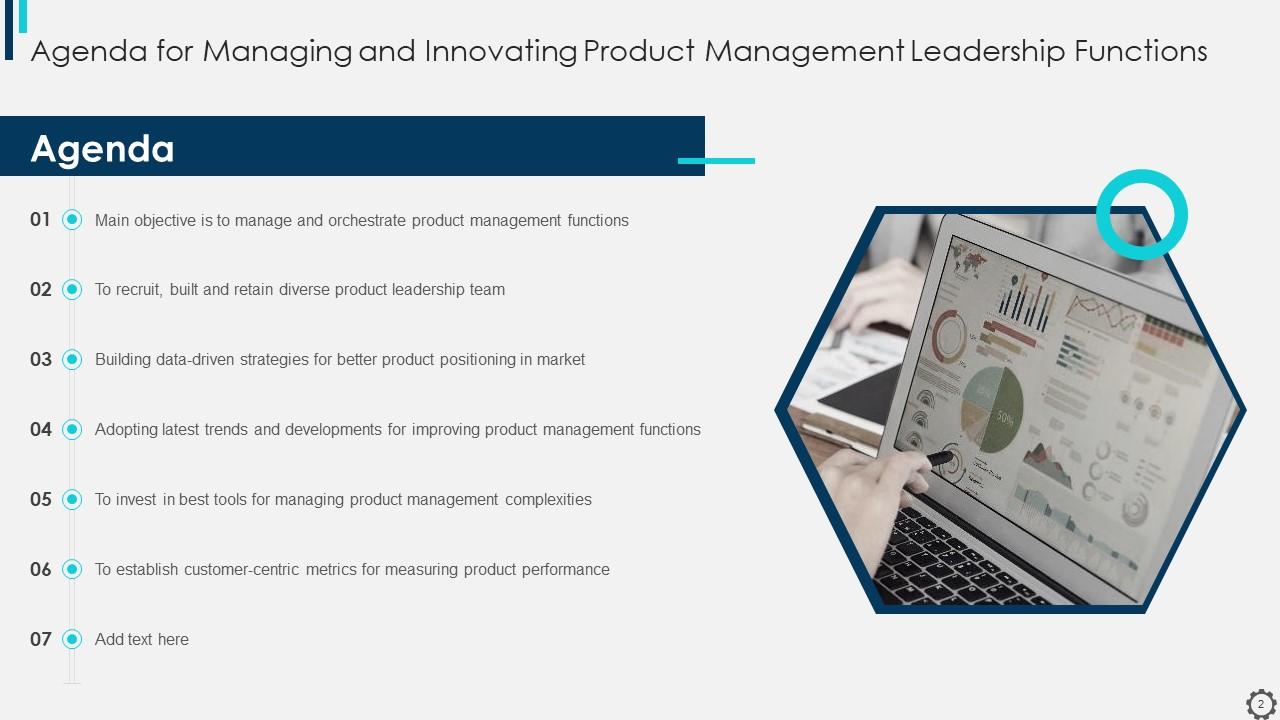
Slide 2: This is an Agenda slide. State your agendas here.
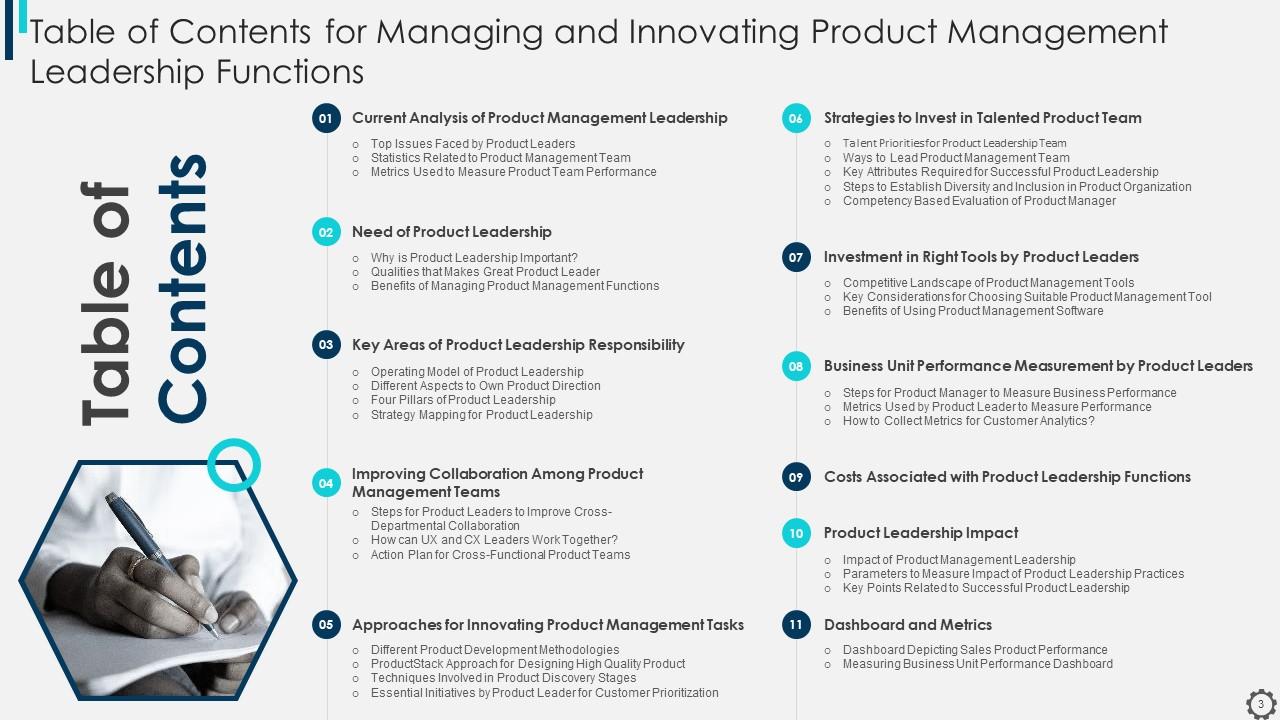
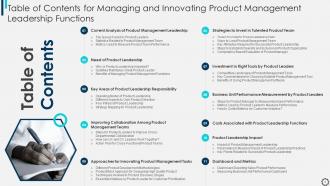
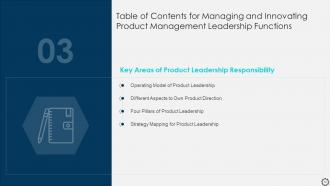
Slide 3: This slide presents Table of Content for the presentation.
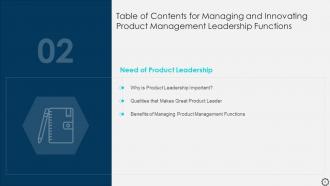
Slide 4: This slide highlights title for topics that are to be covered next in the template.
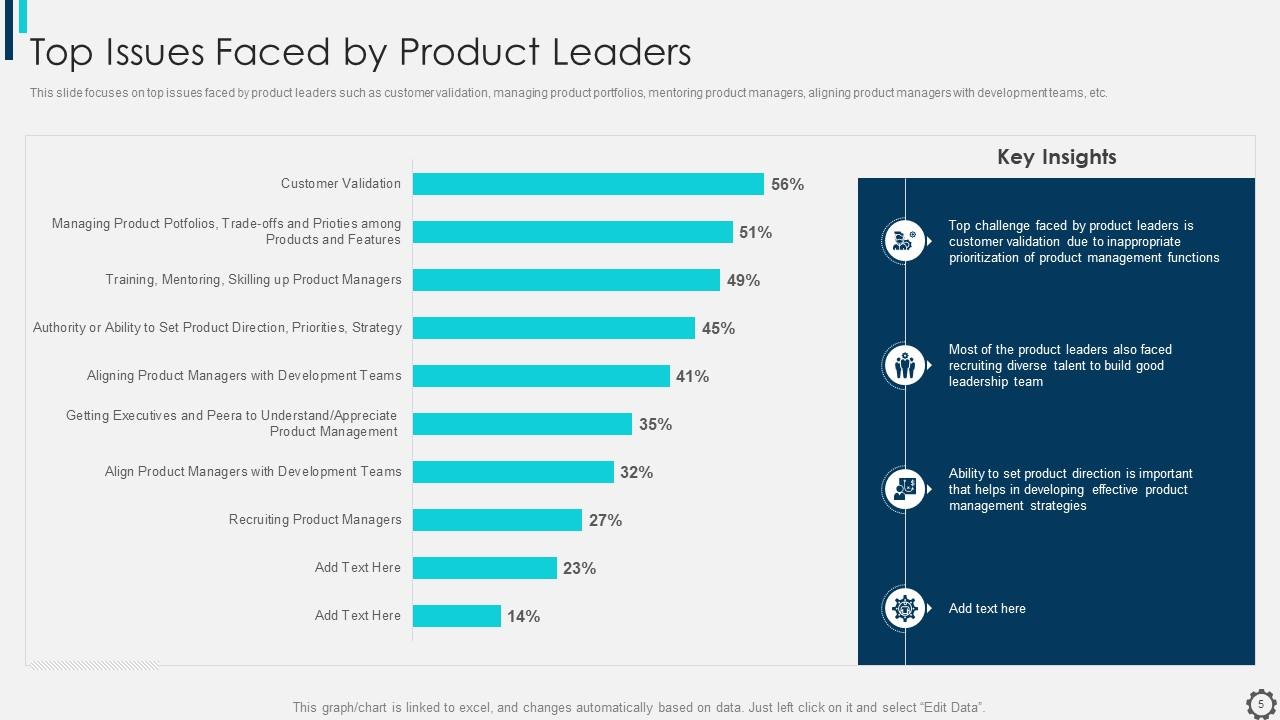
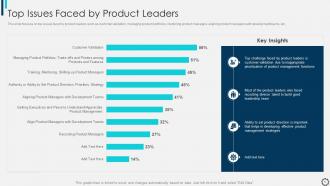
Slide 5: This slide shows top issues faced by product leaders such as customer validation, managing product portfolios, etc.
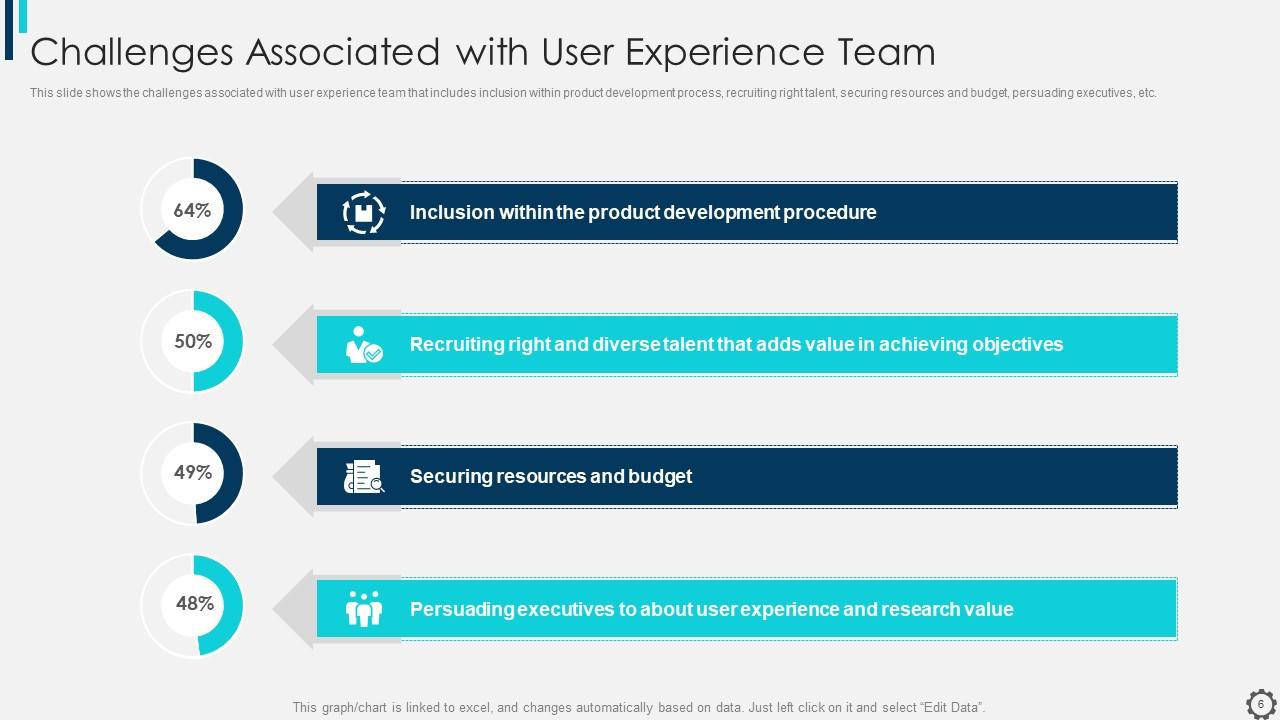
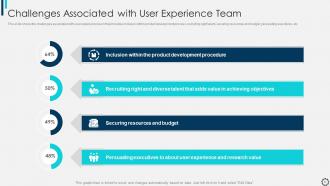
Slide 6: This slide displays Challenges Associated with User Experience Team.
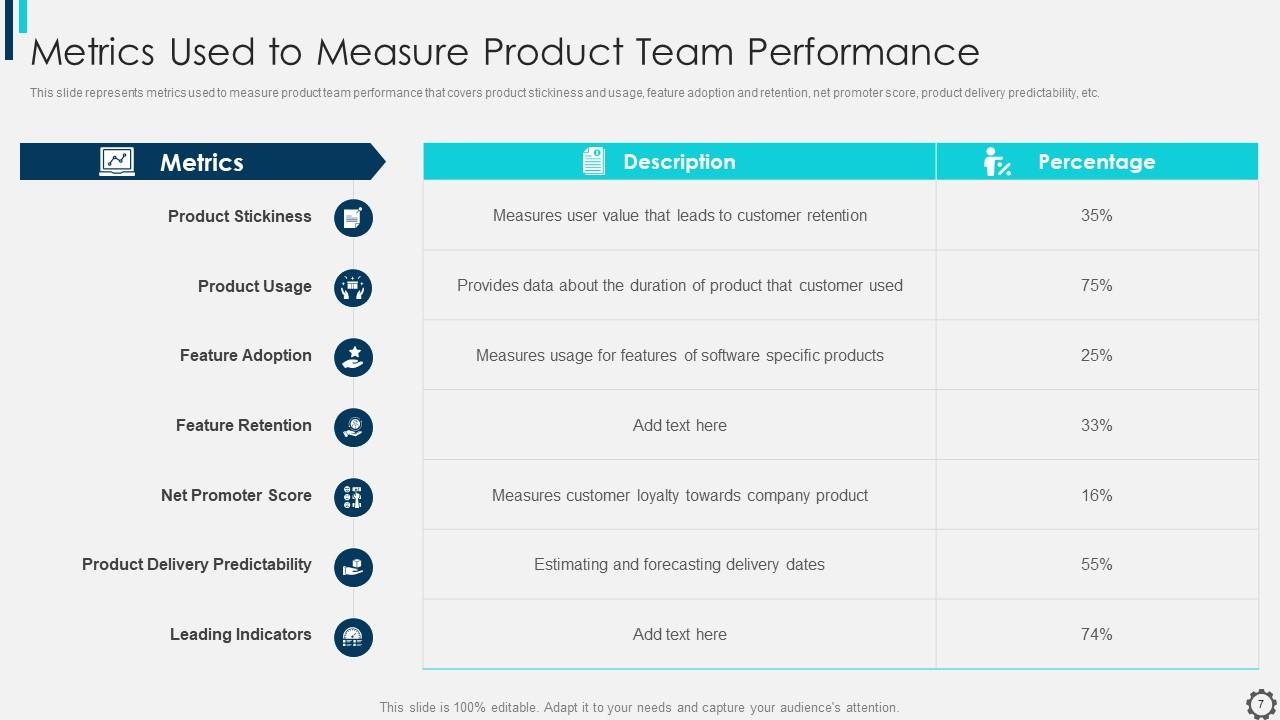
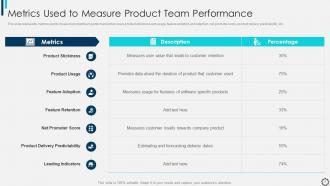
Slide 7: This slide represents Metrics Used to Measure Product Team Performance.
Slide 8: This slide highlights title for topics that are to be covered next in the template.
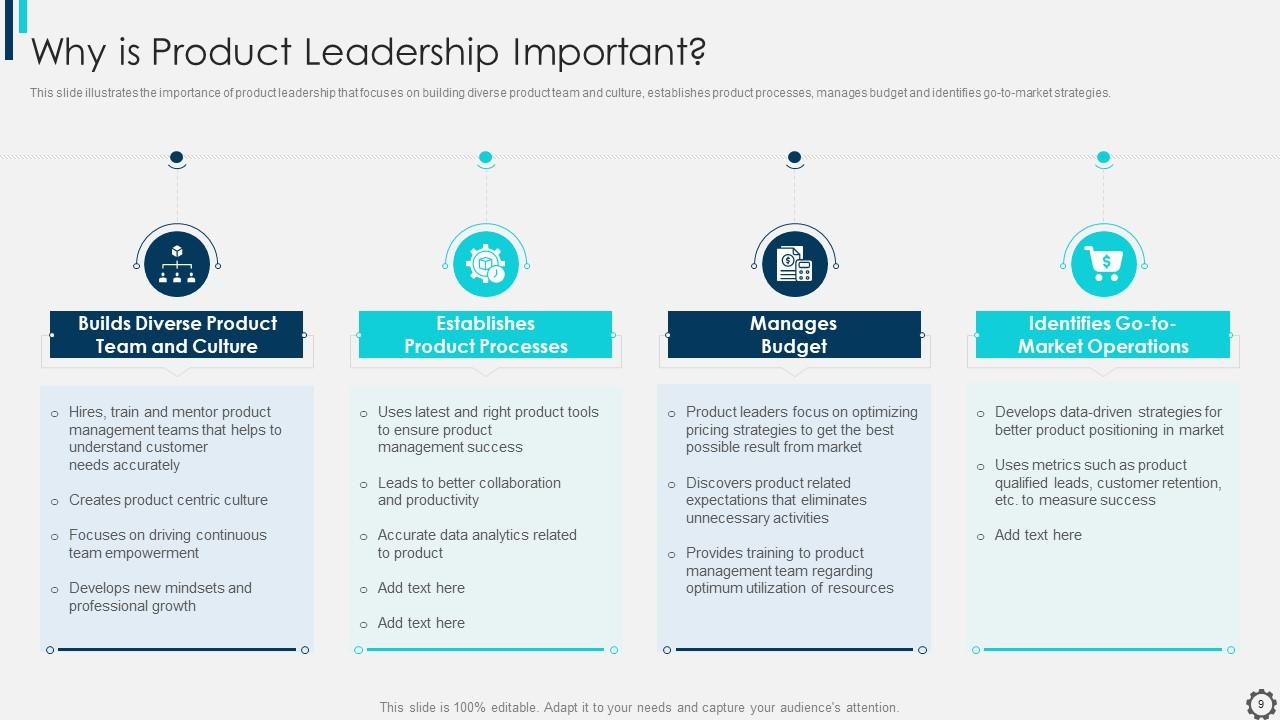
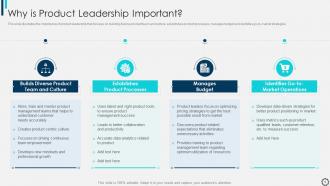
Slide 9: This slide illustrates the importance of product leadership that focuses on building diverse product team and culture.
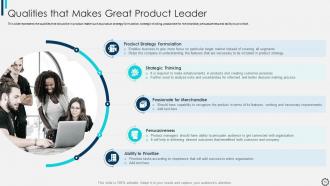
Slide 10: This slide shows Qualities that Makes Great Product Leader.
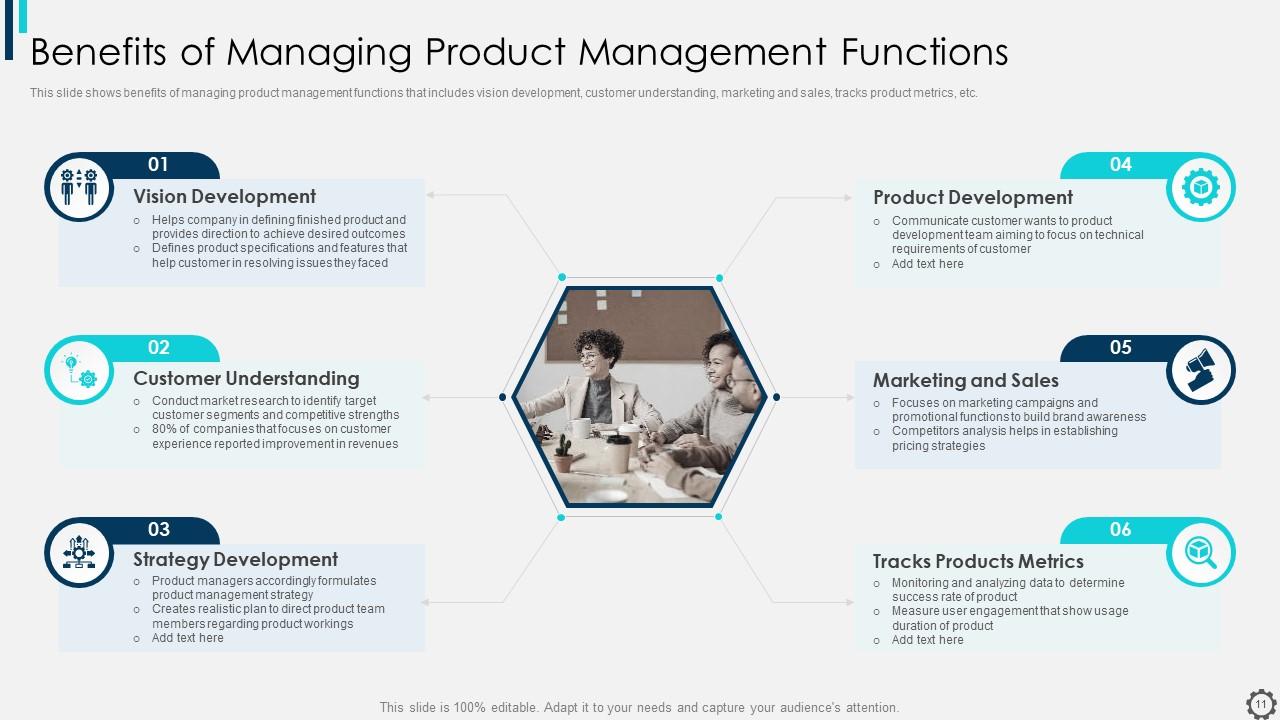
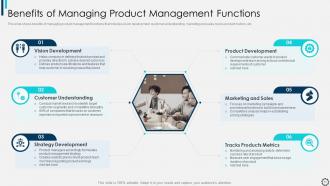
Slide 11: This slide displays benefits of managing product management functions.
Slide 12: This slide highlights title for topics that are to be covered next in the template.
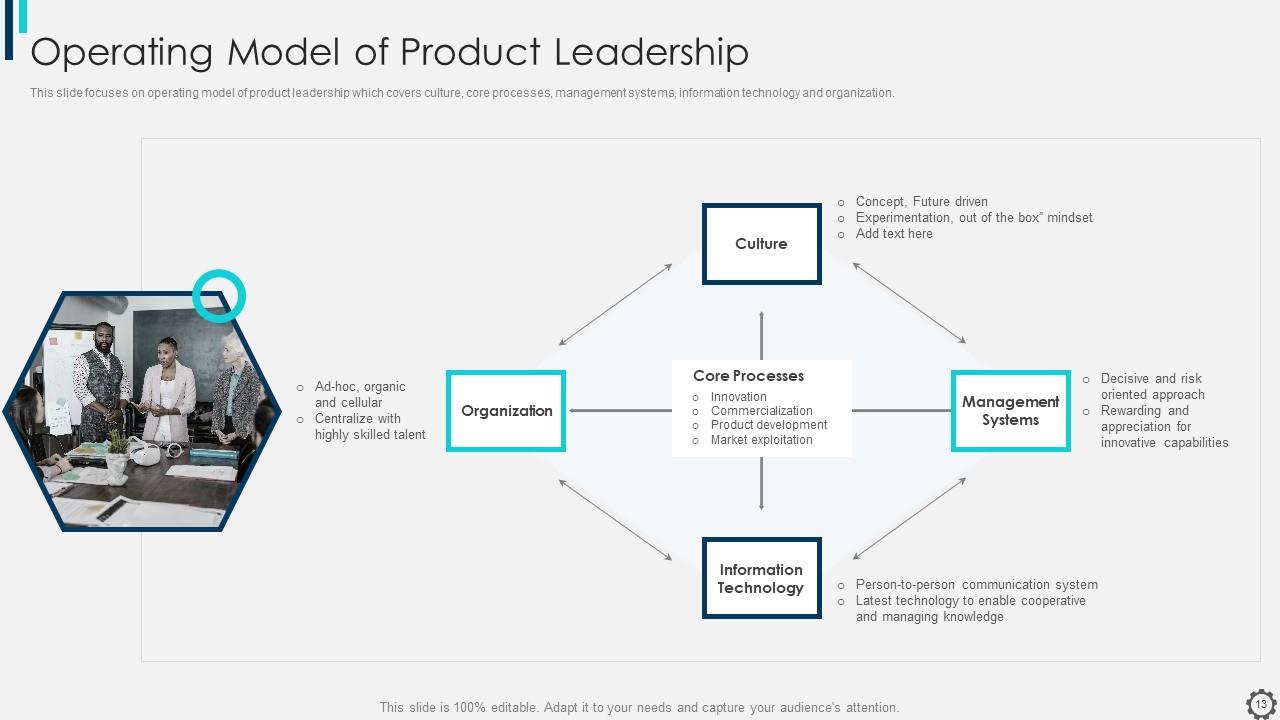
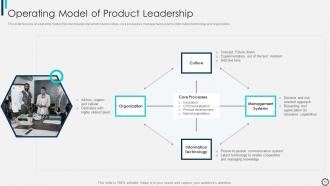
Slide 13: This slide shows operating model of product leadership which covers culture, core processes, management systems, etc.
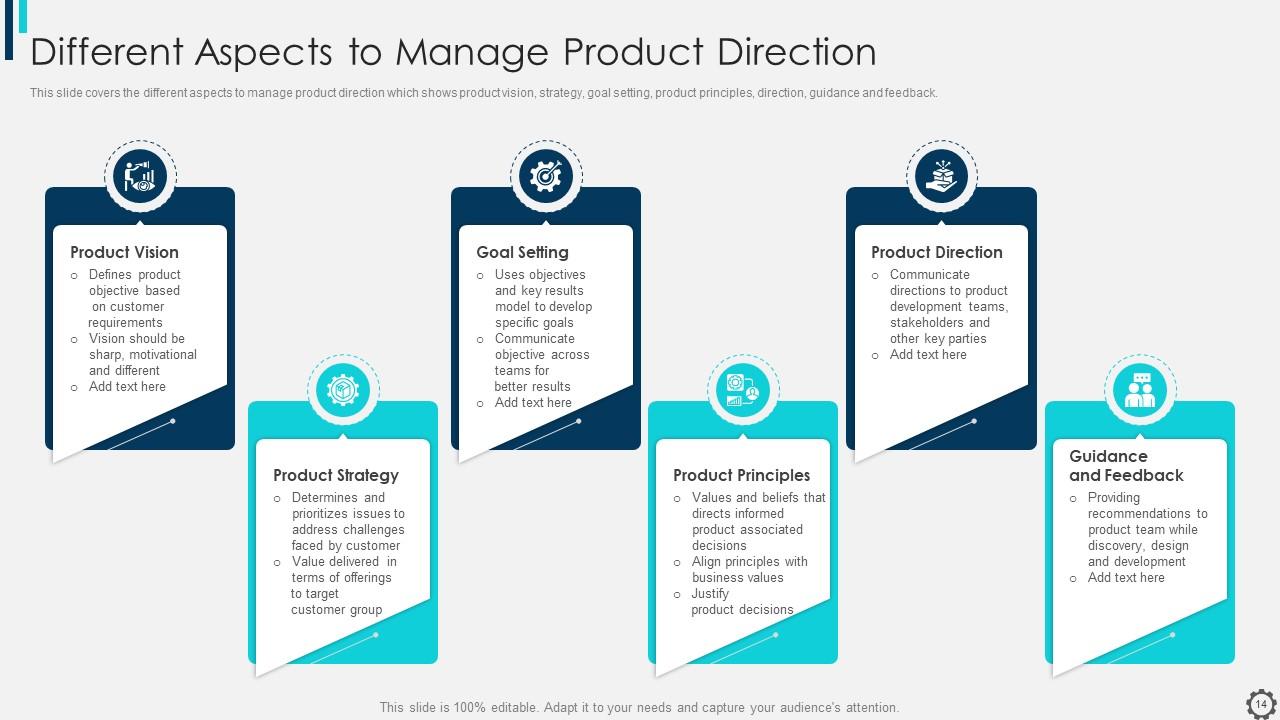
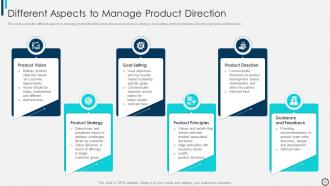
Slide 14: This slide presents Different Aspects to Manage Product Direction.
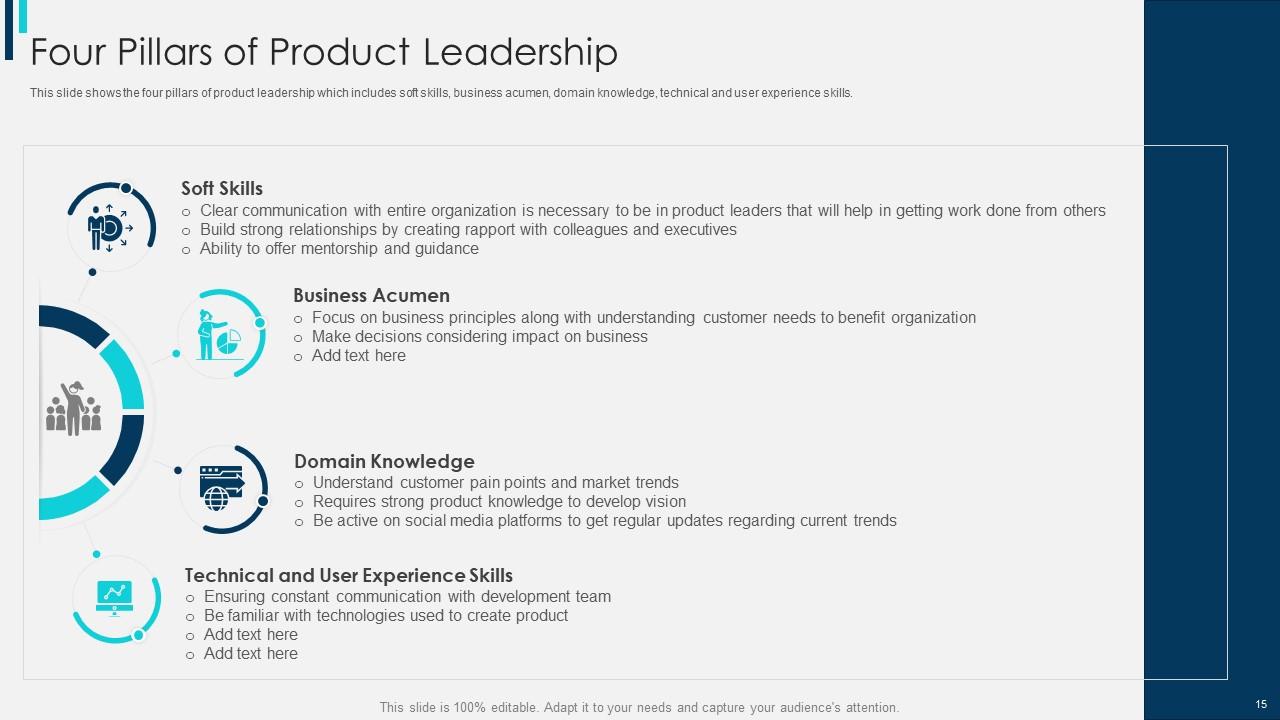
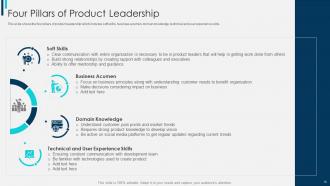
Slide 15: This slide shows the four pillars of product leadership which includes soft skills, business acumen, domain knowledge, etc.
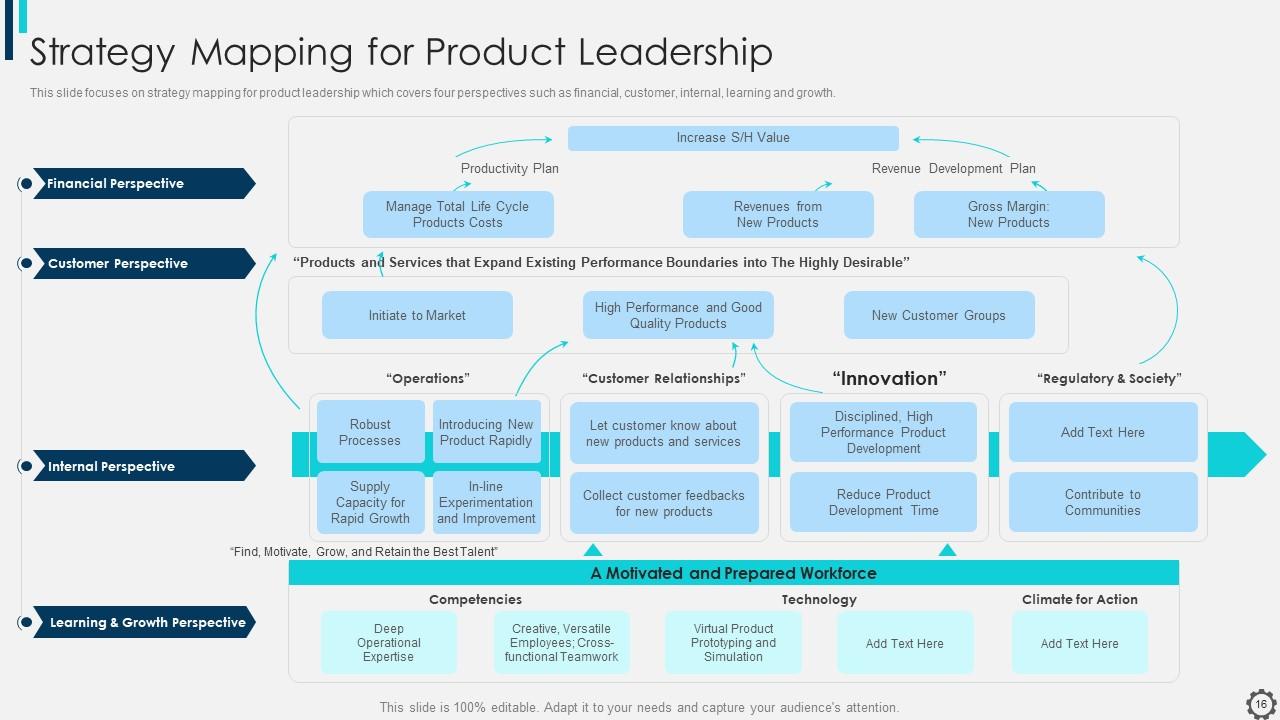
Slide 16: This slide displays strategy mapping for product leadership which covers four perspectives such as financial, customer, internal, learning and growth.
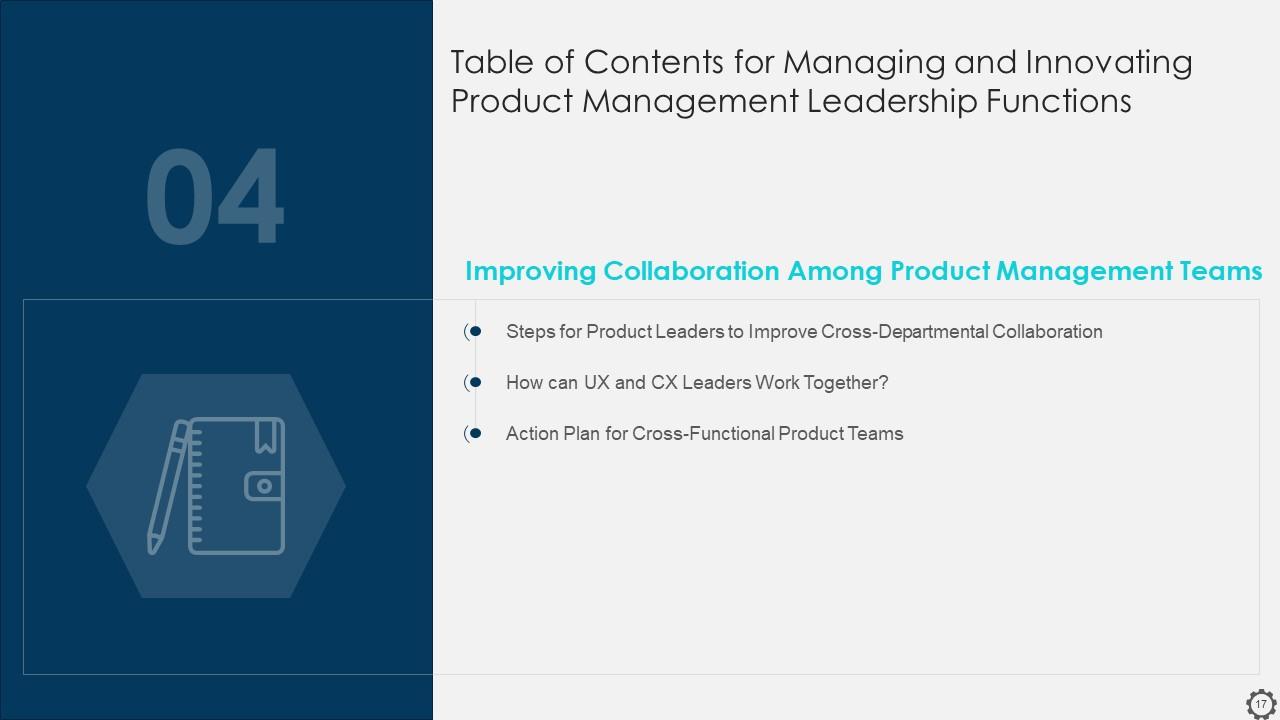
Slide 17: This slide highlights title for topics that are to be covered next in the template.
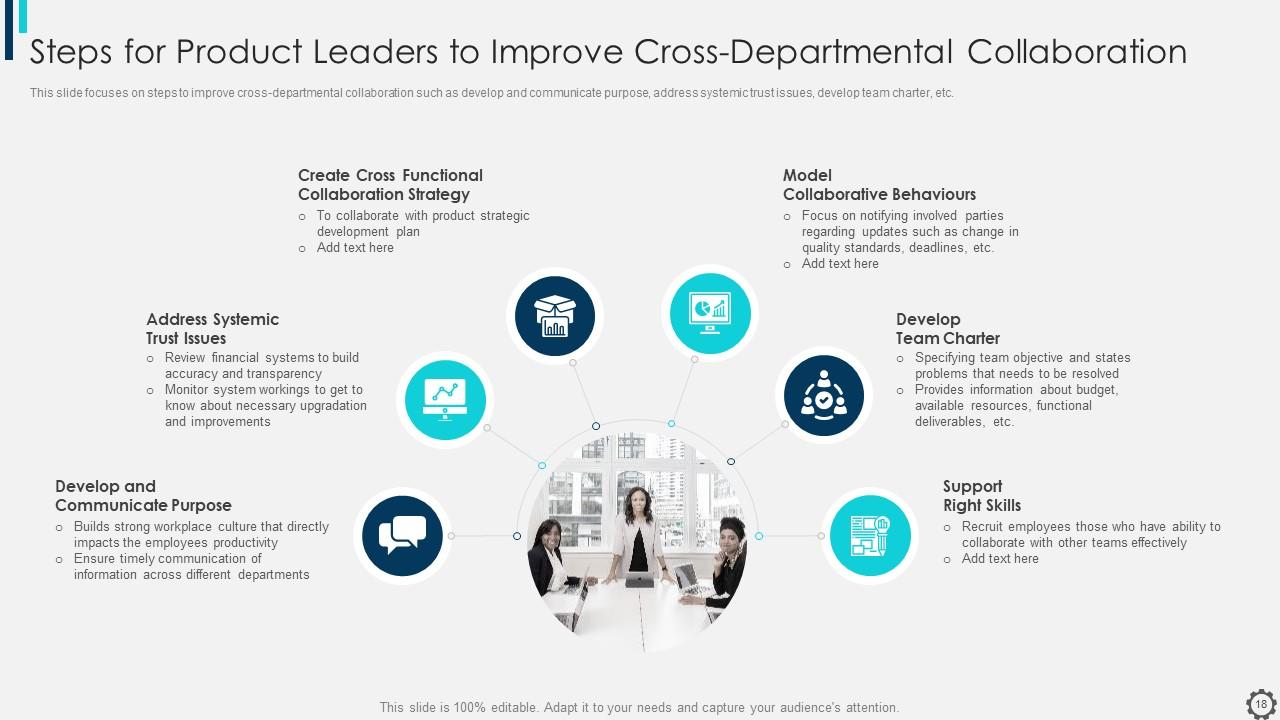
Slide 18: This slide shows Steps for Product Leaders to Improve Cross-Departmental Collaboration.
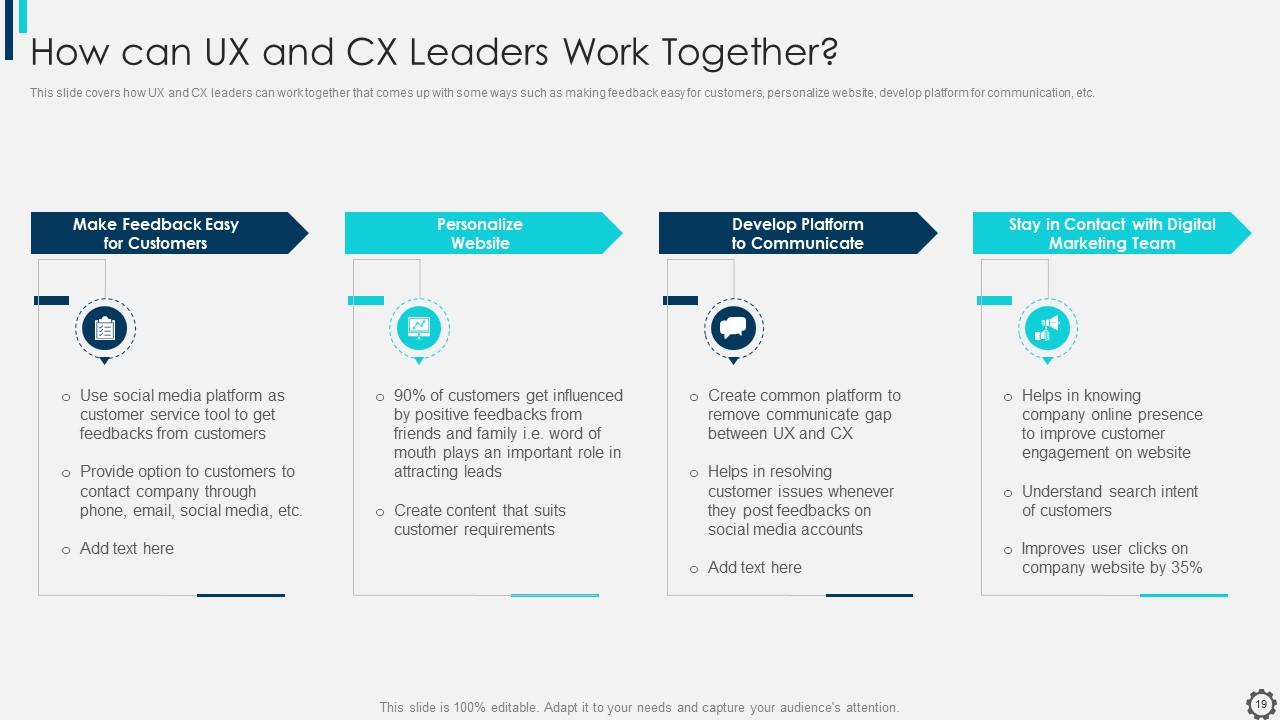
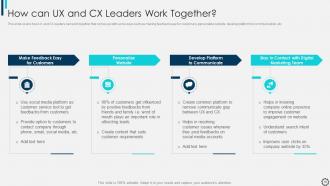
Slide 19: This slide presents how UX and CX leaders can work together that comes up with some ways.
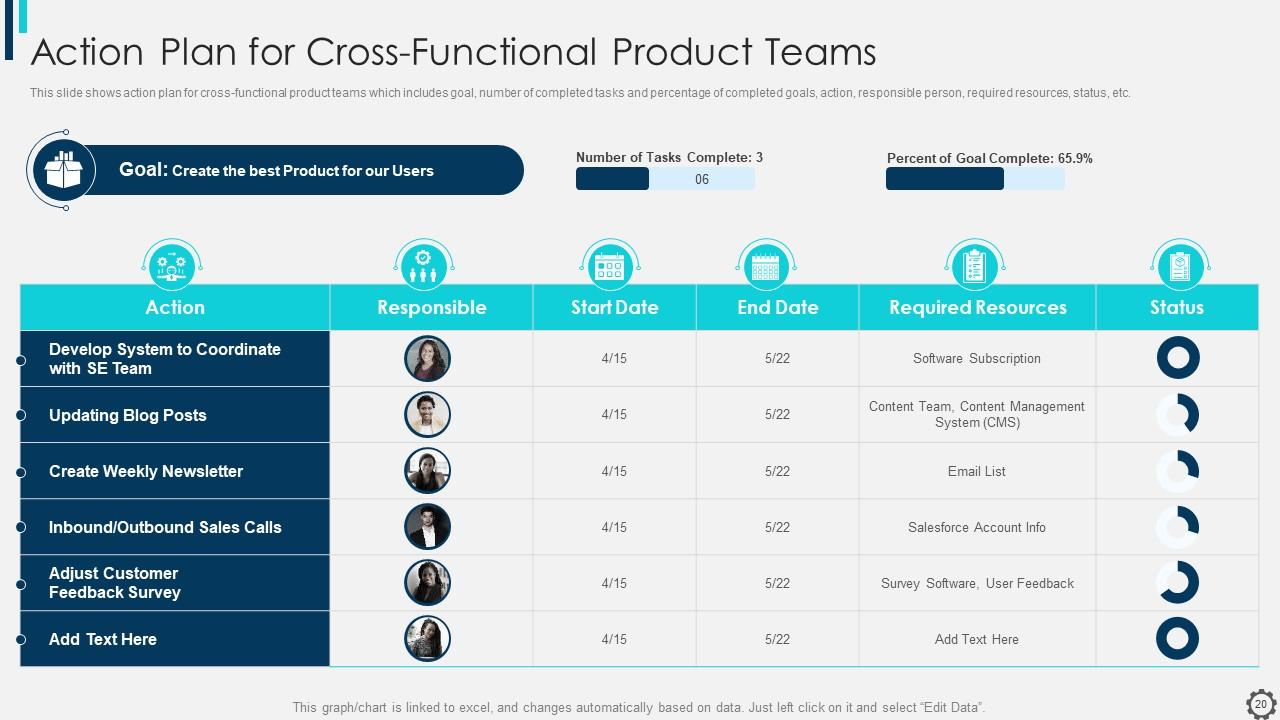
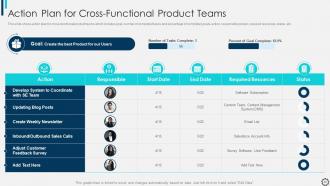
Slide 20: This slide shows action plan for cross-functional product teams which includes goal, number of completed tasks, etc.
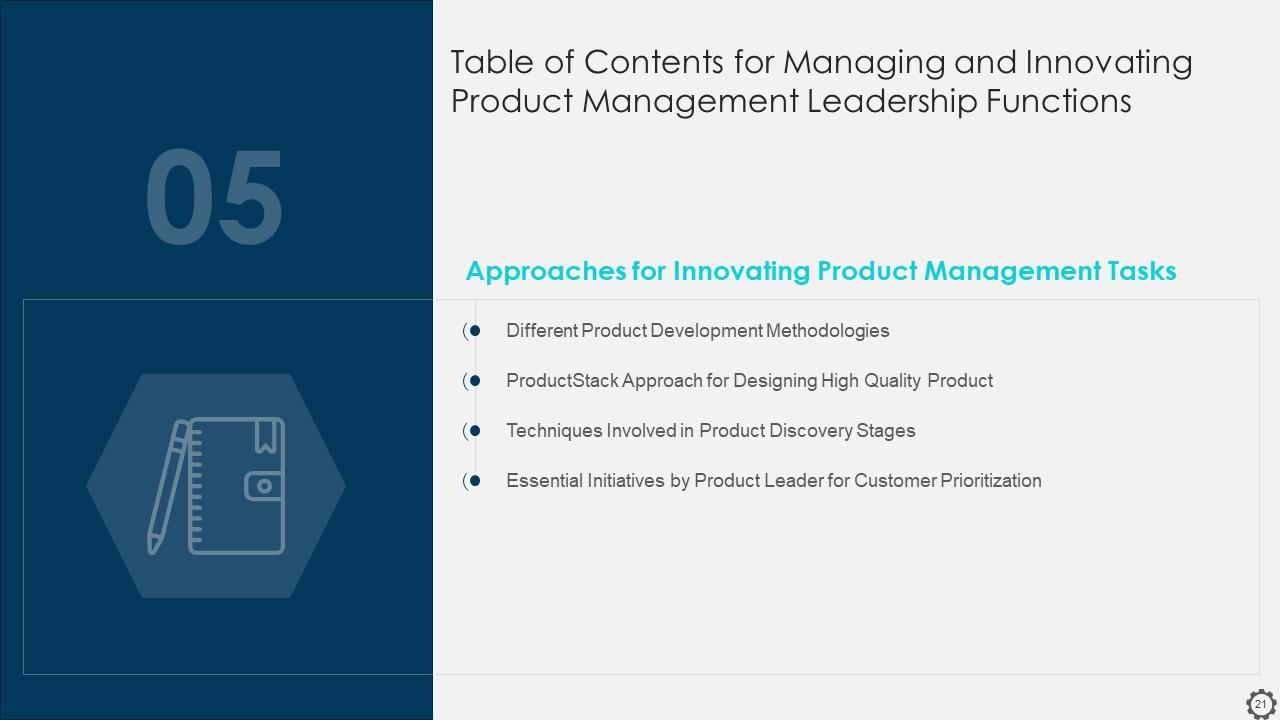
Slide 21: This slide highlights title for topics that are to be covered next in the template.
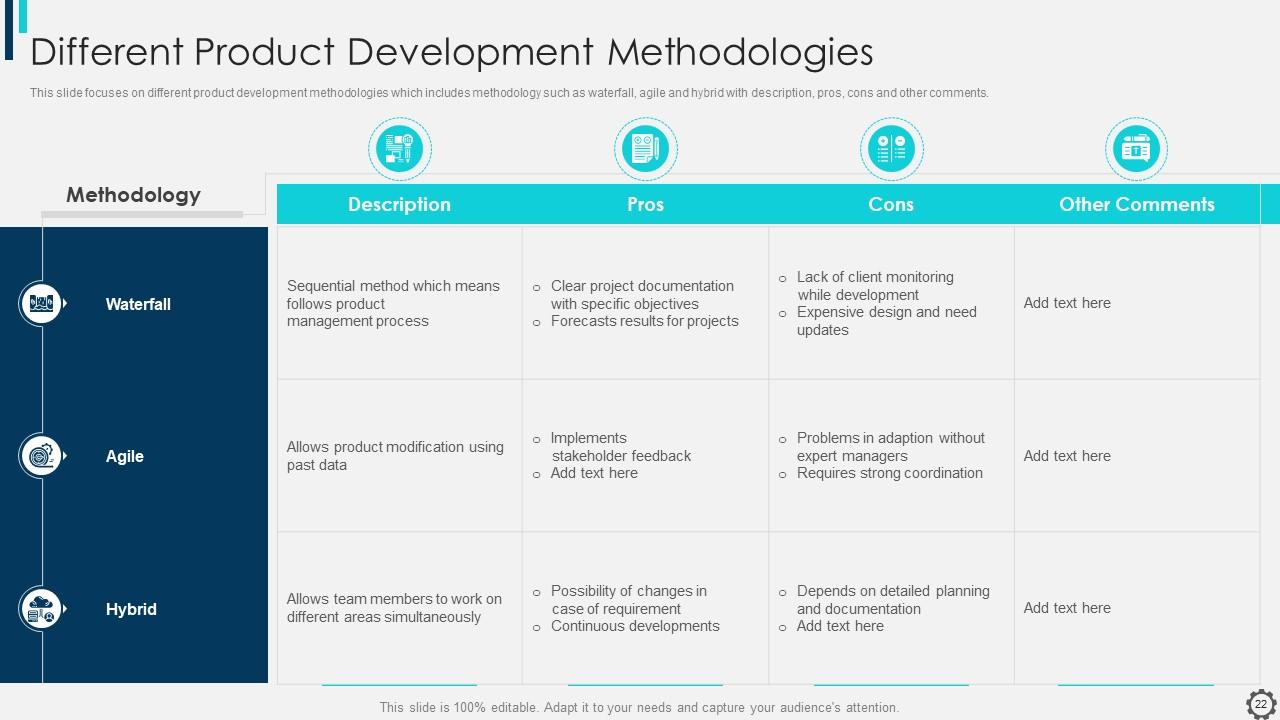
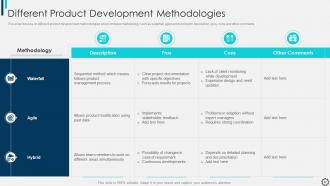
Slide 22: This slide focuses on different product development methodologies which includes methodology such as waterfall, agile and hybrid.
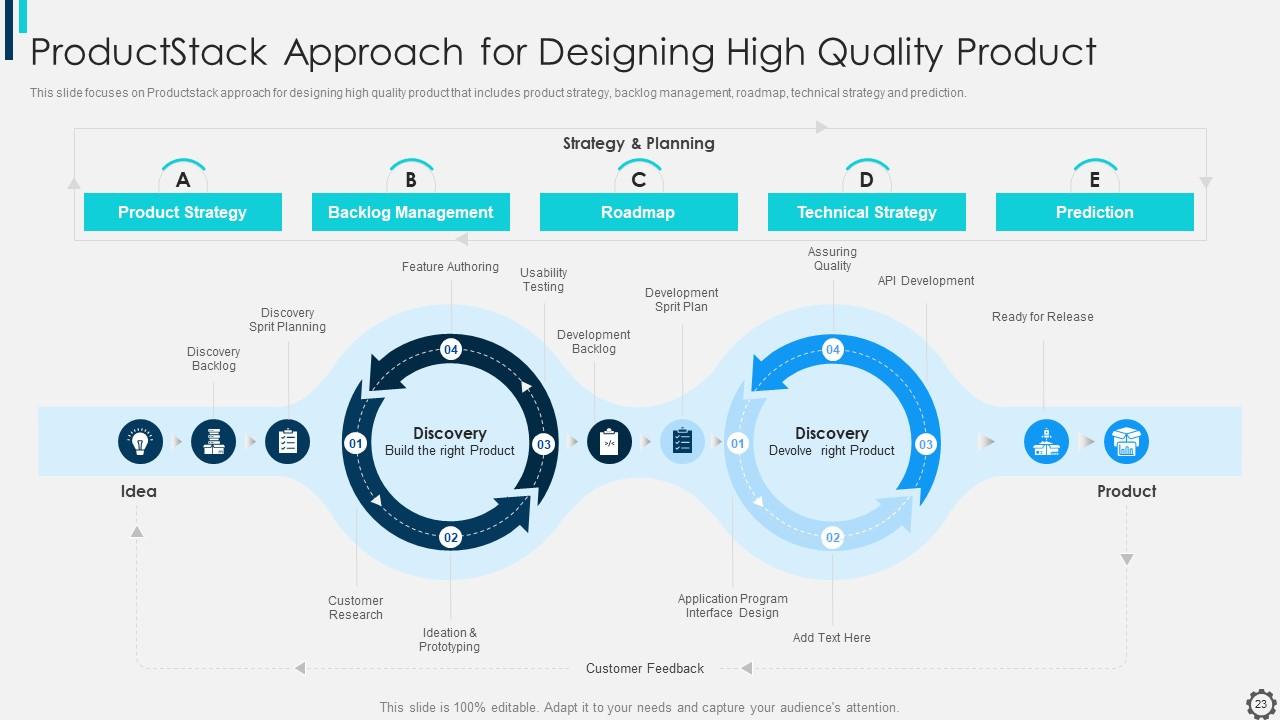
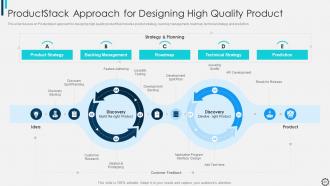
Slide 23: This slide shows Product Stack Approach for Designing High Quality Product.
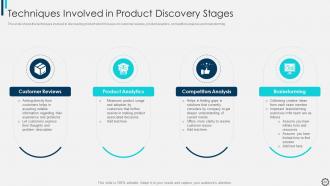
Slide 24: This slide presents the techniques involved in discovering product which focuses on customer reviews, product analytics, competitors analysis and brainstorming.
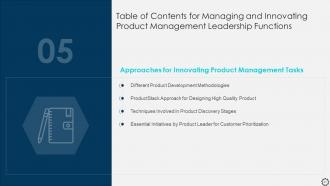
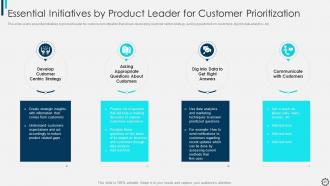
Slide 25: This slide shows Essential Initiatives by Product Leader for Customer Prioritization.
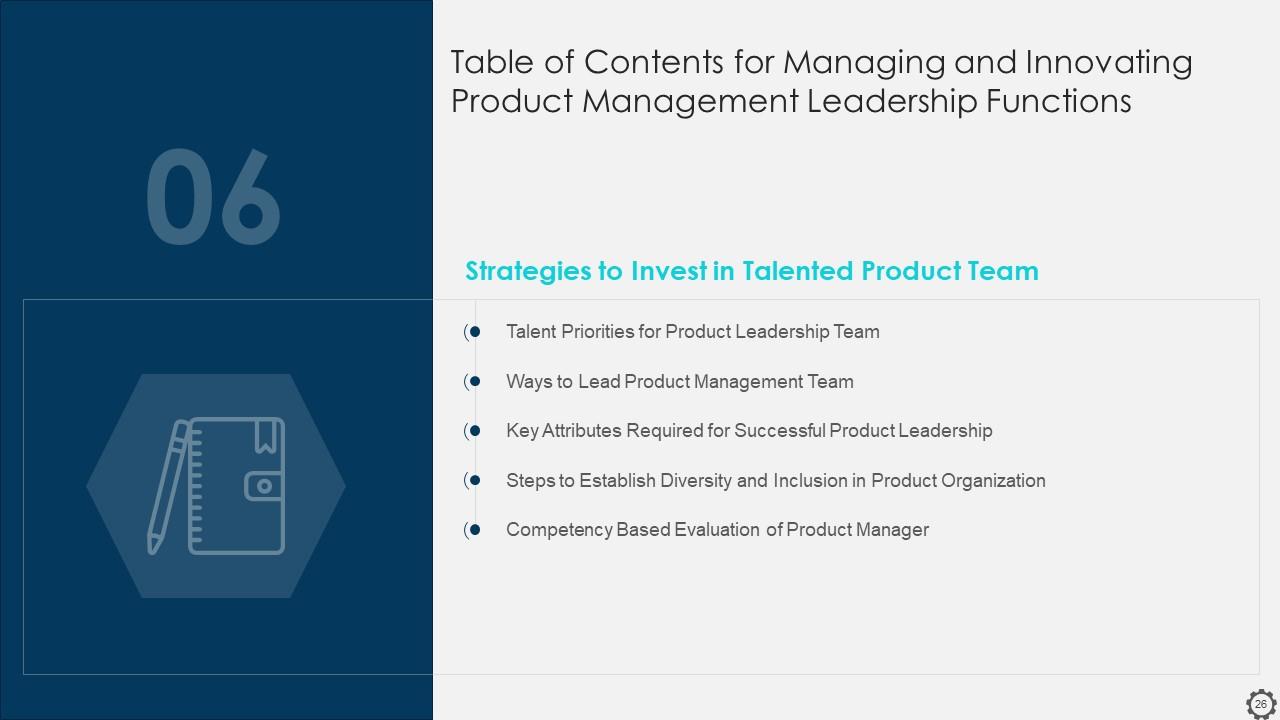
Slide 26: This slide highlights title for topics that are to be covered next in the template.
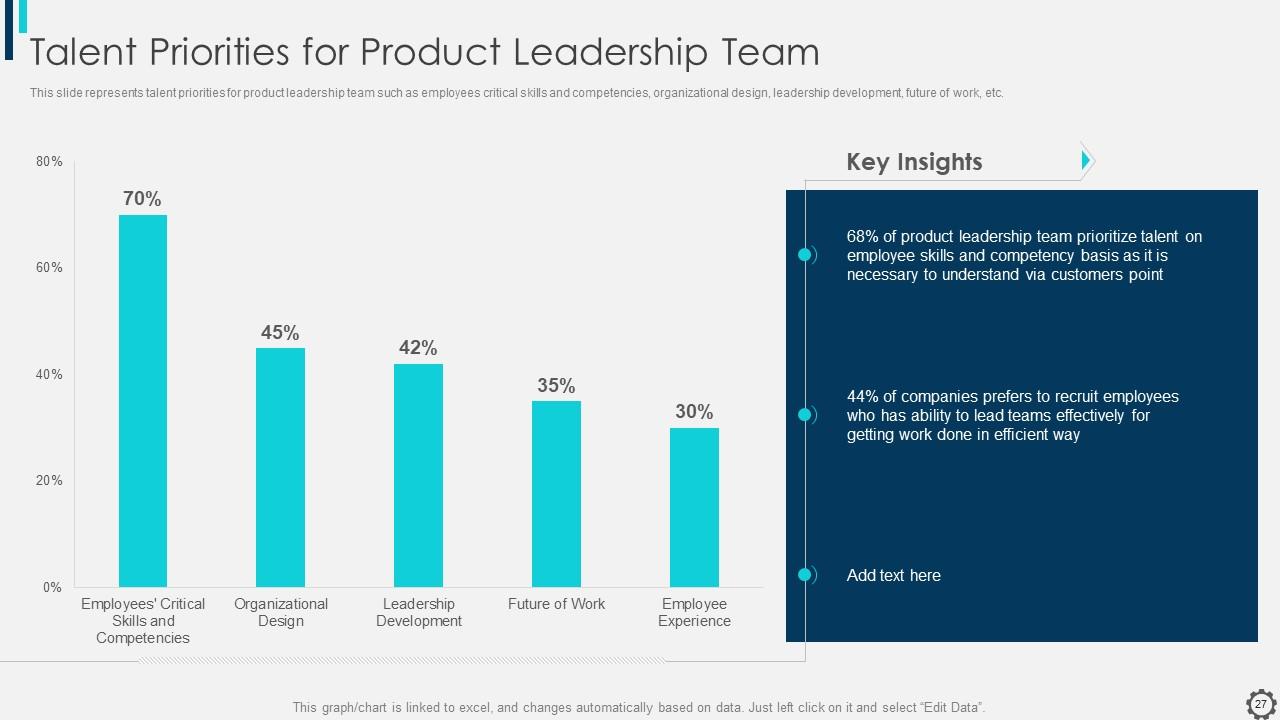
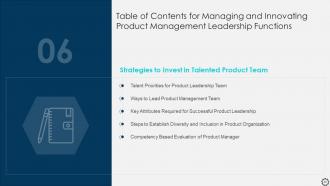
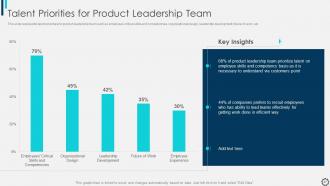
Slide 27: This slide represents talent priorities for product leadership team such as employees critical skills and competencies.
Slide 28: This slide shows Ways to Lead Product Management Team.
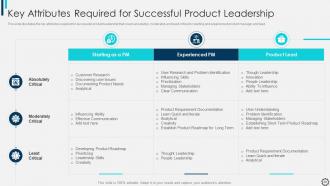
Slide 29: This slide presents Key Attributes Required for Successful Product Leadership.
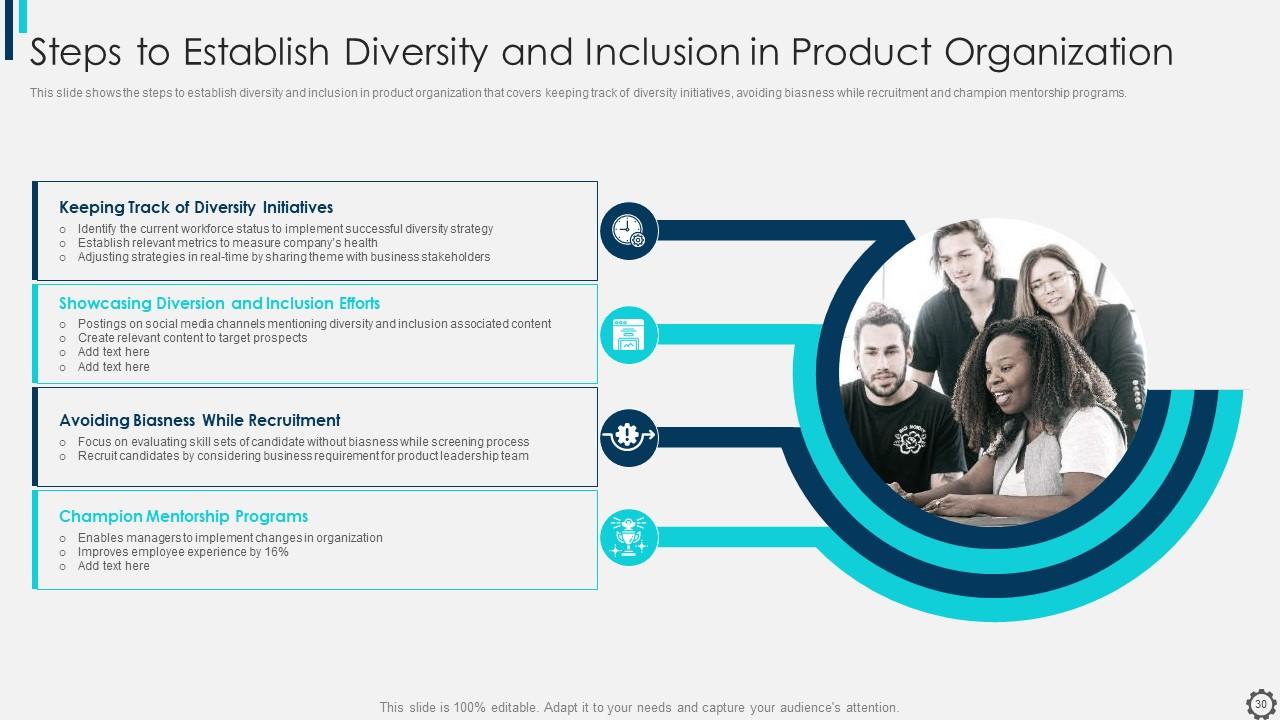
Slide 30: This slide shows Steps to Establish Diversity and Inclusion in Product Organization.
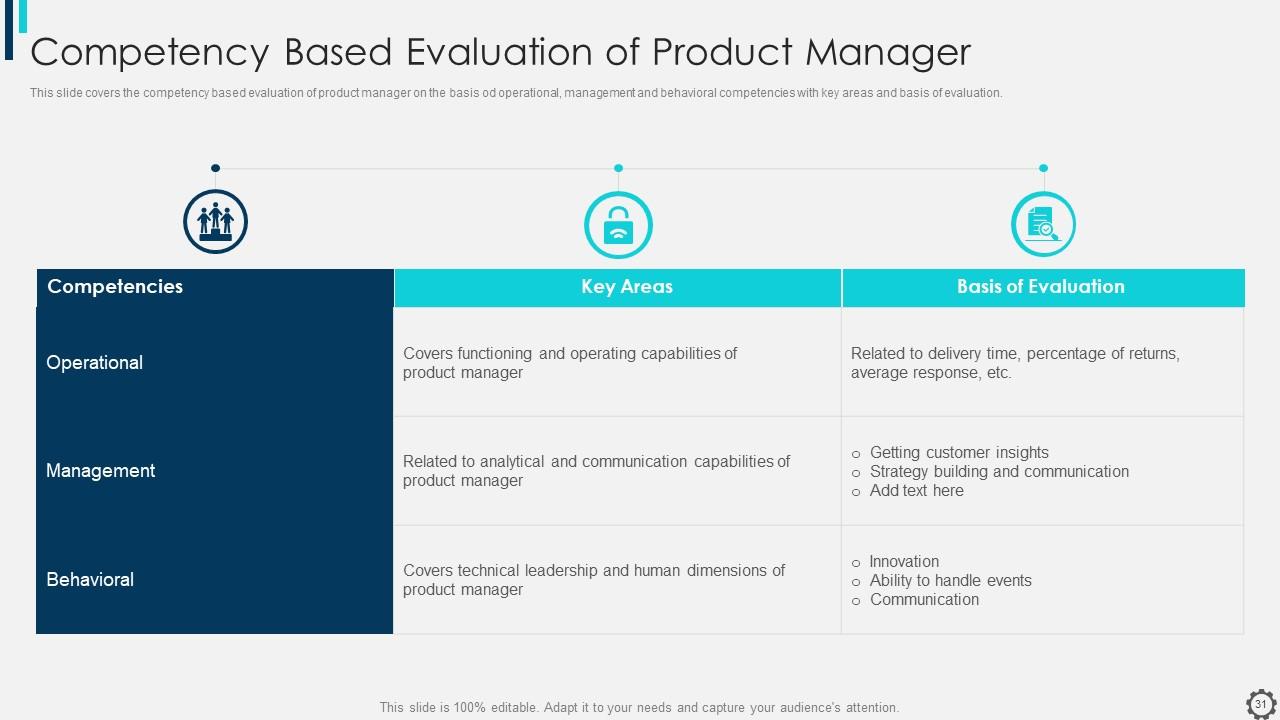
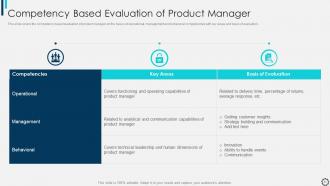
Slide 31: This slide covers the competency based evaluation of product manager on the basis od operational, management and behavioral competencies.
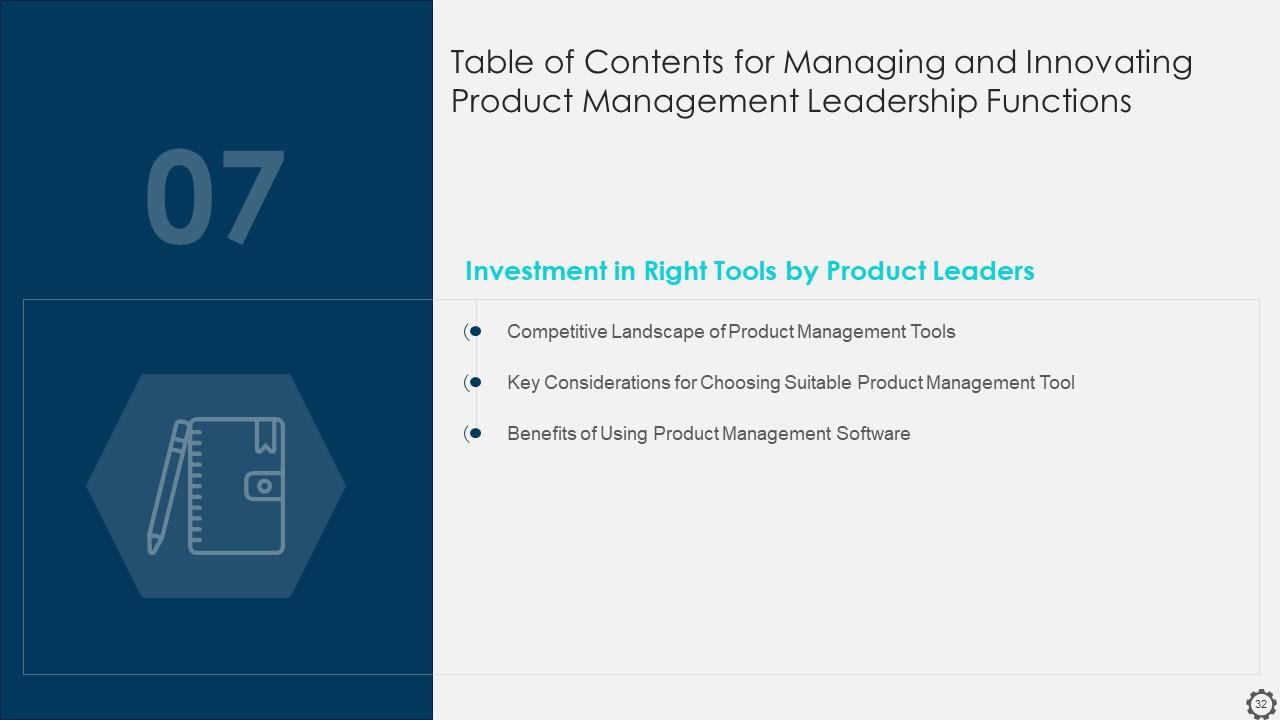
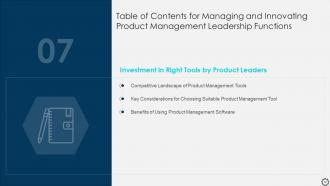
Slide 32: This slide highlights title for topics that are to be covered next in the template.
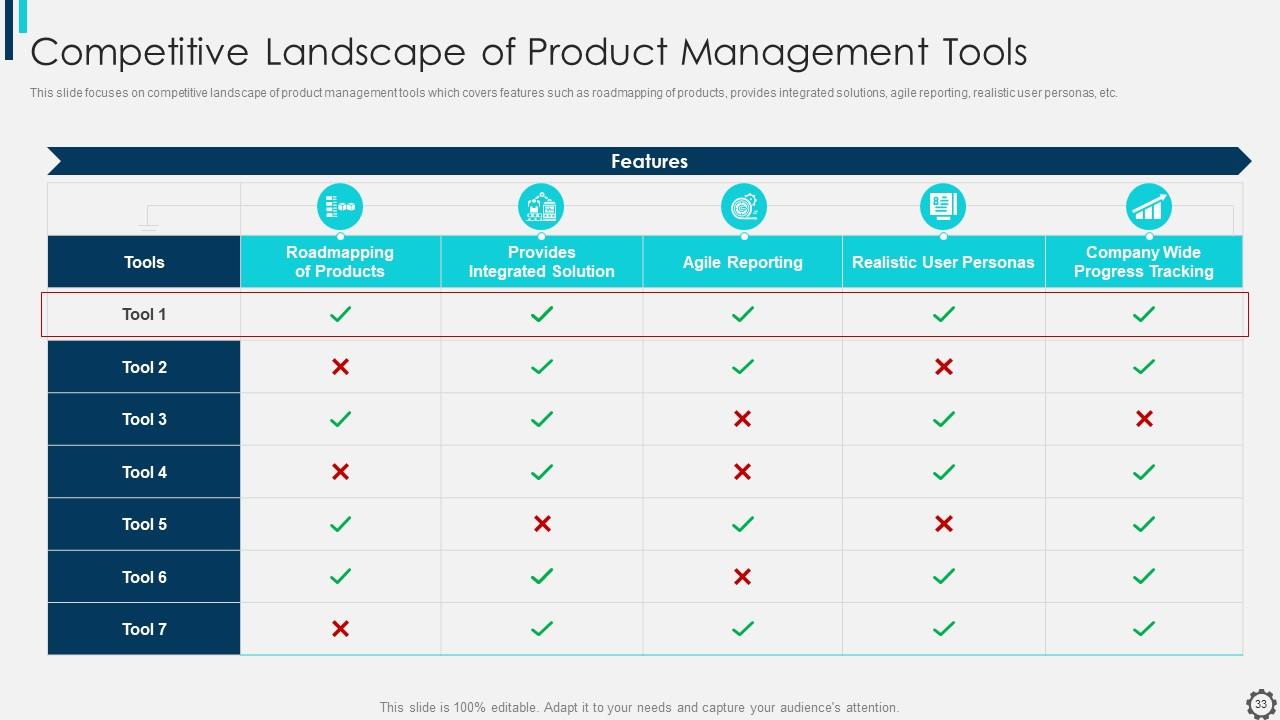
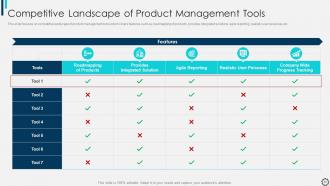
Slide 33: This slide shows Competitive Landscape of Product Management Tools.
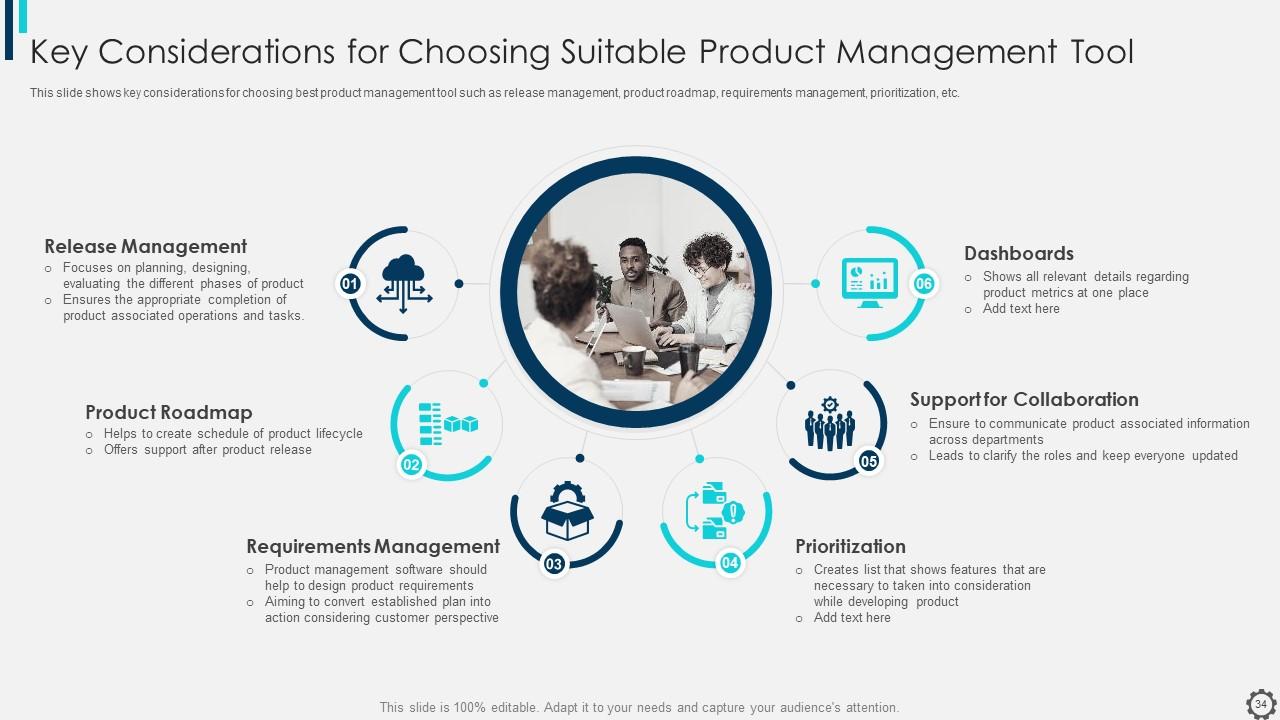
Slide 34: This slide presents Key Considerations for Choosing Suitable Product Management Tool.
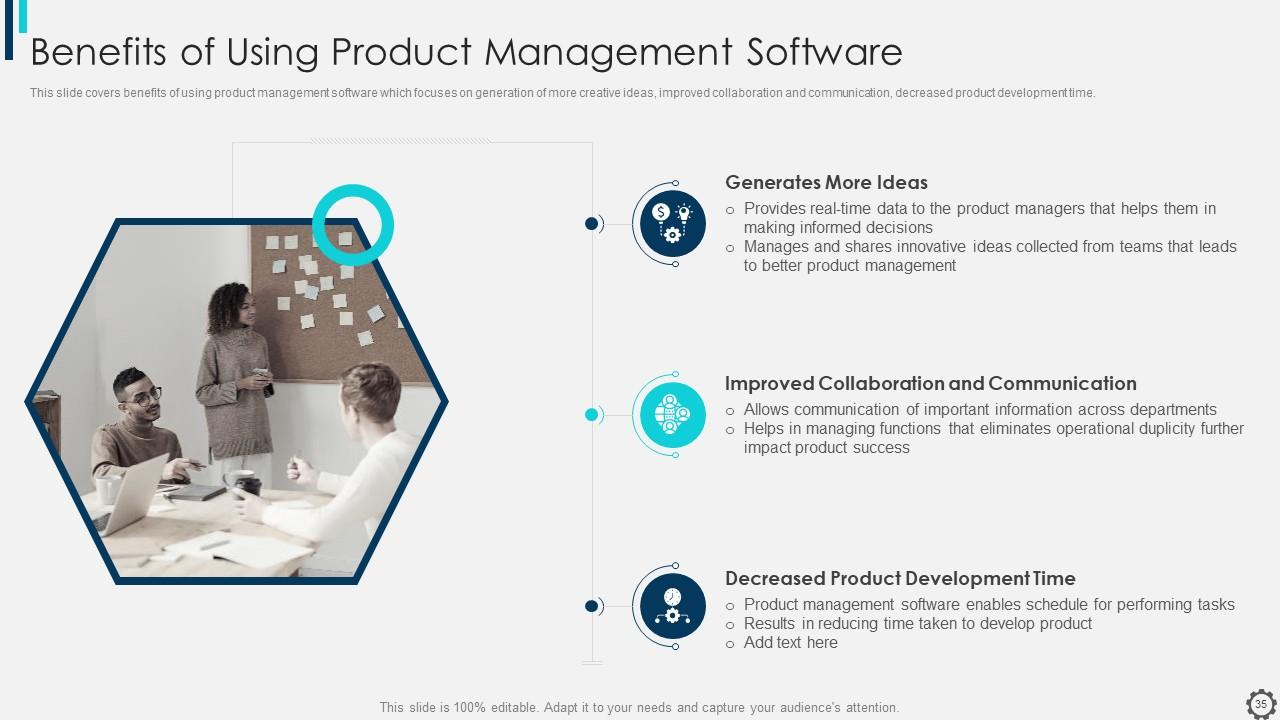
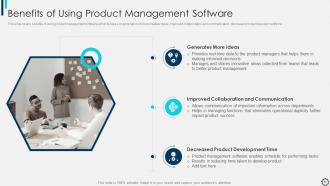
Slide 35: This slide shows Benefits of Using Product Management Software.
Slide 36: This slide highlights title for topics that are to be covered next in the template.
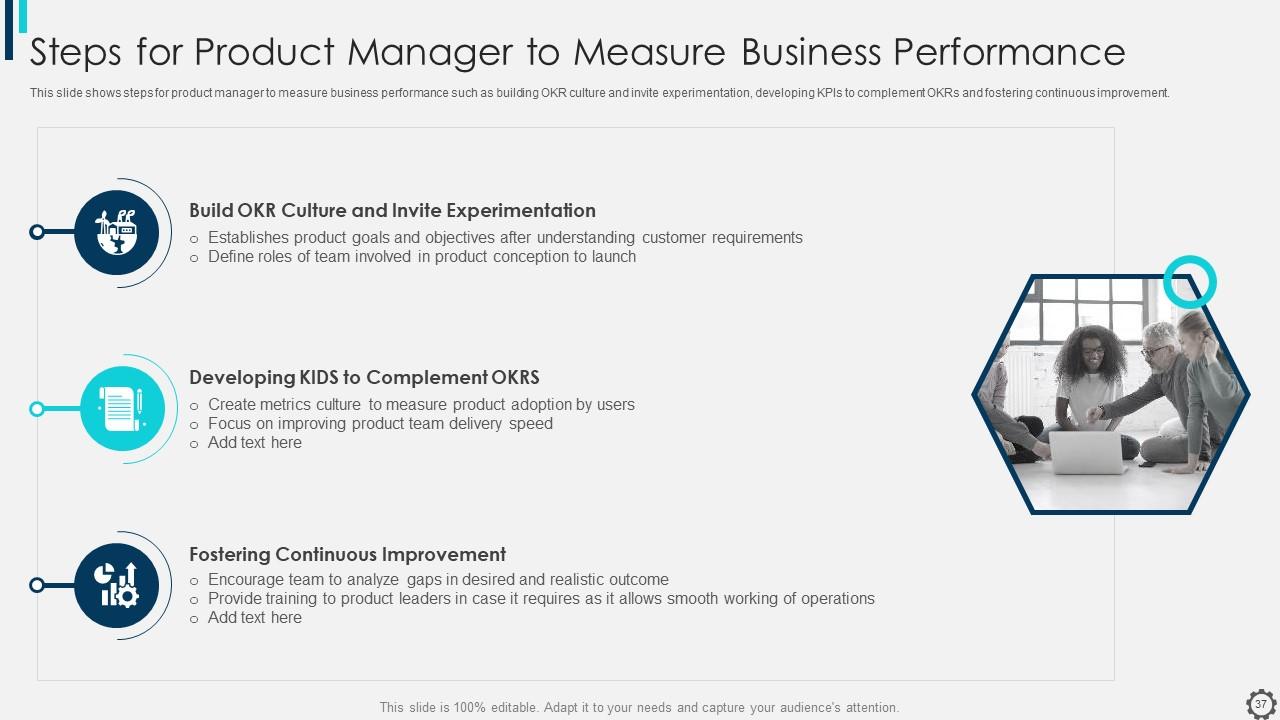
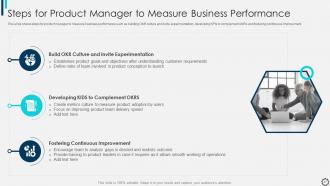
Slide 37: This slide represents Steps for Product Manager to Measure Business Performance.
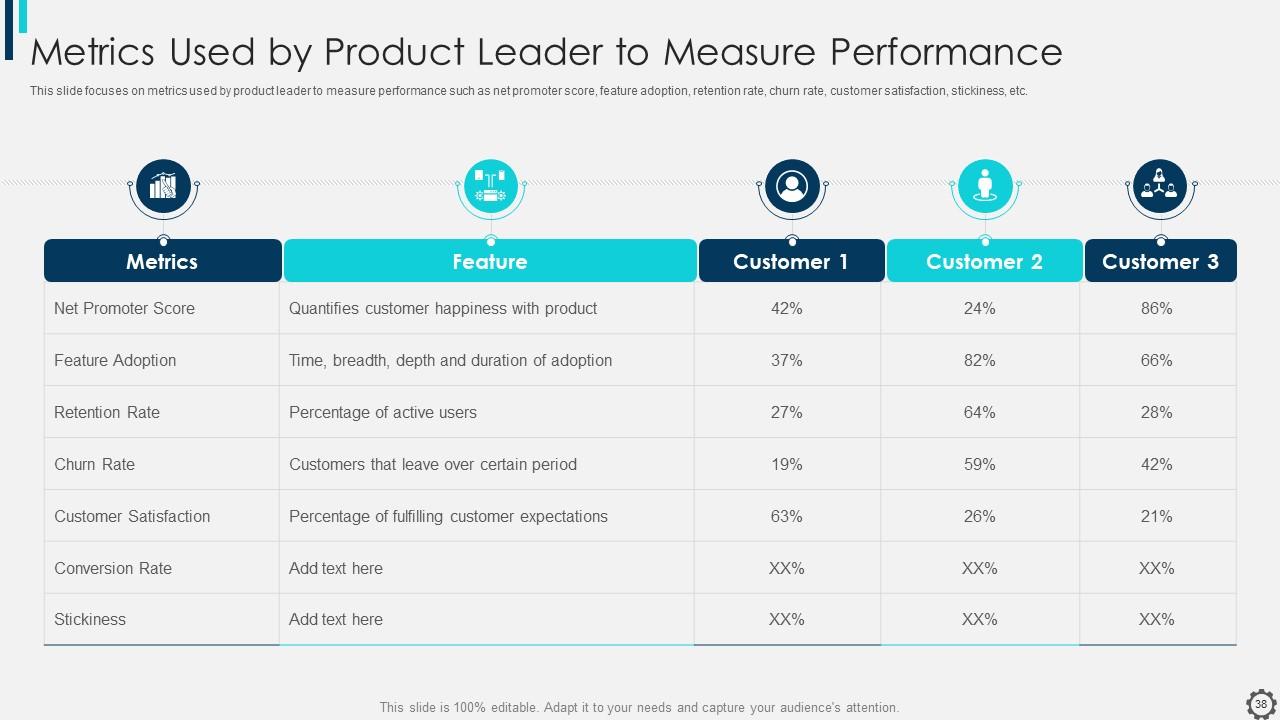
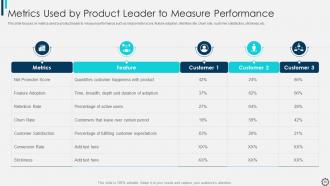
Slide 38: This slide focuses on metrics used by product leader to measure performance such as net promoter score, feature adoption, retention rate, etc.
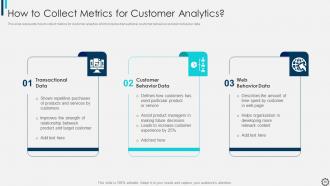
Slide 39: This slide represents how to collect metrics for customer analytics which includes transactional, customer behavior and web behavior data.
Slide 40: This slide highlights title for topics that are to be covered next in the template.
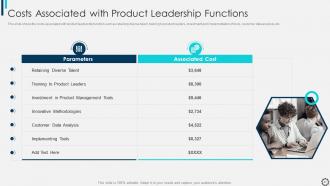
Slide 41: This slide displays Costs Associated with Product Leadership Functions.
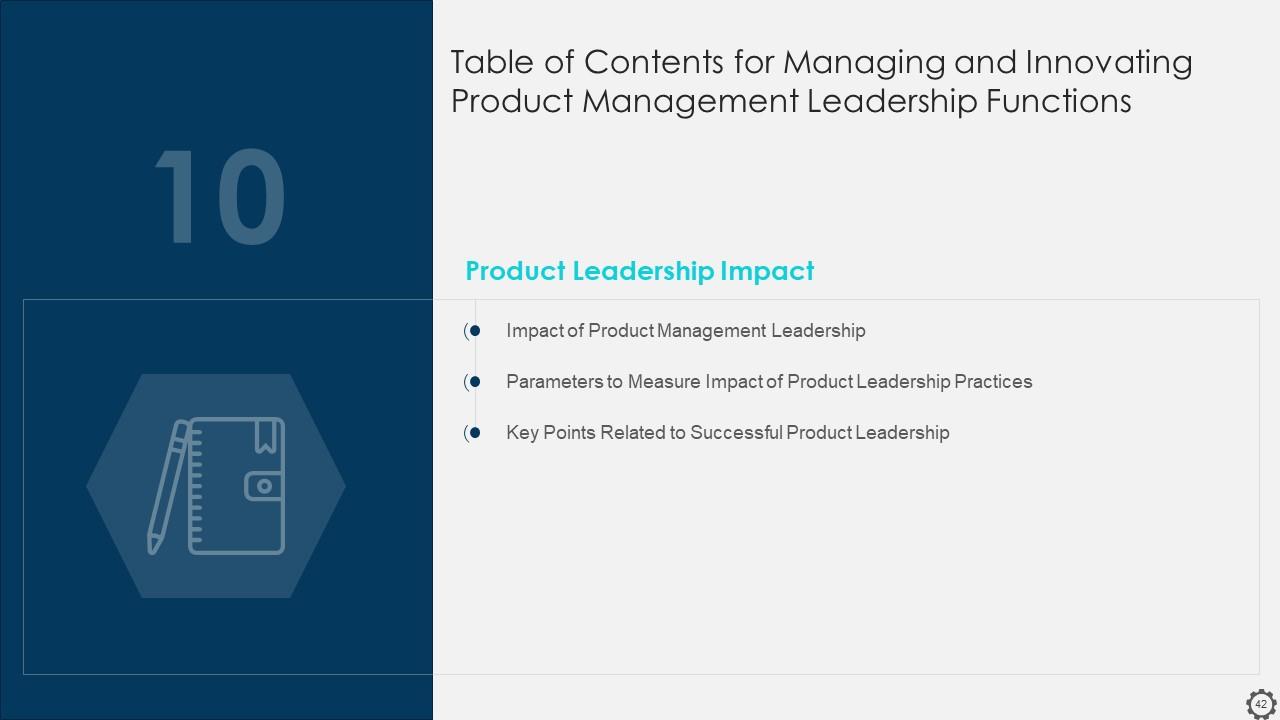
Slide 42: This slide highlights title for topics that are to be covered next in the template.
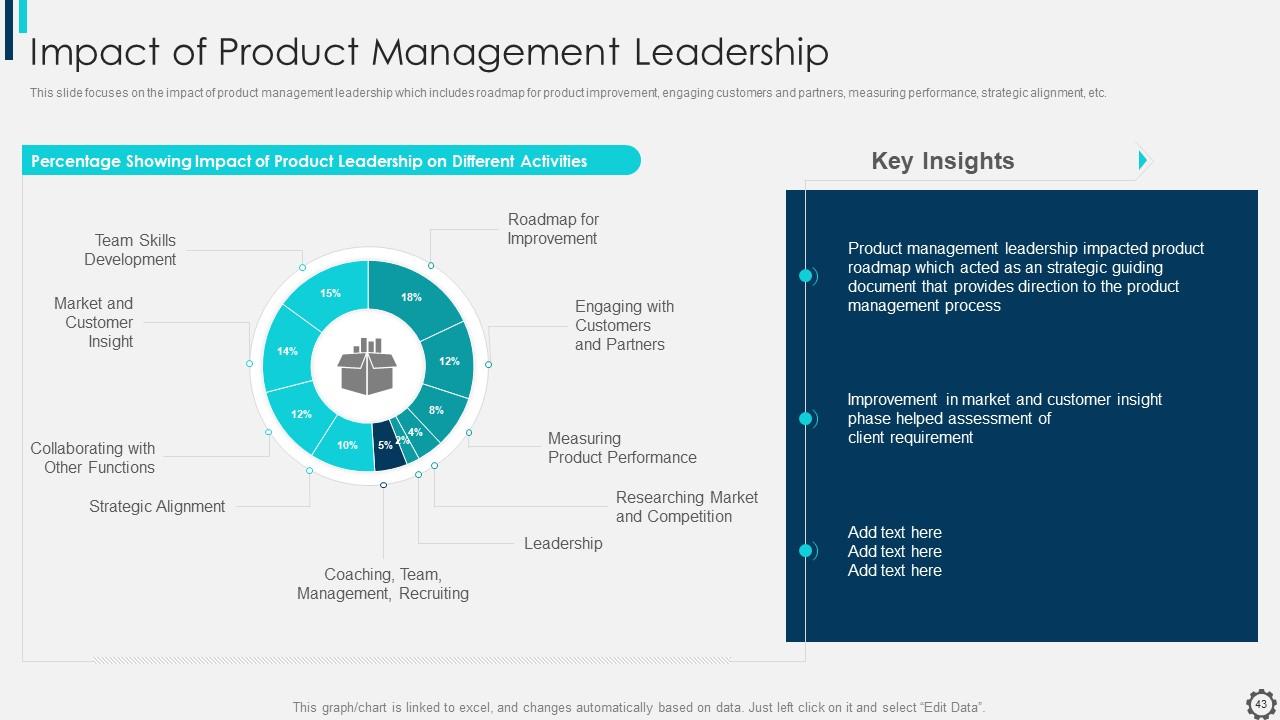
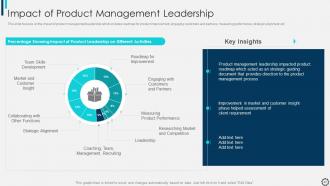
Slide 43: This slide shows impact of product management leadership which includes roadmap for product improvement.
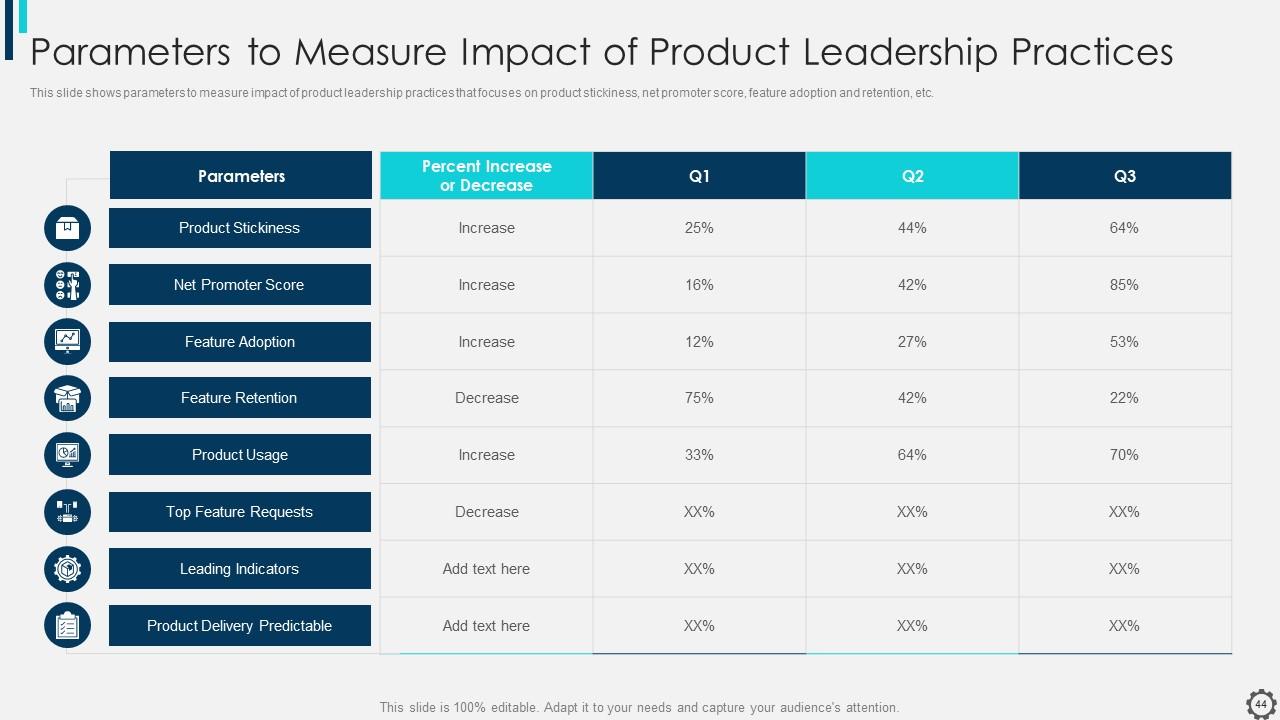
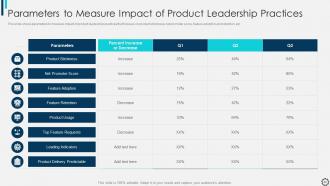
Slide 44: This slide presents Parameters to Measure Impact of Product Leadership Practices.
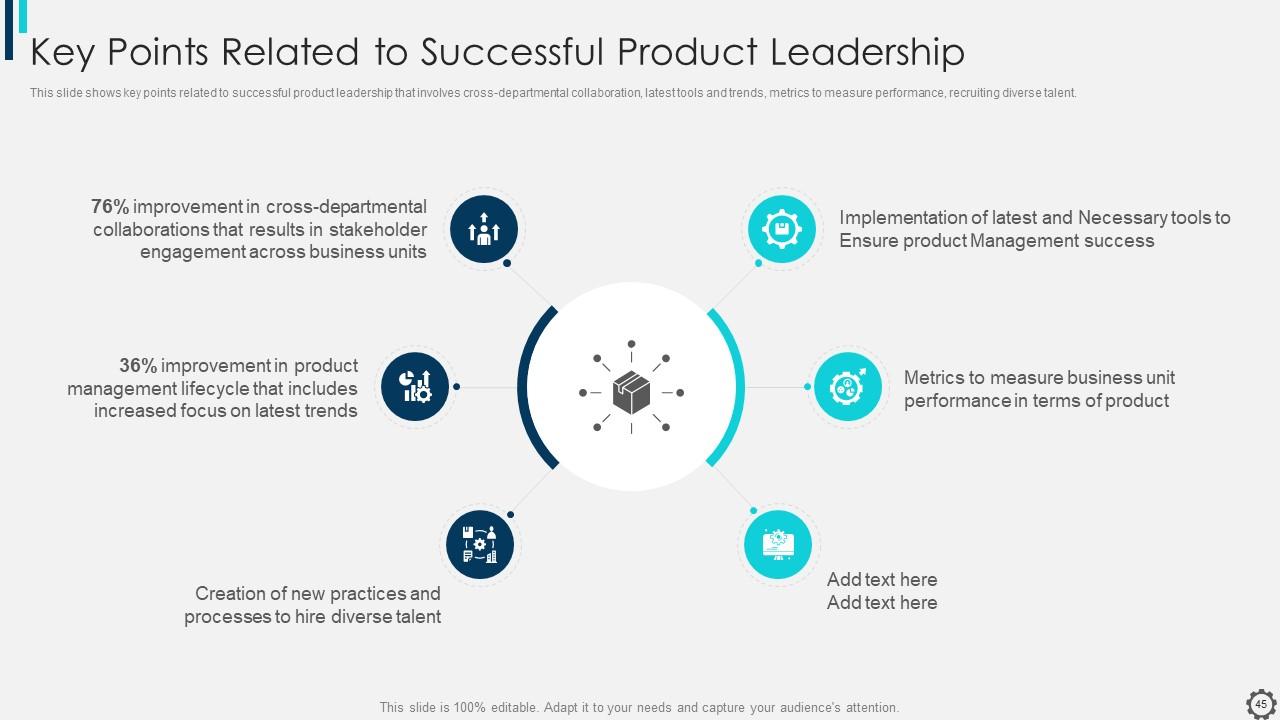
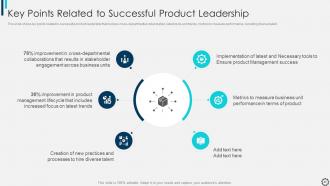
Slide 45: This slide shows Key Points Related to Successful Product Leadership.
Slide 46: This slide highlights title for topics that are to be covered next in the template.
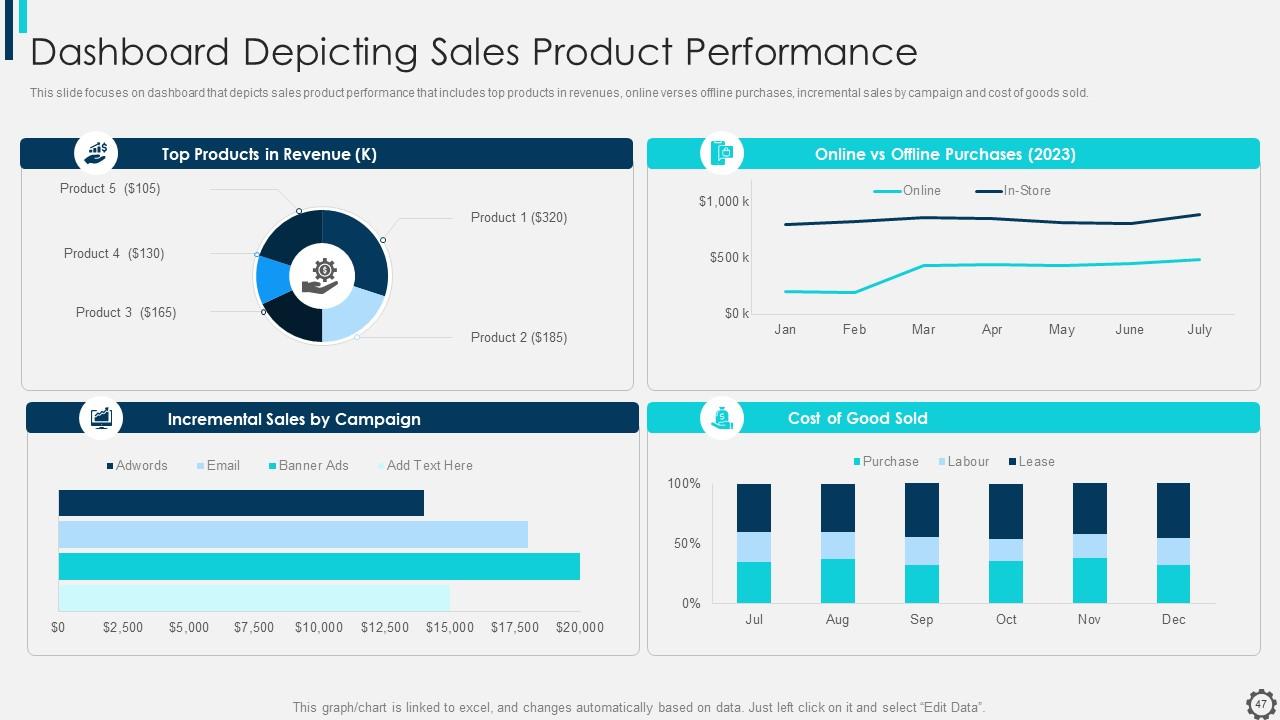
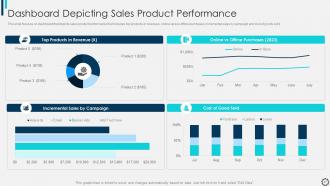
Slide 47: This slide represents dashboard that depicts sales product performance that includes top products in revenues.
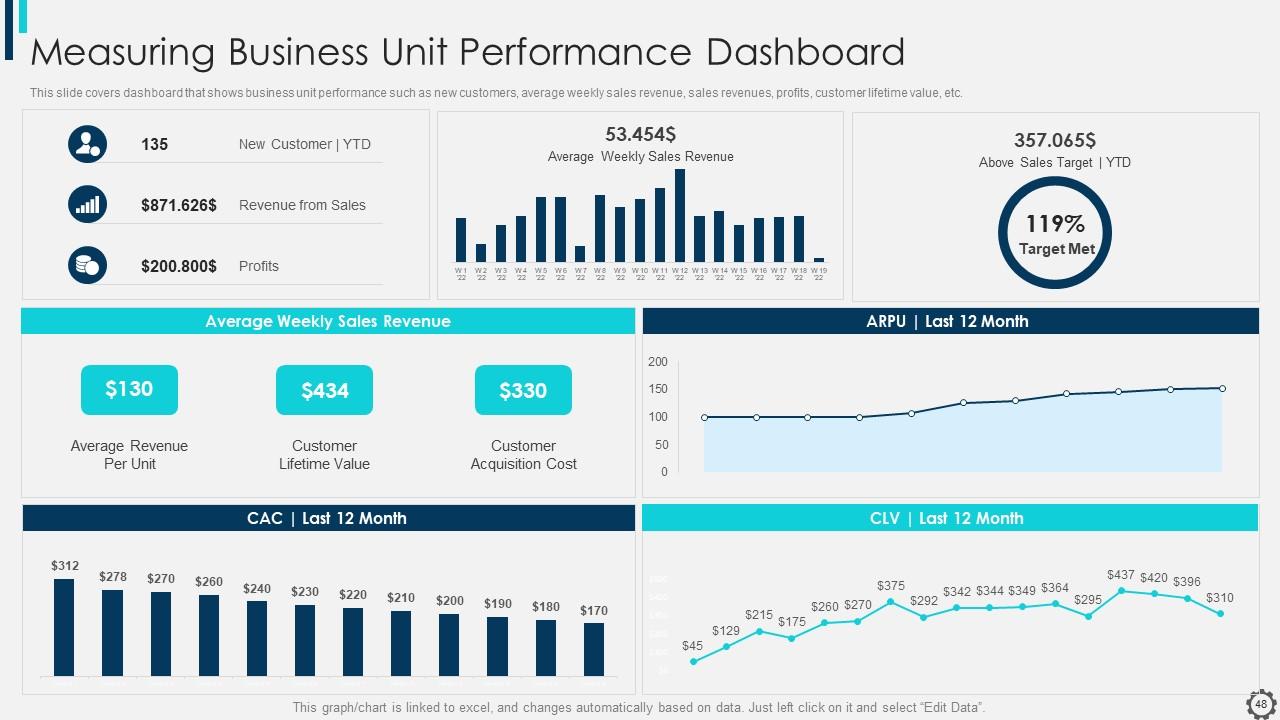
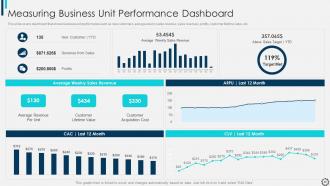
Slide 48: This slide covers dashboard that shows business unit performance such as new customers, average weekly sales revenue, etc.
Slide 49: This slide displays Icons for Managing and Innovating Product Management Leadership Functions.
Slide 50: This slide is titled as Additional Slides for moving forward.
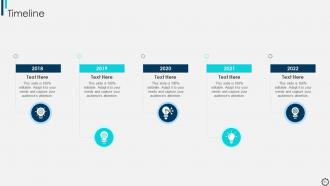
Slide 51: This is a Timeline slide. Show data related to time intervals here.
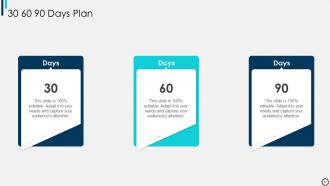
Slide 52: This slide provides 30 60 90 Days Plan with text boxes.
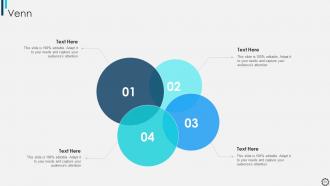
Slide 53: This slide depicts Venn diagram with text boxes.
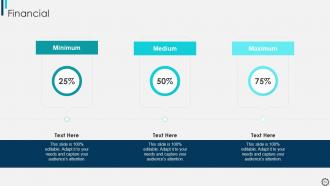
Slide 54: This is a Financial slide. Show your finance related stuff here.
Slide 55: This is About Us slide to show company specifications etc.
Slide 56: This slide shows Post It Notes. Post your important notes here.
Slide 57: This is a Thank You slide with address, contact numbers and email address.
Managing And Innovating Product Management Leadership Functions Powerpoint Presentation Slides with all 62 slides:
Use our Managing And Innovating Product Management Leadership Functions Powerpoint Presentation Slides to effectively help you save your valuable time. They are readymade to fit into any presentation structure.
-
Perfect template with attractive color combination.
-
Easily Editable.
