Managing Employee Turnover Dashboard For Employee Retention Polices Ppt Professional

Rating:
90%
Managing Employee Turnover Dashboard For Employee Retention Polices Ppt Professional
Slide 1 of 7
Favourites Favourites

Try Before you Buy Download Free Sample Product

Audience Impress Your
Audience
Editable 100%
Editable
Time Save Hours
of Time
The Biggest Sale is ending soon in
0
0
:
0
0
:
0
0
Rating:
90%
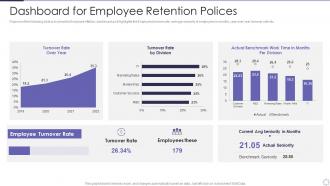
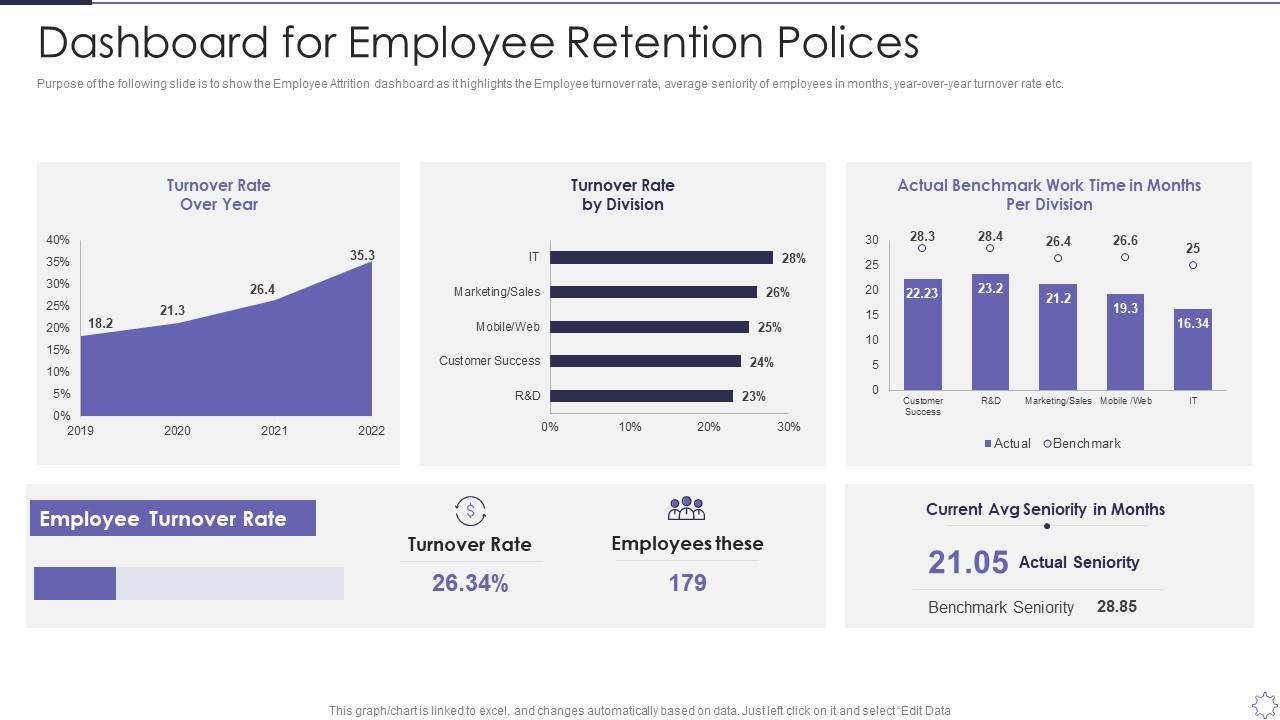
Purpose of the following slide is to show the Employee Attrition dashboard as it highlights the Employee turnover rate, average seniority of employees in months, year over year turnover rate etc. Present the topic in a bit more detail with this Managing Employee Turnover Dashboard For Employee Retention Polices Ppt Professional. Use it as a tool for discussion and navigation on Turnover Rate, Employees These. This template is free to edit as deemed fit for your organization. Therefore download it now.
FAQs for Managing Employee Turnover Dashboard For Employee Retention

Primary factors contributing to employee turnover include inadequate compensation, limited career advancement opportunities, poor management relationships, insufficient work-life balance, and lack of recognition or engagement. These challenges particularly impact sectors like retail, hospitality, and healthcare, where organizations increasingly find that addressing compensation transparency, leadership development, and flexible work arrangements delivers improved retention rates and competitive talent advantages.

Organizations effectively measure employee satisfaction through regular pulse surveys, exit interviews, one-on-one feedback sessions, employee net promoter scores, and engagement analytics platforms. These measurement approaches enable companies to identify retention risks early, address workplace concerns proactively, and create targeted improvement strategies, with many finding that consistent satisfaction tracking reduces turnover by 25-40% while enhancing overall workplace culture.

Company culture significantly influences talent retention by shaping employee engagement, job satisfaction, career development opportunities, and workplace relationships. Organizations with strong, positive cultures that prioritize transparency, recognition, and growth find that employees are more likely to stay long-term, ultimately reducing recruitment costs and maintaining institutional knowledge while delivering enhanced productivity and competitive advantage.

Effective onboarding improvements include structured multi-week programs, dedicated mentor assignments, clear role expectations, regular check-ins, and comprehensive cultural integration activities. These strategies enhance employee engagement by providing consistent support, reducing uncertainty, and accelerating productivity timelines, with many organizations finding that robust onboarding processes decrease turnover by up to 50% within the first year.

High employee turnover creates substantial financial burdens through recruitment costs, training expenses, lost productivity, overtime payments, and reduced operational efficiency. These costs often reach 50-200% of an employee's annual salary, with sectors like retail and hospitality finding that streamlined retention strategies, competitive compensation packages, and enhanced workplace culture ultimately deliver significant cost savings and improved bottom-line performance.

HR can implement predictive analytics to analyze engagement scores, performance patterns, and behavioral indicators, alongside regular one-on-one check-ins, exit interview trend analysis, and employee pulse surveys. These strategies enable organizations to identify disengagement early through declining productivity, increased absenteeism, and reduced collaboration, ultimately allowing proactive retention interventions and stronger workforce stability.

Employee training and development is crucial in turnover management, serving as both retention strategy and competitive advantage by enhancing skills, career progression opportunities, and job satisfaction. Organizations investing in comprehensive development programs experience significantly lower turnover rates, with employees feeling more valued and engaged, ultimately reducing recruitment costs while building stronger, more capable teams that drive long-term business success.

Leadership style significantly impacts employee retention through communication approaches, recognition practices, decision-making transparency, and professional development support. Transformational leaders who provide clear direction, regular feedback, and growth opportunities often see higher retention rates in organizations like tech companies and healthcare systems, while micromanagement styles typically increase turnover, ultimately affecting operational efficiency and competitive advantage.

Exit interviews can be utilized to identify turnover patterns by conducting structured conversations with departing employees, analyzing feedback themes, documenting management concerns, and tracking compensation issues. Through systematic data collection, organizations streamline retention strategies, enhance workplace culture, and address specific departmental challenges, with many companies finding that consistent exit interview processes ultimately deliver actionable insights and reduced future turnover rates.

**INPUT**: What technology tools are available to help monitor and manage employee retention? **OUTPUT**: Employee retention technology tools include HR analytics platforms, predictive modeling software, employee engagement surveys, performance management systems, and workforce planning applications. These technologies streamline retention efforts by identifying at-risk employees, tracking engagement metrics, and automating personalized interventions, with many organizations finding that data-driven approaches significantly reduce turnover while enhancing overall workforce stability. [Word count: 58 words]

Remote work significantly reduces turnover by enhancing work-life balance, eliminating commutes, and expanding talent pools beyond geographic constraints. However, it presents retention challenges through reduced team cohesion and career development visibility, with tech and financial services finding that hybrid models ultimately deliver optimal retention while healthcare and manufacturing face unique implementation considerations requiring strategic adaptation.

Creating a positive work environment involves implementing flexible work arrangements, recognition programs, professional development opportunities, transparent communication channels, and competitive compensation packages. These practices enhance employee satisfaction by promoting work-life balance, career growth, and organizational trust, with many companies finding that such strategic investments significantly reduce turnover while building long-term loyalty and engagement.

Organizations can balance flexibility and structure by implementing hybrid work policies, flexible scheduling within defined core hours, clear performance metrics with adaptable workflows, and structured career development with personalized growth paths. Through strategic workforce management, companies like tech firms and financial services enhance employee satisfaction, reduce turnover costs, and maintain operational efficiency, ultimately delivering competitive advantage in talent retention.

Employee recognition and rewards programs play a crucial role in turnover management by boosting morale, enhancing job satisfaction, increasing loyalty, and creating emotional connections to the organization. These programs help retain top talent through personalized acknowledgment, performance-based incentives, and career development opportunities, with many companies finding that strategic recognition efforts significantly reduce recruitment costs while improving overall employee engagement and productivity.

Small businesses can implement effective turnover management through cost-efficient strategies like regular one-on-one check-ins, peer recognition programs, flexible work arrangements, clear career development conversations, and skills-based training using free online resources. These approaches enhance employee engagement and retention by fostering communication, acknowledging contributions, and demonstrating growth opportunities, ultimately reducing recruitment costs while building stronger, more committed teams in competitive talent markets.

Ratings and Reviews

90% of 100
Review Form
Write a review
Most Relevant Reviews
  1. 80%

    by O'Ryan Edwards

    Eye-catching PPT designs, outstanding team, and best customer service. I’m a super satisfied customer here!
  2. 100%

    by Chung Bennett

    SlideTeam is very efficient when it comes to saving time. I am happy that I chose them for my presentation.

2 Item(s)

per page: