Managing Employee Turnover Employee Compensation Strategy Ppt Infographics Diagrams
Try Before you Buy Download Free Sample Product
Audience
Editable
of Time
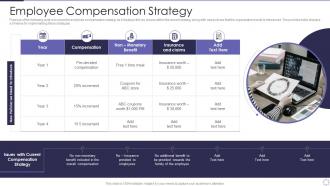
Purpose of the following slide is to show the employee compensation strategy as it displays the key issues within the current strategy along with new policies that the organization needs to introduced. The provided table displays a timeline for implementing these strategies.
People who downloaded this PowerPoint presentation also viewed the following :
Managing Employee Turnover Employee Compensation Strategy Ppt Infographics Diagrams with all 6 slides:
Use our Managing Employee Turnover Employee Compensation Strategy Ppt Infographics Diagrams to effectively help you save your valuable time. They are readymade to fit into any presentation structure.
FAQs for Managing Employee Turnover Employee Compensation Strategy
Employee turnover typically stems from inadequate compensation, limited career advancement opportunities, poor work-life balance, ineffective management practices, and lack of recognition or engagement. These factors often compound in today's competitive job market, with many organizations finding that addressing compensation transparency, flexible work arrangements, and professional development opportunities significantly reduces turnover while enhancing retention and productivity.
Employee turnover significantly impacts organizational culture by creating instability, disrupting team dynamics, reducing institutional knowledge, and weakening established relationships among colleagues. High turnover rates often lead to increased workloads for remaining staff, decreased morale, and erosion of trust, with many organizations finding that consistent departures create anxiety and uncertainty that ultimately undermines collaborative culture and productivity.
Leadership significantly influences turnover through clear communication, career development opportunities, recognition programs, fair compensation practices, and fostering positive workplace culture. Effective managers who provide regular feedback, support professional growth, and create inclusive environments see substantially lower attrition rates, with many organizations finding that leadership training and accountability measures ultimately deliver improved retention and enhanced employee satisfaction.
Exit interviews can be leveraged by conducting structured conversations with departing employees, analyzing feedback patterns across departments and timeframes, and implementing systematic data collection processes. Through consistent questioning frameworks, organizations identify recurring issues like management concerns, compensation gaps, or career development limitations, ultimately enabling targeted retention strategies and cultural improvements that address root causes rather than symptoms.
Turnover rates vary significantly across industries, with hospitality and retail experiencing 70-100% annual turnover, while technology, healthcare, and financial services typically see 10-15% rates. Professional services, manufacturing, and government sectors generally maintain lower turnover through competitive benefits and career development, ultimately delivering greater operational stability and reduced recruitment costs.
Employee engagement and retention strategies significantly reduce turnover by creating meaningful work experiences, offering competitive compensation, providing career development opportunities, and fostering positive workplace cultures. Through strategic initiatives like mentorship programs, flexible work arrangements, and recognition systems, organizations enhance job satisfaction, strengthen employee loyalty, and minimize recruitment costs, ultimately delivering improved productivity and sustainable competitive advantage.
Organizations should track overall turnover rate, voluntary versus involuntary departures, turnover by department and role level, time-to-fill positions, and exit interview insights. These metrics enable companies to identify patterns across different teams, assess recruitment efficiency, and understand departure reasons, with many finding that comprehensive tracking helps reduce hiring costs, improve retention strategies, and maintain operational continuity.
Effective onboarding improvements include structured orientation programs, mentorship assignments, clear role expectations, regular check-ins, and comprehensive training schedules. These enhancements streamline integration by building connections, reducing uncertainty, and accelerating productivity, with many organizations finding that systematic onboarding approaches decrease early turnover by up to 25% while improving employee engagement.
High employee turnover creates significant financial burdens through recruitment costs, training expenses, lost productivity, overtime payments, and reduced operational efficiency. These costs often range from 50-200% of an employee's annual salary, with industries like hospitality and retail facing particularly steep impacts, ultimately affecting profitability and competitive positioning in increasingly talent-driven markets.
Remote work significantly enhances employee retention by offering flexible schedules, eliminating commutes, and improving work-life balance, while reducing recruitment costs and geographic limitations. Companies like tech firms and financial services find that remote policies decrease turnover rates by 25-50%, ultimately delivering higher job satisfaction, expanded talent pools, and substantial cost savings from reduced office overhead.
HR can implement predictive analytics monitoring engagement scores, exit interview pattern analysis, performance trend tracking, one-on-one feedback sessions, and employee satisfaction surveys to identify flight risks. These strategies enable organizations to proactively address retention challenges by recognizing early warning signs like declining productivity or reduced participation, ultimately reducing turnover costs and maintaining institutional knowledge.
Companies can use employee feedback to enhance retention through regular surveys, exit interviews, one-on-one meetings, and anonymous suggestion systems that identify specific pain points and improvement opportunities. This strategic approach enables organizations to address compensation concerns, workplace culture issues, and career development gaps proactively, with many finding that responsive feedback implementation significantly reduces turnover while enhancing overall employee satisfaction.
**INPUT**: What are the psychological effects of frequent turnover on remaining employees? **OUTPUT**: Frequent turnover creates psychological stress through increased workload anxiety, survivor guilt, job insecurity, and decreased team cohesion among remaining employees. These effects ultimately diminish morale, productivity, and organizational trust, with many companies finding that addressing turnover proactively through retention strategies enhances workplace stability and competitive advantage. [Word count: 50 words]
Mentorship programs reduce turnover by fostering professional development, creating stronger workplace relationships, and providing clear career pathways through structured guidance and support. These initiatives enhance employee engagement, accelerate skill building, and improve retention rates, with many organizations finding that effective mentoring delivers increased job satisfaction, better performance outcomes, and significantly lower recruitment costs.
Successful companies implement flexible work arrangements, personalized career development programs, comprehensive wellness initiatives, performance-based recognition systems, and mentorship opportunities. Through strategic combinations of remote work options, skill-building investments, and competitive benefits packages, organizations like Google and Salesforce significantly reduce turnover rates while enhancing employee satisfaction, ultimately delivering stronger retention and competitive advantage.
-
It’s really cool, and you can find pretty much everything you could need for your work or school.
-
I am really satisfied with their XYZ products. Used their slides for my business presentations and now I am taking their help for my son's high-school assignments. Super satisfied!!