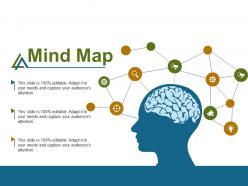
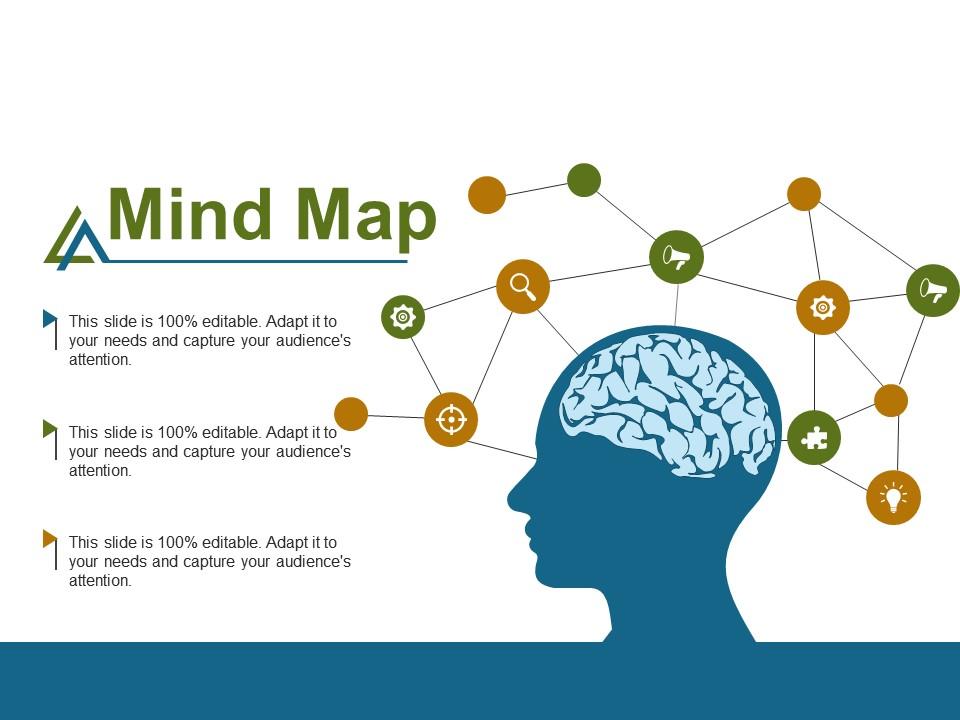
Mind map knowledge f466 ppt infographic template graphics design
Try Before you Buy Download Free Sample Product
Audience
Editable
of Time
Give it that extra bit of boost with our Mind Map Knowledge F466 Ppt Infographic Template Graphics Design. Cater for insufficient effort.
People who downloaded this PowerPoint presentation also viewed the following :
Mind map knowledge f466 ppt infographic template graphics design with all 5 slides:
Discredit insufficient effort with our Mind Map Knowledge F466 Ppt Infographic Template Graphics Design. Ensure folks feel apologetic about being careless.
FAQs for Mind map knowledge f466 ppt infographic
A mind map is a visual thinking tool that organizes information radially around a central topic, using branches, colors, images, and keywords to represent connections and relationships. Unlike traditional linear note-taking methods that follow sequential text formats, mind maps engage both analytical and creative thinking processes, enabling faster information processing, improved memory retention, and enhanced brainstorming capabilities, with many professionals finding that this approach streamlines complex project planning and knowledge synthesis.
Mind maps enhance creativity and brainstorming sessions by visualizing connections between ideas, encouraging non-linear thinking, and enabling rapid idea capture through color-coded branches and visual elements. These tools streamline collaborative sessions by allowing teams to build upon each other's concepts simultaneously, with many organizations finding that mind mapping increases participant engagement and generates more innovative solutions than traditional brainstorming methods.
Mind maps improve information retention and recall by engaging visual and spatial memory, creating associative connections between concepts, and organizing information in hierarchical structures that mirror natural thinking patterns. These visual frameworks enable students, professionals, and researchers to process complex information more effectively, with many educational institutions finding that mind mapping significantly enhances comprehension and long-term memory formation.
Effective mind mapping strategies include using vibrant colors to differentiate branches, incorporating icons and symbols for quick recognition, maintaining consistent font sizes with larger text for main topics, and ensuring balanced spacing between elements. These visual techniques enhance comprehension by creating clear hierarchies, improving information retention, and enabling faster navigation, with many organizations finding that well-designed mind maps significantly streamline brainstorming sessions and project planning processes.
Mind maps enhance project management by visualizing project hierarchies, breaking down complex tasks into manageable components, tracking dependencies, and facilitating team collaboration through shared visual frameworks. Organizations across industries, from software development to construction, find that mind mapping streamlines workflow planning, resource allocation, and milestone tracking, ultimately delivering improved project transparency and faster execution timelines.
**INPUT**: What are the best software tools or applications for creating digital mind maps? **OUTPUT**: Leading digital mind mapping tools include MindMeister, XMind, Lucidchart, SimpleMind, and Coggle, each offering unique collaboration and visualization features. These platforms streamline brainstorming and project planning by enabling real-time collaboration, cloud synchronization, and seamless integration with business applications, with many organizations finding that digital mind maps enhance team productivity and strategic planning processes significantly.
Educators can integrate mind mapping by using it for lesson planning, student note-taking, project brainstorming, concept visualization, and assessment preparation. Through digital tools and collaborative platforms, teachers enhance student engagement, improve information retention, and facilitate creative problem-solving, with many schools finding that visual learning approaches ultimately deliver better comprehension and academic outcomes.
Colors and images enhance mind map effectiveness by improving visual appeal, aiding memory retention, creating emotional connections, and enabling faster information processing and recall. These visual elements help the brain categorize and distinguish different concepts more easily, with many educators and business professionals finding that colorful, image-rich mind maps significantly increase comprehension and engagement during presentations and brainstorming sessions.
Mind maps facilitate better communication during team meetings by creating visual representations that organize ideas, track discussion points, and ensure all perspectives are captured in real-time. This approach enables teams to maintain focus, identify connections between concepts, and build consensus more effectively, with many organizations finding that visual collaboration reduces meeting time while improving decision-making outcomes.
Common mistakes include overcrowding with excessive text, using inconsistent visual elements, creating poor hierarchical structure, neglecting color coding systems, and making branches too linear or rigid. These design flaws can reduce clarity and comprehension, with many educators and business professionals finding that balanced layouts, consistent formatting, and strategic use of keywords ultimately enhance information retention and decision-making processes.
Mind mapping assists presentation preparation by organizing key points, structuring logical flow, identifying supporting examples, and creating visual memory aids that enhance recall. Speakers use mind maps to develop compelling narratives, anticipate audience questions, and practice smooth transitions between topics, ultimately delivering more confident, coherent presentations while reducing anxiety through thorough preparation and clear content organization.
Mind maps for personal goal setting offer enhanced visualization, improved creativity, better task prioritization, clearer connection identification, and streamlined progress tracking. These visual planning tools enable individuals to break down complex objectives into manageable components, identify interdependencies between different life areas, and maintain motivation through visual progress representation, ultimately delivering greater clarity and achievement rates in personal development endeavors.
Mind maps adapt across industries by restructuring information visualization, workflow planning, and strategic analysis to meet sector-specific needs. In marketing, teams use them for campaign development and customer journey mapping, while healthcare professionals leverage them for patient care protocols and medical decision trees, ultimately streamlining complex processes and enhancing collaborative planning across diverse organizational contexts.
Mind map analysis involves reviewing branch hierarchy, eliminating redundant information, consolidating similar concepts, checking logical flow between ideas, and ensuring visual balance across sections. Through color-coding priorities, trimming excessive detail, and restructuring unclear connections, organizations streamline project planning, strategic development, and team brainstorming processes, ultimately delivering clearer communication and more focused decision-making frameworks.
Collaborative mind mapping enhances teamwork by enabling real-time idea sharing, visual brainstorming, and collective knowledge synthesis across distributed teams. Through digital platforms, teams streamline project planning, strategic discussions, and creative sessions while ensuring equal participation and transparent communication, ultimately delivering faster consensus-building and more innovative solutions in increasingly complex business environments.
No Reviews