


My career planning outline powerpoint presentation with slides
Delivering an example of PPT presentation on career planning and development don’t happen by accident. It is a continuous process and hence to deliver a killer example of PPT you need assistance. Bearing this in mind here we are showcasing a readymade sample of career planning process PowerPoint show. You can download this PPT sample file to cast spotlight on structured planning as well as your professional career so as to pave a secure future path for thriving growth process. Going further, our PowerPoint slide deck helps to thoroughly illustrate goals, dreams and action plan in order to grab good jobs opportunity. Additionally, to add a extra sheen and give synergy to your career path planning we have included innovative designs template like of evaluating process, work experience, projects and assignments, achievements, personal goals, key skills, current competencies and many more. In short, with this presentation deck you can improve your self assessment and effectively communicate career change ideas. We've dedicated ourselves to the development of the highest quality My Career Planning Outline Complete Powerpoint Deck With Slides available today. Our products are designed to have your presentations perform at their best.










-

- Google Slides is a new FREE Presentation software from Google.
- All our content is 100% compatible with Google Slides.
- Just download our designs, and upload them to Google Slides and they will work automatically.
- Amaze your audience with SlideTeam and Google Slides.
-

Want Changes to This PPT Slide? Check out our Presentation Design Services
-

- WideScreen Aspect ratio is becoming a very popular format. When you download this product, the downloaded ZIP will contain this product in both standard and widescreen format.
-

- Some older products that we have may only be in standard format, but they can easily be converted to widescreen.
- To do this, please open the SlideTeam product in Powerpoint, and go to
- Design ( On the top bar) -> Page Setup -> and select "On-screen Show (16:9)” in the drop down for "Slides Sized for".
- The slide or theme will change to widescreen, and all graphics will adjust automatically. You can similarly convert our content to any other desired screen aspect ratio.
Compatible With Google Slides

Get This In WideScreen
You must be logged in to download this presentation.


Do you want to remove this product from your favourites?
PowerPoint presentation slides
Complete set of pre made 59 slide templates. Exclusive template themes as career planning tools to find a job. Readymade package for all from a career advisor to career planner and career consultants. Easy replaceable dummy text to save time. High resolution and easily customizable presentation slides. Temporary water mark. Downloading process commences with just a click. Can be easily converted into PDF or JPG. Well compatible with Google slides. The stages in this process are career management, career assessment, career development, self development, self assessmt.

People who downloaded this PowerPoint presentation also viewed the following :
Content of this Powerpoint Presentation
“Where do you see yourself in five years?”At some point, a professor, a family member, or an interviewer has probably asked you this question. But what a cliché, right?
Yet, having a long-term career plan can be beneficial and the questions draws your attention to it. Thinking about your path can reduce career-related stress, increase your perceived employability, and help you connect more deeply to your purpose. A Gartner survey revealed that fewer than one in three employees knows how to develop their careers over the next five years.
Why do employees and organizations need a career plan?
The career planning process creates a road map for employees to see the next steps in their career progression. When deployed inside organizations, this process also helps HR leaders and managers create better training and professional development opportunities for the workforce.
Employer support of people’s career ambitions isn’t just a feel-good exercise. According to the Work Institute’s 2022 Retention Report, 21% of employees who quit their jobs in 2021 did so due to lack of career growth and exploration.
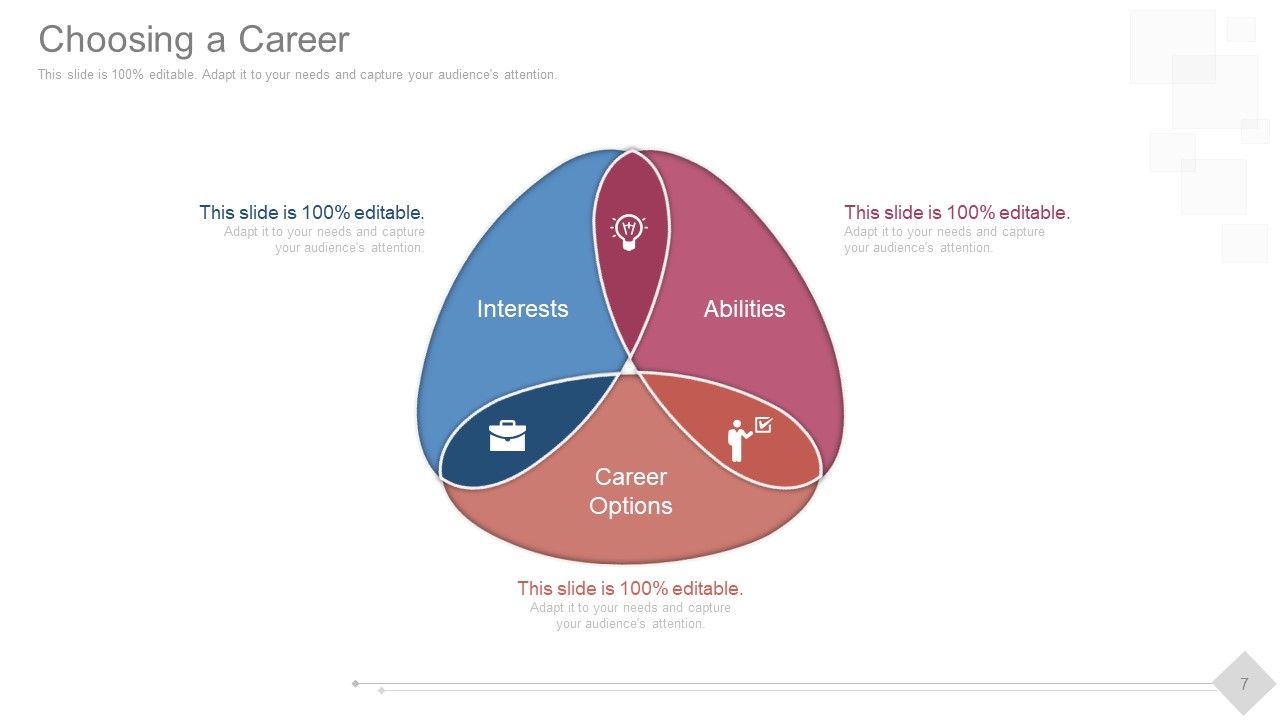
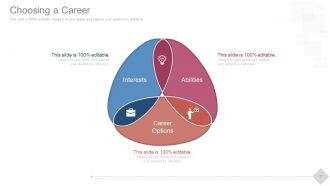
Encourage your employees to explore career options that better use their abilities, beliefs, and interests, such as jobs with similar skill sets or in new functional areas, enabling growth and innovation within the organization. Employees may start planning for the future once they have a better understanding of who they are and what their career opportunities could be. This strategy may include exploring new skills, new job opportunities, or even a new career. They may identify the advantages and disadvantages of their existing options and establish a realistic timeline for achieving their professional objectives.
Planning career paths benefits both employees and companies. HR managers can use templates to develop career planning procedures across their organizations. This ensures a consistent procedure that aligns with the organization's goals while also allowing employees to consider their growth opportunities.
Let’s explore these 100% editable and customizable templates now!
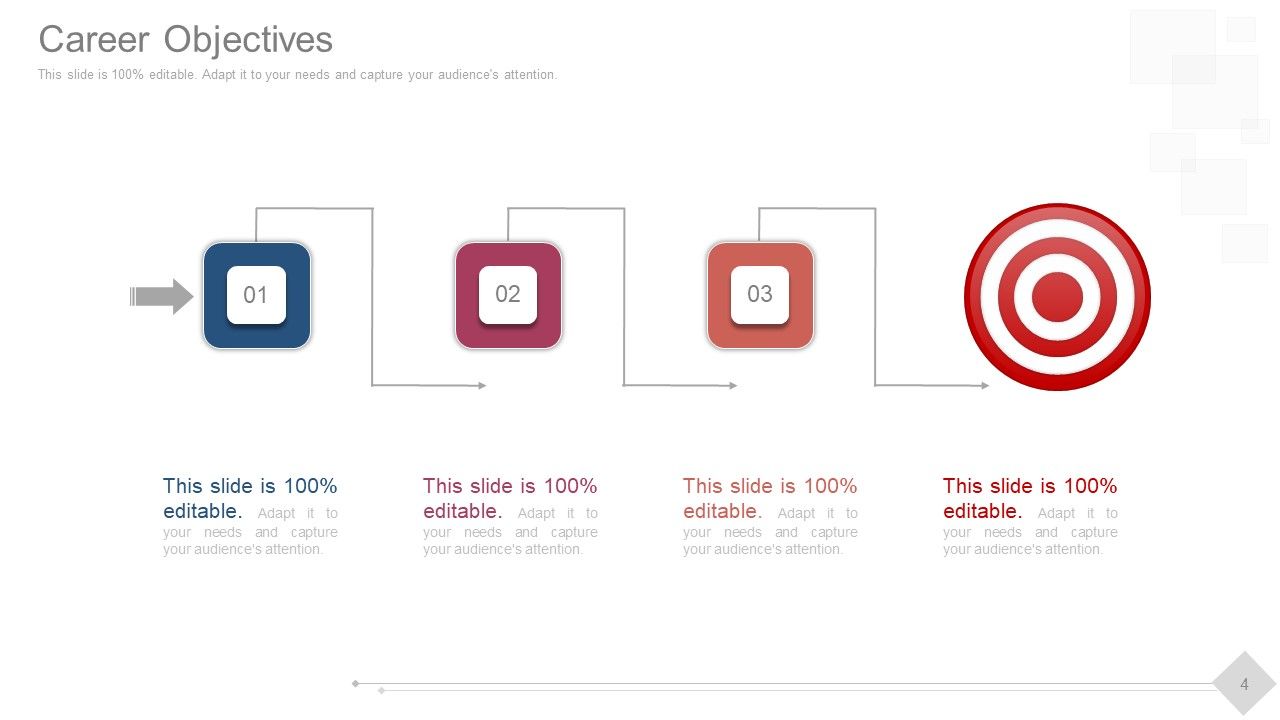
Template 1: Career Objectives PPT Template
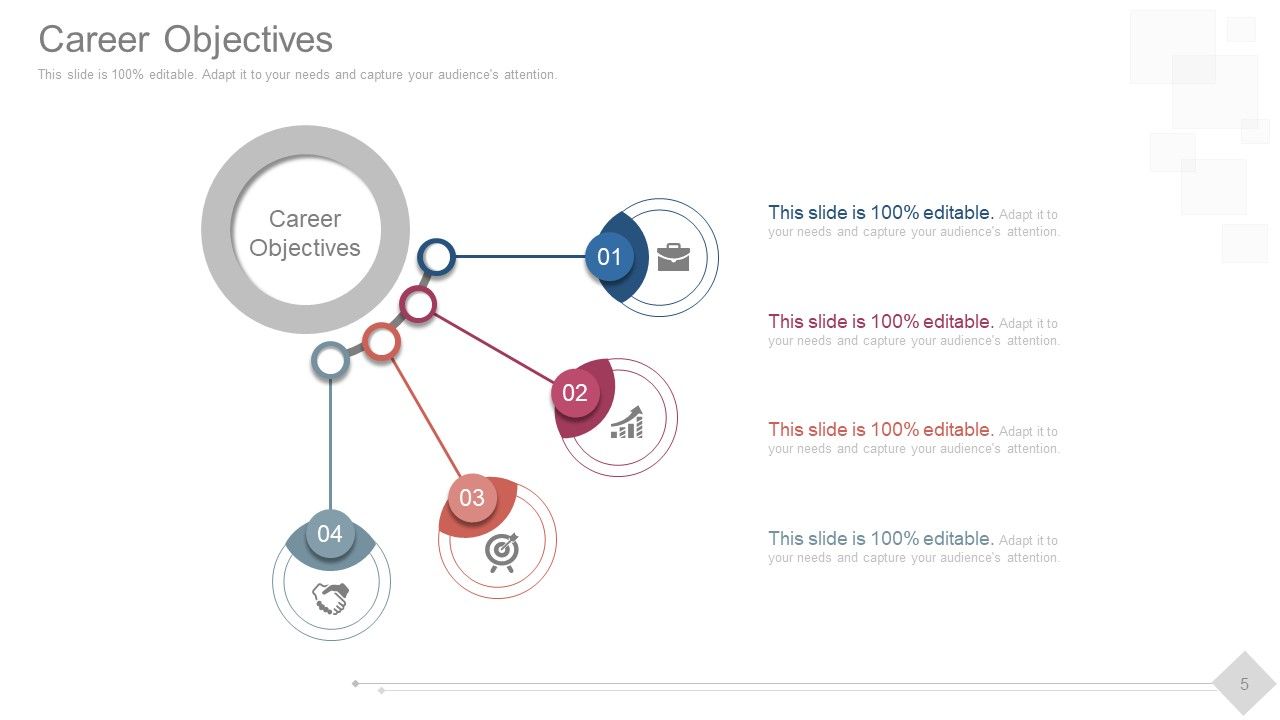
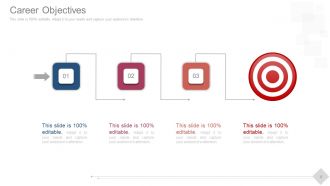
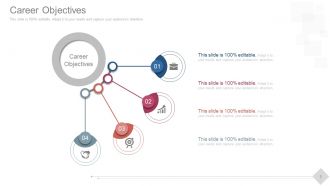
Use this PPT Template to map out your career objectives on a diagram. The slide enables you to list up to four goals that you want to achieve. As per the icons in the columns, you can add your professional goals, personal goals, financial targets, and collaboration goals. Use the text placeholders provided on the right side to record estimated timeline, brief action plans, etc. Download Now!
Template 2: Educational Qualifications PPT Template
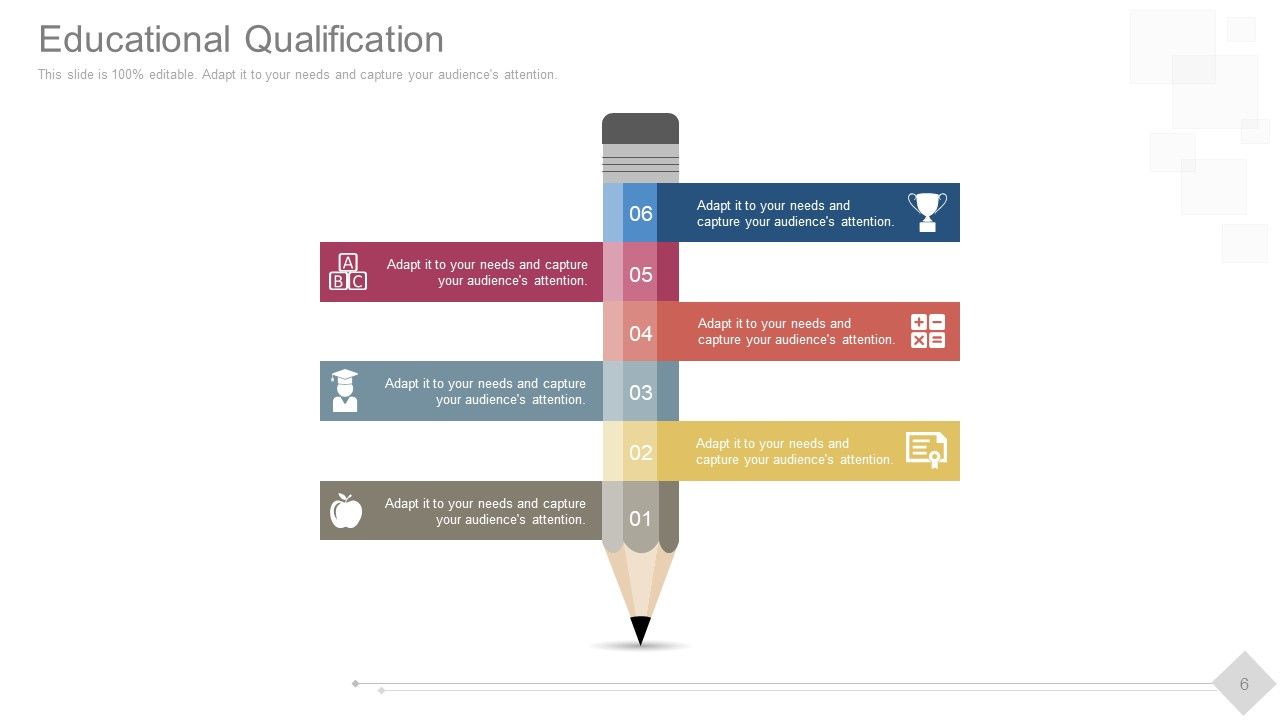
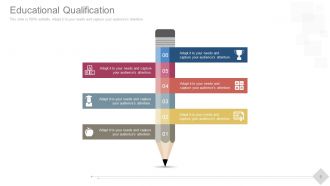
To plan ahead, it is crucial to lay down academic milestones in your kitty. This data will help you assess your pre-acquired knowledge and technical skills with which you can explore opportunities. Add details of your undergraduate, post graduate and any other professional degrees that you have. Along with that add information about skilled courses that you might have completed. Download now and assess your career options.
Template 3: Career Prospects PPT Template
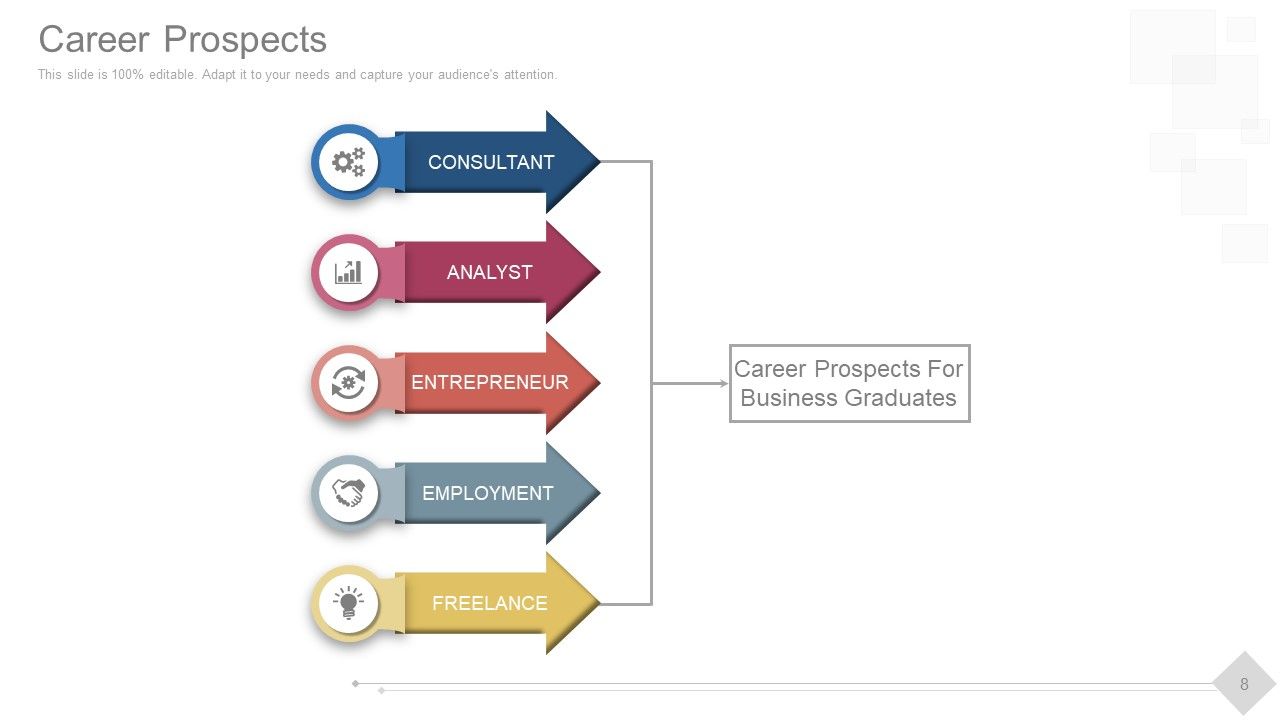
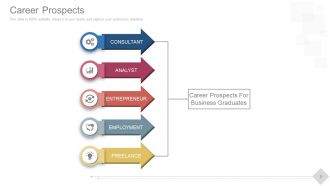
Based on educational qualifications, technical skills, personal goals, and professional aspirations, list down your career prospects in the slide. Based on your options, you can either look for opportunities that align with your career path. It could be jobs with similar profiles or startups. Download now and shortlist your options!
Template 4: Evaluating Prospects PPT Template
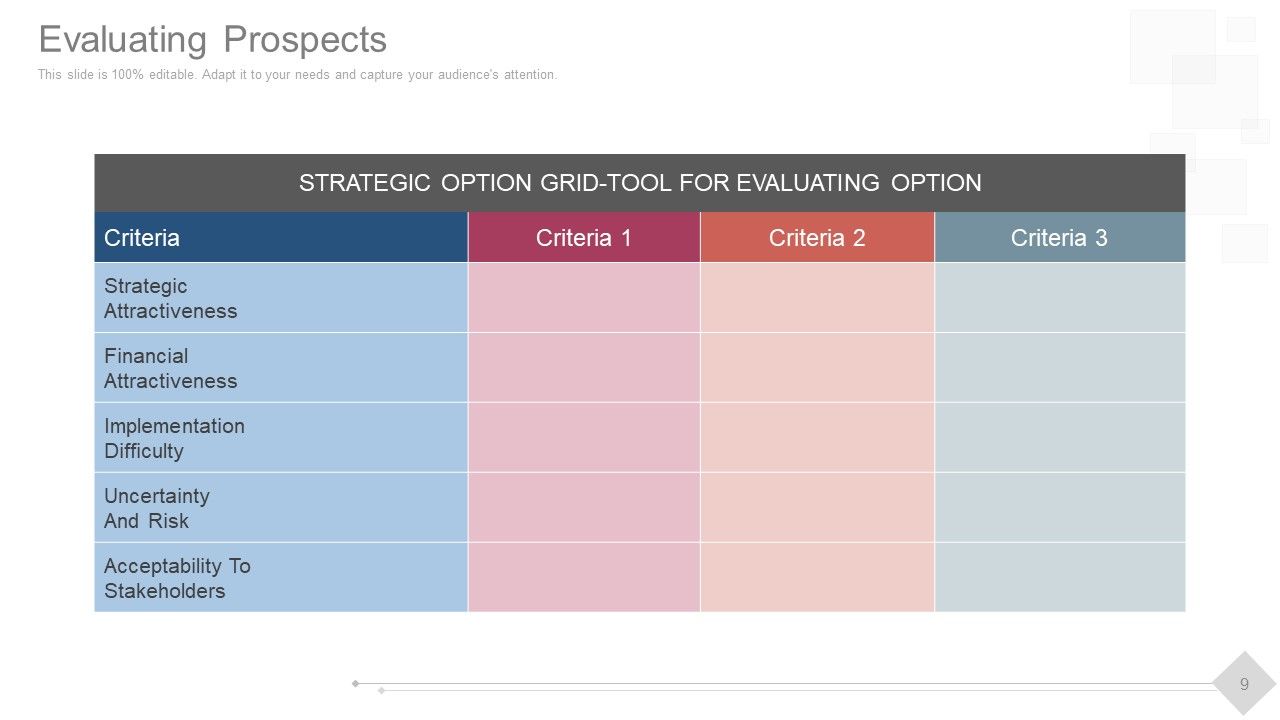
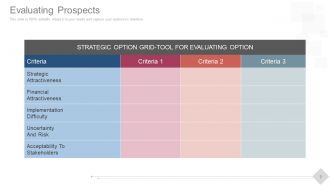
Use this Grid tool to evaluate your shortlisted options from the last slide. Take into consideration the strategic awareness, financial attractiveness, implementation difficulty, risk, acceptability to stakeholders, and uncertainty of the career paths. With this table, evaluate these criterias and choose the option that aligns with your goals and suitability. Download Now!
Template 5: Work Experience PPT Template
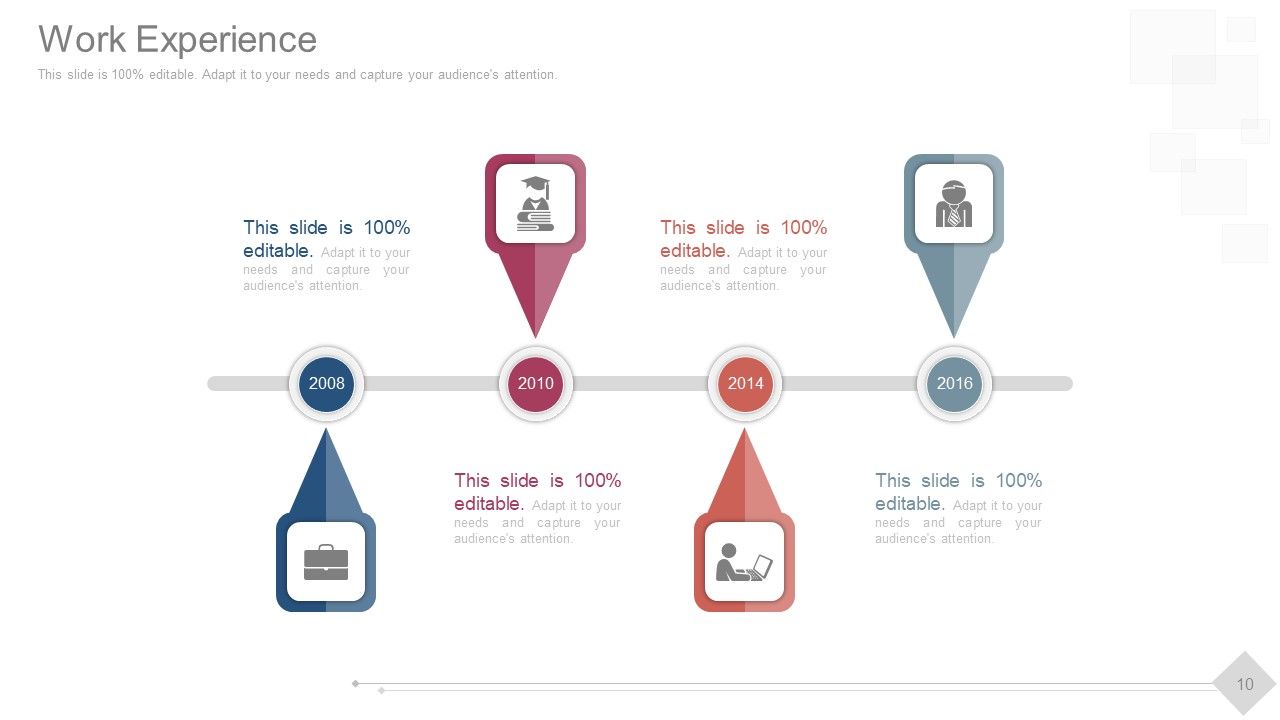
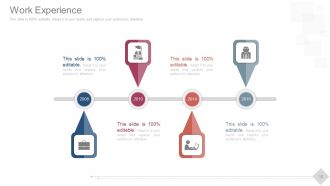
Track you past, analyze your outcomes, and advance your career with this Work Experience Tracker Slide. Document internships, part-time work, and full-time positions to acquire useful insights regarding abilities and accomplishments. This Template organizes experiences for simple reference and provides data for in-depth research to identify opportunities. Whether you're looking to advance, explore new sectors, or launch your enterprise, this data-driven strategy enables informed decisions. Download it today and start your journey to growth and prosperity.
Template 6: Project and Assignments PPT Template
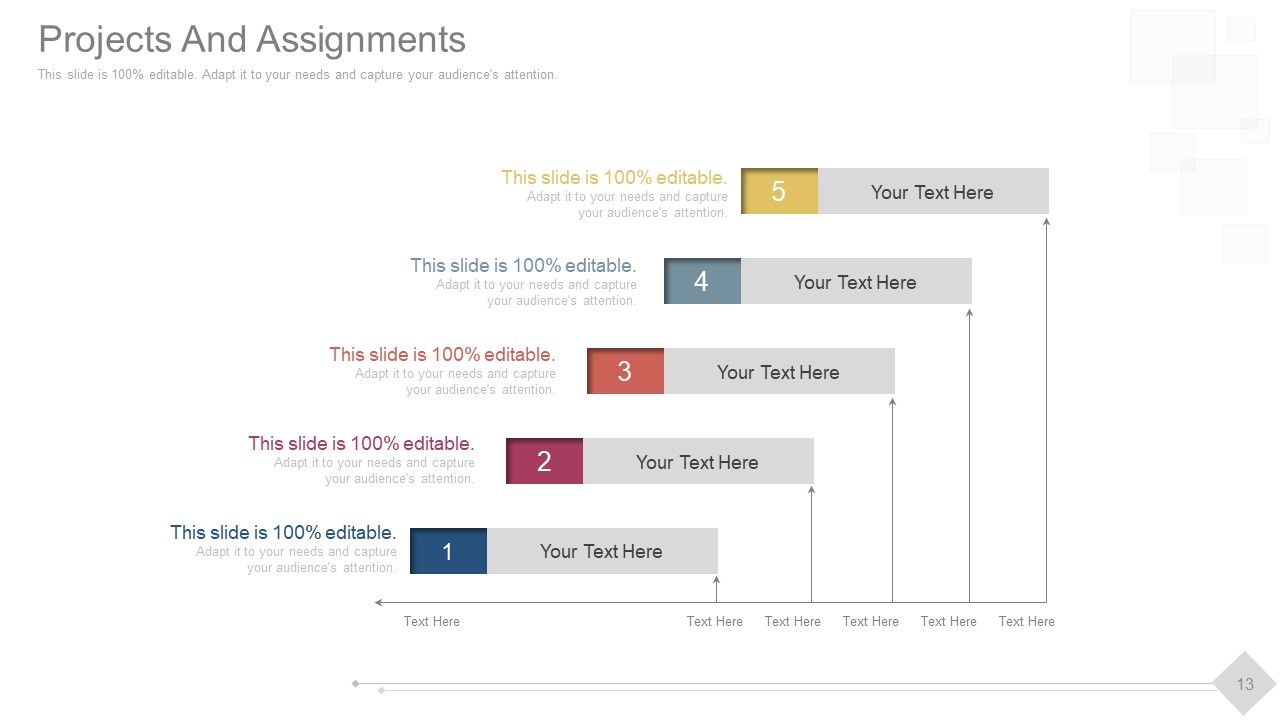
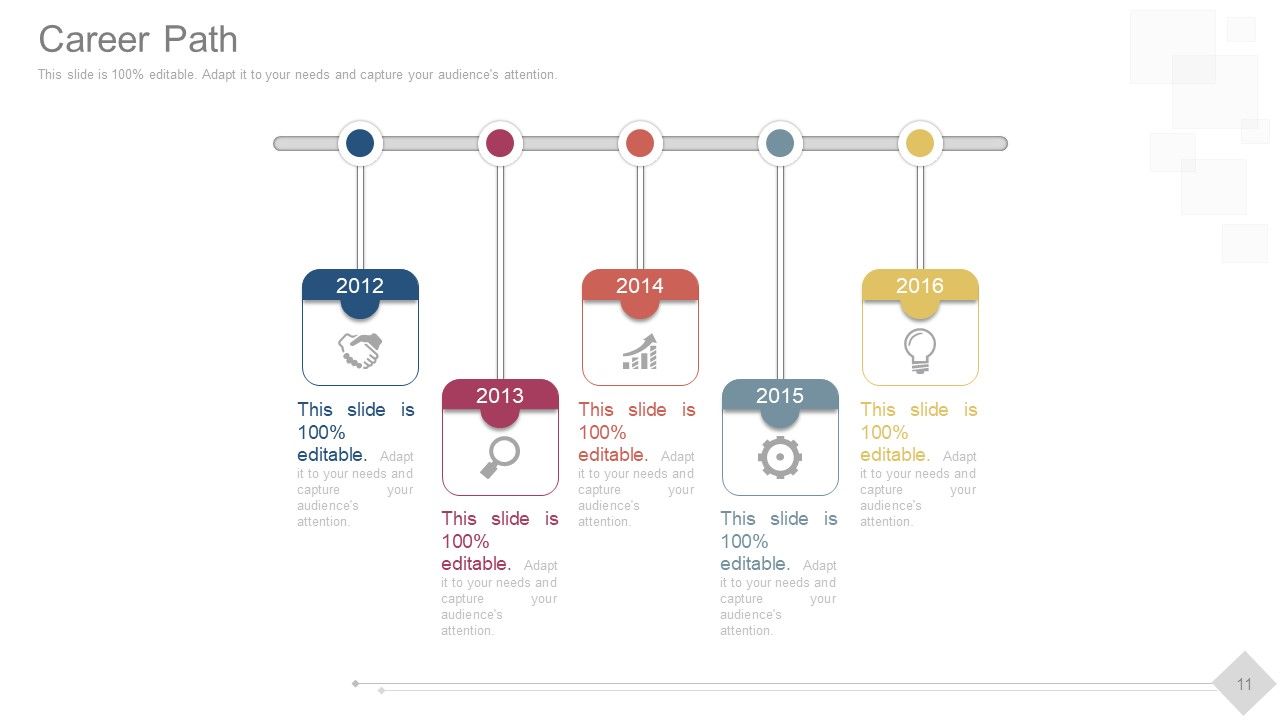
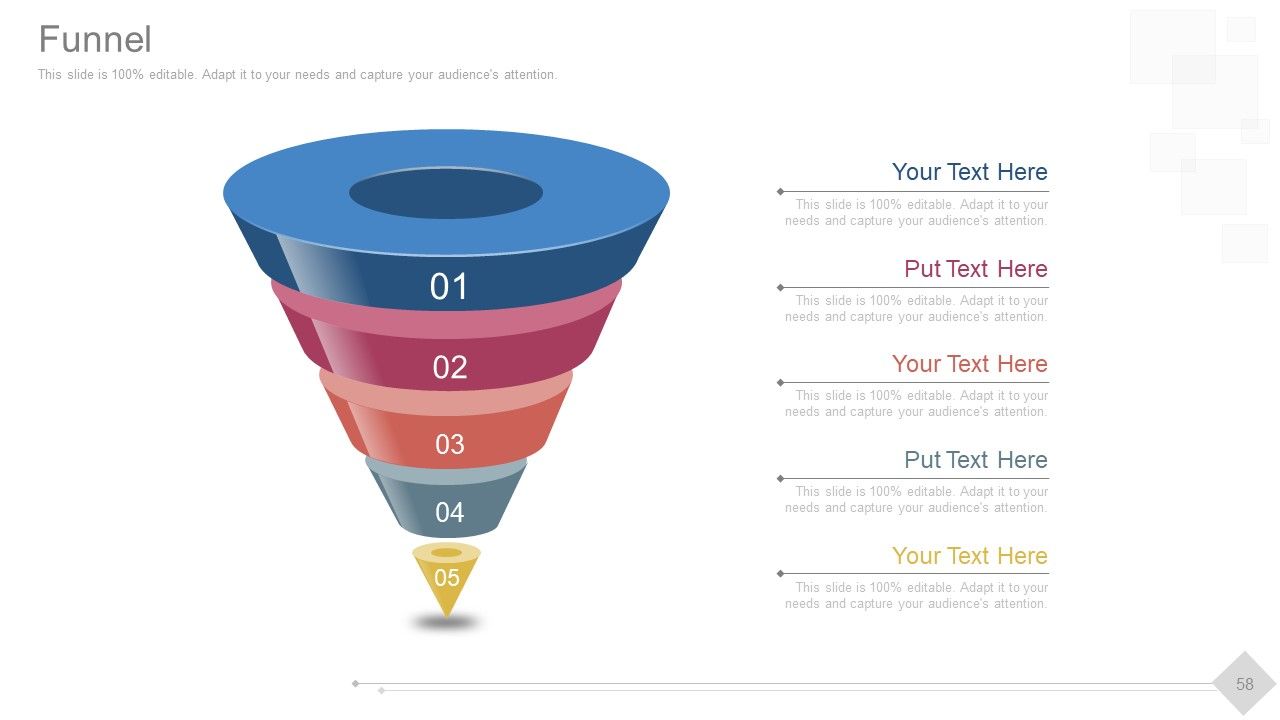
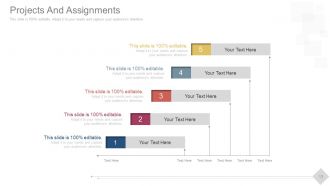
The thought of planning out your entire career may seem overwhelming. But by breaking it down into smaller, more manageable steps, you’ll soon develop a clear idea of what your career could look like. With this PPT Template, plan out small projects and assignments that will help you reach your goals. You can form a timeline and plan up to five tasks in the slide below. Add details of the project in the text placeholders provided at each step. Download now
Template 7: Achievements PPT Template
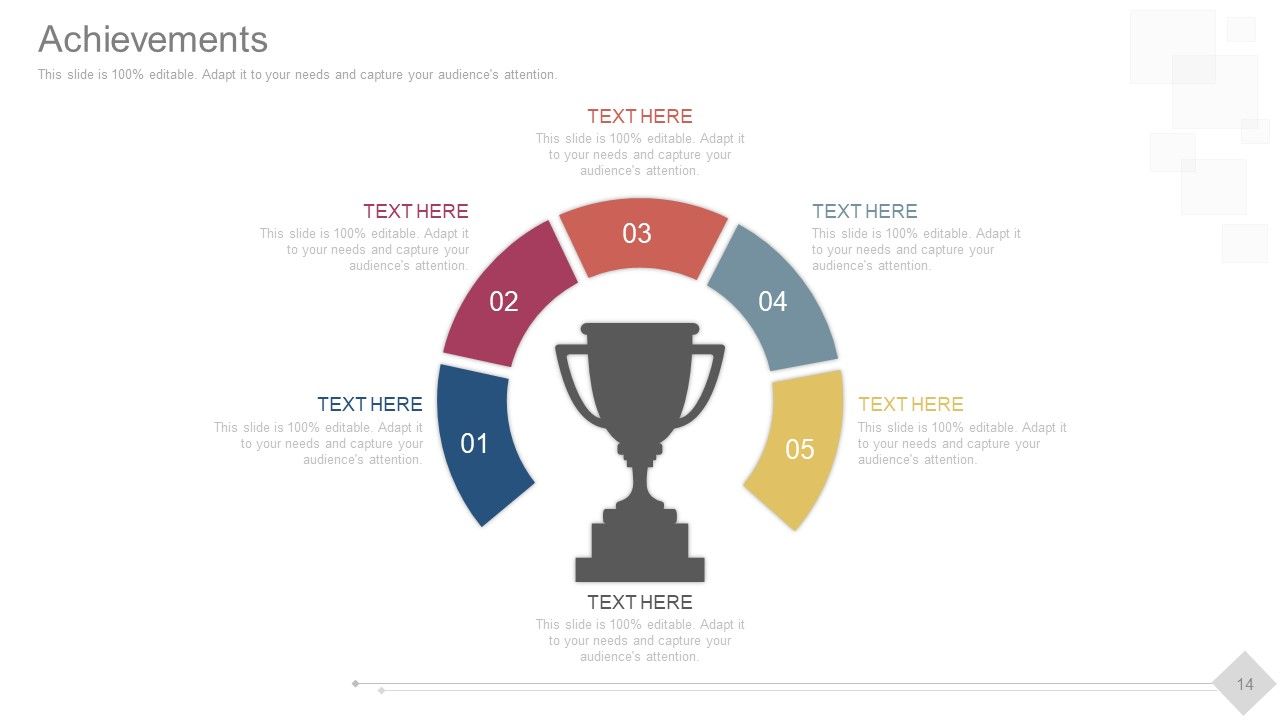
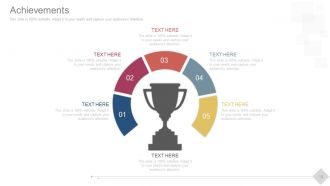
It’s the small wins on the long journey that keep our confidence, joy and motivation alive. Documents your achievements at every stage using this PPT Layout. These achievements will help you and your employers, or future partners understand your area of acquired knowledge. This will be important for validating your skills and showcasing your area of expertise. Download Now!
Template 8: Short Term Goals Timeline PPT Template
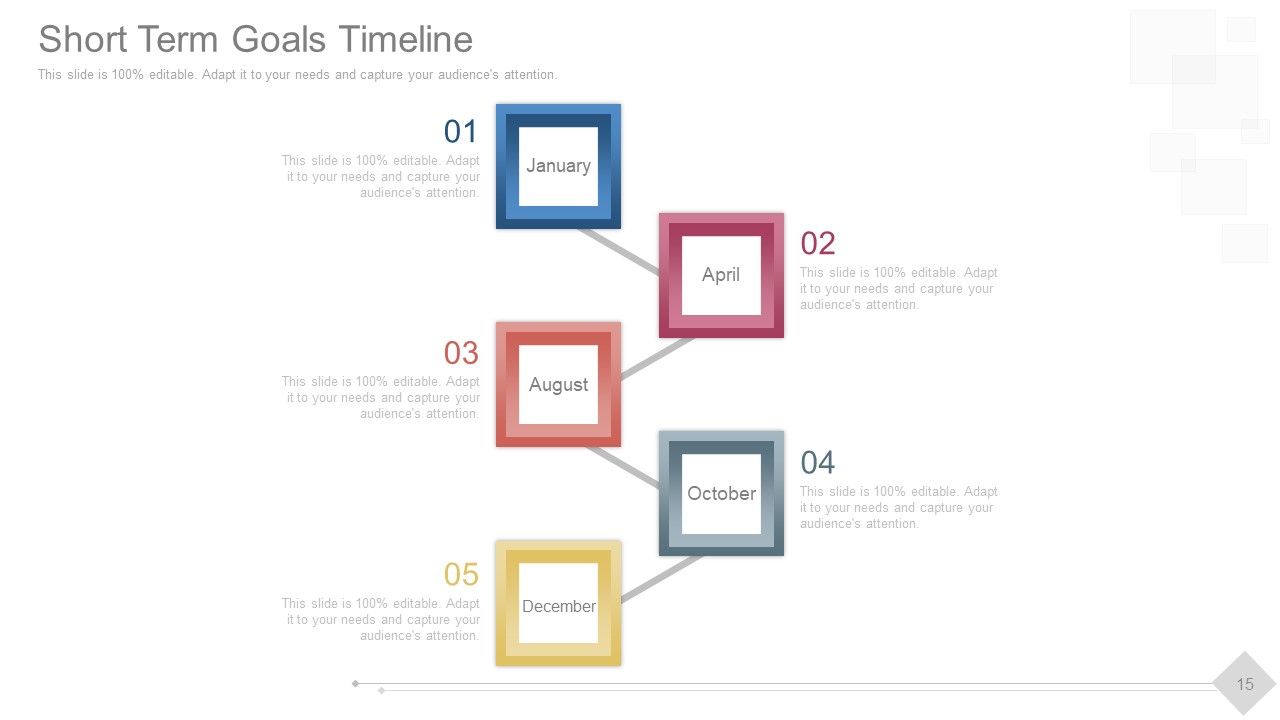
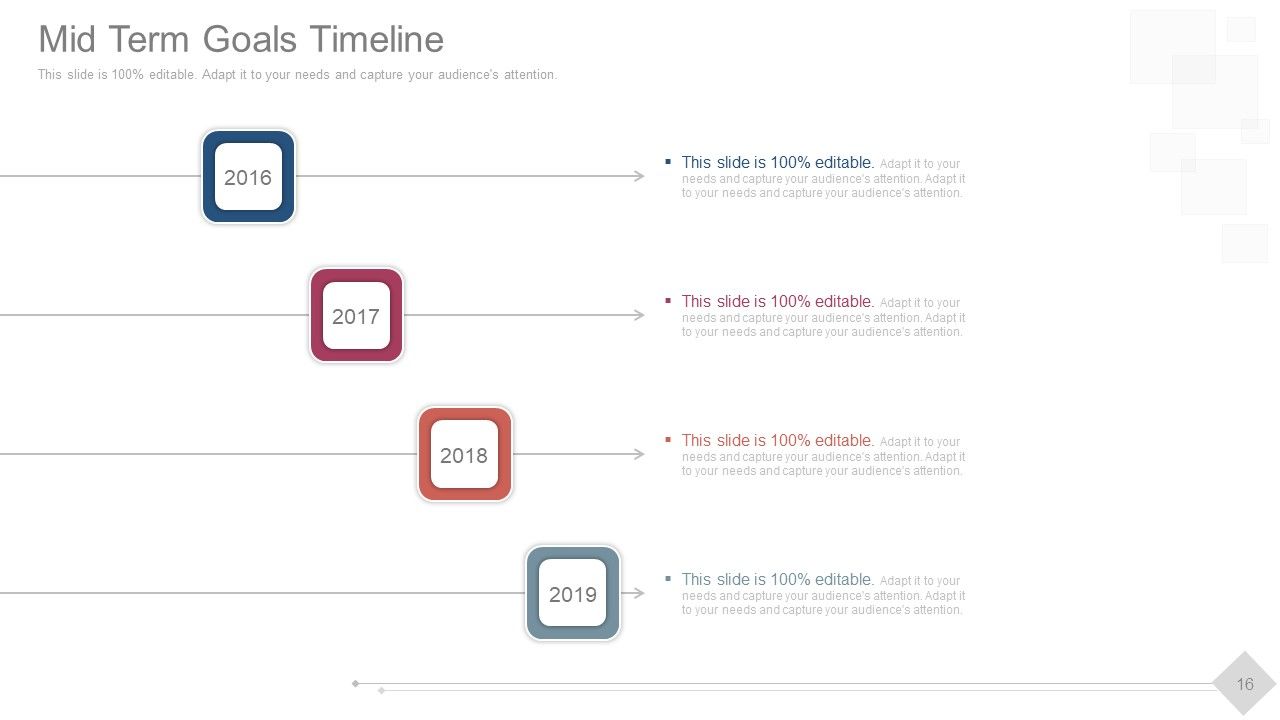
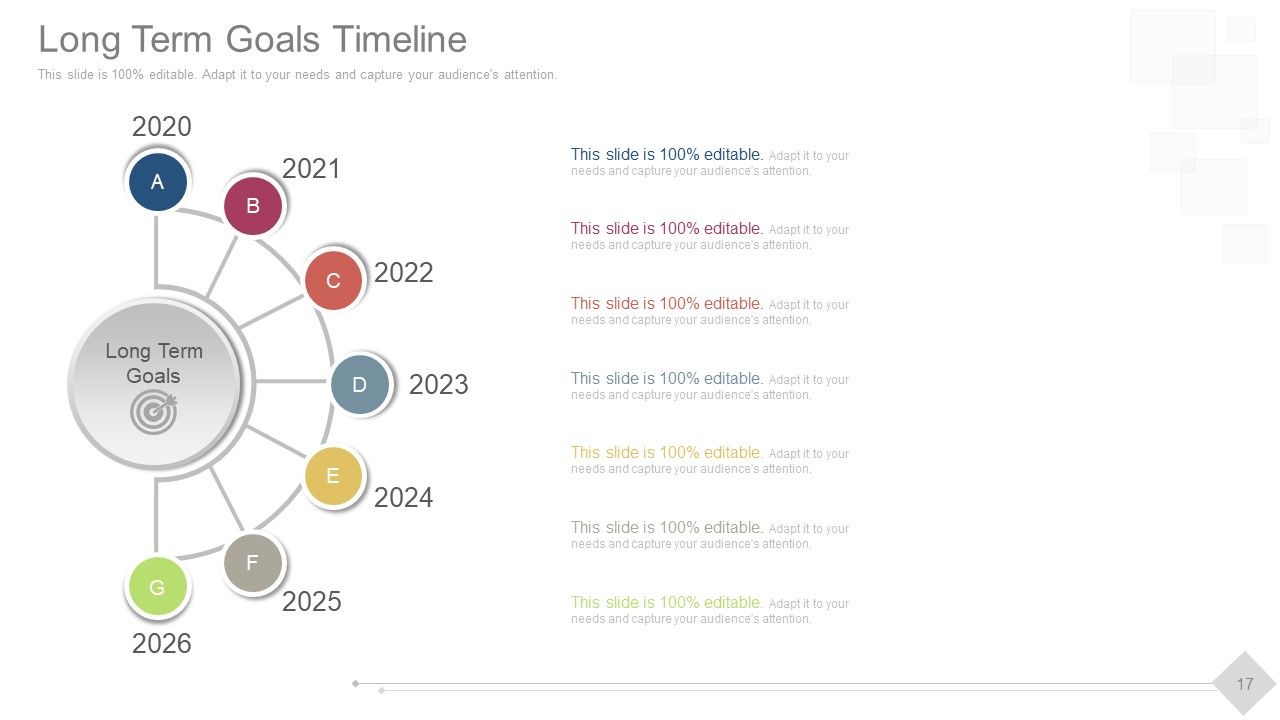
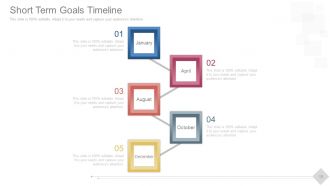
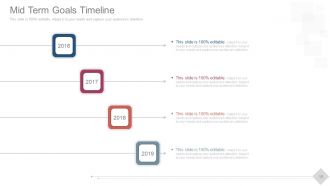
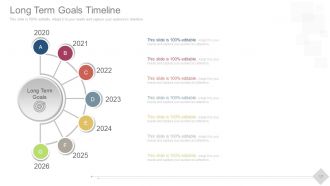
If you don’t set long term goals, it becomes near impossible to track the trajectory of your long term goals. This template allows you to form a timeline of your near goals. Map out your daily, weekly or monthly goals in the chart provided. Add details like brief plans, deadlines, prerequisites or any other relevant information alongside each goal. Download now and set your short term goals. Download Now!
Template 9: Personal Goals PPT Template
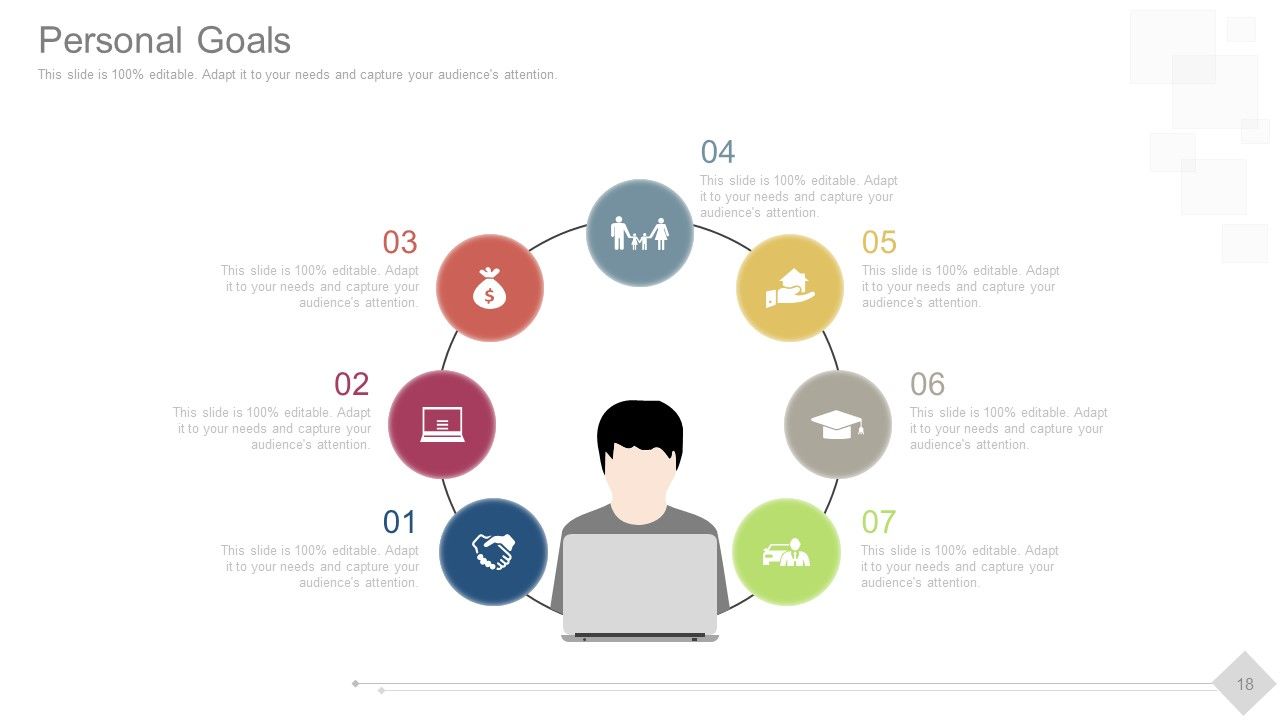
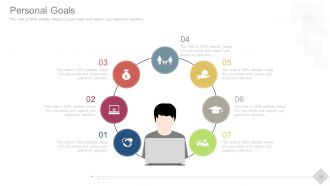
To plan your career, it is crucial to determine your personal goals. Define your professional, health, financial, social, work-life balance goals that you hope to achieve. You can do this by imagining how you want your life to be 8-10 years from now. Pick aspects from this hypothetical scenario and fill in the aspirational aspects in the template below. Download now and write your dreams in stone.
Template 10: Value PPT Template
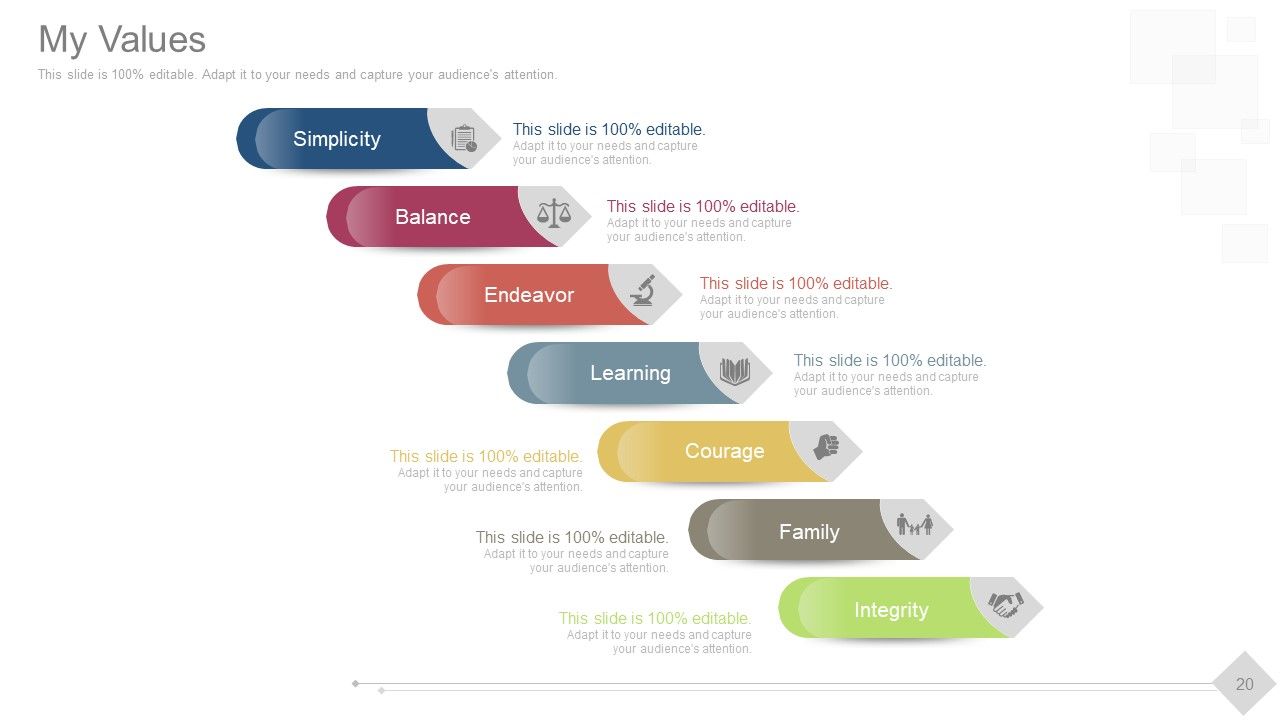
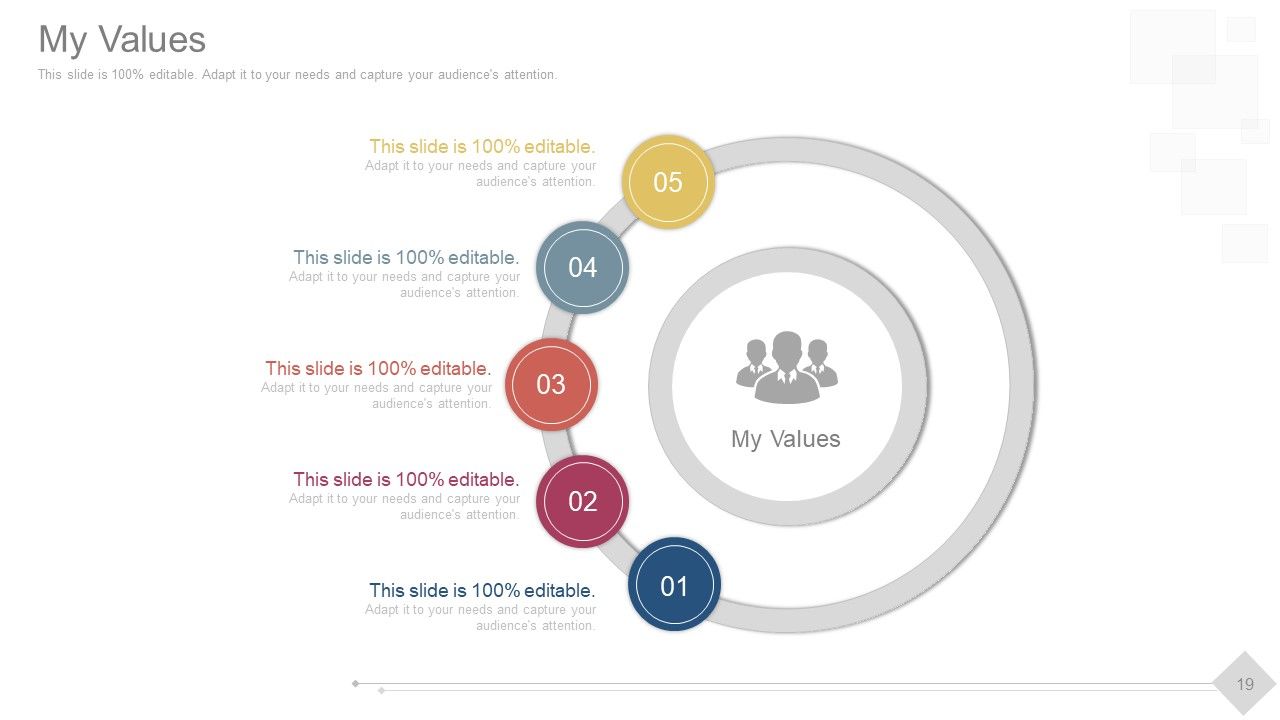
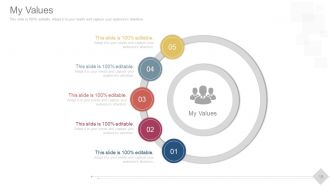
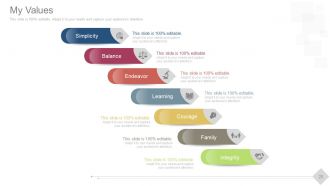
Your values and ethics determine your career options as your technical skills and knowledge. Use this PPT Template to list down the pillars of your personality. Qualities like being an enthusiastic learner and being courageous allows you to take risks and experiment with your available options. Get to know yourself better and take your career ahead. Download Now!
Luck Favors the Prepared!
While parts of your career might come down to luck, it’s far more likely that intentional career planning plays a role in where you are and where you’re going. The investment you make in career planning is an investment in yourself and will allow you to chart the career path you want.
My career planning outline powerpoint presentation with slides with all 59 slides:
Give your ideas the designer touch. Each of our My Career Planning Outline Complete Powerpoint Deck With Slides were made for you.
-
Hello, the templates and slides are creative, skillful, very excellent
-
Thank you for this slide its helping me a lot
-
Excellent products for quick understanding.
-
Thanks for all your great templates they have saved me lots of time and accelerate my presentations. Great product, keep them up!
