New zealand country powerpoint maps

Rating:
90%
New zealand country powerpoint maps
Slide 1 of 7
Favourites Favourites

Try Before you Buy Download Free Sample Product

Audience Impress Your
Audience
Editable 100%
Editable
Time Save Hours
of Time
The Biggest Sale is ending soon in
0
0
:
0
0
:
0
0
Rating:
90%
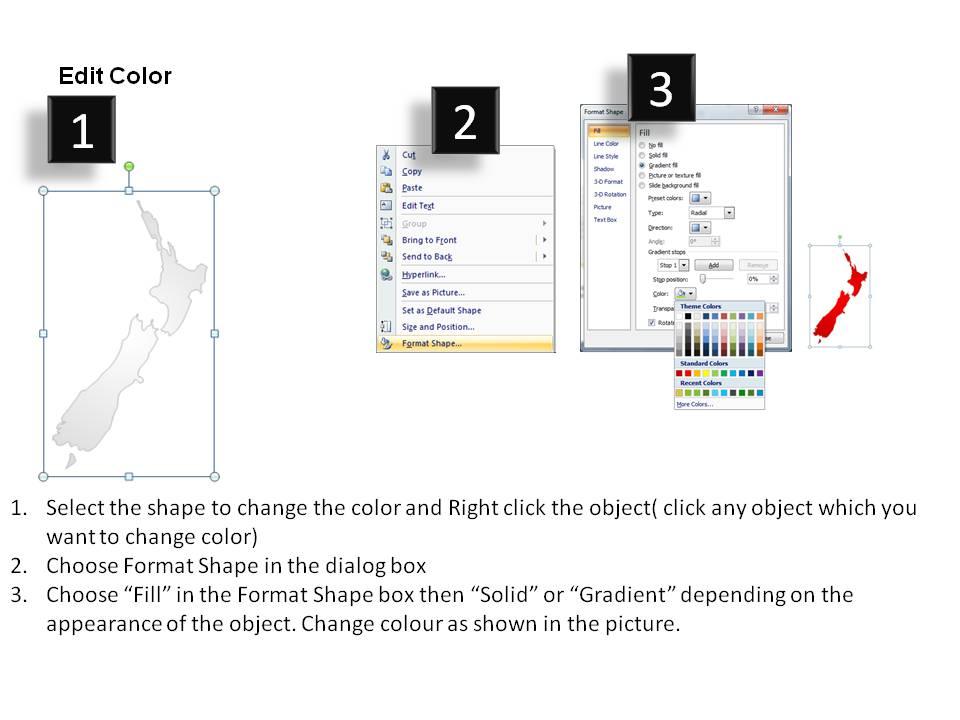
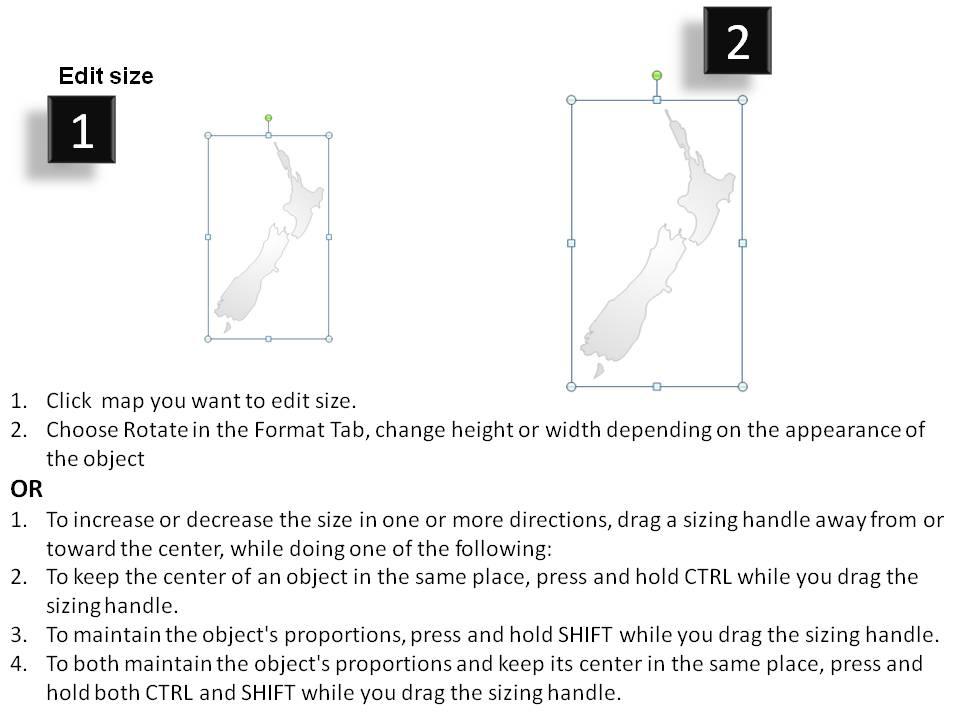
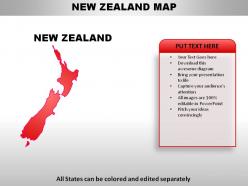
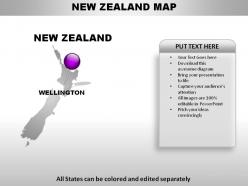
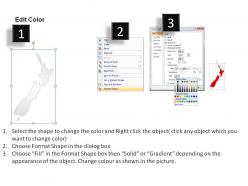
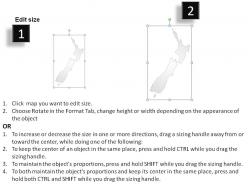
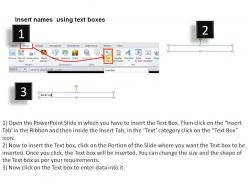
These high quality, editable powerpoint country maps have been carefully created by our professional team to display location and other geographic details in your PowerPoint presentation. Each map is vector based and is 100% editable in powerpoint. Each and every property of any region - color, size, shading etc can be modified to help you build an effective powerpoint presentation. Use these maps to show sales territories, business and new office locations, travel planning etc in your presentations. Any text can be entered at any point in the powerpoint map slide. Simply DOWNLOAD, TYPE and PRESENT!

People who downloaded this PowerPoint presentation also viewed the following :

Content of this Powerpoint Presentation

Description:

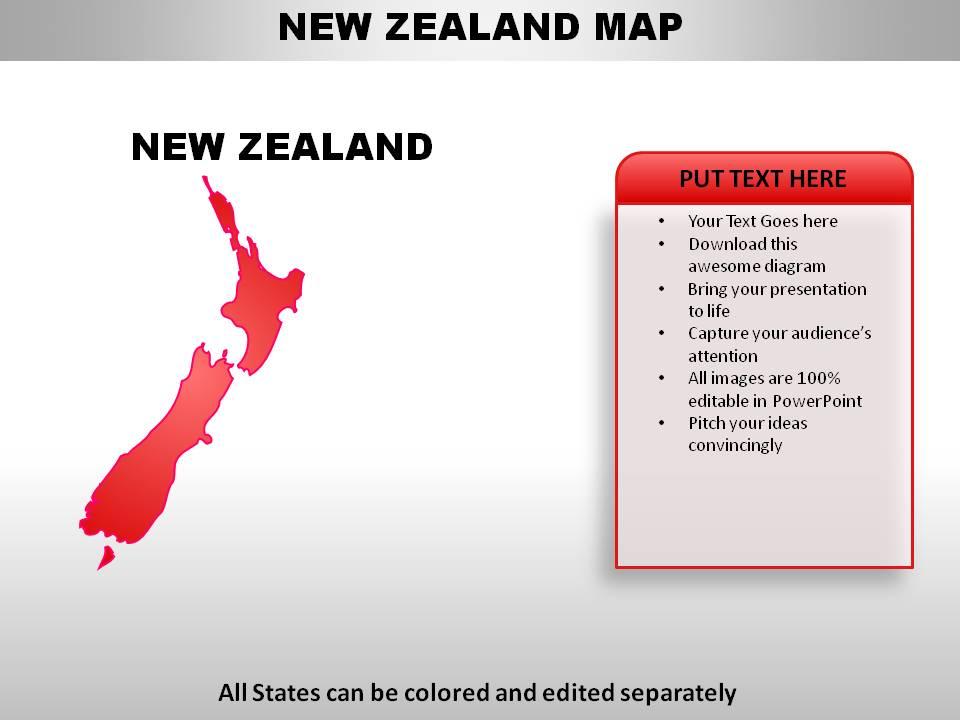
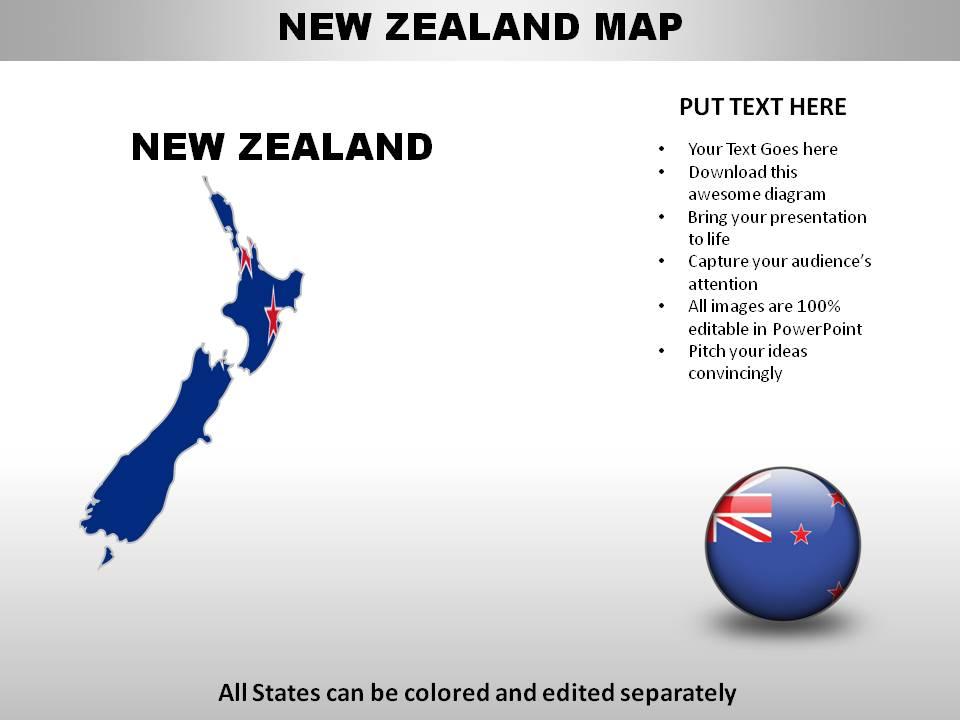
This image shows a PowerPoint slide template featuring a map of New Zealand annotated with a text box for customizable content. The slide emphasizes the ease of editing the graphic elements and the ability to personalize the message to effectively share ideas and capture the audience's attention.

Use Cases:

1. Tourism:

Use: Mapping out key destinations

Presenter: Travel agencies and tour operators

Audience: Potential travelers and tourists

2. Education:

Use: Geography lessons about New Zealand

Presenter: Teachers and educators

Audience: Students learning about the region

3. Government:

Use: Presenting regional development plans

Presenter: Local and national government officials

Audience: Policy makers and community stakeholders

4. Real Estate:

Use: Highlighting property investment opportunities

Presenter: Real estate agents and developers

Audience: Investors and home buyers

5. Logistics:

Use: Illustrating transportation networks

Presenter: Logistics and supply chain managers

Audience: Business clients and transport companies

6. Environmental Research:

Use: Showing areas of ecological significance

Presenter: Environmental researchers and scientists

Audience: Conservation groups and policymakers

7. Marketing:

Use: Launching products specific to New Zealand

Presenter: Marketing professionals

Audience: Target market and potential consumers

FAQs for New zealand

**INPUT**: What are the key features that distinguish different types of maps of New Zealand (topographic, political, tourist)? **OUTPUT**: New Zealand maps differ by purpose: topographic maps show elevation, terrain contours, and geographical features, political maps highlight boundaries, cities, and administrative regions, while tourist maps emphasize attractions, accommodations, and travel routes. These specialized mapping approaches enable different users, from hikers and researchers to government planners and travelers, to navigate effectively for their specific needs, ultimately delivering targeted information and enhanced decision-making capabilities.

Digital mapping technology has revolutionized New Zealand geography visualization through interactive 3D terrain models, real-time satellite imagery, GPS integration, and layered data analytics. These advanced mapping systems enable tourism operators, urban planners, and conservation groups to streamline route planning, enhance visitor experiences, and optimize resource management, ultimately delivering more precise geographical insights and strategic decision-making capabilities.

Historical maps reveal New Zealand's cultural heritage through Māori place names, traditional land boundaries, early European settlement locations, and evolving urban development patterns. These cartographic records enable researchers, historians, and communities to trace migration routes, understand territorial changes, and preserve indigenous knowledge, while museums and cultural institutions increasingly use them to enhance educational programs and strengthen cultural identity connections.

New Zealand maps showcase diverse ecosystems through detailed topographical features, climate zones, endemic species distributions, marine environments, and geological formations across North and South Islands. These cartographic representations enable researchers, conservationists, and policymakers to visualize biogeographical patterns, track habitat connectivity, and develop strategic conservation initiatives, while tourism operators increasingly leverage this ecosystem mapping to enhance visitor experiences and promote sustainable exploration.

Popular tourist maps of New Zealand include regional route maps, adventure activity guides, scenic drive collections, cultural heritage trails, and nature reserve directories. These maps highlight unique attractions like Milford Sound's fjords, Rotorua's geothermal features, Queenstown's adventure sports, and Maori cultural sites, with many travelers finding that comprehensive mapping enhances their exploration experience and helps maximize limited travel time across both islands.

Educators can effectively use New Zealand maps to teach geography and environmental science by exploring topographical features, climate zones, volcanic regions, biodiversity hotspots, and urban planning patterns. These visual tools enhance student understanding by connecting theoretical concepts to real-world applications, with many schools finding that interactive mapping exercises improve spatial literacy and environmental awareness, ultimately delivering more engaging and comprehensive learning experiences.

GIS advancements impacting New Zealand maps include satellite imagery integration, real-time data processing, 3D terrain modeling, mobile mapping technologies, and cloud-based spatial analytics. These technologies streamline cartographic workflows by enhancing accuracy, enabling faster updates, and delivering interactive visualizations, with government agencies and environmental organizations finding that modern GIS solutions ultimately provide more precise land management and strategic decision-making capabilities.

Cultural and indigenous perspectives significantly influence New Zealand map design through incorporating Māori place names, traditional territorial boundaries, spiritual sites, and cultural landmarks alongside conventional geographic features. These culturally-informed maps enhance understanding by representing both Western cartographic methods and indigenous spatial knowledge, with many educational institutions and government agencies finding that this integrated approach delivers more comprehensive geographic literacy and cultural awareness.

Challenges include remote terrain accessibility, frequent seismic activity altering landscapes, rapidly changing urban development, limited surveying resources, and integrating diverse data sources from multiple agencies. Through advanced satellite technology and collaborative mapping initiatives, organizations like Land Information New Zealand streamline data collection and verification processes, ultimately delivering more accurate geographic information while reducing costs and enhancing decision-making for infrastructure planning.

Relief maps of New Zealand help visualize the country's diverse topography by displaying elevation changes, mountain ranges, volcanic plateaus, and coastal formations through three-dimensional representation. These detailed geographical tools enable geologists, educators, and planners to analyze tectonic activity, identify geological formations like the Southern Alps and volcanic zones, while enhancing understanding of natural hazards, biodiversity patterns, and landscape evolution across both islands.

**INPUT**: What tools and platforms are available for creating custom maps of New Zealand for presentations or analysis? **OUTPUT**: Custom mapping tools include ArcGIS, QGIS, Tableau, Power BI, Google Earth Engine, and specialized platforms like Koordinates and LINZ Data Service. These platforms streamline geographic analysis by enabling data visualization, demographic overlays, and interactive features, with organizations across sectors like tourism, agriculture, and urban planning finding enhanced decision-making capabilities.

Virtual reality mapping enhances New Zealand's landscape representation by creating immersive, three-dimensional environments that enable users to explore terrain features, geological formations, and cultural sites with unprecedented depth and interactivity. Through VR technology, tourism operators, educational institutions, and urban planners can deliver enhanced visitor experiences, streamlined educational programs, and more effective spatial planning, ultimately providing competitive advantages in tourism marketing and geographic education.

Nautical charts are essential for safe maritime navigation around New Zealand, providing detailed water depths, underwater hazards, tidal patterns, currents, and coastal features. These specialized maps enable commercial shipping companies, fishing fleets, and recreational boaters to navigate New Zealand's complex coastlines and harbor approaches safely, ultimately reducing maritime accidents while enhancing operational efficiency.

Demographic maps of New Zealand reveal concentrated population clusters in Auckland, Wellington, and Christchurch, while highlighting rural depopulation and coastal urbanization patterns. These visualizations enable urban planners, government agencies, and businesses to identify growth corridors, infrastructure needs, and market opportunities, ultimately delivering strategic insights for resource allocation and development planning.

Key considerations include accurate demographic representation, culturally sensitive Māori place names and territorial boundaries, population density variations across urban and rural areas, and regional economic disparities. These mapping approaches enhance understanding by incorporating te reo Māori nomenclature, reflecting contemporary settlement patterns, and showcasing cultural landmarks, with many educational institutions and government agencies finding that comprehensive demographic visualization ultimately delivers greater cultural awareness and more informed policy development.

Ratings and Reviews

90% of 100
Write a review
Most Relevant Reviews
  1. 80%

    by Charlie Jones

    The Designed Graphic are very professional and classic.
  2. 100%

    by Denny Salazar

    Great experience, I would definitely use your services further.

2 Item(s)

per page: