Organizational security ppt powerpoint presentation portfolio summary cpb

Organizational security ppt powerpoint presentation portfolio summary cpb
Slide 1 of 5
Favourites Favourites

Try Before you Buy Download Free Sample Product

Audience Impress Your
Audience
Editable 100%
Editable
Time Save Hours
of Time
The Biggest Sale is ending soon in
0
0
:
0
0
:
0
0
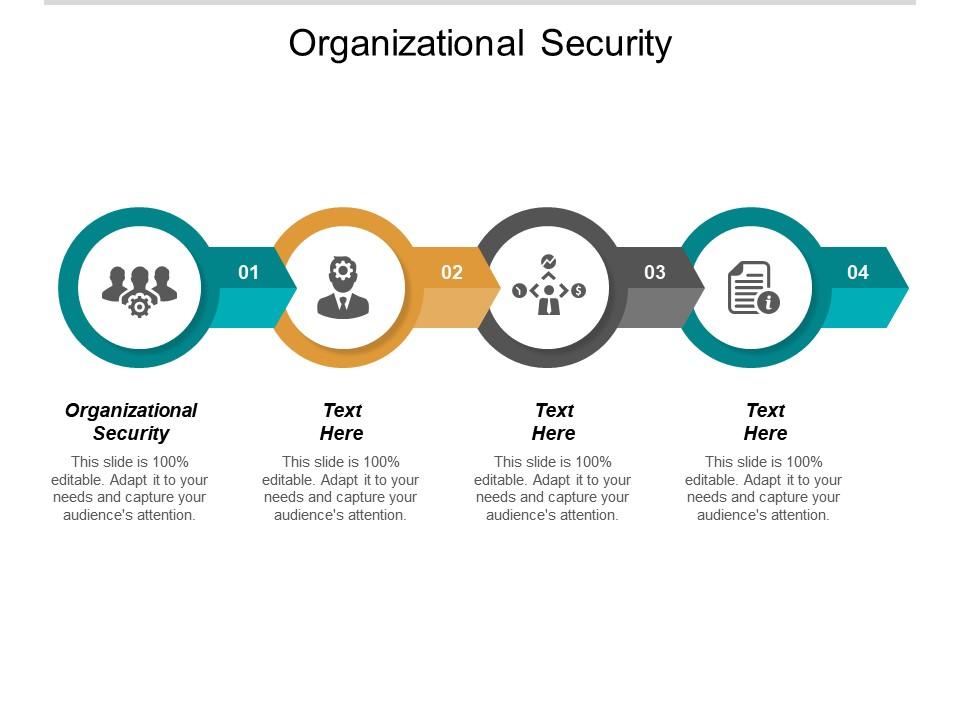
Presenting this set of slides with name - Organizational Security Ppt Powerpoint Presentation Portfolio Summary Cpb. This is an editable four stages graphic that deals with topics like Organizational Security to help convey your message better graphically. This product is a premium product available for immediate download, and is 100 percent editable in Powerpoint. Download this now and use it in your presentations to impress your audience.

FAQs for Organizational security ppt powerpoint presentation

The core pillars include risk assessment, access controls, incident response planning, employee training, and continuous monitoring. These foundational elements work together by identifying vulnerabilities, restricting unauthorized access, and maintaining security awareness, with many organizations finding that this comprehensive approach ultimately delivers enhanced protection and operational resilience.

Organizations can assess their security posture through vulnerability assessments, penetration testing, security audits, compliance reviews, and risk assessments. These comprehensive evaluations enable businesses to identify weaknesses across networks, applications, and processes, while many financial institutions and healthcare organizations find that regular assessments ultimately deliver enhanced protection and regulatory compliance.

Employee training serves as a critical defense layer by educating staff on phishing recognition, password management, social engineering tactics, incident reporting protocols, and compliance requirements. Through regular security awareness programs, organizations significantly reduce human error vulnerabilities, enhance threat detection capabilities, and create a security-conscious culture, with many companies finding that well-trained employees become their strongest asset against cyber threats.

Risk management frameworks integrate into organizational security practices by establishing systematic risk assessment protocols, defining threat response procedures, and creating continuous monitoring systems across all business units. Through frameworks like NIST or ISO 27001, organizations streamline vulnerability identification, automate compliance reporting, and enhance incident response capabilities, with many enterprises finding that this strategic combination ultimately delivers reduced security costs and stronger competitive positioning.

Effective data protection technologies include advanced encryption, multi-factor authentication, zero-trust security frameworks, endpoint detection systems, and data loss prevention tools. These technologies work by securing data both at rest and in transit, monitoring user access patterns, and preventing unauthorized transfers, with many financial institutions and healthcare organizations finding that this strategic combination ultimately delivers enhanced compliance, reduced breach risks, and stronger competitive positioning.

Organizations should respond to security breaches through immediate containment, comprehensive assessment, stakeholder communication, and systematic recovery protocols. Effective incident response involves isolating affected systems, documenting the scope of compromise, notifying relevant authorities and customers transparently, and implementing corrective measures, with many companies finding that well-rehearsed response plans significantly minimize damage and restore customer confidence faster.

Key regulations affecting organizational security include GDPR, HIPAA, SOX, PCI DSS, and ISO 27001, each addressing specific data protection and risk management requirements. These frameworks streamline compliance by establishing standardized security protocols, audit procedures, and incident response mechanisms, with many organizations finding that strategic adherence ultimately delivers reduced regulatory risk, enhanced customer trust, and competitive advantage in increasingly regulated markets.

Organizational culture significantly influences security effectiveness by shaping employee behaviors, compliance attitudes, and risk awareness across all levels. When leadership prioritizes security through clear policies, regular training, and accountability measures, employees naturally adopt security-conscious practices, ultimately reducing vulnerabilities and enhancing overall protection, with many organizations finding that culture-driven security delivers stronger results than technology alone.

Organizations can implement continuous monitoring systems, automated vulnerability scanning, regular penetration testing, security audits, and compliance reviews to ensure ongoing assessments. These mechanisms work by providing real-time threat detection, identifying vulnerabilities before exploitation, and maintaining regulatory compliance, with many financial institutions and healthcare organizations finding that automated monitoring combined with quarterly assessments significantly reduces security incidents.

Organizations balance security measures with business productivity by implementing risk-based approaches, automated security tools, and user-friendly authentication systems like single sign-on. Through strategic layering of security controls, companies streamline workflows while maintaining protection, with many financial services and healthcare organizations finding that integrated security platforms actually enhance operational efficiency and reduce compliance overhead.

Remote work significantly transforms organizational security strategies by requiring expanded endpoint protection, enhanced identity verification systems, secure cloud infrastructure, and comprehensive employee training protocols. Through zero-trust frameworks and advanced monitoring tools, organizations strengthen data protection, minimize breach vulnerabilities, and maintain compliance standards, while many companies finding that distributed security models ultimately deliver greater resilience and operational flexibility.

Organizations leverage threat intelligence to strengthen security through continuous monitoring, predictive analysis, threat hunting, and automated response systems. By analyzing attack patterns from sectors like banking and healthcare, security teams can anticipate vulnerabilities, deploy preventive measures, and streamline incident response, ultimately delivering faster threat mitigation and enhanced organizational resilience.

Third-party security best practices include comprehensive vendor risk assessments, contractual security requirements, regular security audits, access controls, and continuous monitoring of vendor activities. These measures streamline risk management by establishing clear security standards, implementing ongoing oversight protocols, and ensuring compliance verification, with many organizations finding that structured vendor governance ultimately delivers enhanced security posture and reduced supply chain vulnerabilities.

The principle of least privilege restricts user access to only the minimum resources necessary for their specific job functions, significantly reducing security vulnerabilities and potential breach impacts. Organizations implementing this approach across departments like finance, HR, and operations find that it streamlines compliance auditing, minimizes insider threats, and enhances overall data protection while maintaining operational efficiency.

Organizations should prepare for AI-powered cyberattacks, quantum computing threats to current encryption, deepfake social engineering, IoT device vulnerabilities, and supply chain compromises. These evolving threats require strategic investment in adaptive security frameworks, employee training, and next-generation detection systems, with many enterprises finding that proactive threat intelligence and zero-trust architectures deliver competitive resilience.

Ratings and Reviews

0% of 100
Review Form
Write a review
Most Relevant Reviews

No Reviews