

Partner relationship management prm partner executive performance dashboard





Try Before you Buy Download Free Sample Product
 Impress Your
Audience
 100%
Editable
 Save Hours
of Time


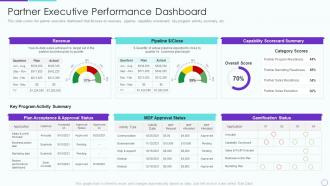
This slide covers the partner executive dashboard that focuses on revenues, pipeline, capability scoreboard, key program activity summary, etc.
People who downloaded this PowerPoint presentation also viewed the following :
Partner relationship management prm partner executive performance dashboard with all 7 slides:
Use our Partner Relationship Management PRM Partner Executive Performance Dashboard to effectively help you save your valuable time. They are readymade to fit into any presentation structure.






FAQs for Partner relationship management prm partner
So you'll need solid partner onboarding first - that's huge. Get a decent tech platform because spreadsheets will literally make you want to quit. Communication channels matter too, plus joint business planning with your partners. Training programs are clutch - give them marketing resources that don't suck. Performance tracking keeps everyone honest. Oh, and incentive alignment is key or people just do whatever they want. Regular check-ins help too. Honestly? Just map out your partner journey first. Find where things are totally broken and fix those spots. Way easier than trying to build everything at once.
Track revenue growth from partners first - that's what your boss actually cares about. But also watch deal registration rates, how fast you're launching joint stuff, and partner satisfaction surveys. Training completion matters too, plus whether partners actually log into your portal (spoiler: they probably don't as much as you'd hope). Don't forget partner retention rates and how engaged they are overall. Time-to-market for solutions is huge. Set up a dashboard so you can catch problems early and pivot when things aren't working.
Dude, tech completely changed how I handle PRM. All those manual processes? Gone. Now I can actually see what's happening with partners in real-time instead of drowning in spreadsheets. The onboarding workflows run themselves, and partners grab resources from one portal rather than bugging me constantly. Analytics show you which partnerships actually make money - super eye-opening honestly. Oh, and you'll want to map out where you're currently touching base with partners first. That's where you'll spot the biggest time-wasters to automate. Game changer for sure.
Honestly, if you're not talking to your partners regularly, your PRM is basically dead in the water. Set up monthly check-ins - trust me on this one. I've watched so many partnerships crash just because people got busy and stopped communicating. You need those shared workspaces too, where you're actually collaborating on campaigns and co-selling instead of just tossing leads back and forth like hot potatoes. Clear communication helps you align on goals and catch problems early. Oh, and sharing market insights? That's where the real magic happens. Short version: talk more, work together, don't let things go silent.
Honestly, the worst part is partners just refusing to use it - they're already set in their ways, you know? Data integration will make you want to pull your hair out too. Getting everything to sync with your CRM and other systems is a total pain. Training becomes this never-ending thing since everyone's at different tech levels. Plus you'll get inconsistent data when partners input stuff however they want. Start with your best partners who actually care, figure out the tech connections first (seriously, do this early), and plan on tons of hand-holding those first few months.
So PRM software puts all your partner training stuff in one place where people can actually find it. New partners work through modules whenever they want instead of waiting for someone to walk them through everything. You get to see who's finishing what and can automatically send out certs. Way better than those email chains with random PowerPoints that sit in everyone's inbox forever. The cool part is customizing different paths - like your enterprise partners don't need the same basic stuff as smaller ones. Your team gets decent analytics too. I'd start with whatever content you absolutely need partners to know, then expand it out.
Track your partner recruitment speed, deal registration rates, and partner-influenced revenue first. Time-to-productivity for new partners matters way more than satisfaction surveys, trust me. Same with their quarterly sales numbers - that's where you'll actually see if your onboarding works. Partner satisfaction scores are still worth watching though, plus training completion rates. Mix your quick wins (recruitment metrics) with the slower stuff (actual revenue results). Honestly, pick maybe 3-4 things you can actually do something about. Nobody needs another dashboard collecting dust.
Honestly, analytics are a game-changer for this stuff. Pull reports on deal registrations, co-selling wins, and how engaged your partners actually are. You'll start seeing who's really bringing in revenue vs. who just talks a big game (we all know that type). Look for patterns in where relationships drop off - maybe your onboarding sucks or certain partners need different support. The data shows which enablement programs actually work too. I'd focus on churn prediction since losing good partners is expensive. Once you have those insights, prioritize the high-performers and fix whatever's clearly broken. Numbers don't sugarcoat things like people do.
Start with the basics - group your partners by revenue potential and deal size. Market reach and technical capabilities matter too, but honestly don't get too fancy at first. A simple tier system works great when you're starting out. High-touch strategic partners need completely different treatment than your self-service resellers, so factor in their engagement level. Oh, and make sure you can actually run different programs for each segment - I've seen people create these elaborate frameworks they can't even execute. That just makes everything messier without helping anyone.
Honestly, PRM works because you're actually giving partners what they need instead of just dumping products on them. Set up training portals, make marketing materials super easy to find, and create communication channels that don't suck. Ask your current partners what pisses them off most about working with you - that's your starting point. Show them better margins through tiered programs. Recognition matters too. When partners feel supported consistently, they'll stick around and actually want to sell your stuff. It's really about proving you care about their success, not just your own sales numbers.
Okay so first thing - sit down and actually map out what winning looks like for everyone involved. Shared metrics are clutch here, not just stuff that helps your bottom line. I'd do quarterly check-ins to keep things on track, plus those joint planning sessions (they're weirdly like couples therapy but whatever, they work). Your partners need to see real value in hitting these goals together. Oh and definitely set up rewards for the right behaviors - people respond to incentives way more than they admit. Don't skip celebrating when you actually nail those milestones either.
So basically, CRM is for managing your direct customers - you know, the people actually buying your stuff. PRM is different though, it's for managing your partners, distributors, whoever's selling for you. With PRM you're tracking how well your partners perform, handling co-op money, sharing marketing stuff with them. It's like relationship management but one level removed from the actual buyer, if that makes sense. Your CRM pulls data from customers, but PRM pushes data out to partners who then deal with those customers. Honestly, if you've got any kind of channel strategy going, you'll probably end up needing both systems.
Honestly, partner feedback is everything in PRM. Your partners are the ones dealing with your processes every single day - they'll spot issues you'd never see from your end. I've watched companies build these huge partner programs that completely flop because they never asked what partners actually wanted (kind of wild, right?). Don't just wait for problems to come up. Regular check-ins work way better. Set up surveys, create different ways for them to give you honest feedback about what's broken and what's not. You can't fix what you don't know about, and they're your best source of real info.
Tech companies get the most out of PRM systems, honestly. They're dealing with tons of reseller relationships and need to track everything - lead distribution, co-marketing, you name it. Manufacturing and automotive see huge benefits too since they work through dealer networks. Healthcare and insurance are jumping on board lately. Really, if you're manually handling partner onboarding or training right now, you'll probably save yourself major headaches with a PRM system. Financial services also love them, though I guess that's obvious since they're always big on tracking partner performance.
Here's the thing - good PRM is basically about not treating your partners like crap. Give them decent training and sales materials upfront instead of leaving them to figure it out. They'll actually close more deals when they know what they're doing. You stop wasting time rebuilding the same processes over and over too. Partners get happier, deals move faster, and more money comes through your channel. Honestly, just think of them as part of your sales team rather than some external vendor you barely talk to. Makes a huge difference.
-
Presentation Design is very nice, good work with the content as well.
-
Out of the box and creative design.