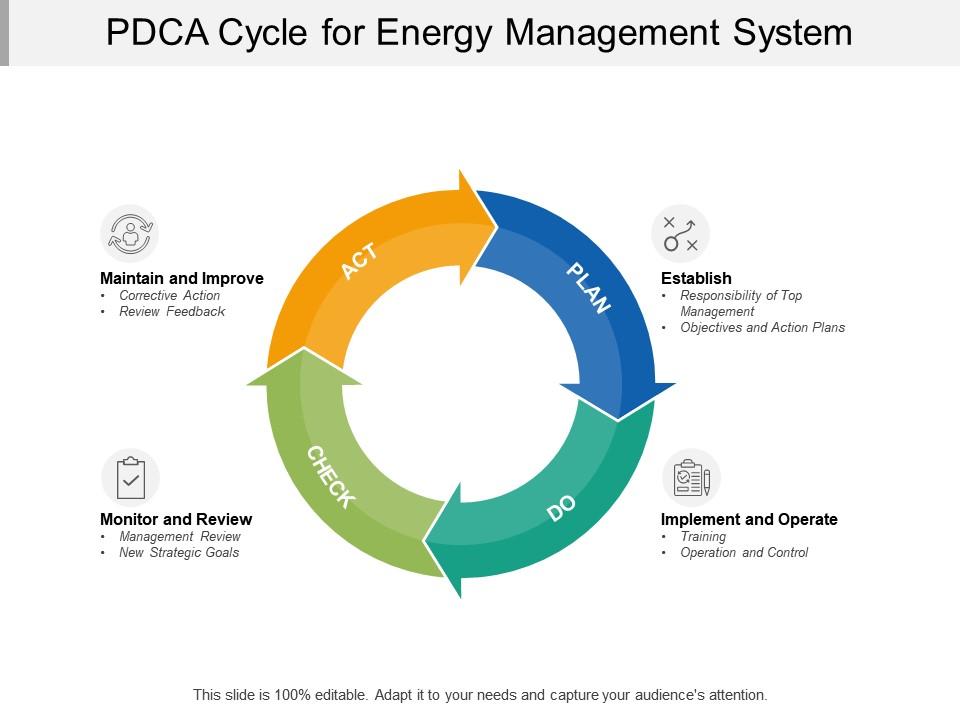
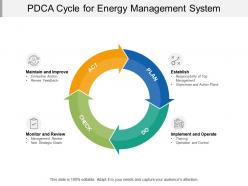
Pdca cycle for energy management system
Try Before you Buy Download Free Sample Product
Audience
Editable
of Time
Explain to folks how they are bound to fail with our PDCA Cycle For Energy Management System. Discourage any haphazard approaches.
People who downloaded this PowerPoint presentation also viewed the following :
Pdca cycle for energy management system with all 5 slides:
Bargain forcefully with our PDCA Cycle For Energy Management System. Extract a deal convenient for you.
FAQs for Pdca cycle for
So PDCA is basically Plan, Do, Check, Act - pretty straightforward. You start by planning your solution to whatever problem you're tackling. Then implement it small-scale (don't go crazy here). Check means analyzing what actually happened vs what you expected. Act is where you either roll out the changes that worked or go back to the drawing board if things went sideways. The whole thing loops back around, which honestly took me forever to appreciate but it's actually genius for continuous improvement. My advice? Start tiny with your first cycle. You'll get the rhythm down faster that way.
Start with something small that's actually annoying your team - don't try to fix everything at once. PDCA breaks down into Plan (figure out what's wrong and what you want), Do (test your fix on a small scale), Check (see if it actually worked), and Act (keep what works, toss what doesn't). Honestly, most people just skip the checking part and then act surprised when nothing changes. Make it a habit, not a one-time thing. Document what you learn - trust me, you'll forget otherwise. Once you've gone through the whole cycle with one issue, then you can expand to other stuff.
Oh man, the worst thing teams do is skip the "Check" part completely - drives me crazy! Also rushing through without collecting actual data. Your planning phase doesn't need to be some massive complicated thing either. Pick one small problem and stick with it. Actually write down what you learned at the end, otherwise you're just gonna make the same dumb mistakes again. I know documentation sounds boring but trust me on this one. Start simple, measure everything properly, then expand from there. Works way better than trying to fix everything at once.
PDCA is like the scientific method but for projects - you Plan something, Do a test run, Check if it worked, then Act on what you learned. Honestly, it's pretty genius because each cycle builds on the last one. You'll catch problems way earlier and make decisions based on actual data instead of just guessing. Keep the cycles short though - that's where most people mess up. Short cycles mean you can pivot fast when something's not working and double down on what actually moves the needle.
So basically, just treat each sprint like one full PDCA cycle. Sprint planning = Plan, development work = Do, then Check happens in your reviews and retros. Act is when you actually fix stuff for next sprint. Honestly, it maps pretty naturally once you see it. The big difference? You're cranking through these cycles every 2-4 weeks instead of waiting months like old school projects do. One thing that's worked for me - actually call out which phase you're in during meetings. Keeps everyone thinking about improvement instead of just shipping features. Makes a difference.
Yeah totally! PDCA isn't just for factories - honestly I think it's way more useful elsewhere. You basically plan something out, try it (maybe just a small test first), see what actually happened vs what you hoped for, then adjust. My old team used it for customer service stuff, and I've even done it with personal things like getting better at cooking. The key thing is you're not just guessing if something worked - you actually check the results. Which sounds obvious but you'd be surprised how many people skip that step. Just pick one thing you want to fix and walk through those four steps.
So PDCA totally relies on data at every step. You start by collecting baseline info in Plan to spot problems and set goals you can actually measure. Implementation data comes next during Do - gotta track if your changes are doing what you hoped. Check is where it gets real (and honestly kinda nerve-wracking) because you're comparing what actually happened versus what you planned. Sometimes the results aren't pretty! Then Act uses those findings to either lock in the improvement or change direction if things flopped. Just stay consistent with your metrics throughout so you'll know what's actually moving the needle.
Track leading and lagging indicators during your PDCA cycles - stuff like cycle time, defect rates, customer satisfaction, cost per unit. Do this in the "Check" phase mainly. Honestly, don't go crazy with metrics or you'll get overwhelmed. Stick to 3-5 max that actually matter. Get your baseline numbers first, before changing anything. Then measure the same things after each cycle to see if you're making real progress. The trick is staying consistent with how you measure - that way you can tell the difference between actual trends and just random fluctuations in your data.
PDCA really works for engagement because your team gets to own the improvements instead of just following orders from above. During planning, employees actually get heard - which feels amazing honestly. Testing ideas in the Do phase is pretty low-risk, so people jump in more willingly. I've noticed the Check part is huge because workers finally have real data backing up what they've been saying all along. When Act makes their good ideas stick around permanently, that's incredibly motivating. Plus the whole cycle keeps repeating, so it's not just one-and-done like most workplace initiatives.
Honestly, if your leaders aren't on board with PDCA, you're basically screwed from the start. They need to actually USE the process themselves - not just talk about it in meetings. Your team has to feel safe admitting failures during the Check phase, which only happens when leadership creates that environment. Plus someone's gotta pay for training and time, right? The tricky part is when deadlines hit, leaders always want to skip steps. I've seen it a million times. But here's the thing - without that bigger vision from the top, all these improvement cycles just feel like busywork. Leaders can't just write checks and disappear.
So basically treat each big strategic goal like its own PDCA loop. Set your targets with real metrics (Plan), then run pilot programs first (Do). Here's where most teams mess up - they skip the Check part completely! Build in quarterly reviews to actually look at your KPIs and see what's working. Then adjust your approach based on what you learned (Act). I've seen too many companies just set their strategy once and forget about it for a year. Make those review meetings mini-PDCA cycles themselves and you'll stay way more flexible.
Honestly, PDCA is everywhere once you notice it. Toyota's the classic example - they built their whole kaizen thing around it and basically changed manufacturing forever. Healthcare places like Virginia Mason cut patient wait times in half using those cycles. Software teams do it too, though they don't always call it that. Spotify runs their sprints pretty much the same way. Works in retail, manufacturing, wherever really. The cycle's just flexible enough to fit different situations. My advice? Pick some annoying workflow you deal with and try a quick PDCA round this week. Nothing fancy.
Honestly, tech makes PDCA cycles so much faster when you do it right. Real-time dashboards help you track your planning metrics, then you can push changes instantly. Monitoring happens automatically during the check phase - no more waiting around. Some corrective actions can even run themselves. I've watched teams go from taking months per cycle down to just weeks, which is pretty wild. Here's the thing though: don't get caught up in shiny new software that doesn't actually fit how you work. Pick one tool per phase first, see how it goes, then add more. Otherwise you'll just create more headaches for yourself.
So PDCA's way more structured than other improvement methods - it's got these four clear steps that just keep cycling. Six Sigma gets super heavy on data analysis, Kaizen is all about tiny daily tweaks, but PDCA keeps things straightforward with Plan, Do, Check, Act. Honestly, I think Lean has too many tools sometimes and can feel overwhelming. What's cool about PDCA is that "Check" step - you actually have to measure what happened before jumping ahead. Most other approaches totally skip that part, which is kinda dumb if you think about it. Just try it on some small process next time and you'll see how the structure keeps you on track.
So here's the thing about PDCA - everyone forgets about the "Act" phase and that's exactly where things fall apart. Write down what actually worked and update your procedures. Train people on the new way of doing things. Most teams get excited about early wins then watch everything go back to how it was before (honestly drives me crazy). You need regular check-ins to see if your changes are sticking. Set up some basic metrics or dashboards to catch when things start sliding backward. Oh, and make sure someone owns keeping the improvements going - can't just hope it'll maintain itself!
No Reviews