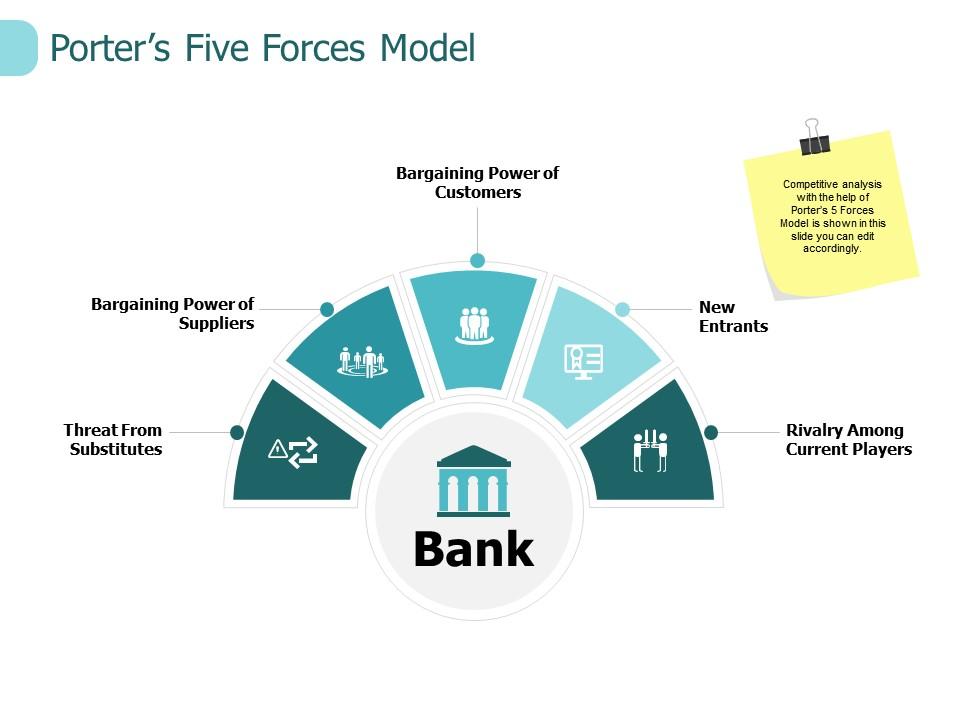
Porters five forces model customers ppt powerpoint presentation ideas file

Porters five forces model customers ppt powerpoint presentation ideas file
Slide 1 of 5
Favourites Favourites

Try Before you Buy Download Free Sample Product

Audience Impress Your
Audience
Editable 100%
Editable
Time Save Hours
of Time
The Biggest Sale is ending soon in
0
0
:
0
0
:
0
0
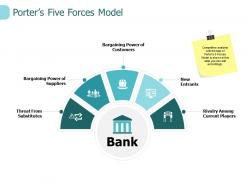
Presenting this set of slides with name Porters Five Forces Model Customers Ppt Powerpoint Presentation Ideas File. This is a five stage process. The stages in this process are Porters Five Forces Model, Customers, Icons, Strategy, Business. This is a completely editable PowerPoint presentation and is available for immediate download. Download now and impress your audience.

People who downloaded this PowerPoint presentation also viewed the following :

FAQs for Porters five forces model customers ppt powerpoint

Porter's Five Forces Model includes competitive rivalry, supplier bargaining power, buyer bargaining power, threat of new entrants, and threat of substitute products. These components work together to assess industry attractiveness and competitive intensity, enabling organizations to identify strategic opportunities, minimize market threats, and develop sustainable competitive advantages in increasingly dynamic business environments.

Businesses can effectively assess new entrant threats by analyzing barriers to entry, startup costs, regulatory requirements, brand loyalty strength, and access to distribution channels. Companies should monitor patent landscapes, capital requirements, and customer switching costs, while evaluating how easily competitors can replicate their value proposition, ultimately enabling strategic positioning and competitive advantage maintenance.

High supplier bargaining power significantly influences market dynamics by driving up input costs, limiting product innovation flexibility, and reducing profit margins across industries. Companies with powerful suppliers, like those dependent on specialized technology components or rare materials, often face constrained pricing strategies and must invest heavily in supplier relationships, ultimately reshaping competitive positioning and forcing strategic pivots toward supplier diversification or vertical integration.

Companies can mitigate substitute threats through product differentiation, customer loyalty programs, strategic pricing, continuous innovation, and building switching costs. By enhancing unique value propositions, investing in R&D, and strengthening customer relationships, organizations create competitive barriers that make alternatives less attractive, ultimately delivering sustained market position and reduced vulnerability to substitution pressures.

Buyer power significantly impacts pricing strategies by enabling customers to negotiate lower prices, demand higher quality, and switch between competitors, ultimately compressing profit margins. Organizations with strong buyer power, such as large retailers negotiating with suppliers or hospitals purchasing medical equipment, can dictate terms and force vendors to reduce costs while enhancing service levels.

Porter's Five Forces Model effectively applies to digital industries by analyzing competitive rivalry, supplier power, buyer power, threat of substitutes, and barriers to entry within digital contexts. Tech companies leverage this framework to assess platform ecosystems, cloud services, and software markets, while digital startups use it to evaluate market entry strategies, ultimately delivering strategic insights for navigating competitive digital landscapes and identifying sustainable advantages.

Competitive rivalry serves as the central force determining industry profitability and strategic positioning, influencing pricing power, innovation cycles, and market share distribution among existing players. Intense rivalry in sectors like airlines or telecommunications drives companies to differentiate through operational efficiency, customer experience enhancements, and strategic partnerships, ultimately reshaping competitive dynamics and forcing continuous adaptation.

Understanding Porter's Five Forces enables organizations to identify competitive threats, market opportunities, and strategic positioning within their industry landscape. This framework guides strategic decisions by revealing where companies can build sustainable competitive advantages, optimize resource allocation, and develop defensive strategies, with many executives finding that systematic force analysis streamlines long-term planning and enhances market positioning.

The Five Forces Model faces limitations in today's dynamic environment, including difficulty analyzing digital disruption, network effects, platform ecosystems, rapid technological change, and interconnected global markets. While Porter's framework remains valuable for foundational competitive analysis, many organizations find that it requires supplementation with agile strategic tools to capture emerging competitive dynamics, ultimately delivering more comprehensive insights when combined with modern analytical approaches.

Globalization has expanded Porter's Five Forces beyond traditional geographic boundaries, intensifying competitive rivalry through global competitors, increasing supplier and buyer power through worldwide sourcing options, and lowering barriers to entry via digital platforms and international market access. While this creates more complex competitive landscapes, it also enables organizations to leverage global supply chains, access broader markets, and develop strategic partnerships across borders, ultimately delivering enhanced competitive positioning for businesses that effectively navigate these expanded force dynamics.

The Five Forces Model proves most beneficial when analyzing industry competitiveness, market entry decisions, and external competitive pressures, while SWOT analysis works better for internal strategic assessments. Companies evaluating new market opportunities, pricing strategies, or competitive positioning find Porter's framework delivers deeper insights into industry dynamics, supplier relationships, and competitive threats, ultimately enabling more strategic market-focused decisions.

Technology changes can intensify competitive rivalry through lower barriers, empower buyers with information and alternatives, strengthen suppliers through digital platforms, and create substitutes that disrupt traditional offerings. In retail, e-commerce platforms enable new entrants while mobile apps give customers price comparison tools, with established companies finding that digital transformation becomes essential for maintaining competitive advantage.

Companies like Southwest Airlines and Netflix demonstrate successful Five Forces applications in strategy development. Southwest identified low supplier power in fuel costs, minimal substitution threats for short-haul flights, and moderate competitive rivalry, enabling their low-cost strategy, while Netflix leveraged insights about buyer power shifts and competitive intensity to transition from DVDs to streaming, ultimately delivering sustained competitive advantages and market leadership.

Startups can utilize Porter's Five Forces by identifying market gaps with low competitive intensity, negotiating favorable supplier terms through strategic partnerships, and creating high switching costs to reduce buyer power. By analyzing these forces early, startups can position themselves in defensible market niches, differentiate their offerings, and build sustainable competitive moats that larger competitors struggle to penetrate.

Industries like retail, telecommunications, and consumer electronics demonstrate the strongest buyer bargaining power due to abundant alternatives, low switching costs, and high price sensitivity among customers. In these sectors, buyers can easily compare options, negotiate aggressively, and switch providers seamlessly, forcing companies to continuously enhance value propositions, reduce prices, and improve customer experiences to maintain competitive positioning.

Ratings and Reviews

0% of 100
Write a review
Most Relevant Reviews

No Reviews