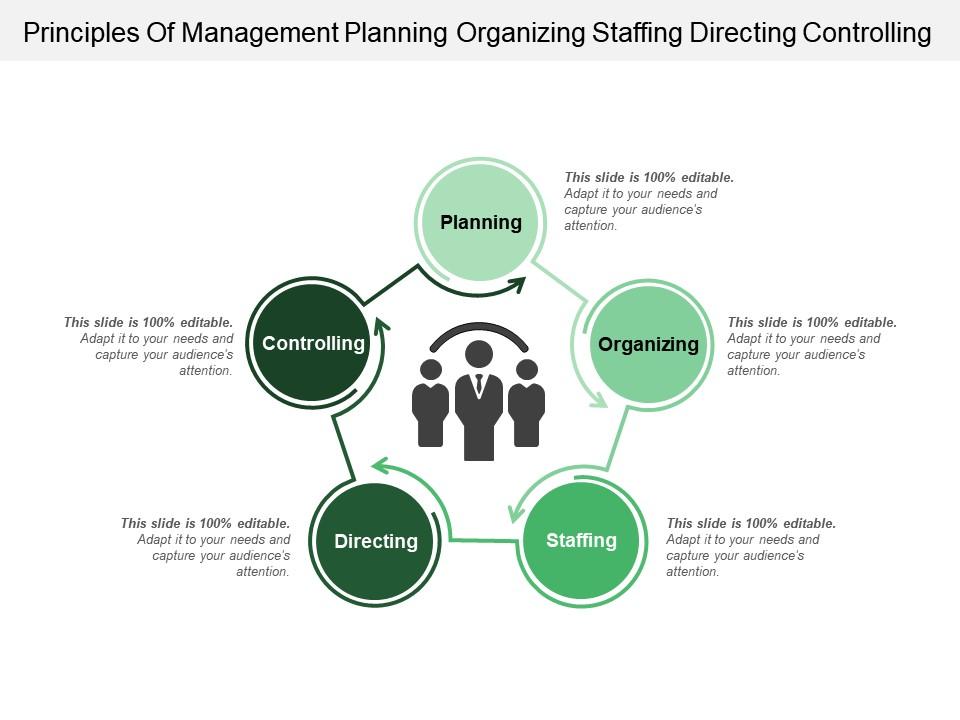
Principles of management planning organizing staffing directing controlling

Rating:
90%
Principles of management planning organizing staffing directing controlling
Slide 1 of 5
Favourites Favourites

Try Before you Buy Download Free Sample Product

Audience Impress Your
Audience
Editable 100%
Editable
Time Save Hours
of Time
The Biggest Sale is ending soon in
0
0
:
0
0
:
0
0
Rating:
90%
Presenting this set of slides with name - Principles Of Management Planning Organizing Staffing Directing Controlling. This is a five stage process. The stages in this process are Principles Of Management, Rules Of Management, Concept Of Management.

People who downloaded this PowerPoint presentation also viewed the following :

FAQs for Principles of management planning organizing

Oh man, so there's four main things: planning, organizing, leading, and controlling. You're basically cycling through these constantly. Set clear goals, get your team and resources sorted, then motivate people and track how things are going. The leading part honestly messes with most new managers - like, you can't just boss people around anymore, it's more about actual influence. Communication is huge for all of this stuff. My old boss was terrible at it and everything fell apart. Don't try mastering everything at once though, just pick one area first.

Yeah, management principles definitely work. Your team needs structure - without it, everyone's just guessing what they should be doing. Clear delegation and regular feedback make a huge difference. Goal-setting frameworks too, though honestly those can feel a bit corporate sometimes. The main thing is eliminating confusion and duplicate work through better planning. Pick one thing to start with - I'd say weekly check-ins work great. You'll notice improvements pretty quickly once people know their roles and priorities. It's way better than everyone just figuring it out as they go.

Dude, you can't implement anything without solid communication - I learned this the hard way. People won't just magically figure out what you want them to do. Always explain WHY you're making changes, not just what they need to do differently. I've watched so many good ideas crash because managers thought everyone was on the same page. Check in regularly to catch confusion early. Make it a real conversation too - ask what they think and actually listen when they push back. Honestly? Over-communicate at first, then ease up once everyone gets it.

Honestly, how you manage totally changes whether your team actually cares about stuff like accountability and transparency. Sure, being super controlling might get people to follow rules, but they're just checking boxes - they don't really get it. When you're more collaborative, people actually buy into the principles because they understand the reasoning behind them. Laissez-faire can work if your team's already motivated (big if though). The trick is being firm about what matters while letting people figure out their own way to make it happen day-to-day.

Honestly, you gotta stop watching what people are doing and start caring about what they actually deliver. Can't just walk over to bug someone anymore (which was probably annoying anyway lol). Be super clear about deadlines upfront. Slack becomes your best friend for async stuff. Schedule those one-on-ones religiously - people feel forgotten otherwise. Trust is huge here. Start micromanaging and your team will hate you fast. You need way more structure than before. Document everything first, then figure out what's broken for remote work.

Look, it really comes down to not being a total asshole while still hitting your numbers. Yeah, you want profits, but not at the expense of completely screwing over your team. Can't just chase efficiency if it means everyone's working 80-hour weeks and hating life. Be straight with people about tough decisions - even the messy ones nobody wants to hear. Watch how you're tracking performance too, because that privacy stuff gets weird fast. Oh, and make sure you're actually giving everyone fair shots at promotions and opportunities. Honestly? Just flip it around - would you want your boss pulling whatever you're thinking of doing?

Oh man, this is so real. What feels like normal direction to you might seem like micromanaging to some team members, while others actually want way more guidance. Power distance is a big factor too - some people will openly challenge your decisions, others won't speak up even when things are obviously wrong. Different communication styles, time priorities (relationships vs quick wins), individual vs group thinking... it all affects how they receive feedback and goals. Honestly though? Just ask them directly how they prefer getting direction. Sounds obvious but you'd be surprised how much headache it saves.

Honestly, start with employee engagement and retention rates - those tell you everything. People don't stick around bad managers, period. Check productivity numbers and how fast teams bounce back from changes too. The soft metrics matter just as much though. 360 reviews, internal promotions, whether people actually talk in meetings (huge red flag if they don't). Pick maybe 3-4 things that match your biggest headaches right now. I learned the hard way that tracking everything just becomes noise. Focus on what's actually broken first, then expand from there.

Honestly, think of tech as your sidekick, not your replacement. AI can crunch numbers for better decisions, but you still gotta nail the people stuff - talking to your team, delegating well, all that. Start with something simple like project management software to get your planning tighter. Or use analytics for performance reviews (way better than going off gut feeling alone). Don't chase every new app though - I've seen managers burn out their teams that way. Pick tools that fix actual headaches you're dealing with. Roll them out slowly so people can adjust without freaking out about constant changes.

Look, strategic planning is like having a roadmap, but management principles? That's actually knowing how to drive. You can map out the perfect route, but if you can't communicate clearly with your team or delegate properly, you're screwed. I've seen so many good strategies die because nobody thought about the basics first. It's like - and this might be a weird comparison - but it's like planning an amazing dinner party without knowing how to cook. The execution toolkit has to be there before you commit to the big vision. Does your team even have those fundamentals down?

Look, good management principles basically give your team permission to innovate without you breathing down their necks. Delegation and decentralization are huge here - people need space to experiment and mess up sometimes. Unity of direction keeps everyone pointed toward the same innovation goals, while having clear communication channels means ideas can actually reach the right people. But here's where it gets tricky - too much structure kills creativity dead. I've seen it happen. You've got to find that sweet spot between having frameworks and letting people run with their ideas. Figure out what's already working in your org, then loosen up where you can.

Ugh, honestly the worst part is dealing with people who just hate change - doesn't matter how good your idea is. Leadership buy-in is huge too because if your boss isn't really behind it, forget about it. What always kills me is how inconsistent teams get with rollouts. Like one department goes all-in while another barely tries. Plus you never have enough time or budget for proper training, which is so frustrating. I'd definitely start with small pilot groups first though - find those people who actually get excited about new stuff and let them prove it works before going company-wide.

Look, training your team basically hits all your management goals at once. You're doing strategic planning by building skills for the future. People feel valued when you invest in them - that's your motivation piece right there. Honestly, most employees actually want to learn new stuff anyway, so you're not pushing against the current. It also closes those annoying performance gaps you've been dealing with. Just don't fall into the trap of doing random workshops because someone thinks you should. Make sure whatever training you pick actually connects to what your business needs. Way better return than just buying more equipment.

Skip the boring handbook dump - nobody retains that stuff anyway. Jump straight into real scenarios they'll deal with, like handling angry customers or whatever applies to your business. Role-playing feels cringy but it actually works way better than slideshows. Pair them with someone from your current team who already gets it. The magic happens through repetition - orientation, casual check-ins, team meetings where you bring it up again. Don't just ask "any questions?" Really dig into whether they understand. Most people won't speak up if they're confused, so you've gotta create that safe space.

Look, feedback loops are basically your reality check - they show you if your management style is actually working or if you're just winging it. Say you're trying to get better at delegating. Check in with your team weekly. Are they drowning? Do they feel supported? Here's the thing though - most managers collect feedback and then... do nothing with it. Total waste. You've got to actually tweak your approach based on what you hear. My advice? Pick one thing you're working on and do those pulse checks religiously. Otherwise you'll keep making the same mistakes.

Ratings and Reviews

90% of 100
Review Form
Write a review
Most Relevant Reviews
  1. 80%

    by Wilson Cooper

    Very unique, user-friendly presentation interface.
  2. 100%

    by David Snyder

    I discovered this website through a google search, the services matched my needs perfectly and the pricing was very reasonable. I was thrilled with the product and the customer service. I will definitely use their slides again for my presentations and recommend them to other colleagues.

2 Item(s)

per page: