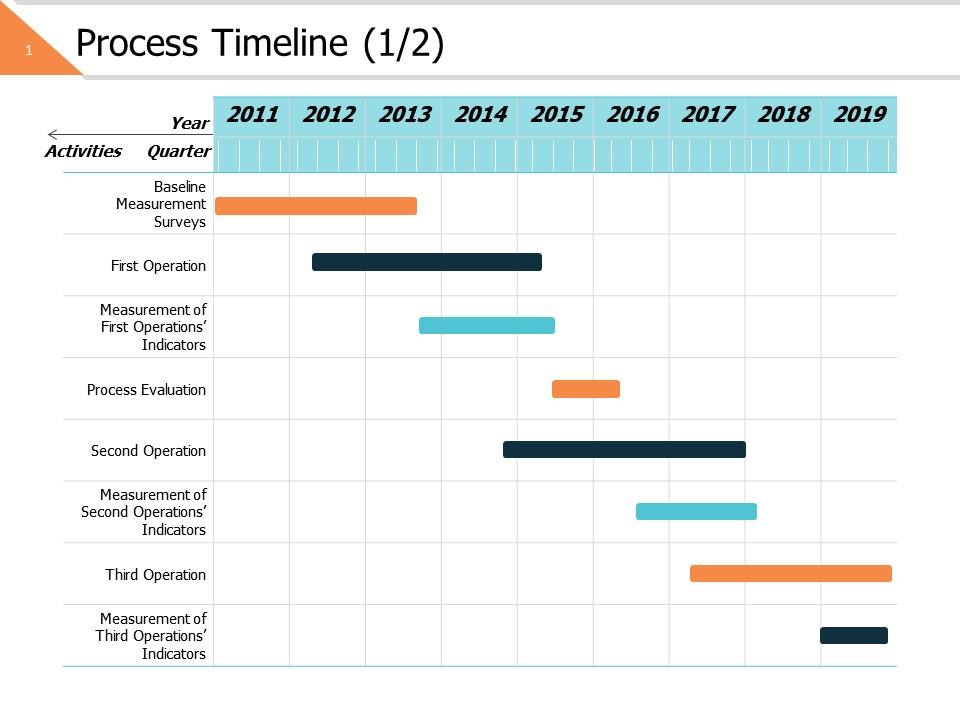
Process timeline 1 2 ppt powerpoint presentation file gridlines

Process timeline 1 2 ppt powerpoint presentation file gridlines
Slide 1 of 5
Favourites Favourites

Try Before you Buy Download Free Sample Product

Audience Impress Your
Audience
Editable 100%
Editable
Time Save Hours
of Time
The Biggest Sale is ending soon in
0
0
:
0
0
:
0
0
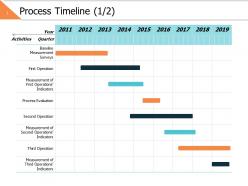
Presenting this set of slides with name - Process Timeline 1 2 Ppt Powerpoint Presentation File Gridlines. This is a nine stage process. The stages in this process are Business, Management, Strategy, Analysis, Marketing.

People who downloaded this PowerPoint presentation also viewed the following :

FAQs for Process timeline 1 2 ppt powerpoint

Key phases of an effective process timeline include initiation and planning, resource allocation and team assignment, execution with milestone tracking, quality checkpoints and review cycles, and final delivery with stakeholder approval. These structured phases streamline project management by establishing clear expectations, minimizing delays, and ensuring consistent progress monitoring, with many organizations finding that systematic timeline management delivers faster project completion and improved resource efficiency.

A process timeline improves project communication by establishing clear milestones, deadlines, and dependencies that all stakeholders can reference throughout the project lifecycle. This visual roadmap enhances transparency and accountability, enabling teams to identify potential bottlenecks early, coordinate resources more effectively, and maintain alignment on deliverables, ultimately reducing miscommunication and ensuring smoother project execution.

PowerPoint, Visio, Lucidchart, Canva, and Smartsheet offer robust features for creating compelling process timelines through drag-and-drop interfaces, customizable templates, and collaborative editing capabilities. These platforms enable organizations to streamline project communication, enhance stakeholder understanding, and accelerate decision-making processes, with many teams finding that visual timelines reduce confusion and improve project delivery rates significantly.

Industries customize process timelines by adjusting phases, milestones, and resource allocation to match their operational requirements, regulatory constraints, and customer expectations. Manufacturing companies streamline production cycles for efficiency, while healthcare organizations extend approval processes for safety compliance, and financial services balance speed with risk management, ultimately delivering sector-specific advantages and enhanced customer experiences.

Common pitfalls include underestimating task durations, overlooking dependencies between activities, failing to account for resource constraints, ignoring stakeholder availability, and neglecting buffer time for unexpected delays. These oversights streamline project failure by creating unrealistic expectations, cascading delays, and resource conflicts, with many organizations finding that thorough planning and contingency allocation ultimately delivers more reliable outcomes and stakeholder confidence.

A process timeline aids in identifying bottlenecks by visualizing task sequences, duration estimates, and resource dependencies, enabling managers to spot delays before they occur. Through timeline analysis, organizations can pinpoint critical path constraints, resource allocation gaps, and workflow inefficiencies, ultimately streamlining operations and enhancing project delivery speed across departments.

Stakeholder input provides critical insights into resource availability, dependencies, realistic timeframes, and potential bottlenecks that ensure timeline accuracy and feasibility. Through collaborative planning sessions, organizations gather diverse perspectives from departments like operations, finance, and customer service, ultimately delivering more achievable milestones and stronger buy-in across teams.

Historical data enhances process timeline accuracy by providing baseline measurements, identifying recurring bottlenecks, and revealing seasonal patterns that affect workflow duration. Through predictive analytics and trend analysis, organizations can anticipate delays, optimize resource allocation, and set realistic milestones, with many manufacturing and financial services companies finding significantly improved project delivery rates.

Effective process timelines should include clear milestones, defined deliverables, resource allocation requirements, dependencies between tasks, and realistic timeframes with buffer periods. These elements enable organizations to track progress systematically, identify potential bottlenecks early, and maintain stakeholder alignment, with many project teams finding that comprehensive timelines reduce delays and enhance overall execution efficiency.

Success measurement involves tracking key performance indicators like cycle time reduction, milestone completion rates, resource utilization efficiency, and stakeholder satisfaction scores. Organizations typically analyze these metrics through dashboards and regular reviews, with many finding that successful timelines deliver 20-30% faster project completion, improved team accountability, and enhanced predictability in delivery schedules.

Creative timeline presentation methods include interactive flowcharts, milestone roadmaps, Gantt chart visualizations, step-by-step infographics, and progress dashboards with visual indicators. These approaches enhance audience engagement by combining clear chronological sequences with dynamic elements, color coding, and progress tracking, ultimately delivering more compelling presentations that improve stakeholder understanding and project buy-in across organizations.

Process timelines in agile management emphasize iterative sprints, continuous feedback loops, and adaptive planning rather than rigid sequential phases. These frameworks streamline development cycles by incorporating regular retrospectives, stakeholder reviews, and flexible milestone adjustments, with many software teams and product organizations finding that this approach ultimately delivers faster time-to-market and enhanced responsiveness to changing requirements.

Visual elements that enhance process timeline engagement include color-coded phases, interactive hover effects, progress indicators, milestone icons, and animated transitions between stages. These design features streamline information consumption by creating visual hierarchy, reducing cognitive load, and maintaining audience attention, with many organizations finding that well-designed timelines improve stakeholder comprehension and project buy-in significantly.

Feedback loops can be incorporated into process timelines through scheduled review points, stakeholder check-ins, milestone evaluations, and iterative adjustment phases built directly into project schedules. These structured touchpoints enable organizations to identify issues early, refine approaches mid-process, and optimize outcomes, with many finding that regular feedback integration ultimately delivers faster project completion and higher quality results.

Best practices for accessible process timelines include clear visual hierarchies, multiple format options, plain language descriptions, color-blind friendly designs, and scalable text features. These approaches streamline stakeholder engagement by accommodating different learning styles, technical proficiencies, and accessibility needs, with many organizations finding that inclusive timeline designs ultimately enhance project comprehension and reduce communication barriers across diverse teams.

Ratings and Reviews

0% of 100
Write a review
Most Relevant Reviews

No Reviews