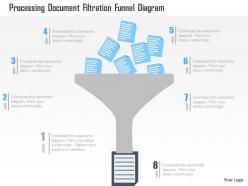
Processing document filtration funnel diagram flat powerpoint design

Rating:
100%
Processing document filtration funnel diagram flat powerpoint design
Slide 1 of 5
Favourites Favourites

Try Before you Buy Download Free Sample Product

Audience Impress Your
Audience
Editable 100%
Editable
Time Save Hours
of Time
The Biggest Sale is ending soon in
0
0
:
0
0
:
0
0
Rating:
100%
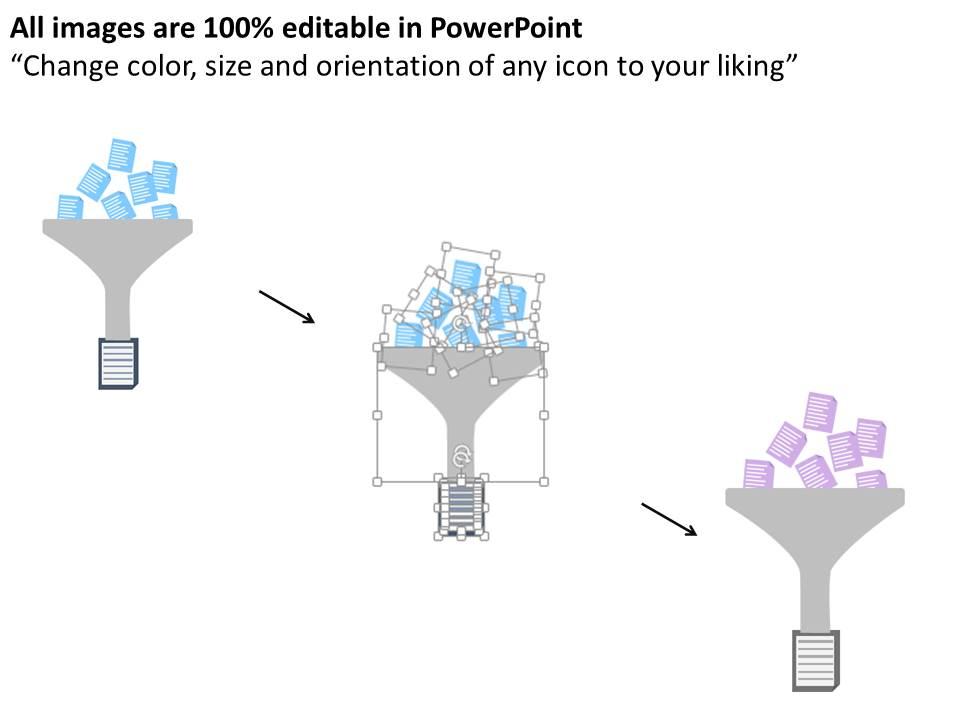
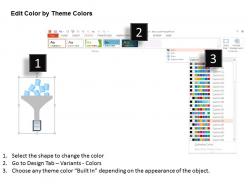
We are proud to present our processing document filtration funnel diagram flat powerpoint design. Graphic of funnel diagram has been used to craft this power point template diagram. This PPT diagram contains the concept of filtration and processing. Use this diagram template for business and marketing process related presentations.

People who downloaded this PowerPoint presentation also viewed the following :

FAQs for Processing document filtration funnel diagram

A Document Filtration Funnel Diagram is a visual framework that illustrates how large volumes of documents or information are systematically narrowed down through progressive filtering stages to reach specific, actionable outcomes. This approach streamlines decision-making processes by enabling organizations to visualize data reduction workflows, enhance document management efficiency, and ultimately deliver clearer insights for strategic planning and operational optimization.

A Document Filtration Funnel Diagram enhances presentation organization by systematically categorizing information from broad concepts to specific details, eliminating redundant content, and creating logical flow sequences. This visual approach enables presenters to streamline complex data, prioritize key messages, and guide audiences through structured information hierarchies, ultimately delivering clearer understanding and more impactful business communications.

Document filtration funnel diagrams typically represent stages including initial document collection, automated screening, content categorization, relevance assessment, quality verification, and final selection or approval. These stages streamline document management by eliminating irrelevant materials, ensuring compliance standards, and prioritizing high-value content, with many organizations finding that systematic filtration reduces processing time while enhancing decision-making accuracy.

Document Filtration Funnel Diagrams are most commonly used in compliance management, legal discovery processes, quality assurance workflows, and content management systems across industries like healthcare, finance, and manufacturing. These visual tools streamline document review by establishing clear filtering criteria at each stage, enabling organizations to efficiently process large volumes of documentation while ensuring regulatory compliance and operational accuracy.

Document filtration funnel diagrams enhance comprehension through clear hierarchical flow, intuitive color coding, consistent visual elements, and strategic white space utilization. By incorporating distinct filtering stages, progressive data reduction visualization, and outcome-focused labeling, organizations streamline complex information processing workflows, ultimately delivering improved decision-making capabilities and enhanced stakeholder understanding across departments.

Color theory enhances Document Filtration Funnel Diagrams by establishing visual hierarchy, indicating process flow direction, and differentiating filtration stages through strategic hue selection. These design principles streamline comprehension by using warm colors for inputs, cool tones for processing stages, and contrasting colors for outputs, ultimately delivering clearer communication and faster decision-making across organizational teams.

Document Filtration Funnel Diagrams enable businesses to streamline document processing workflows by establishing clear sorting criteria, automating approval sequences, and eliminating bottlenecks throughout organizational hierarchies. These visual frameworks enhance operational efficiency by reducing processing time, minimizing human error, and ensuring consistent quality control, with many organizations finding significant cost savings and faster decision-making across departments.

Common mistakes include using unclear criteria definitions, creating overly complex filtering stages, neglecting stakeholder input validation, and failing to establish measurable rejection thresholds. These oversights can compromise document processing efficiency by reducing transparency, increasing processing time, and creating bottlenecks, with many organizations finding that simplified, well-defined filtration stages ultimately deliver faster approvals and improved operational workflows.

Technology tools and software simplify Document Filtration Funnel Diagram creation through automated templates, drag-and-drop interfaces, real-time collaboration features, and integrated data visualization capabilities. These platforms enable teams to streamline workflow mapping, enhance accuracy through standardized formatting, and accelerate decision-making processes, with many organizations finding that digital tools reduce creation time while improving diagram clarity and strategic impact.

When labeling Document Filtration Funnel Diagram stages, consider process specificity, stakeholder clarity, outcome measurability, compliance requirements, and actionable terminology that reflects your organization's workflow. These elements streamline document management by ensuring clear stage identification, reducing processing delays, and enhancing team coordination, with many organizations finding that precise labeling ultimately delivers improved operational efficiency and faster document approval cycles.

Document Filtration Funnel Diagrams can effectively be applied to non-document processes by visualizing progressive filtering, refinement, and selection stages across various business operations. These frameworks streamline lead qualification, candidate screening, product development phases, and quality control processes, with many organizations finding that the visual funnel approach enhances decision-making transparency and operational efficiency.

Document filtration funnels with too many stages create unnecessary complexity, slow processing times, and increased maintenance costs, while too few stages risk inadequate filtering, reduced accuracy, and poor document quality control. Organizations must balance thoroughness with efficiency, with many financial institutions and healthcare systems finding that 4-6 strategic filtering stages optimize both document precision and operational workflow speed.

Industries implement Document Filtration Funnel Diagrams by customizing stages to match their specific compliance and operational needs, with healthcare filtering patient records through HIPAA verification, financial services screening loan applications through risk assessment layers, and legal firms organizing case documents through relevance hierarchies. These tailored workflows streamline document processing, enhance regulatory compliance, and accelerate decision-making timelines across sectors.

**INPUT**: What kind of data is most suitable to represent in a Document Filtration Funnel Diagram? **OUTPUT**: Document filtration funnel diagrams work best with sequential processing data, document review workflows, compliance screening stages, quality assurance checkpoints, and approval hierarchies. These visualizations streamline complex filtering processes by showing volume reduction at each stage, enabling organizations in legal, healthcare, and financial services to optimize document workflows and enhance operational efficiency.

Financial institutions use Document Filtration Funnel Diagrams for loan processing, filtering applications through credit checks, income verification, and risk assessment stages. Healthcare organizations implement these systems for patient record management, insurance claims processing, and regulatory compliance documentation, with many finding that structured filtration reduces processing time by 60% while enhancing accuracy.

Ratings and Reviews

100% of 100
Write a review
Most Relevant Reviews
  1. 100%

    by Clyde Sullivan

    Excellent template with unique design.
  2. 100%

    by Dannie Washington

    Visually stunning presentation, love the content.

2 Item(s)

per page: